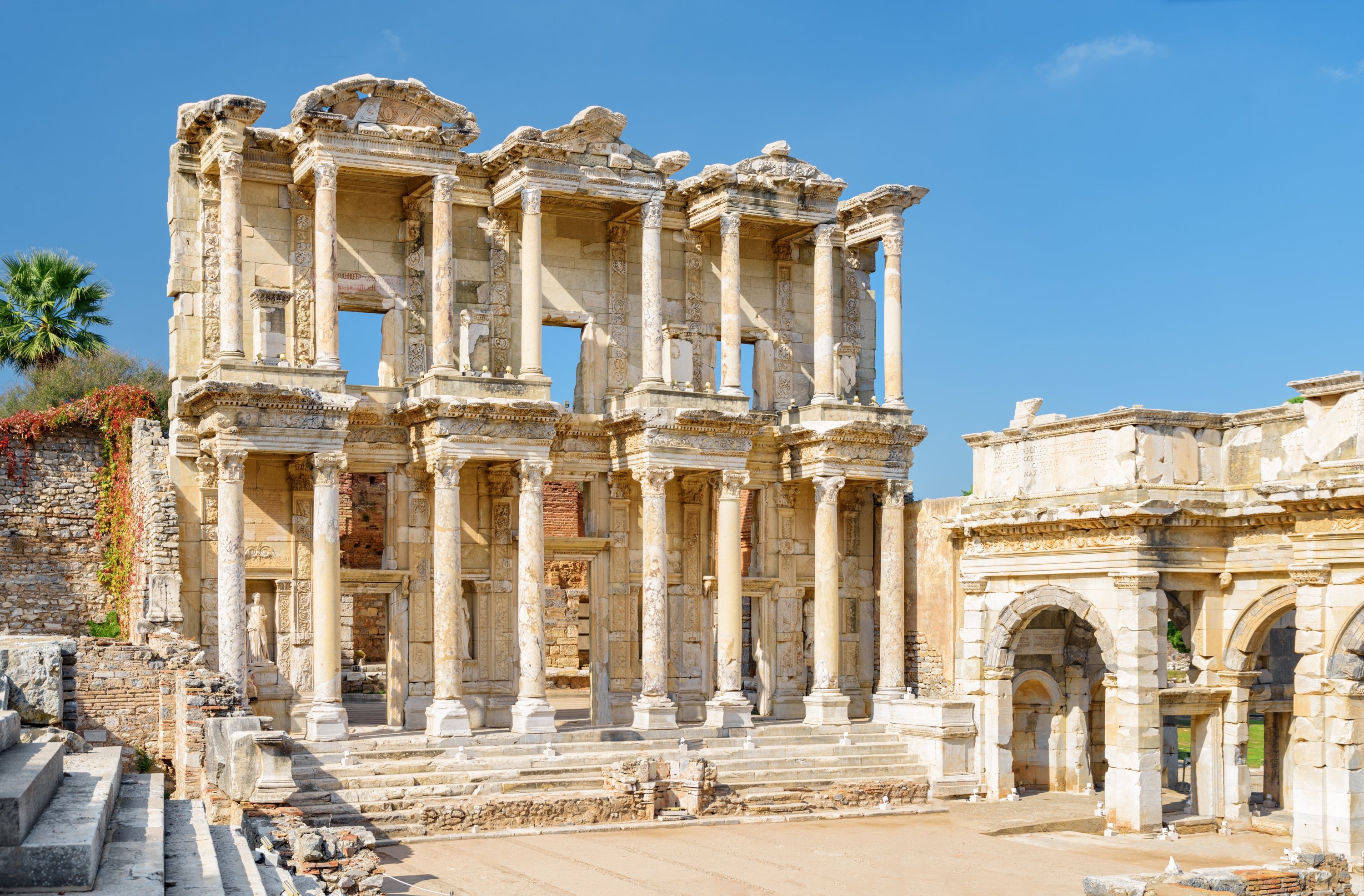
At the ancient city of Ephesus in Izmir, western Türkiye, restoration teams are carefully rebuilding columns, bases and architectural blocks that have been buried, broken and scattered for centuries, using what archaeologists describe as a “stone hospital” where each piece is meticulously analyzed, cleaned and reassembled.
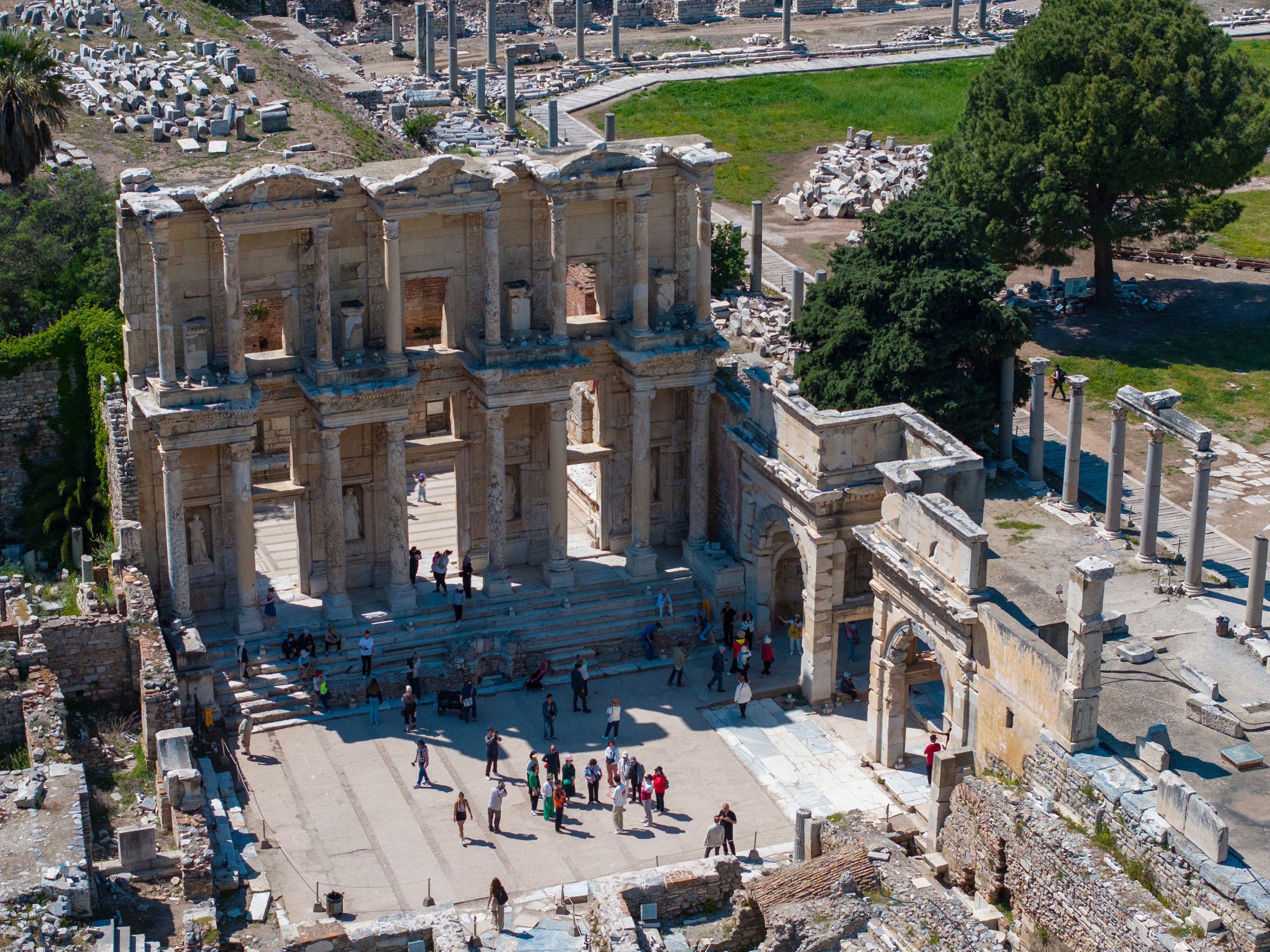
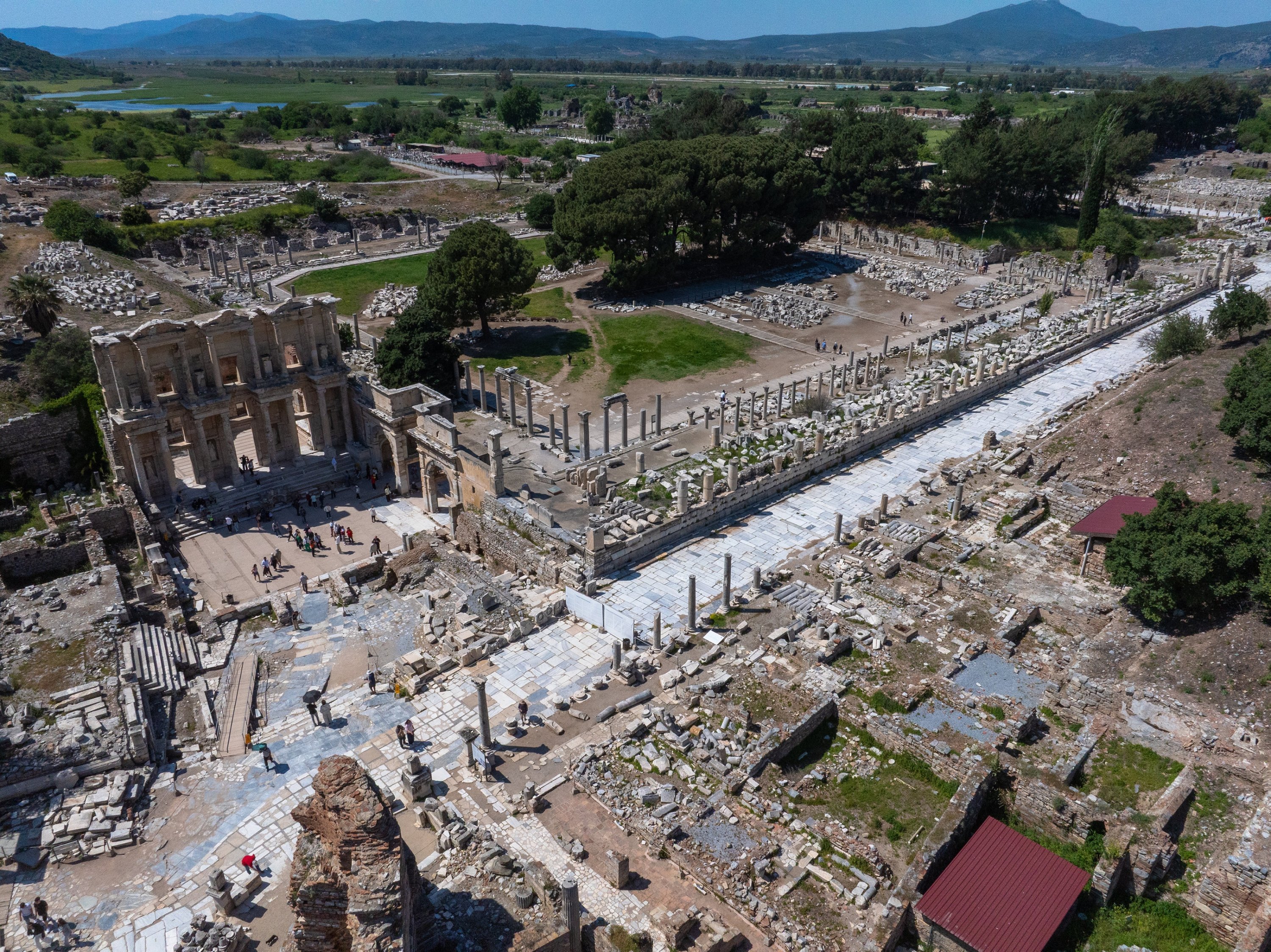
The work is part of the Ministry of Culture and Tourism’s “Geleceğe Miras Sonsuz Efes” (“Ephesus, an Eternal Heritage for the Future”) project at Ephesus, a UNESCO World Heritage Site. Excavation and restoration efforts continue across multiple areas of the ancient city, including the Stadium Street corridor, the ancient theater and surrounding public spaces.
Along Stadium Street, hundreds of columns and stone blocks toppled by earthquakes, fires and other natural disasters over thousands of years are being restored by a large international team of experts. The restoration zone, informally called the “stone hospital,” functions as a conservation workshop where each artifact is individually processed.
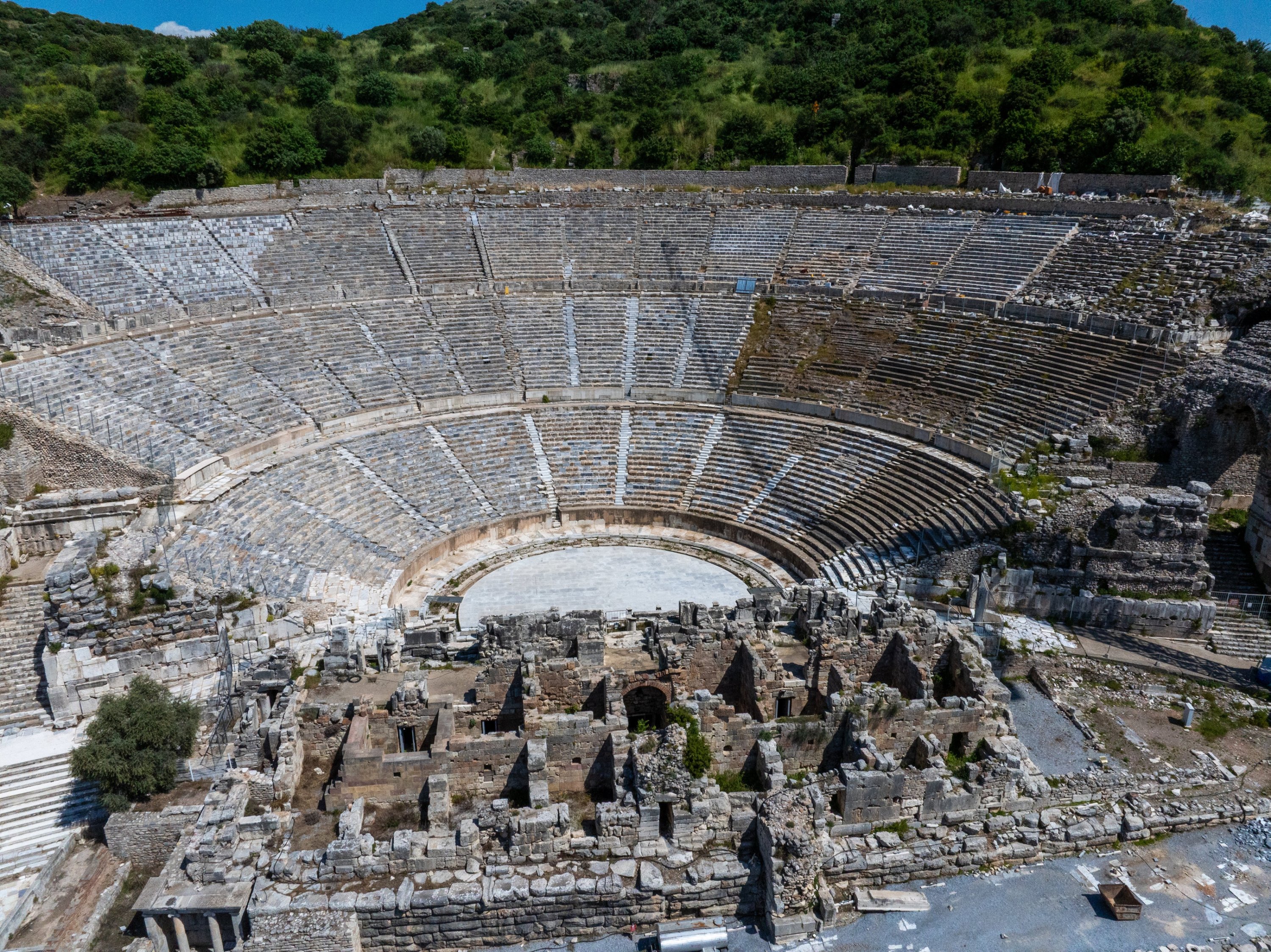
Artifacts such as columns, capitals, bases and inscribed blocks are first documented in detail. They are then scanned, drawn and recorded before undergoing cleaning, stabilization and structural reassembly. Once restored, the pieces are returned to their original positions along the street.
The project is coordinated by Bahadır Duman, an archaeology professor at Pamukkale University. He said the effort, launched in 2023, brings together 200 to 250 archaeologists, conservators, geologists, architects and engineers from Türkiye and abroad.
Duman described the “stone hospital” as a controlled conservation environment where every stone is examined in detail before any intervention is approved.
“Everything is documented down to the finest detail,” he said, explaining that specialists determine whether mechanical, chemical, or structural treatments are needed before reassembly work begins.
Stadium Street, which was actively used for roughly 2,500 years, has suffered repeated destruction from earthquakes, fires and natural decay. Historical evidence shows that ancient Ephesians repeatedly attempted to repair and reuse fallen architectural elements, sometimes repurposing column bases as capitals or placing stones in inverted positions.
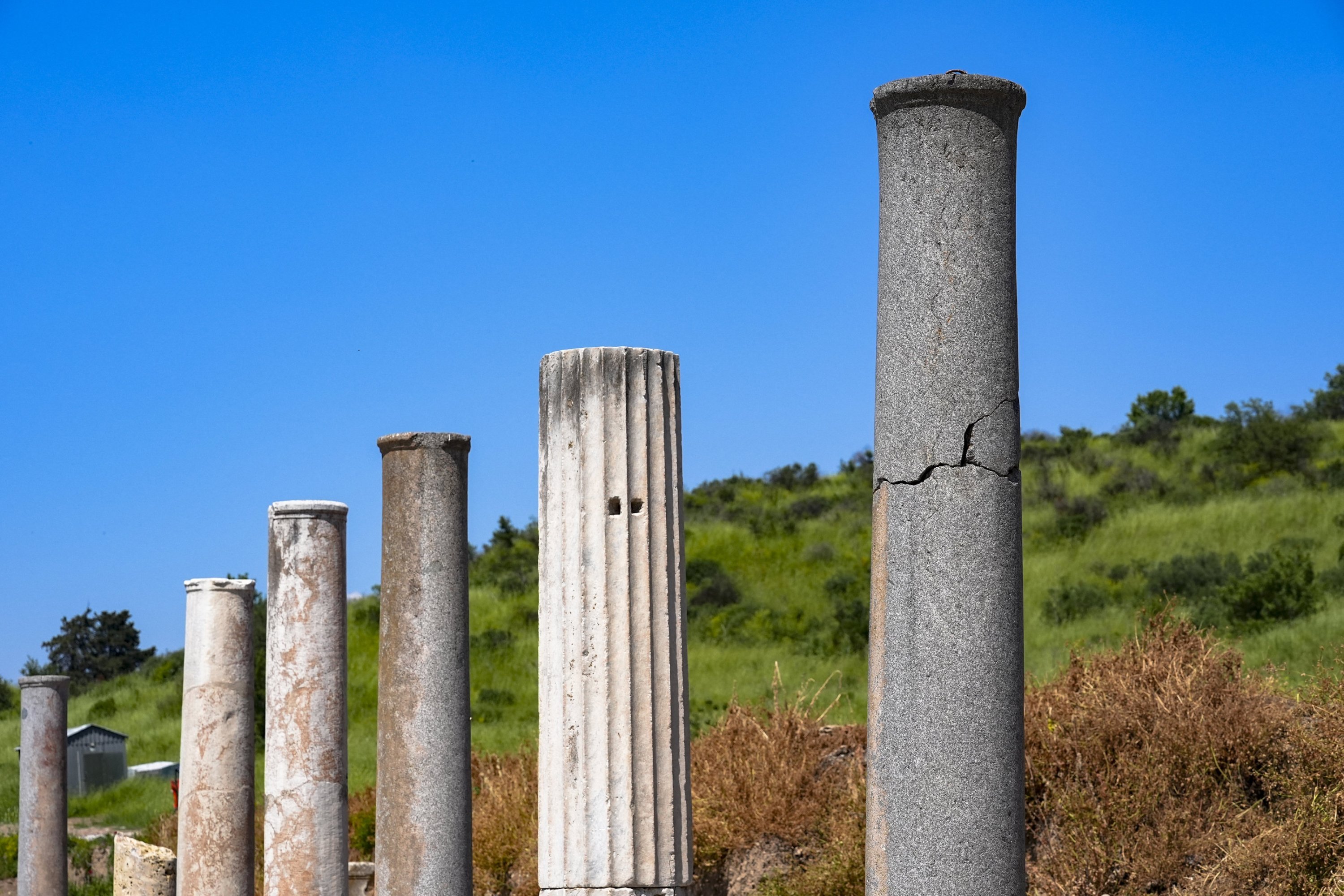
To preserve authenticity, restoration teams are now applying minimal intervention techniques to help modern visitors better understand the original urban layout.
Researchers have identified approximately 120 to 130 columns and bases along the street, with about 60% already restored. The remaining work is expected to be completed in the coming months.
As part of the broader initiative, inscriptions in Latin and Greek are being translated into Turkish and English to improve accessibility for visitors. The project aims to create a clearer interpretive experience across the site.
Once Stadium Street is completed, restoration will continue to the ancient theater and later extend to Harbor Street, where a new visitor route is being developed. Duman said the goal is to present a reimagined pathway through Ephesus that even repeat visitors have not seen before.
“Ephesus was the capital of Asia Minor,” he said, noting that the updated route will offer a significantly different experience of the ancient city.
Future phases include continued excavation and restoration along Harbor Street, including flooring, column reconstruction and work at the Roman bath complex. Authorities have also approved conservation efforts at the Middle Harbor Gate, where controlled anastylosis, reassembling fallen architectural elements, will begin later this year.
Project leaders aim to complete major restoration work on both Stadium Street and Harbor Street by the end of the year, further expanding public access to newly reconstructed sections of Ephesus.