The conversation around sustainability in art has, in recent years, evolved from a niche institutional concern into one of the defining philosophical tensions of contemporary culture itself. Yet the more the word “sustainability” enters museum walls, biennials, art fairs and artist statements, the more urgent another question becomes: Is art truly becoming sustainable, or is sustainability itself becoming aestheticized? In other words, are we witnessing a profound ethical transformation in artistic production, or merely the emergence of a new visual language fashionable enough to satisfy cultural expectations while leaving the machinery of excess untouched?
This question matters because the contemporary art world has long occupied a paradoxical position. Art, perhaps more than any other human endeavor, has historically attempted to outlive time. A painting preserved for centuries, an ancient ceramic vessel surviving empires, or a cathedral fresco enduring war and climate alike are already examples of extraordinary sustainability. Art has always resisted disappearance. It carries memory across generations. In this sense, art is inherently sustainable because it preserves meaning beyond the lifespan of economies, political systems and even civilizations themselves.
And yet contemporary art production, particularly after globalization accelerated the international art market, became deeply entangled with systems that are anything but sustainable. Massive shipping operations move artworks from Basel to Hong Kong, from Miami to Doha, from Venice to Seoul. Temporary exhibition architectures are constructed and demolished within weeks. Tons of packaging materials protect fragile works during intercontinental transport. Digital art consumes enormous energy through servers, blockchain infrastructures, and increasingly AI-generated production pipelines. Art fairs operate almost like luxury fashion weeks, requiring endless mobility, spectacle and novelty. In this ecosystem, sustainability entered the art world not only as an ecological necessity but as a moral reckoning.
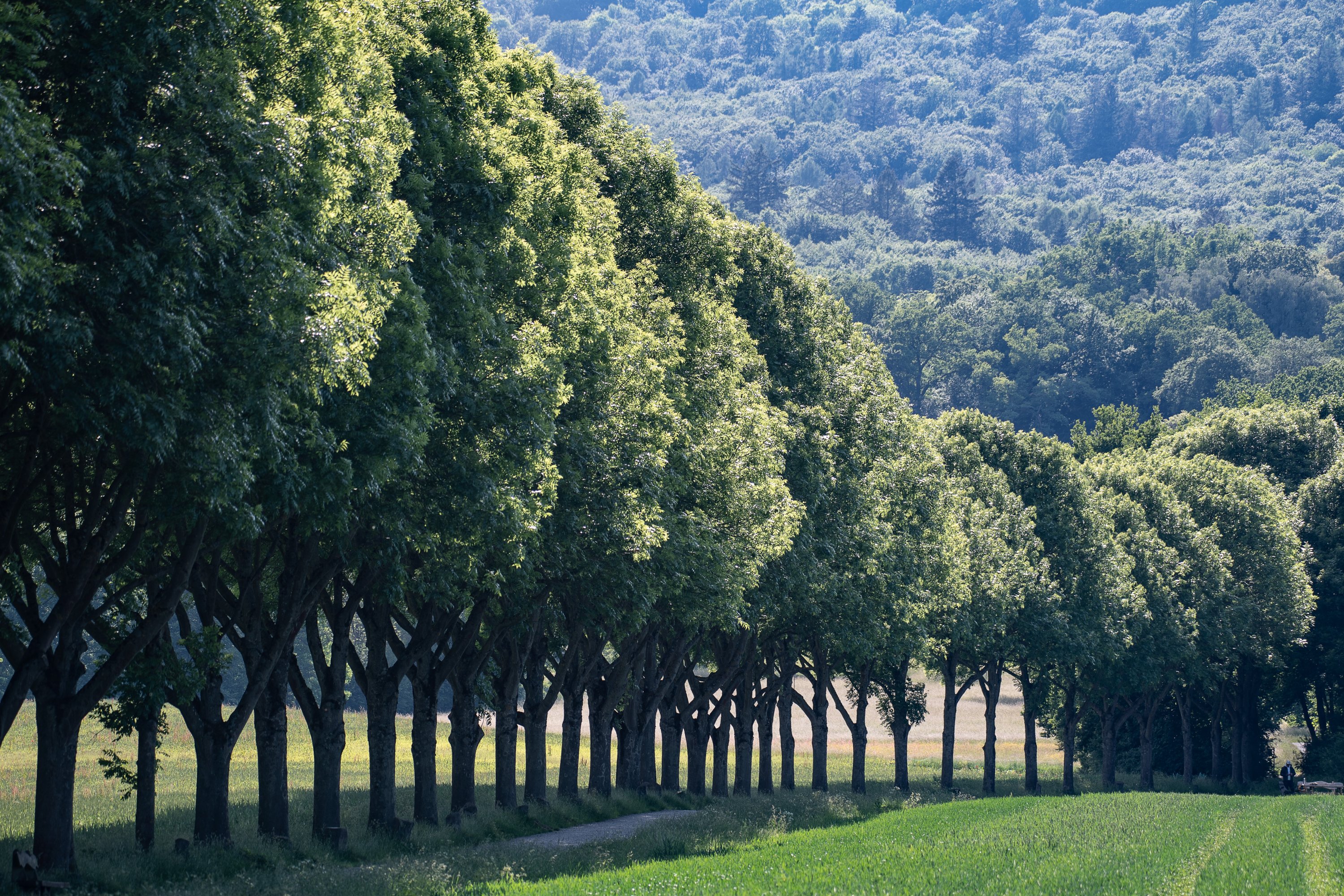
One of the earliest and most influential artistic figures to radically reshape how we think about environmental consciousness in art was Joseph Beuys. Beuys did not simply make ecological-themed artworks; he attempted to redefine art itself as a social organism capable of healing collective systems. His monumental project “7000 Oaks,” initiated at Documenta in 1982, remains one of the most powerful examples of sustainability entering artistic practice not as decoration, but as direct intervention. Thousands of oak trees were planted throughout the city of Kassel, each paired with a basalt stone. The work unfolded over years, resisting the temporary spectacle culture that dominates much of contemporary art. It was slow, collective, living, and dependent on future generations for completion. Beuys essentially proposed that sculpture could exist not only in marble or bronze, but in ecosystems, public participation and time itself.
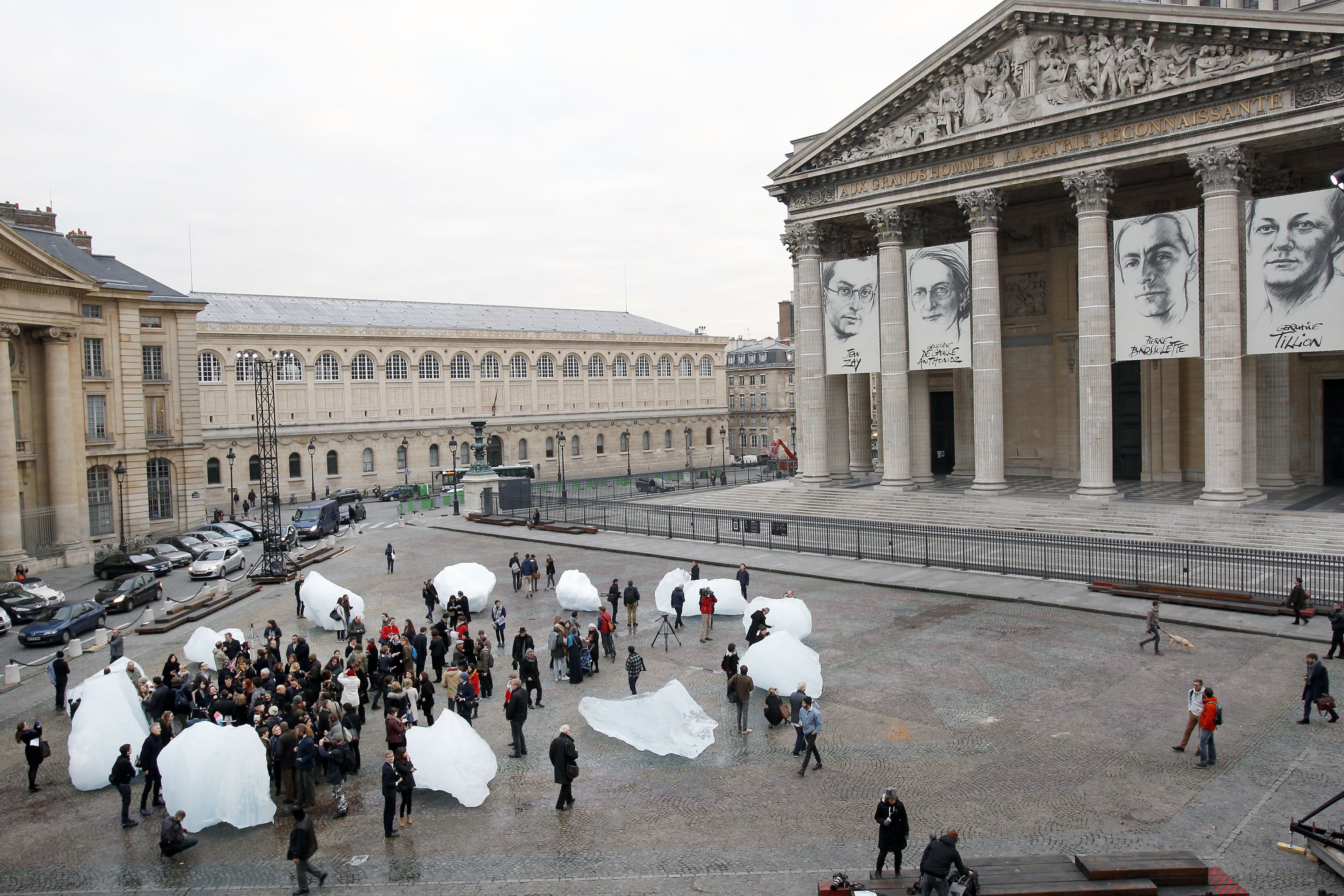
Decades later, artists like Olafur Eliasson transformed environmental anxiety into immersive sensory experiences. Eliasson’s installations often force viewers to physically encounter climate instability rather than intellectually consume it. In “Ice Watch,” enormous blocks of glacial ice were transported from Greenland and left to melt publicly in urban spaces. The work created a haunting confrontation between geological time and human immediacy. Audiences touched, photographed, and watched ancient ice disappear before their eyes. Critics questioned the environmental contradiction of transporting ice internationally, yet perhaps this contradiction itself revealed the impossibility of purity within contemporary systems. Sustainability in art is rarely innocent. It often exists in compromise.
Similarly, Agnes Denes created one of the most iconic ecological artworks of the 20th century with “Wheatfield, A Confrontation” in 1982, planting two acres of wheat in downtown Manhattan near Wall Street. The image remains unforgettable: golden wheat growing beside symbols of financial capitalism. Denes transformed agriculture into conceptual resistance, exposing the absurdity of urban economic systems disconnected from ecological realities. The work was not merely environmental activism; it was spatial philosophy. It asked whether value should be measured by stock exchange numbers or by the ability to sustain life itself.
What makes these artists important is that they did not approach sustainability as branding. They approached it as ontology, a reconsideration of what art fundamentally is.
Today, however, sustainability has become inseparable from institutional language. Nearly every major biennial, museum, or art fair now includes ecological frameworks, carbon reduction pledges, recycling initiatives and climate-centered curatorial themes. The question is whether these transformations are structural or symbolic.
The contemporary art world increasingly recognizes its own contradictions. A single international exhibition may involve hundreds of flights, shipping crates, construction materials and temporary infrastructures. Even museums, historically associated with preservation, face scrutiny regarding energy consumption, climate control systems and architectural excess. Large-scale immersive exhibitions often consume extraordinary technological resources while simultaneously presenting environmental narratives.
This contradiction has produced two major artistic responses.
The first is material sustainability: artists using recycled, biodegradable, found, or environmentally conscious materials. The second is conceptual sustainability: artists questioning the ideology of endless production itself.
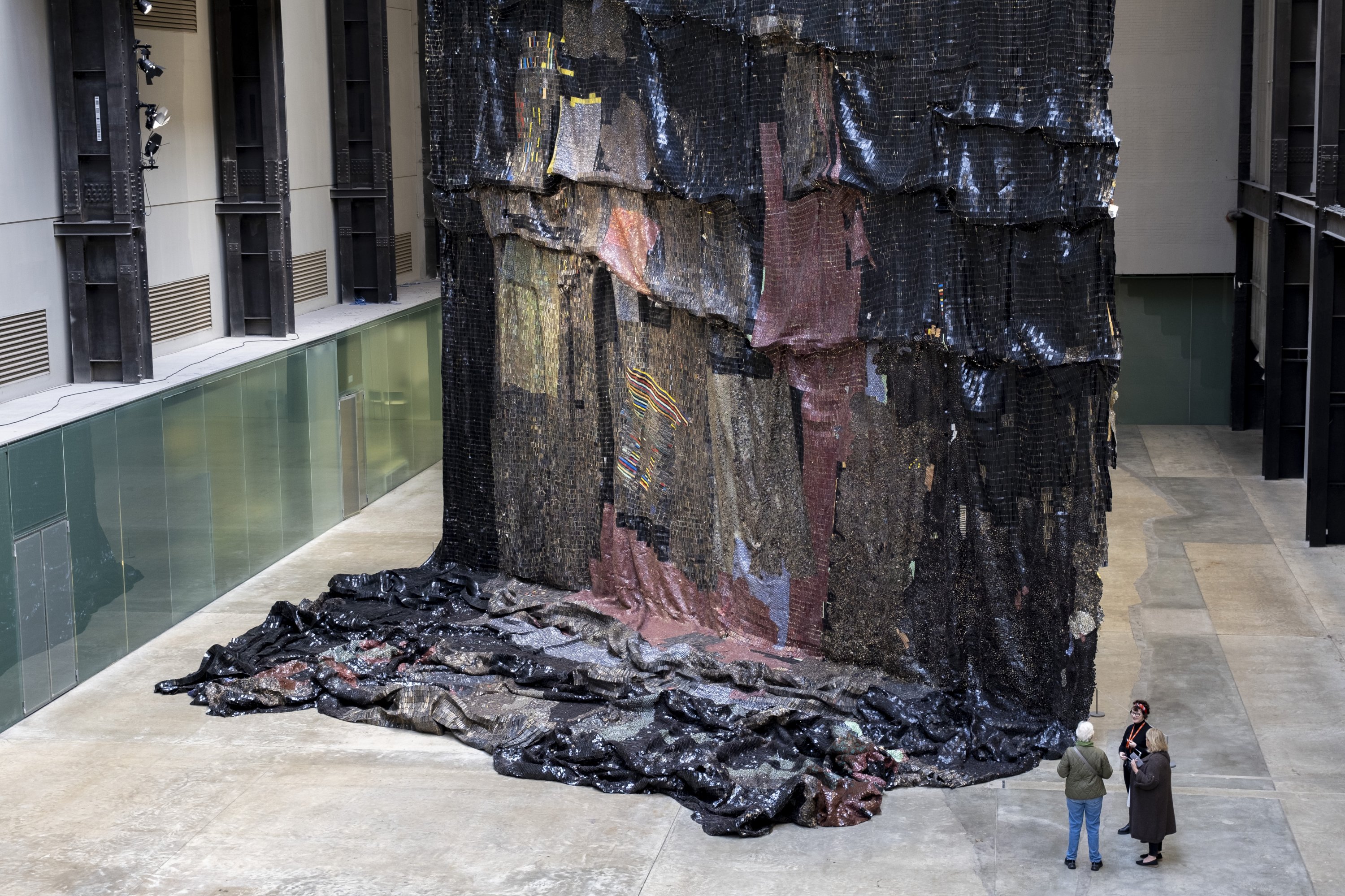
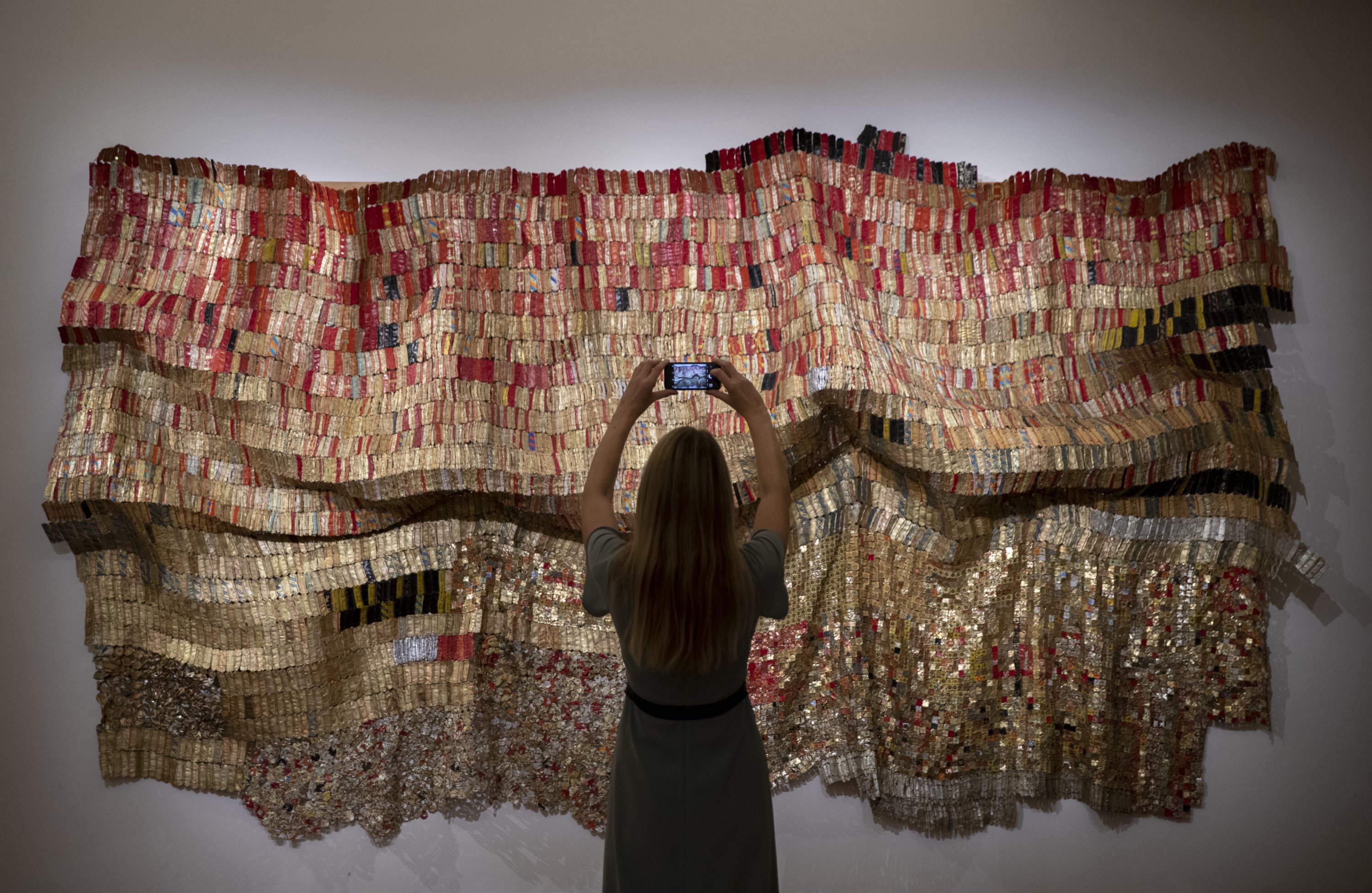
Material sustainability is perhaps the most visible. Artists today frequently work with ocean plastics, discarded industrial objects, electronic waste, textile remnants, or organic matter. El Anatsui became internationally celebrated for monumental shimmering installations composed of discarded bottle caps and metal fragments. From a distance, the works resemble luxurious textiles or royal tapestries. Up close, they reveal histories of consumption, colonialism, alcohol trade and waste. El Anatsui’s genius lies in transforming debris into beauty without erasing its violence.
Likewise, Vik Muniz collaborated with waste pickers in Brazil’s largest landfill to create portraits composed entirely of garbage. These works complicated the relationship between poverty, labor, recycling and representation. Sustainability here was not merely ecological. It was social.
This is perhaps the most important evolution within sustainability discourse in art: the understanding that environmental destruction cannot be separated from economic systems, inequality, migration, labor exploitation and histories of extraction. Sustainability is not simply about recycling plastic. It is about asking what kinds of futures remain possible and for whom.
Yet another uncomfortable question emerges here. Has sustainability itself become marketable?
There is no doubt that ecological aesthetics now possesses commercial value. Museums seek climate-conscious programming because institutions must remain culturally relevant. Collectors increasingly desire works associated with environmental awareness. Luxury brands collaborate with artists around themes of nature, circularity and regeneration. Green language circulates fluently through press releases and sponsorship campaigns.
This does not automatically make such efforts dishonest. But it does create tension.
The contemporary artist often stands between two opposing forces: the desire to communicate urgent ethical realities and the necessity of surviving within an attention economy. Visibility matters more than ever. Algorithms reward immediacy, emotional intensity and visual recognizability. Social media transformed not only how art is consumed, but how it is produced. Artists today are expected to maintain identities as creators, communicators, brands, public intellectuals and content generators simultaneously.
Under these conditions, sustainability itself can risk becoming aesthetic performance.
A recycled-material installation photographs beautifully on Instagram. Climate-themed works easily attract institutional attention. Ecological language signals moral awareness. But does awareness necessarily produce transformation?
This is where the distinction between message and popularity becomes crucial.
Many contemporary artists genuinely seek to address planetary anxiety. Climate collapse, extinction, migration, water scarcity, ecological grief and post-industrial trauma are among the defining emotional realities of our century. Artists, by nature, absorb collective emotions before societies fully articulate them. In this sense, art becomes a sensor system for civilization. The artist often perceives fracture earlier than politics does.
However, the art market simultaneously rewards novelty. This creates a dangerous cycle where urgent political themes can become trends. One decade favors identity discourse, another digital immersion, another climate narratives. The risk is not that artists care too much, but that institutions commodify care itself.
This does not mean socially engaged art lacks sincerity. It means sincerity now exists inside systems of visibility and capital from which it cannot fully escape.
Perhaps the deeper question is whether art should be responsible for sustainability at all.
Art is not engineering. It cannot lower global carbon emissions alone. It cannot replace legislation, infrastructure, or scientific innovation. And yet art possesses something equally important: the ability to alter emotional perception.
Most people do not transform because of statistics. They transform because of images, stories, symbols and emotional encounters. A scientific report may explain melting glaciers. An artwork may make someone feel the tragedy of disappearance.
This emotional dimension is precisely why art remains indispensable during ecological crises. Sustainability is not only technological, but it is also psychological. Humanity cannot preserve what it no longer emotionally experiences as sacred.
Modern industrial culture has trained societies to perceive nature as a resource rather than a relationship. Much contemporary environmental art attempts to reverse this condition. It seeks to restore awe.
And perhaps this is where sustainability and art become naturally connected.
Because true art has always resisted disposability.
A meaningful artwork is not consumed once and forgotten. It continues speaking across decades, sometimes centuries. Unlike mass production, genuine art deepens with time rather than becoming obsolete. In an era dominated by speed, endless scrolling, algorithmic stimulation and accelerated consumption, art offers slowness, presence, reflection.
In this sense, art may be one of the few truly anti-consumerist spaces still remaining.
The irony is that contemporary culture simultaneously demands sustainability while rewarding overproduction. Artists are expected to constantly produce new exhibitions, new content and new visibility. Social media pressures creators into permanent performance. Even the art market often prioritizes novelty over contemplation. Sustainability, however, requires slowness, regeneration and duration.
This tension deeply affects artists psychologically as well.
Can an artist sustainably produce emotionally intense work for decades without exhaustion? Can creativity survive constant visibility? Can cultural production remain meaningful inside economies dependent upon perpetual stimulation?
These questions reveal that sustainability in art is not only environmental. It is existential.
Perhaps the future of sustainable art will involve fewer objects and more experiences. Fewer spectacles and more intimacy. Fewer temporary constructions and more long-term public interventions. We already see this shift emerging through socially engaged practices, ecological restoration projects, digital archives, sound works, participatory rituals and interdisciplinary collaborations between artists, scientists, architects and environmental researchers.
At the same time, technology complicates everything further.
Artificial intelligence now produces images at astonishing speed. Digital art eliminates certain material waste yet increases energy demands through data centers and computational systems. NFTs once promised decentralized artistic economies while simultaneously provoking criticism for extreme energy consumption. Virtual exhibitions reduce travel yet cannot fully replace physical encounters. Sustainability within digital culture remains unresolved.
And yet every historical transformation in art has emerged through contradiction.
Oil painting once depended upon colonial trade routes for pigments. Monumental architecture often relied upon exploitative labor systems. Photography changed memory. Cinema changed time. The internet changed attention itself.
Art has never existed outside the conditions of its era.
What matters is whether artists merely reproduce dominant systems or critically expose them.
Some of the most powerful contemporary ecological artworks succeed precisely because they embrace ambiguity rather than pretending moral purity. They acknowledge complicity. They reveal discomfort. They expose the contradictions between beauty and destruction, consumption and preservation, visibility and ethics.
Perhaps sustainability in art should not be understood as perfection, but consciousness.
An artwork made from recycled material is not automatically meaningful. Likewise, an artwork using traditional materials is not automatically irresponsible. What matters is the depth of engagement. Does the work merely decorate sustainability, or does it fundamentally interrogate our relationship to time, consumption, memory and coexistence?
This distinction separates trend from transformation.
The same applies to artists themselves. Some undoubtedly pursue ecological themes because institutions reward them. Others genuinely attempt to process collective anxiety through artistic language. Yet even this binary may be too simplistic. Artists, like all humans, contain ambition and sincerity simultaneously. Desire for recognition does not automatically invalidate ethical concern.
Historically, many great artists sought visibility. Andy Warhol understood fame as material. Pablo Picasso carefully cultivated myth. Salvador Dalí transformed himself into a spectacle. Yet their ambitions did not erase the cultural impact of their works.
Today’s artist navigates an even more intensified landscape of visibility. The challenge is not whether artists seek attention as artists always have, but whether attention becomes the final goal rather than the vehicle.
The most enduring artworks are rarely those chasing trends most aggressively. They are the works rooted in genuine urgency.
And perhaps that is the ultimate test of sustainable art: whether it continues resonating after the cultural trend fades.
Because sustainability, at its deepest level, is not about appearing ethical for a season. It is about endurance. About creating forms capable of surviving historical exhaustion.
Some artworks survive physically. Others survive emotionally. Some survive because they preserve collective memory. Others because they articulate truths that societies were initially unwilling to hear.
Art becomes sustainable when it remains alive beyond its moment.
A civilization can often be understood through what it chooses to preserve. Temples, poems, sculptures, songs, textiles, ruins, photographs, these become emotional fossils of humanity. Long after economies collapse and technologies disappear, art frequently remains as evidence that human beings once attempted to feel deeply, remember carefully, and imagine beyond survival itself.
Perhaps this is why sustainability and art ultimately belong together.
Both ask the same question in different languages: What deserves to endure?
Not everything should last forever. Mass production thrives on replacement. Algorithms thrive on disappearance. Consumer culture depends upon planned obsolescence. But art, at its best, resists this cycle. It insists that some things deserve duration.
A painting can outlive governments, time, places and borders.
And maybe that is the truest form of sustainability humanity possesses;
Not simply recycling materials, but sustaining meaning.