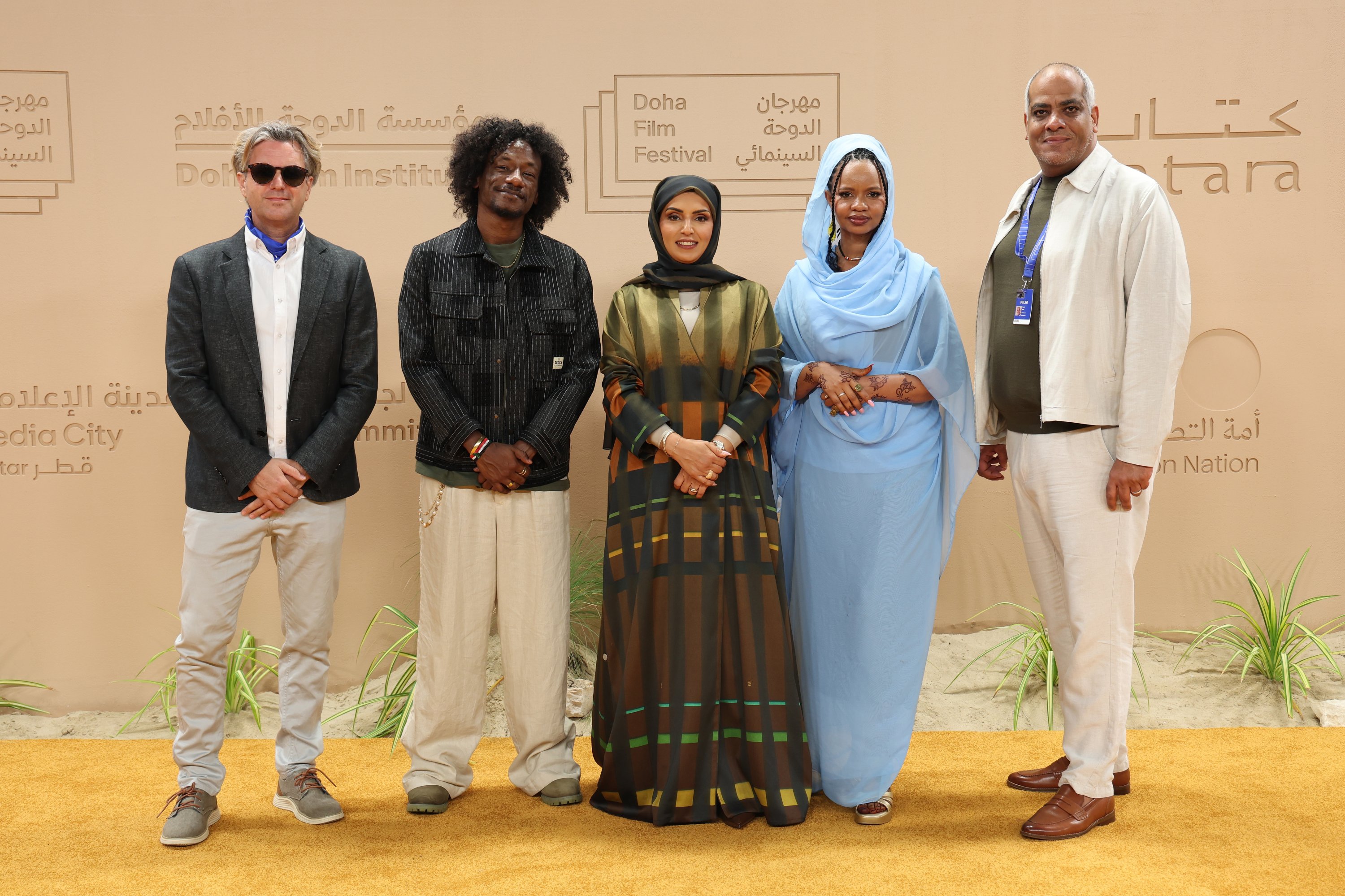
This year saw the Doha Film Institute celebrate its 15th year, expanding its November film festival, Ajyal, to the Doha Film Festival. The festival continued to showcase films from the region and further afield, with films with Palestinian themes being center stage.
The opening film of the festival was "The Voice of Hind Rajab." Hind’s mother, Wissam Hamada, was present at the screening and addressed the audience. The film, which takes place in the Red Crescent Call Center in Ramallah, features the real voices of Hind Rajab and the center's staff – a dramatic feat choreographed to perfection by Kaouther ben Hania. The film received the Best Feature award from the Ajyal jury members.
Doha Film Festival’s inaugural Best Performance Award went to Majd Eid and Nader Abd Alhay together, for portraying the duo of small-time drug dealers in "Once Upon a Time in Gaza." The film is a noir of the best kind, and in the second half turns into something even more playful and profound, as one part of the duo goes on to take part in the production of a film that depicts filming conditions in Gaza. Apart from its genius script, the film serves as a historical record of how films continued to come out of Gaza even during the genocide. Another Gaza film that won a DFF award was Kamal Al Jafari’s "With Hasan in Gaza," receiving the Best Artistic Achievement award.
The best documentary award went to one of my favorites, "My Father and Qaddafi" by Jihan, depicting the filmmaker’s quest to find out how Moammar Gadhafi’s regime made her father disappear. One must be a certain age to be touched by this film the way I have been touched – both by the format and the content. It is a collage of grainy home videos, TV programs and contemporary interviews with Jihan’s family, her father’s friends and foes. Both the home videos and the news items feel extremely familiar: the news bulletins, and of course, Gadhafi’s face. I remember as a child being aware of his presence, this Muslim leader who seemed to have a lot of money and power and sat at all the tables where no Muslim could.
And this is precisely the story that Jihan is telling: This man who got drunk on power and lost his allies, among them her father Mansur Rashid Kikhia, once Gadhafi’s foreign minister and then the head of the opposition. The film chronicles Jihan’s father’s disappearance, her mother’s quest to find him, and Jihan picking up the threads once again to paint a personal picture of her dad. The documentary is a very good primer for the postcolonial liberation of the Arab world and has important historical reminders, such as how Hitler had taken notes from Mussolini’s massacres in Libya on how to exterminate people en masse.
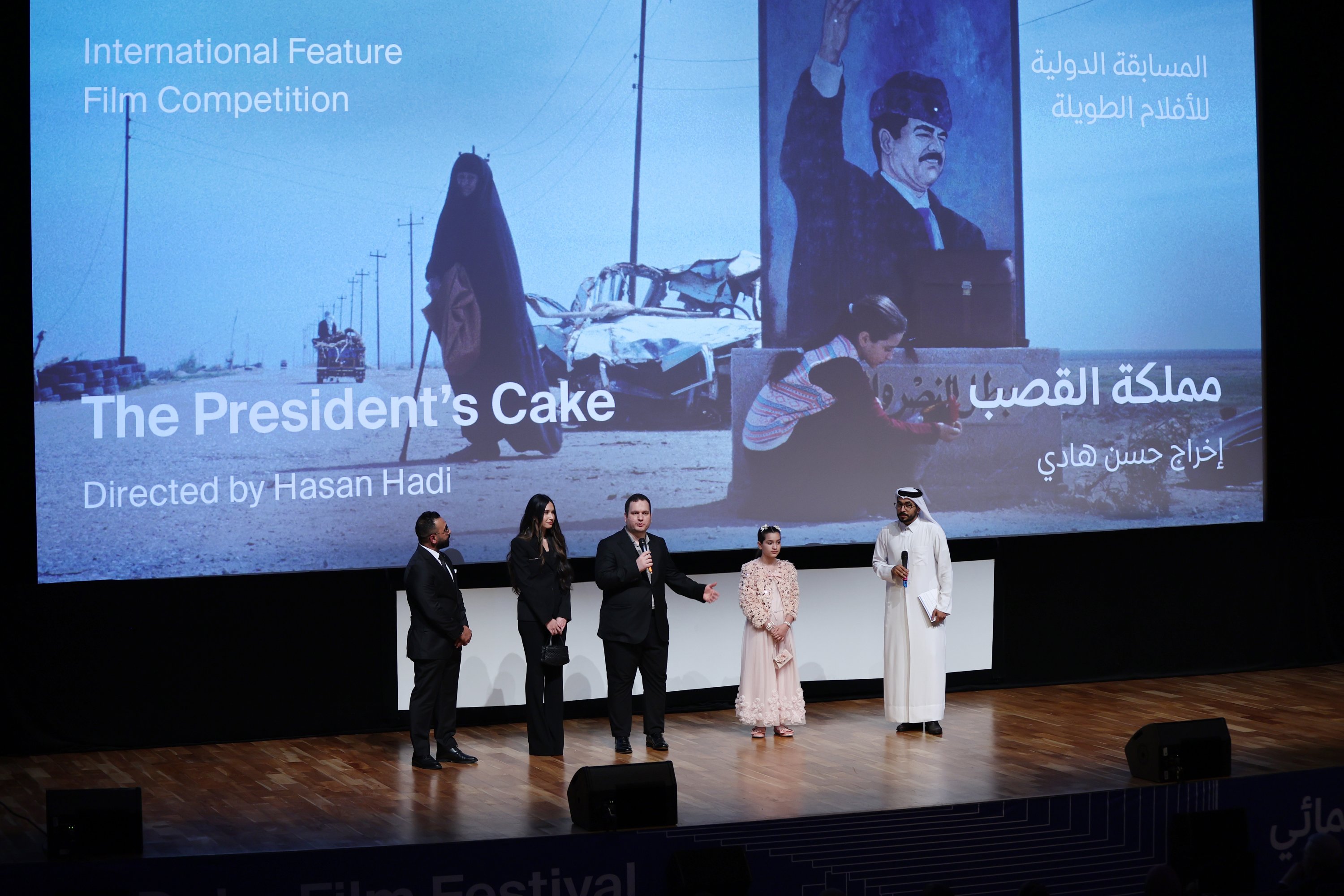
Another film that treads similar ground was "The President’s Cake," about another Arab leader who promised much and then started to prey upon his own people. The film tells the story of how all classrooms in Iraq had to throw a party, complete with cakes and drinks, on Saddam Hussein’s birthday. It was a definite favorite with the journalists I spoke to. Although it garnered no awards at Doha, it is sure to do well in further festivals, as it did at the Boğaziçi Film Festival.
The selection also included Ali Asgari’s "Divine Comedy," a black comedy gem that also won the hearts of many viewers I spoke to. The film tells the story of Bahram, a Turkish-speaking filmmaker who, having already had many accolades abroad, is trying to have his film shown in Iran too. Reliable sources tell me the issue of Turkish as a second native language in Iran is a theme that is already explored often in Iranian cinema, but in "Divine Comedy," it completely dominates the first 20 minutes, with Bahram trying to convince authorities that one can make films in Turkish and the authorities pushing back gently but firmly.
It is a big departure from Asgari’s first film, "Disappearance" (2017), which chronicled a young couple’s odyssey to find a hospital for a girl having a miscarriage, the female lead again played by the lovely Sadaf Asgari. The other very welcome departure in the film is that, rather than the claustrophobic space of the car, Asgari uses a motorcycle for the couple’s wanderings around town. This seemingly light comedy also manages to pack in lots of politics, with the Syrian war always at the edge of the characters’ consciousness, and in fact, the film ends with – no spoilers here – all the characters sitting down to watch a news item about the fall of Bashar Assad.
The other highlight and triumph of the festival was Suzannah Mirghani’s "Cotton Queen," which won the Audience Award. Mirghani is a proud product of the Doha Film Institute and its Qumra program. The audiences in Doha embraced the film, with the screenings turning into a celebration of Sudanese culture with chants and dances. The film tells the story of a Sudanese village that has made its living from cotton for generations, and how older generations sometimes fail and sometimes manage to pass on past trauma.
The DFI has long been a supporter of Sudanese cinema and has supported such gems like Amjad Abu Alala’s "You Will Die at Twenty" (2019) and Hind Meddeb’s "Sudan Remember Us" (2025). Similar to Meddeb’s documentary film, which depicted the popular protests in Khartoum, this year’s "Khartoum" covers the same ground, but this time with people of Khartoum who have made it elsewhere to tell their stories. It is a collective work with directors Anas Saeed, Rawia Alhag, Ibrahim Snoopy Ahmad, Timeea Mohamed Ahmed and Philip Cox. Survivors of the conflict are brought together in a studio and roleplay themselves and the people in other survivors’ stories to try to paint a picture of what happened to their beloved city.
Making the "enactment" the central conceit of documentary and fiction seems to have been one of the themes of this year’s festival and signals a trend in the wider film community, of looking for other forms of narrative that will jolt the news and information weary viewer out of their complacency.