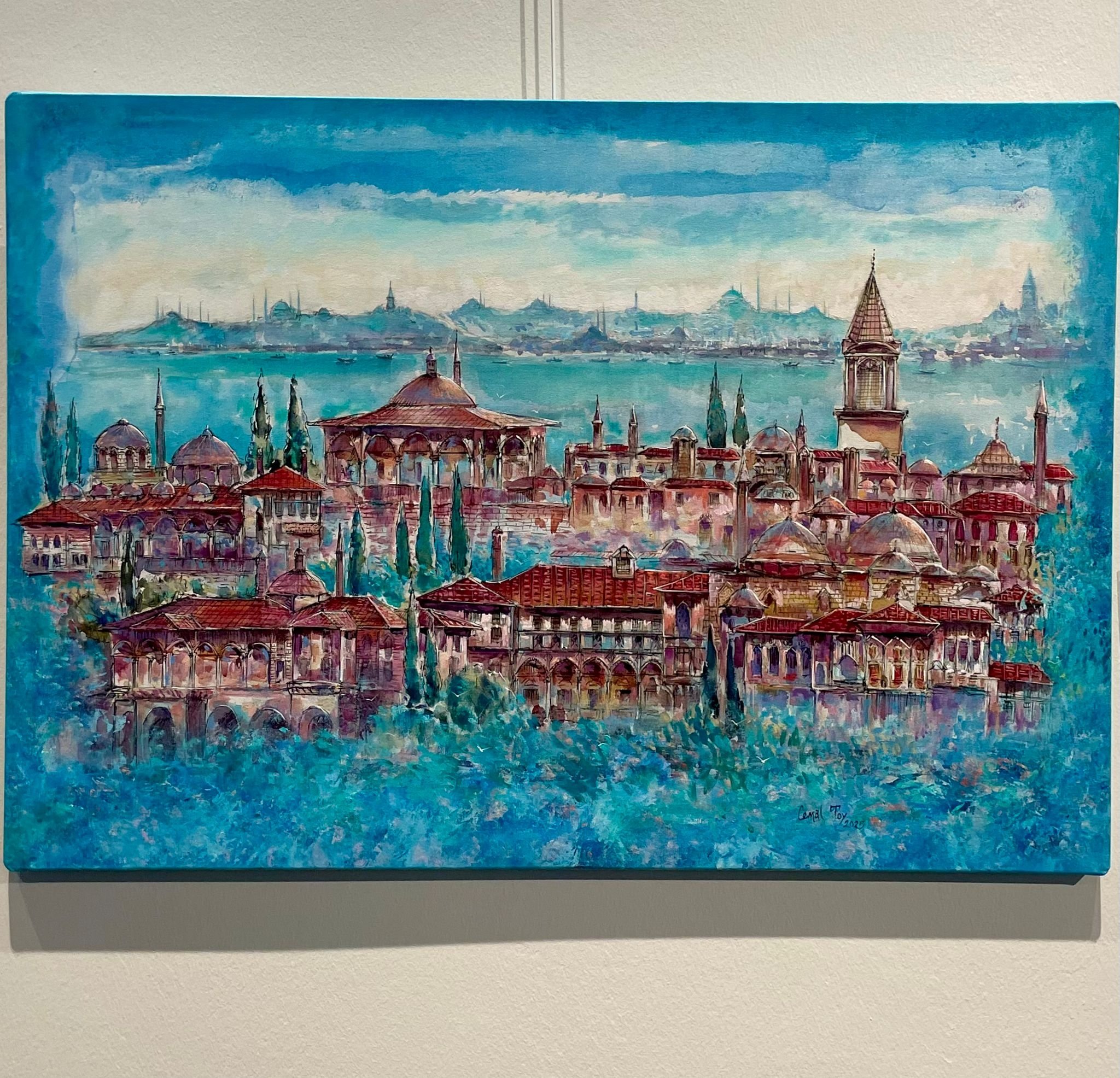
On Aug. 23, Cemal Toy's exhibition “Kalp Hizası” ("At Heart Level") began in the Atatürk Cultural Center (AKM). The exhibition opened with speeches by Fatih Mayor Ergün Turan, Atatürk Cultural Center Art Director Remzi Buharalı, painter Cemal Toy and his teacher, painter Ilhami Atalay.
At the end of his speech, Ilhami Atalay once again demonstrated his witty side with the words, “Today, we have Matrakçı Cemal, the painter of mysterious cities, just like Matrakçı Nasuh.” This sentence actually summarizes Toy’s artistic journey: a pictorial language based on historical tradition but rebuilt with the emotions of his own era.
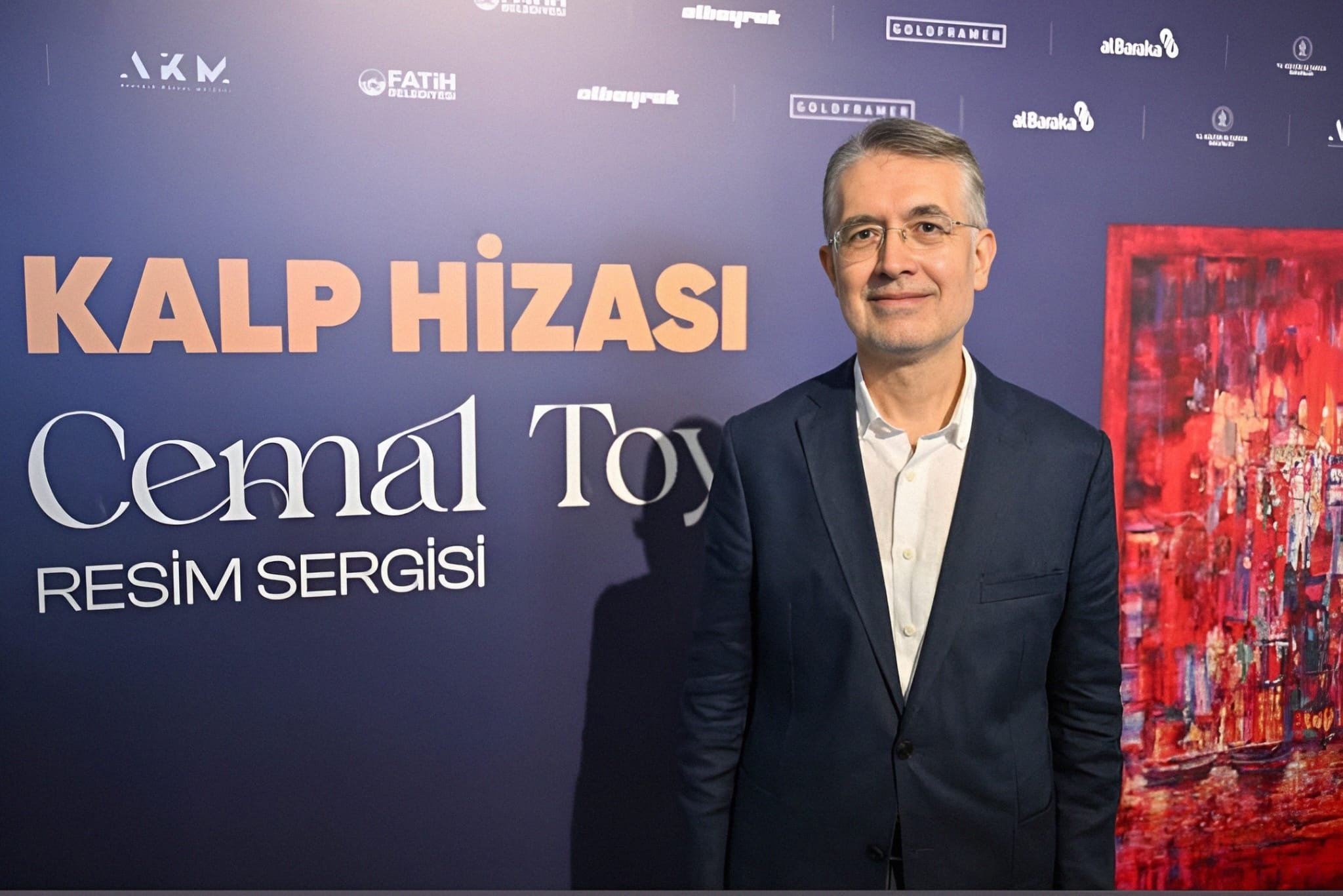
The roots of this journey lie in Toy's deep respect for his teacher Ilhami Atalay, whom he assisted until 1997 during his youth. What he learned from Atalay was not only painting, but also the tradition of the atelier, respect for the student and humility in art. Toy has never forgotten this legacy; he still expresses his gratitude to his teacher today.
Not only Atalay but also Devrim Erbil is one of his biggest sources of inspiration. Toy, who blends the knowledge he gained from these two masters with his own unique language, brings together artworks from different periods in “Heart Level.” Series such as “Every City Looks at Him,” “Istanbul Panorama,” “Infinite Cities,” “Water and Fire” and “Timeless Colors” reveal the diversity of his work and the story behind each painting.
There is always harmony in Cemal Toy's paintings, sometimes captured through the story created by the figures, sometimes through the use of color. The artist describes his works with the following words:
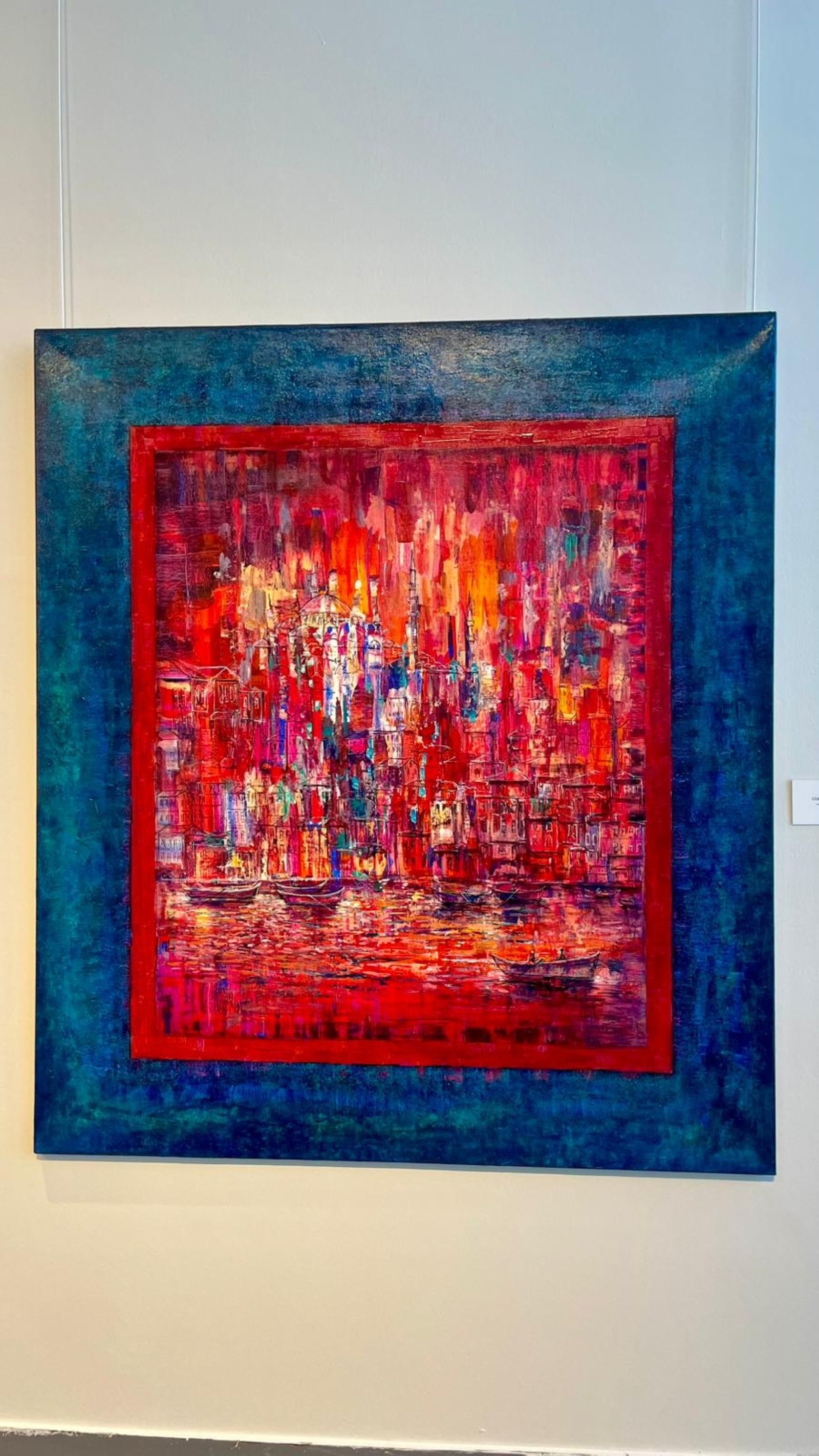
"In my paintings, I try to capture the four colors of Istanbul. For example, once I thought, ‘What if Istanbul were inside an emerald?’ In this sense, I have paintings titled ‘Emerald Cities Istanbul.’ There is a color I call 'Istanbul Red.' There are colors used in the Ottoman and Byzantine palaces, purple and red. There are also artworks related to this in the exhibition. ‘Istanbul Symphony’ is a work that captures rhythms like music. It is also very interesting. At the same time, there are paintings in turquoise and blue tones. There is also a beautiful selection in sepia tones in the exhibition."
His paintings are not only a visual experience, but also like music composed with colors. Istanbul is divided into rhythms on the canvas; sometimes a symphony, sometimes a ney improvisation and sometimes you can almost hear flamenco through the magenta of “Granada Roses.”
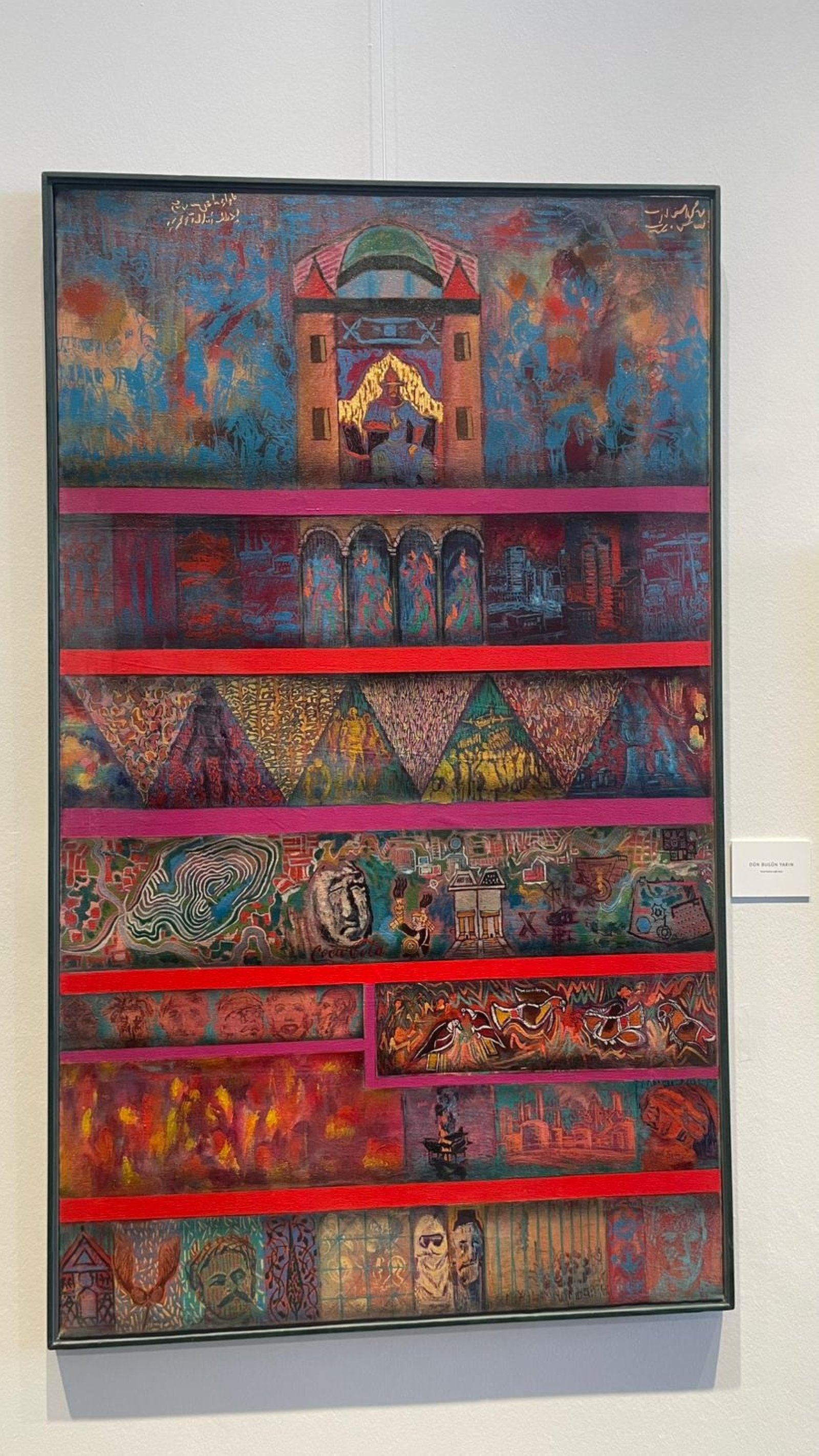
In the exhibition, you encounter the journey of humanity in Cemal Toy's early paintings. From the symbols of cultures on the verge of extinction to the shadows of the industrial revolution and the objects of worship in the modern world, many images have been transferred to the canvas with a wise gaze.
His early works, such as “Out of Time,” “Drifting,” “Yesterday, Today, Tomorrow,” “The Cave Walls of Humanity,” and “The Visible and the Invisible,” take you on a trip through humanity's inner journey, lost values, changing faces, tastes, and ways of life. Everyone who gazes at the paintings unconsciously enters this adventure without needing an explanation and feels the need to find a meaning. Unlike many works of art that we view today without being able to make sense of them, in Toy's works, you search for the truth like an archaeologist, and the pleasure of these mental movements makes the works even more appealing.
Today, on the opposite walls of the same exhibition, we see calmer versions of these paintings: views of Istanbul. Toy's brush has left behind the intense thematic burdens of the past and turned to a simpler but much deeper narrative of Istanbul. Thus, the viewer sees not only the landscape of a city but also a summary of recent history.
A successful installation in the middle of the exhibition space recreates the atelier environment where the teacher brought together his memories and his first students. Shelves, watercolor pieces, oil painting practices, and backgrounds prepared on canvas line the walls. His former students say that when they enter this environment, they feel like they are in a nostalgic time tunnel. Those seeing it for the first time say that this studio environment awakens the inclination toward art within them.
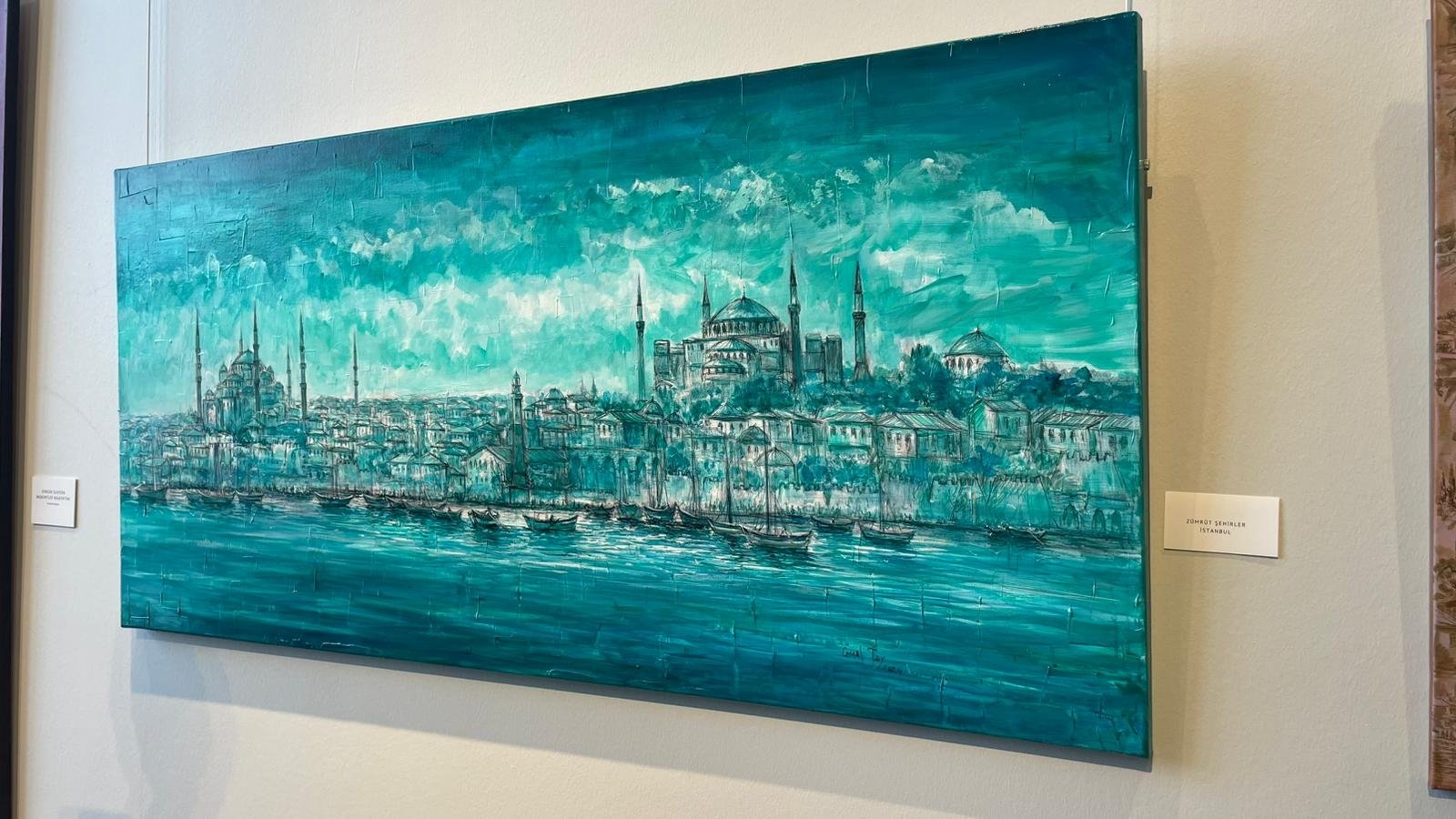
The traces of space are very strong in Toy's art. In particular, the location of his old atelier in Küçük Ayasofya has inspired collections such as “Every City Looks at Him,” “Infinite Cities” and “Istanbul Panorama.” Apparently, the windows opening from the atelier have transferred Istanbul to his canvas layer by layer.
In 1998, he unveiled the first piece in his series entitled “Everything Looks at Him.” The piece begins with a square or a dot in the center. It continues to expand in layers around this center. The cubic form representing the Kaaba, surrounded by cities growing layer upon layer, speaks silently to all the people of the world. It embodies a common truth and the idea of “tawhid” (unity) through a concrete square form. Later, patterns were added to this abstract form using the patchwork technique. In the later pieces of the series, we see paintings featuring figures such as Hagia Sophia Grand Mosque, the Tower of Justice, minarets and domes.
It is clear that the artist's style draws on both traditional and modern sources, and perhaps this is why we feel a sense of familiarity. He blends Matrakçı Nasuh's detailed view of city maps with Paul Klee's rhythmic abstractions and Matisse's bold use of color. The result is neither a completely traditional nor a completely modern language: it is striking yet serene in its own way. When you look at his paintings, emotions flow from the heart to the mind at times and from the mind to the heart at other times. The connection established between the viewer and the artwork justifies the title of the exhibition.
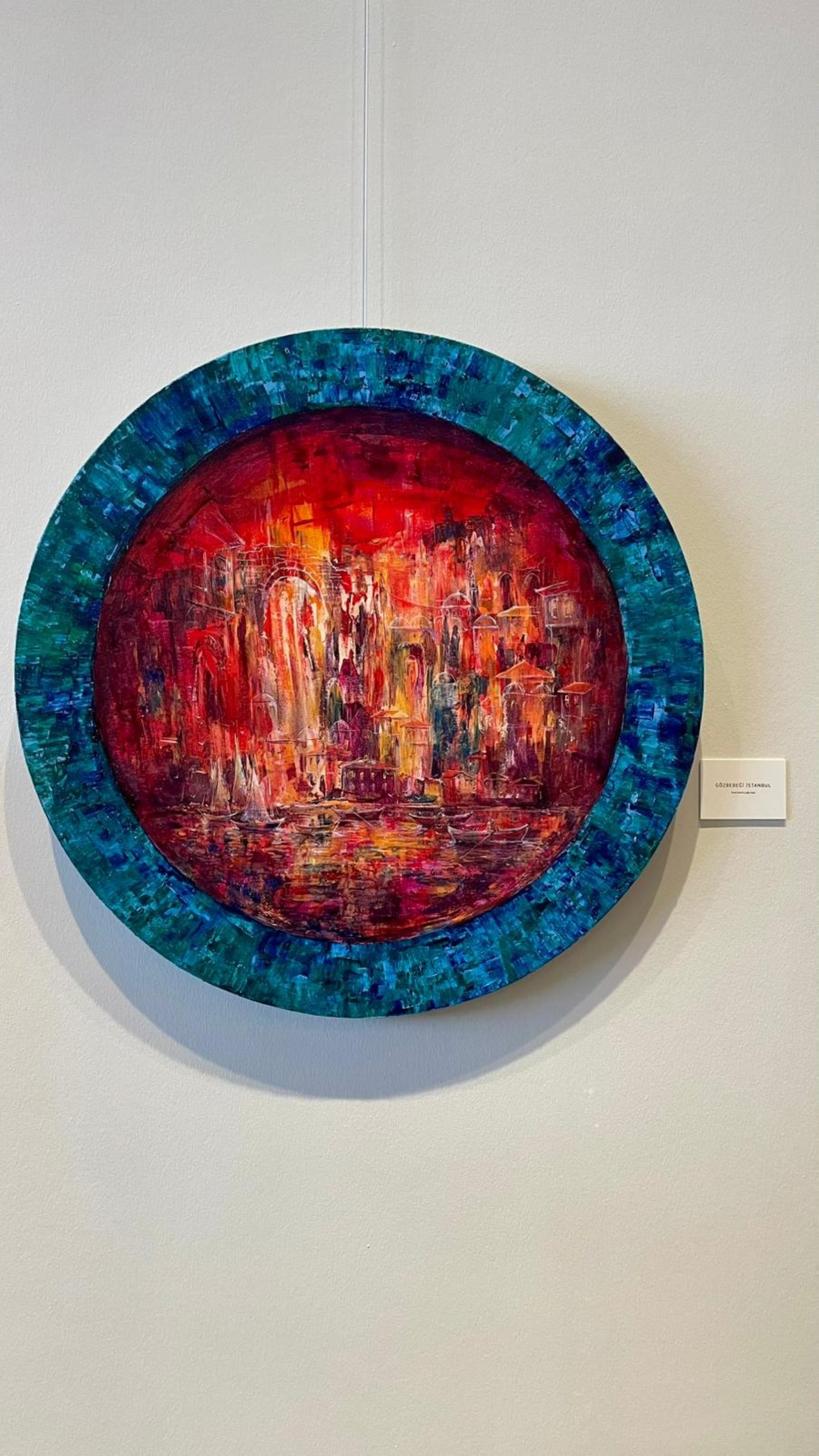
Cemal Toy's greatest mastery lies in his ability to reconstruct Istanbul through abstraction. Silhouettes, domes, minarets, clock towers and bathhouses become forms and rhythms, leaving behind the spirit of the city. But one of the reasons he is special is that he generously shares this technique with his students without keeping it to himself. In his atelier, he shows the paths of art, not its secrets. He teaches the technique but leaves the art free. Because he knows that art is born only through freedom. In the atelier, there is a transfer from heart to heart and then to the canvas. Enthusiasm and serenity coexist.
Cemal Toy's most elegant side actually emerges in his relationship with children. He approaches them not as little people, but as grown-ups. This attitude, knowing how to learn from children and teaching them only technique, sums up his wise teaching. His mastery of transferring the child's pure emotion to the painting is one of the most sincere layers of his art.
“Heart Level” is not only an aesthetic journey but also a call for social responsibility. A portion of the proceeds from the artworks in the exhibition will be donated to individuals in Gaza who need prosthetics. The artist, who has previously been involved in many initiatives as part of the “Accessible Gaza” project, demonstrates that he uses his art as a healing tool that touches the wounds of life.
For me, this exhibition is a kind of testimony as both a student of Cemal Toy and a culture and art writer. The sincere connection he establishes with visitors and his humble personality serve as a powerful example for young people aspiring to become artists. When looking at Cemal Toy's paintings, you will notice that an abstract connection has been established between the canvas and the heart through the brush held at heart level, which is why the choice of name for the exhibition is also quite meaningful. Curated by Betül Tekiner and with installation work by Furkan Türkyılmaz, this exhibition will continue at the Atatürk Cultural Center until Sept. 7. Additionally, the inclusion of previously unseen pieces from private collections in this selection is highly valuable. My advice to visitors is: do not merely look at the paintings. Spend a little more time with them, capture the subtleties in the details, because those paintings are truly completed and defined at heart level.