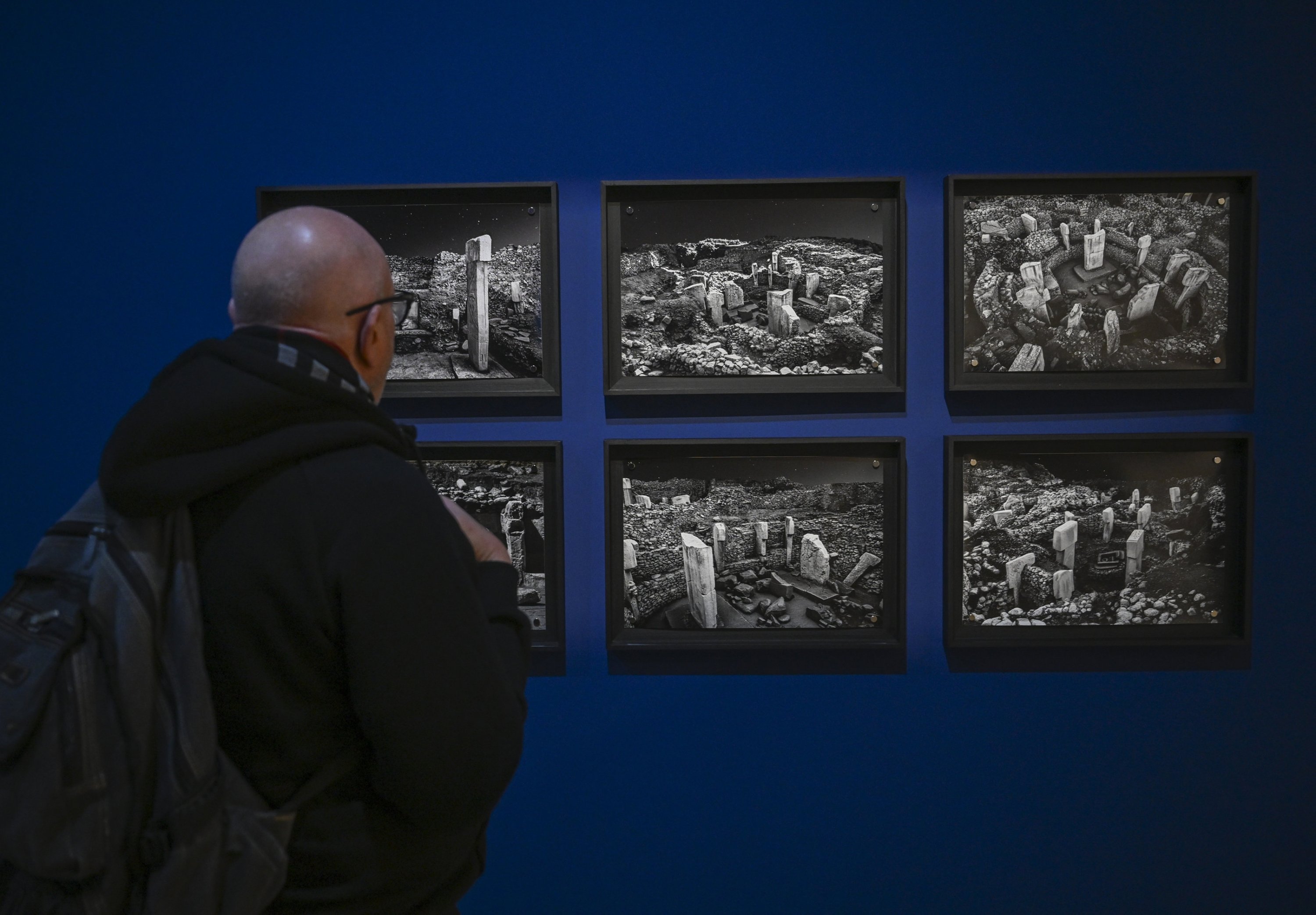
Göbeklitepe, the world’s oldest known settlement and a UNESCO World Heritage site, along with the surrounding "Taş Tepeler" (“Stone Hills”) region, will be showcased in a major German exhibition featuring 93 select artifacts.
The exhibition, titled “Building Community: Göbeklitepe, Taş Tepeler and Life 12,000 Years Ago,” is organized by the Museum of the Ancient Near East on Museum Island, in cooperation with the Istanbul German Archaeological Institute and Türkiye’s Ministry of Culture and Tourism. It will run from Feb. 6 to July 19, 2026.
The show includes archaeological items brought from Türkiye that have never before been displayed abroad. The official opening will be attended by Culture and Tourism Minister Mehmet Nuri Ersoy and German Culture Minister Wolfram Weimer.
Professor Necmi Karul, coordinator of the Stone Hills Research Group, said the Berlin exhibition has two key elements. “We have more than 100 years of collaborative archaeological work in Türkiye with German archaeologists. That relationship is one of the main reasons for holding this exhibition in Berlin,” he said.
Karul noted that the “Stone Hills” project, launched in 2021, revealed that Göbeklitepe is not an isolated site and that the story goes beyond what was previously known. Archaeological excavations are ongoing at 10 sites in Şanlıurfa, southeastern Türkiye, carried out by multinational teams spanning 36 academic institutions from China to Germany. “It’s a project that reshapes how we view the past and renews our understanding of the beginnings of settled life and food production,” he said.
Nearly 100 original artifacts from the Stone Hills will be displayed in Berlin for the first time, accompanied by items and replicas previously held in Germany. Organized into eight thematic sections, the exhibition seeks to share these insights with the public.
Karul noted strong interest from German media and said similar exhibitions are planned in other cultural capitals. “I personally believe this exhibition will be a wonderful way for Turkish citizens living here to feel connected to their heritage,” he said.
Barbara Helwing, director of the Museum of the Ancient Near East (Vorderasiatisches Museum), expressed her delight at hosting the exhibition in Berlin. She highlighted that around 30 sites similar to Göbeklitepe have been discovered in the region, which she said makes Göbeklitepe even more comprehensible and impressive.
“This is the first time original artifacts of this scale are displayed in Berlin,” Helwing said. She emphasized that the pieces illuminate daily life during that period.
Helwing, who studied as a student during the Nevali Çori excavations led by Harald Hauptmann and Klaus Schmidt in 1988-1989, described the exhibition as personally and professionally meaningful. She noted that the visuals and artifacts allow visitors to experience the life world of these ancient communities directly, evoking an emotional impact similar to that of Paleolithic cave paintings in Europe and Indonesia.
The exhibition, organized into eight sections, presents the artistic expressions of early settled communities across various aspects of life, from birth and daily activities to death. Visitors can also view photographs of Göbeklitepe taken by Spanish photographer Isabel Munoz.
Previously, a Göbeklitepe exhibition titled “Göbeklitepe: The Enigma of a Sacred Place” was held at the Colosseum in Rome, attracting more than 6 million visitors.