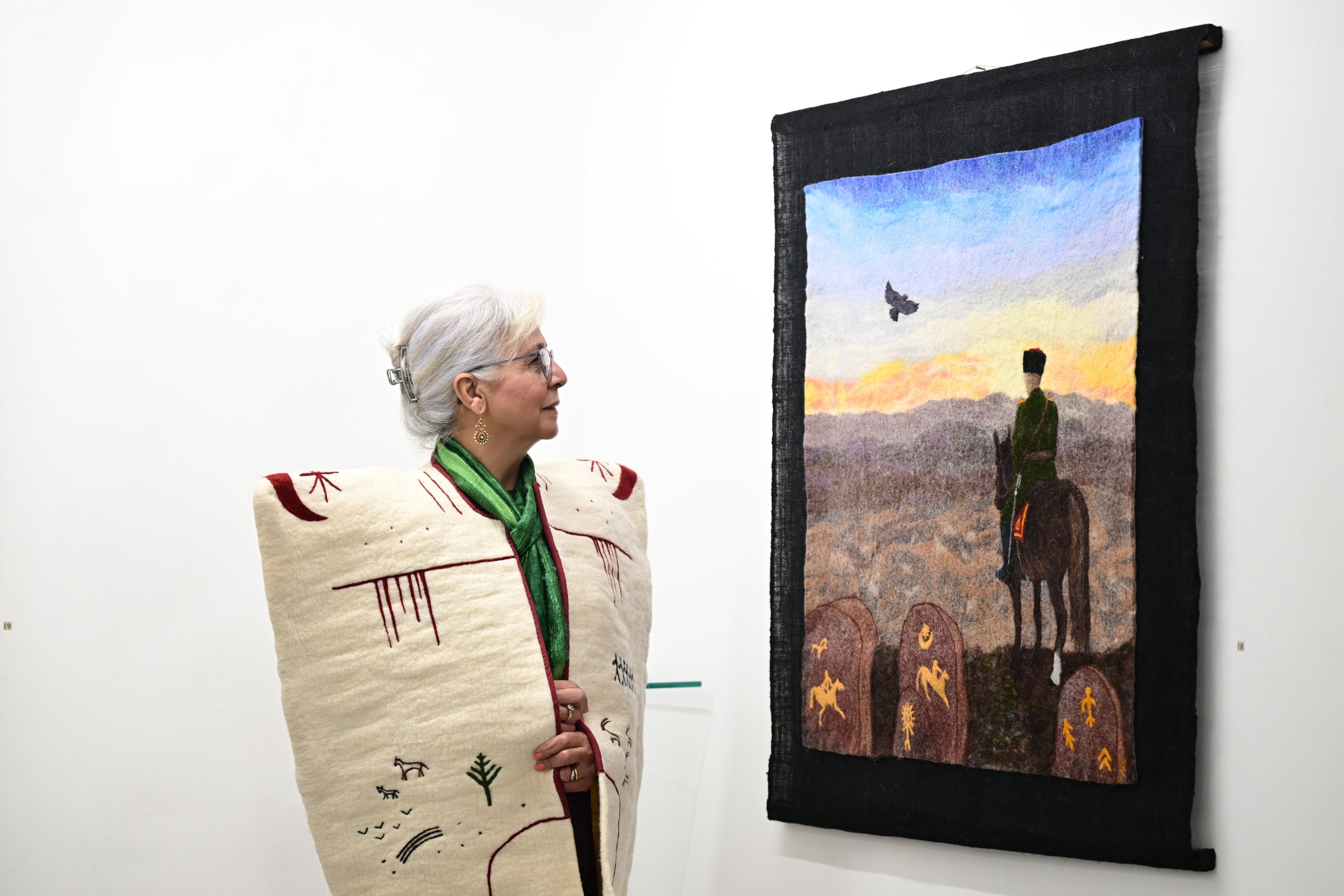
Nur Sağlamer, a felt artist recognized by the Turkish Ministry of Culture and Tourism as a bearer of intangible cultural heritage under UNESCO’s framework, is using her craft to narrate the millennia-long history of Turkish civilization, drawing inspiration from the rock paintings of proto-Turkic peoples.
In 1999, Sağlamer left her career in Istanbul and moved to a mountain village in Kumluca, Antalya. As a painter, writer and designer, she has developed a unique artistic approach she calls “unfinished stories,” working with natural materials to create her pieces.
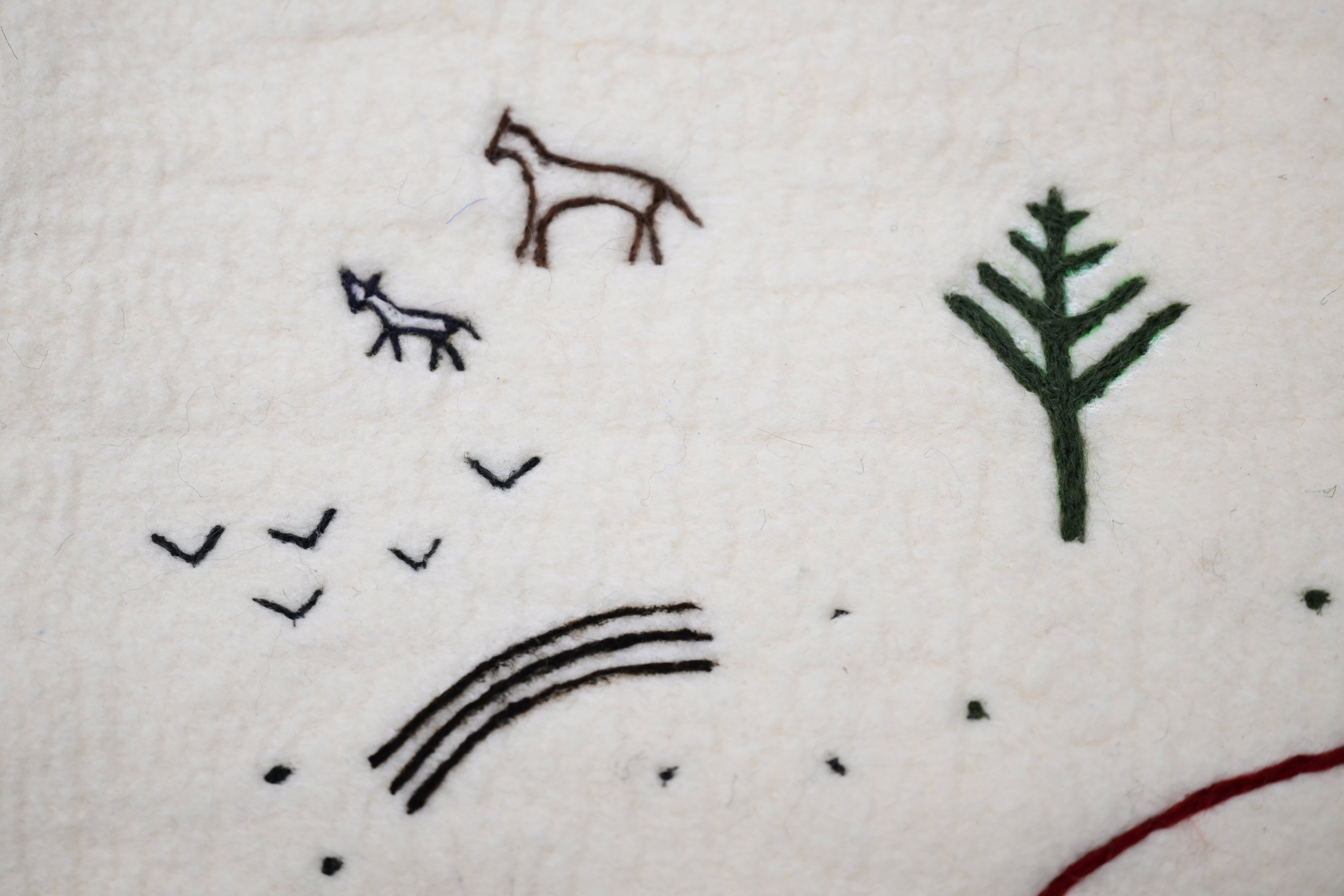
Sağlamer produces works on canvas, stone and wood, drawing inspiration from nature and mythology, and continues to explore and preserve traditional felt art, a practice deeply rooted in the nomadic cultures of Central Asia that is now at risk of disappearing.
Using rock carvings made by proto-Turkic peoples from the Altai Mountains to Anatolia as inspiration, Sağlamer spent 1.5 years creating felt artworks that portray the historical journey of Turkish civilization.
Her new exhibition, titled “Aşina” ("Familiar"), features 20 felt artworks and will open tomorrow at Galeri T in Antalya. With this exhibition, she aims both to preserve the art of felt and to draw attention to the deep history of Turkish civilization.
Speaking to Anadolu Agency (AA), Sağlamer described felt as the world’s first textile, a nature-friendly material made with the same technique since the Neolithic era, before the invention of warp or weft weaving.
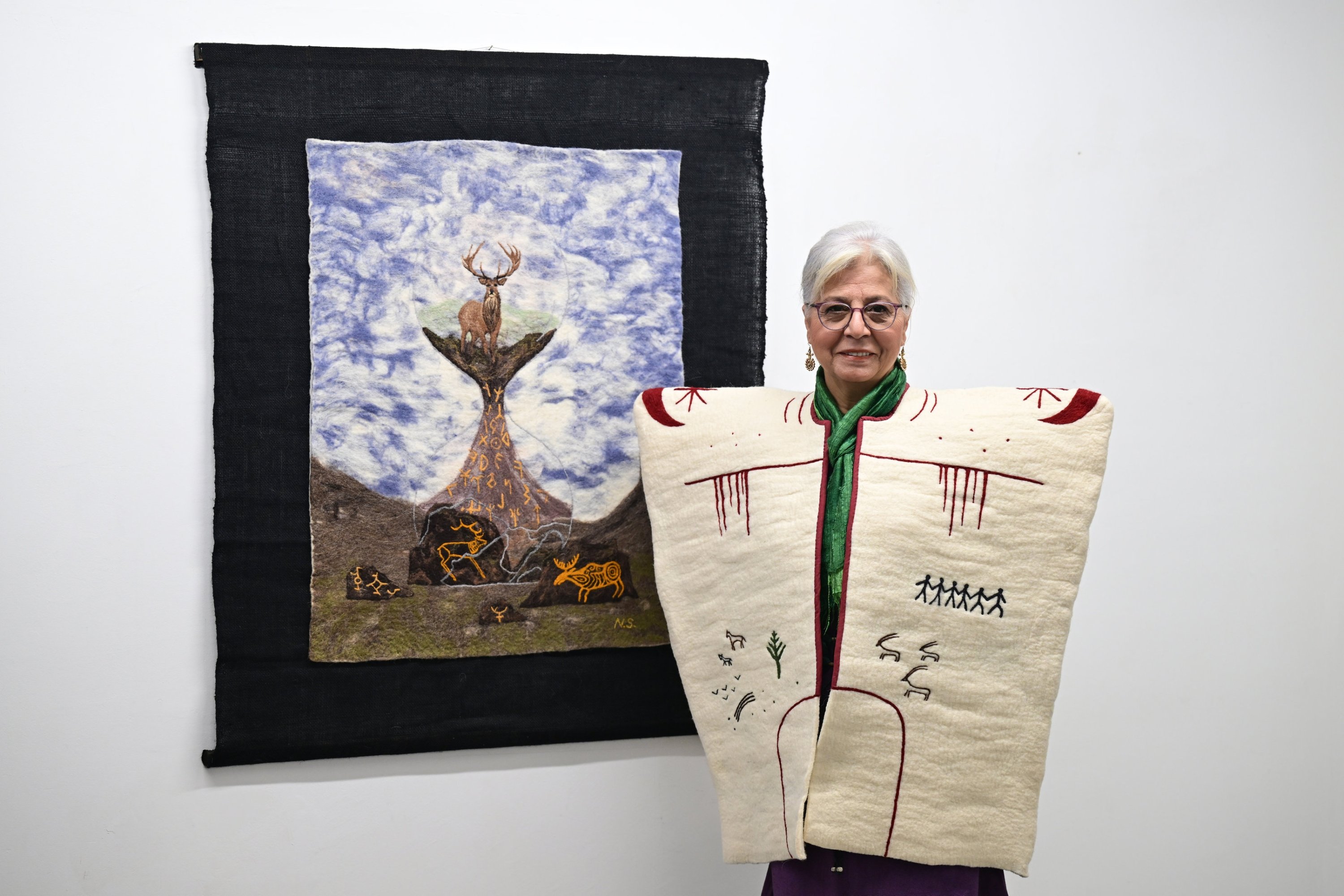
“Felt has been used in many areas, from tents and rugs to clothing and horse gear,” she said. “It’s an insulating material, even used in building insulation, with a thermos-like property. We must keep felt alive, and that’s why I dedicate so much effort to it.”
Sağlamer explained her meticulous process: first, she sketches the design, then lays out wool according to color, applies hot soapy water and uses pressure to felt the fibers together, a process that takes hours of labor.
She emphasized that her goal is to convey pre-Turkic civilization through felt, noting that the material originates from Southern Siberia, the same region where the first rock paintings appeared. This historical connection was a key reason for choosing felt for her exhibition.
Sağlamer also highlighted the significance of the symbols in rock paintings, noting that these early markings, called tamga, were precursors to an alphabet. “Turks are one of the few intellectual nations with their own alphabet, even if it’s not widely used today,” she said.
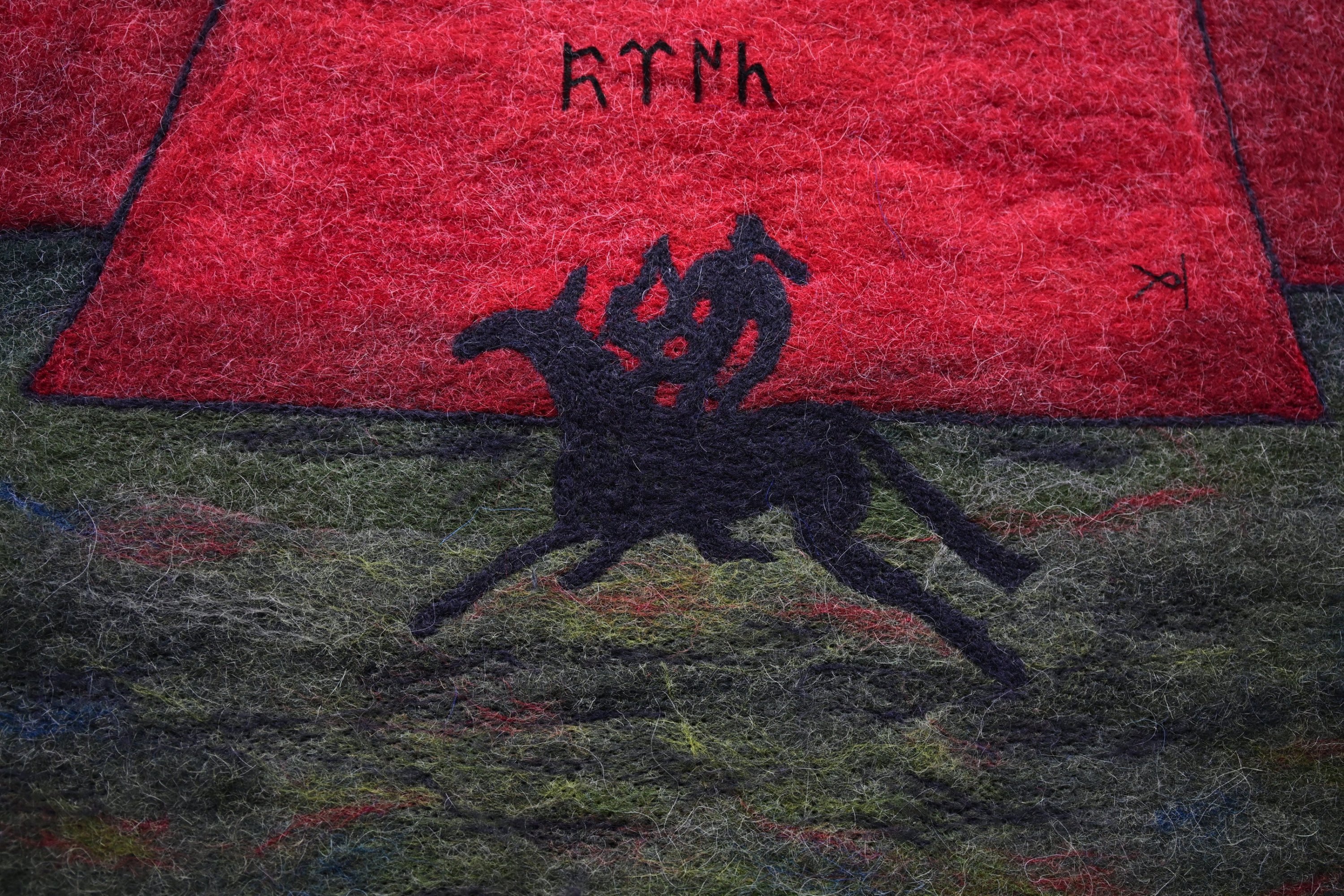
She criticized the exclusion of Turkish civilization from mainstream history textbooks: “When ancient civilizations are discussed, textbooks focus on China, Egypt, Greece, India and Mesopotamia. Turkish civilization is rarely mentioned and Turkish archaeology is often dismissed. Yet rock paintings are Turkish archaeology. If these paintings and monuments don’t constitute archaeology, what does?”
Sağlamer added that she considers it her mission to present Turkish civilization through felt art, taking her works from city to city – and even abroad – to raise awareness of this rich heritage.