A few weeks ago, I asked my hairdresser what kinds of colors people were dying their hair lately. I was simply curious. He told me that in the past, he used to receive more unique requests, but now people often come in showing him almost exactly the same photographs.
It is a common issue that we all recognize, but we still participate in it. We follow what everyone else is doing. We evolved together and once lived in caves, where becoming separated from the community meant being more exposed to danger. Perhaps that instinct has never completely disappeared. The fear of being different pushes us towards sameness, even when we claim that we want to be unique.
But at Istanbul's Sakıp Sabancı Museum, a well-known Aquarius artist – not surprisingly – reminded me of the importance of standing apart.
"Yoko Ono: Insound and Instructure," or "İçses ve İçyapı," is currently on view at the museum. Bringing together 67 works from more than 70 years of artistic production, it is the most comprehensive exhibition of Ono's work presented in Türkiye. The curatorial framework was developed by Jon Hendricks and Connor Monahan from Yoko Ono's Studio One, MUSAC Director Alvaro Rodríguez Fominaya and Sakıp Sabancı Museum Director Ahu Antmen.
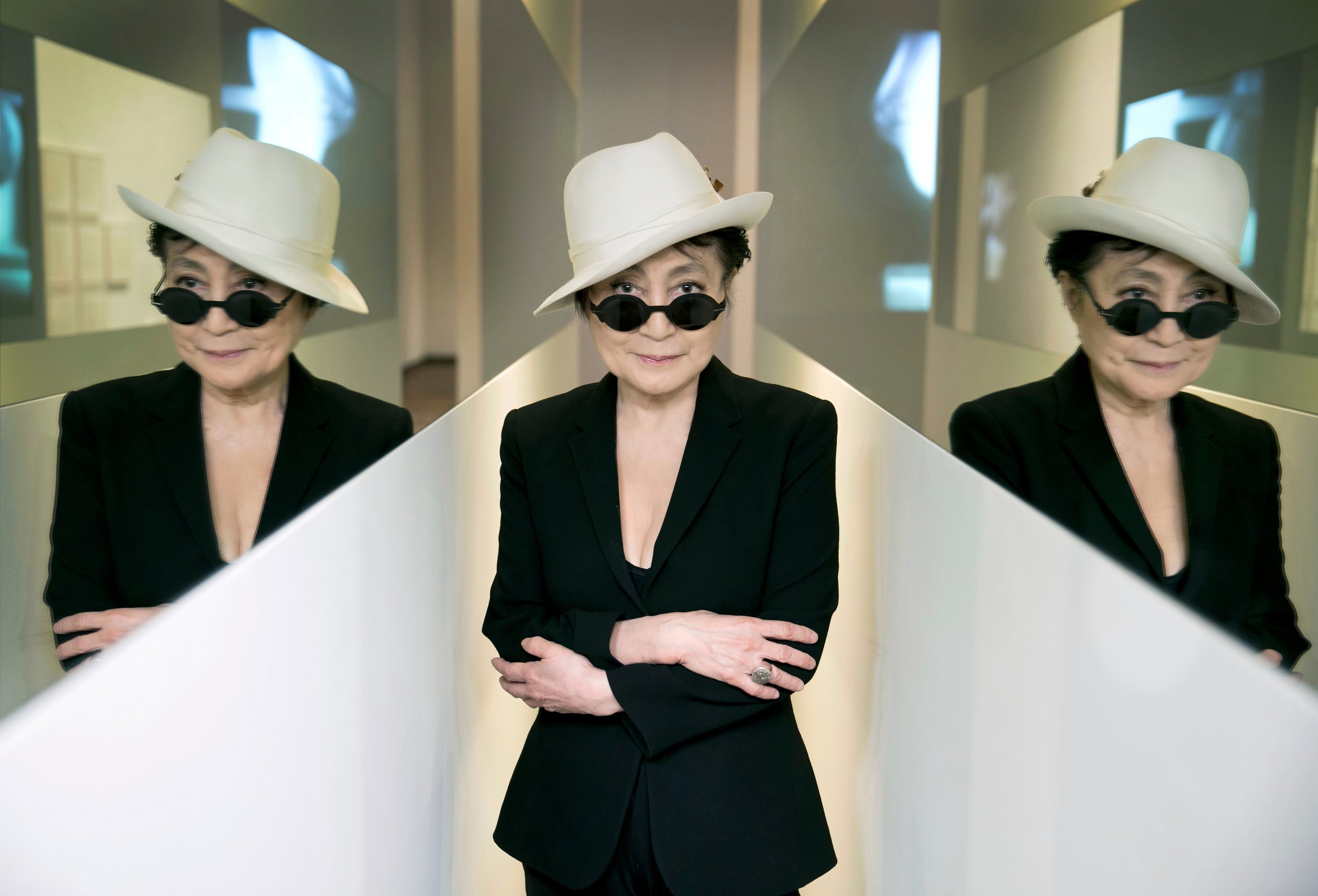
Yoko Ono is a 93-year-old Japanese multimedia artist, musician and peace activist. Popular culture still often introduces Ono through her relationship with John Lennon. Yet long before meeting him, she had already established herself within the avant-garde worlds of New York and Tokyo through performances, experimental music and instruction-based works. She was not simply adjacent to conceptual art; she helped create some of its earliest forms. Most importantly, she is unapologetically herself.
The exhibition begins in the beautiful garden of the museum, with instructions such as "DREAM," "YES," "FLY" and "IMAGINE PEACE." My friend and I stopped in front of "DREAM" and imagined our future selves together. Then we entered the exhibition hall and started following all the instructions, or at least the ones we were physically able to follow. It felt as though we had hung our adult and responsibility costumes outside.
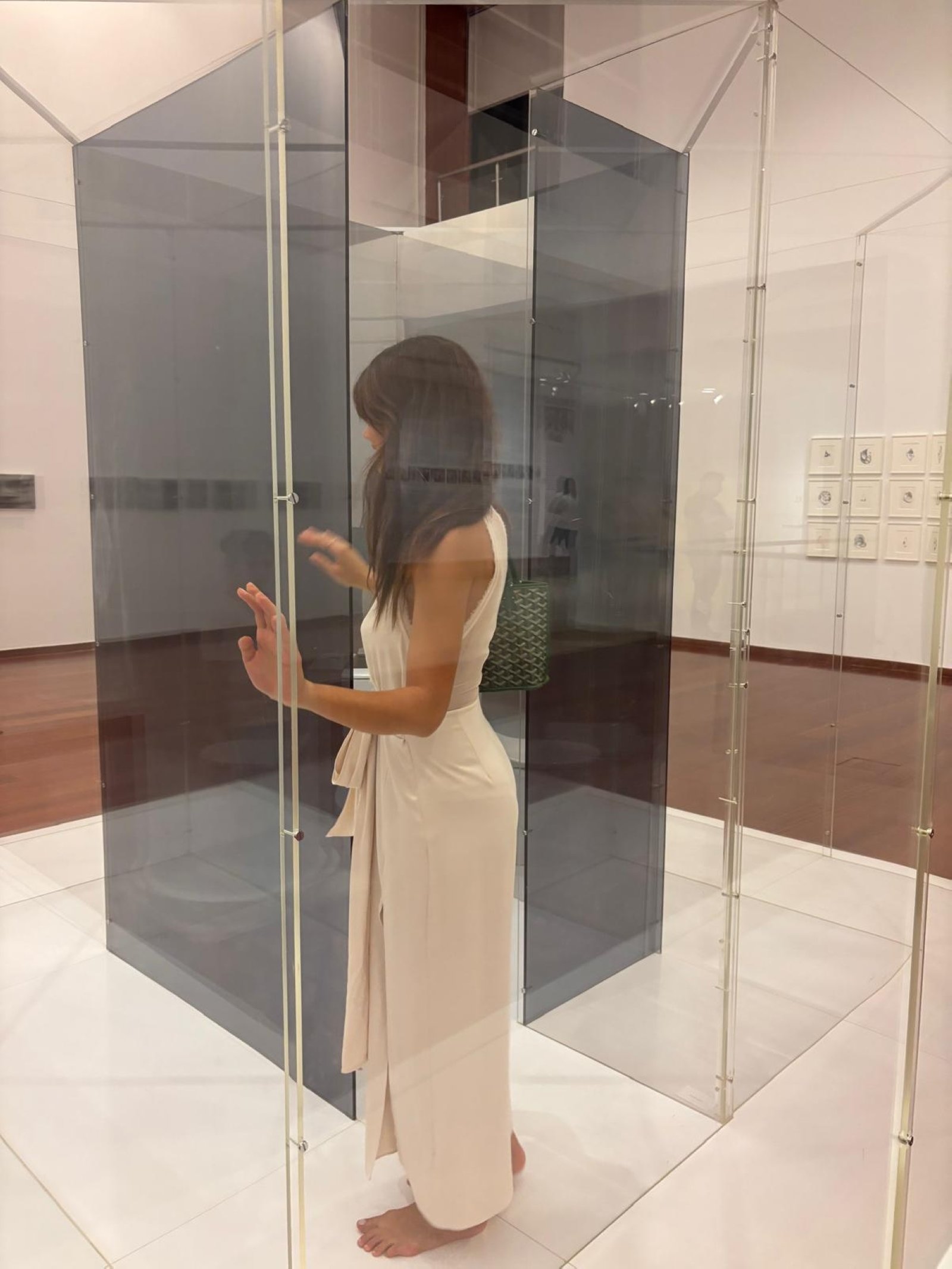
One of the artworks, "AMAZE," asks you to find a toilet at the center of a semi-transparent labyrinth. While you move through the maze towards one of the most intimate and private spaces, other visitors can still watch you through the walls. After finding the toilet, I walked over to a microphone with an instruction telling me to scream, and I did.
Basically, something that might make you appear crazy or immature if you did it only ten meters outside the museum becomes completely acceptable when it is exhibited in a prestigious institution and presented through an instruction by a highly established artist. Yoko Ono gives the audience permission to do it freely.
This is the central paradox of Ono's work: She gives you instructions to make you feel free. Normally, instructions are supposed to limit us. In Ono's work, however, they create permission. Because the action has been requested by the artist, you can scream, draw, dream or behave absurdly without the usual fear of being judged. The instruction becomes a kind of protection.
Is that not one of the greatest gifts an artist can offer the world, or even one individual: the ability to briefly forget daily life? Searching for meaning in everything is part of our existential condition. But not having to place meaning on every action, and simply enjoying absurdity, is a luxury we remember from childhood.
This is where the uniqueness of both Ono and the exhibition lies. She is a living example of how an artist can turn a philosophy into a way of life. Instead of giving the audience heavy intellectual quotations, which both she and the curatorial team could easily have done, they communicate a difficult philosophy in the easiest possible way: by allowing people to feel free.
Yes, you are technically following instructions, but you are doing so without the usual anxiety of being watched or judged. Because everybody is participating, personal freedom turns into collective joy.
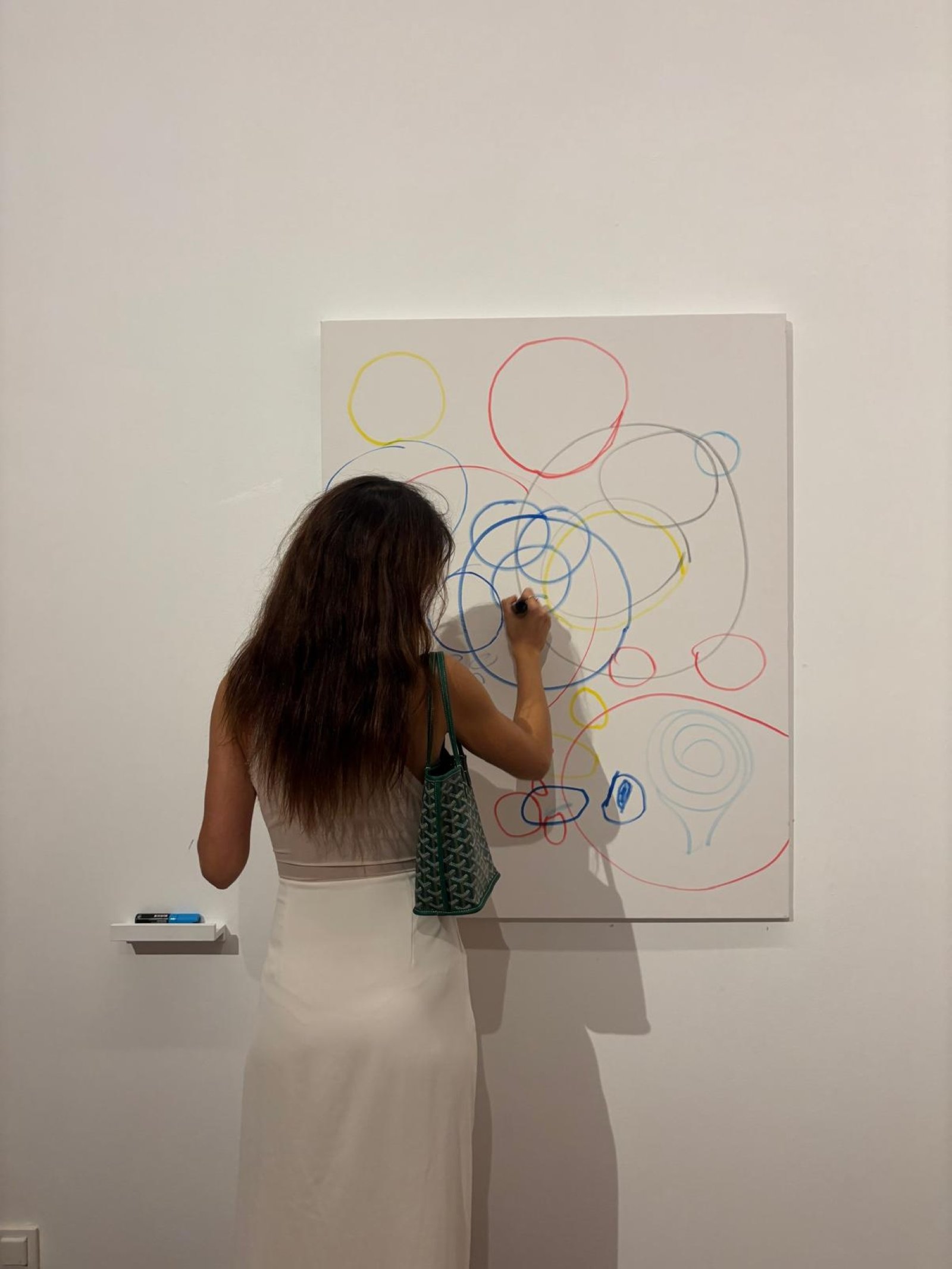
One of the works I enjoyed most was "Draw Circle Painting." I read that Ono's approach challenged the conventional expectation that the artist should complete and control the canvas. Instead, she allowed the audience to create the work. So I drew a circle. I can confirm that I am no Kandinsky, but at that moment, I was thinking about the circle, not my rent.
One of the most emotional parts of the exhibition was "My Mommy Is Beautiful," where visitors can draw their mothers or write them a message and attach it to the wall. While reading the messages, I saw how much happiness, gratitude and pain we hold in our hearts. Someone was grieving her mother. Someone else was appreciating hers. Another person was writing from a scar that had clearly not disappeared. Seeing other people's emotions makes you feel that you are not alone.
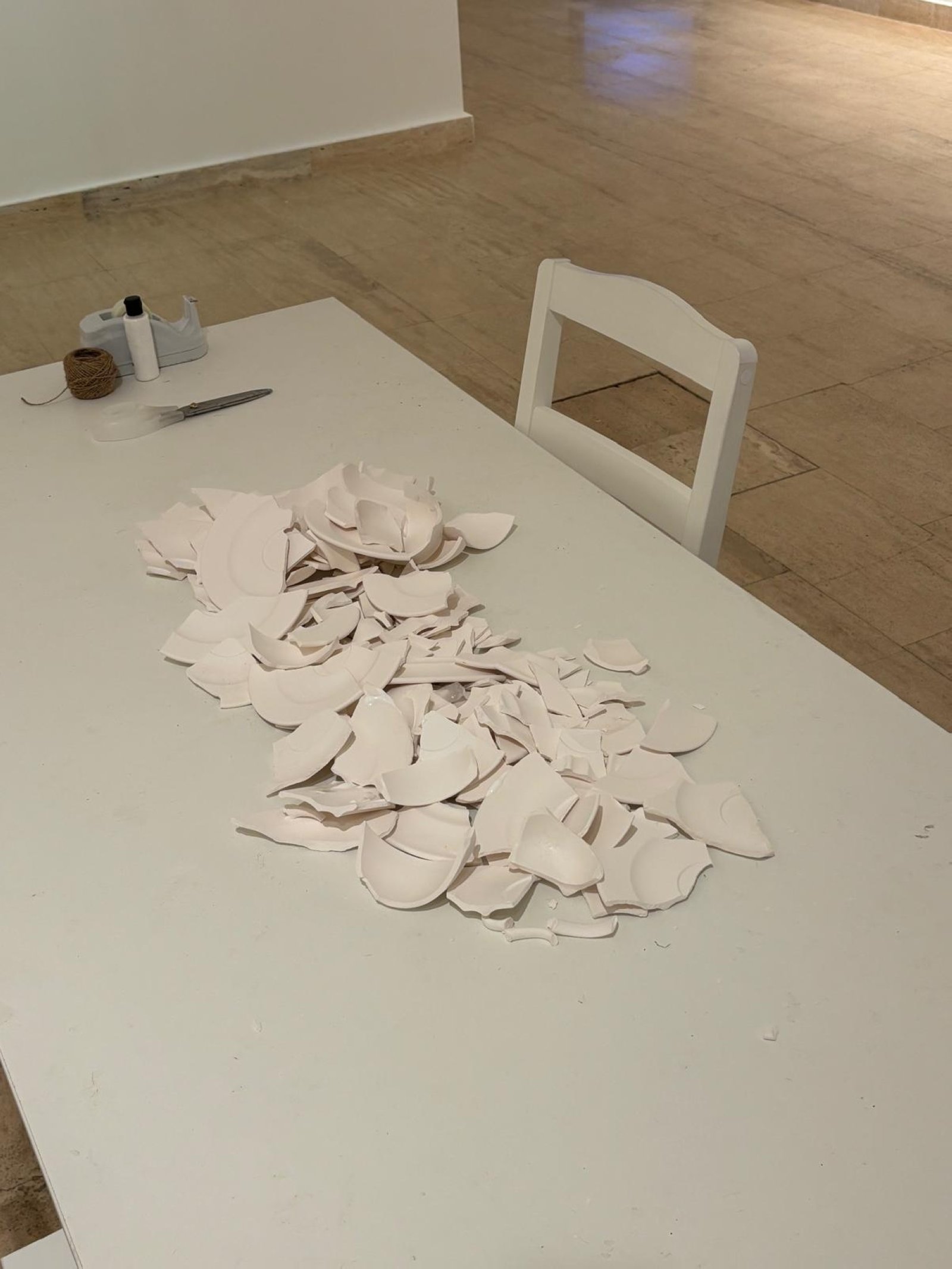
After the goosebumps, we continued walking and arrived at "Mend Piece," where visitors repair broken ceramics while imagining that they are repairing the world. My friend and I sat down with some of the children at the exhibition and tried to create cups and plates from the broken pieces. Their mother told them, "The point is not to make it perfect. The point is just to do it."
I appreciated that sentence very much.
We completed our masterpiece, although I am not sure it could still be described as a cup or a plate and placed it among the other repaired objects.
The installation and curation throughout the exhibition were extremely impressive. The works did not feel like separate objects placed inside rooms. The garden, galleries and participatory pieces created an entire environment in which different social rules seemed to apply.
We finished with "Arising," an ongoing work in which women from around the world are invited to write about experiences of violence and submit a photograph showing only their eyes. At the museum, women were quietly writing down their stories. From the way some of them were sitting and protecting the paper with their bodies, it was obvious that they were writing about something that had deeply affected them. Perhaps it was an assault. Perhaps it was another kind of violence that they had carried silently.
It was painful, but it was also empowering. The work offered them a place to release something that might otherwise remain hidden. I hope the number of these papers decreases day by day, while the number of repaired objects continues to increase.
The exhibition felt almost like therapy, not because an exhibition can replace actual therapy, but because it gives you a temporary release from the roles, anxieties and responsibilities of ordinary life.
If you are waiting for aesthetic temptation, beautiful objects or traditional visual pleasure, this may not be the right exhibition for you. But if you are expecting freedom, you should visit it. Or search for Yoko Ono's instructions online and try following one yourself. Because why not?