Arabesque is far more than a musical genre in Türkiye. It is one of the most visible expressions of the fractures produced by the country’s modernization process. What came to be defined as “arabesque,” reaching its peak between 1969 and 1999, represents a unique musical current. Yet, its roots do not lie solely in local traditions. Rather, it is deeply shaped by the musical heritage of the Middle East.
In the early years of the republic, the goal was not only to establish a new state but also to construct a new type of individual and a new cultural identity. Within this framework, music was positioned as a direct ideological tool. Western music was promoted, while elements associated with the East were systematically excluded. However, this top-down cultural engineering failed to align with the lived realities of society. Films imported via Egypt, the broadcasts of Cairo and Damascus radio stations, and the familiar tonalities of Arab music penetrated everyday life despite official bans. In this way, a suppressed cultural memory found alternative channels through which it reemerged.

The emergence of arabesque, however, cannot be explained solely through this cultural tension. The real rupture occurred with the rapid wave of internal migration beginning in the 1950s. Millions of people moving from rural areas to big cities encountered not prosperity, but exclusion, poverty and crises of belonging. The "gecekondu" (informal settlements) that emerged in urban peripheries represented a life that belonged neither to the village nor to the city. It was a condition of in-betweenness. Arabesque was born as the language of this condition as a voice for the dislocated, the disappointed, and the emotionally suppressed. For this reason, arabesque is not merely about individual heartbreak; it is an aesthetic expression of social compression, class tension and cultural displacement.
The rapid spread of this music was no coincidence. From the very beginning, the state and cultural elites adopted a dismissive and exclusionary stance toward arabesque. Broadcasting bans, criticism of its artists and its labeling as “degenerate” reflected not so much an aesthetic judgment as a class-based distinction. Yet arabesque was not imposed from above. It rose organically from the lower strata of society. As such, it could not be suppressed. The emergence of Unkapanı as a production hub, the expansion of cassette technology and even the role of informal distribution networks enabled arabesque to reach mass audiences. From minibuses to coffeehouses, workshops to gecekondu neighborhoods, it resonated everywhere, transforming from a marginal subculture into a central social current.
Still, explaining arabesque solely through Türkiye’s internal dynamics remains insufficient. Its sonic structure is deeply rooted in Middle Eastern traditions, particularly Egyptian music. Cairo radio, Egyptian cinema and the works of artists such as Umm Kulthum and Mohammed Abdel Wahab were widely consumed in Türkiye and directly influenced the melodic world of arabesque. Long and dramatic vocal lines, an intense emotional register, modal structures resembling makam, and improvisational flexibility became defining features of the genre. In this sense, arabesque is not simply a Turkish creation, but a reinterpretation of the Middle Eastern sonic memory within a new sociological context.
Like many musical forms across the world, arabesque was initially marginalized, underestimated, and stigmatized as a “low” culture. Yet over time, through the very social realities it expressed, it moved toward the center.
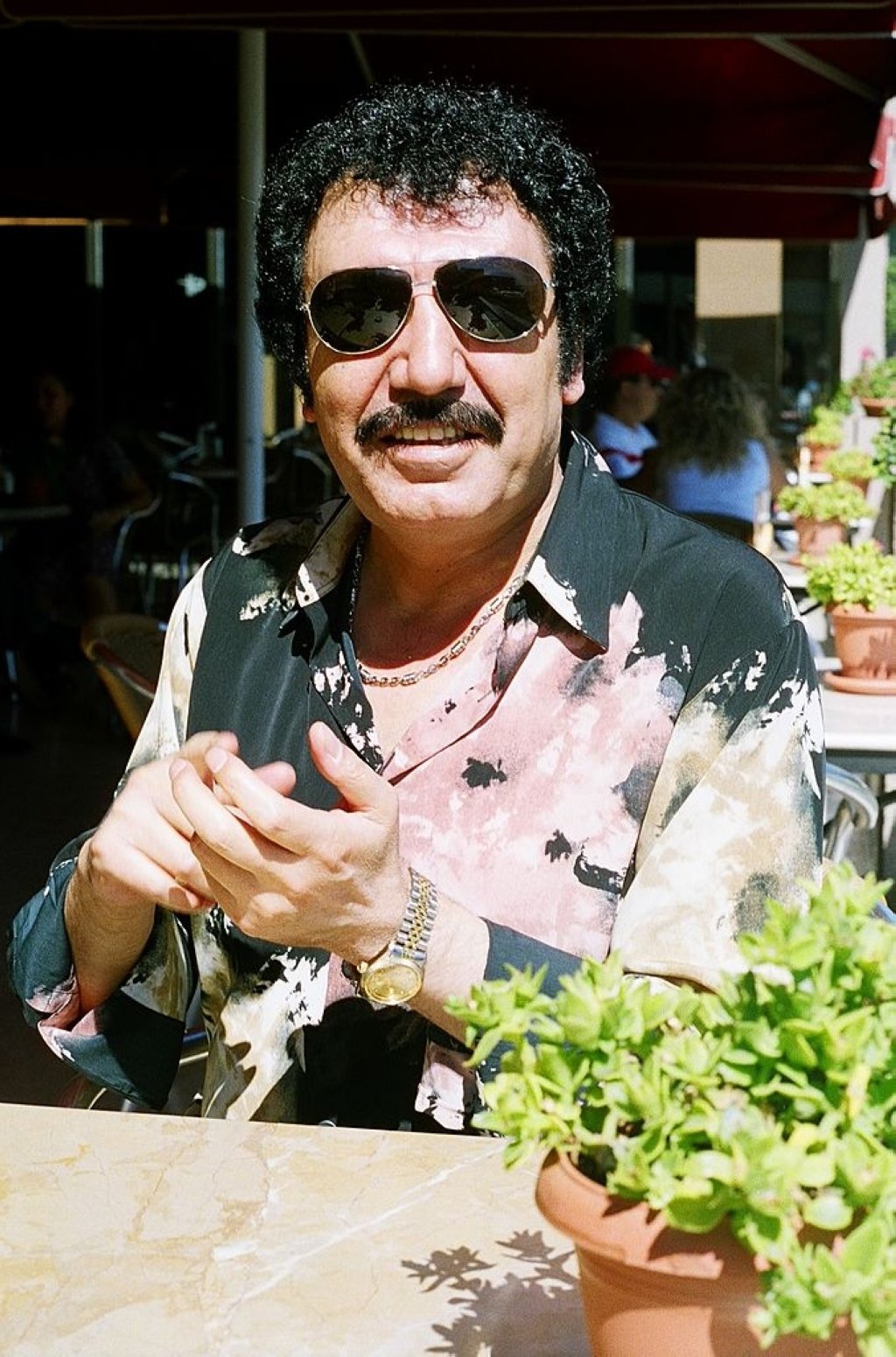
In this process of centralization, figures such as Müslüm Gürses played a decisive role. Gürses was not merely a performer; he became a symbolic embodiment of arabesque’s social resonance. His voice functioned as a bridge, carrying the pain of the margins into the center. Through him, a once-excluded genre was transformed into a widely embraced mainstream expression.
From this perspective, arabesque finds its closest parallel in blues within global music history. Just as blues emerged as the voice of post-slavery trauma, shaped by the forced displacement of African cultural memory, arabesque reflects a different but equally profound rupture. If arabesque carries the pain of a cultural break from the Middle East, blues bears the deeper wound of a rupture from Africa. In both cases, displaced musical memories were rearticulated into new melodic forms. Over time, blues gained central recognition through figures such as B.B. King and later achieved global reach through artists like Eric Clapton, whose fusion of blues with rock transformed it into a universal musical language.
Ultimately, like blues, arabesque is not merely a genre of music. It is the return of the repressed. It is a voice rising from the margins, gradually reshaping the center itself. To understand arabesque, therefore, is not simply to understand a musical form, but to grasp a society’s struggle with modernization, memory and identity.