For much of the 20th century, the global art world looked at the Gulf through a narrow lens. It saw capital before it saw culture, infrastructure before it sensed memory, spectacle before it understood intention. This imbalance shaped early perceptions: the Gulf appeared as a region consuming art rather than producing it, hosting culture rather than generating it, borrowing narratives rather than writing its own.
Yet this reading misses the deeper structure of how the art ecosystem in the Gulf actually took shape. What has emerged over the past decades is not a decorative layer applied to economic growth, but a deliberately constructed cultural architecture, one that began with self-recognition, matured through education and patronage and only later opened itself to global visibility.
The Gulf’s relationship with art did not start in museums. It began much earlier, in patterns of movement and exchange. Historically, the region functioned as a connective tissue between continents: trade routes linking East Africa, South Asia, Persia, the Levant and the Mediterranean passed through its ports and deserts. This constant circulation produced societies accustomed to hybridity, negotiation and translation. Cultural purity was never the point; continuity through exchange was.
When oil radically accelerated modernity in the mid-20th century, it did so with unprecedented speed. Cities expanded vertically and horizontally almost overnight. Infrastructure appeared before collective narratives had time to stabilize. In this context, culture became not an ornament but a form of grounding. The urgency to preserve memory before it dissolved into the velocity of development shaped the earliest cultural initiatives in the region.
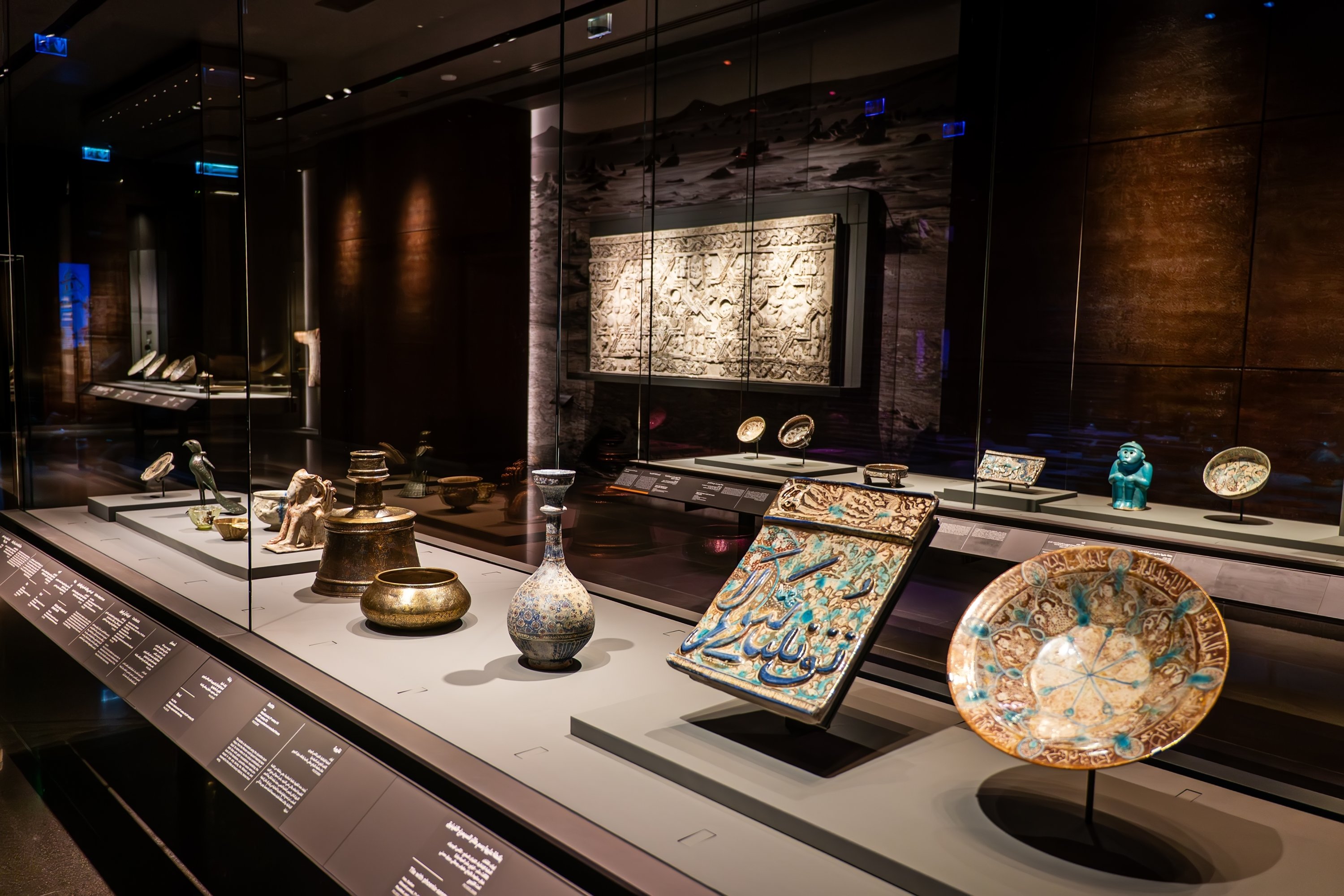
National museums, archives and heritage institutions emerged with a clear inward focus. Their mission was not to impress the outside world, but to secure internal coherence. Oral histories, maritime traditions, calligraphy, poetry, crafts, desert knowledge and communal rituals were documented and elevated. This was a foundational act. Before engaging with the contemporary, the Gulf needed to see itself reflected back, clearly, respectfully and on its own terms.
Art, at this stage, was not yet a market. It was a mirror.
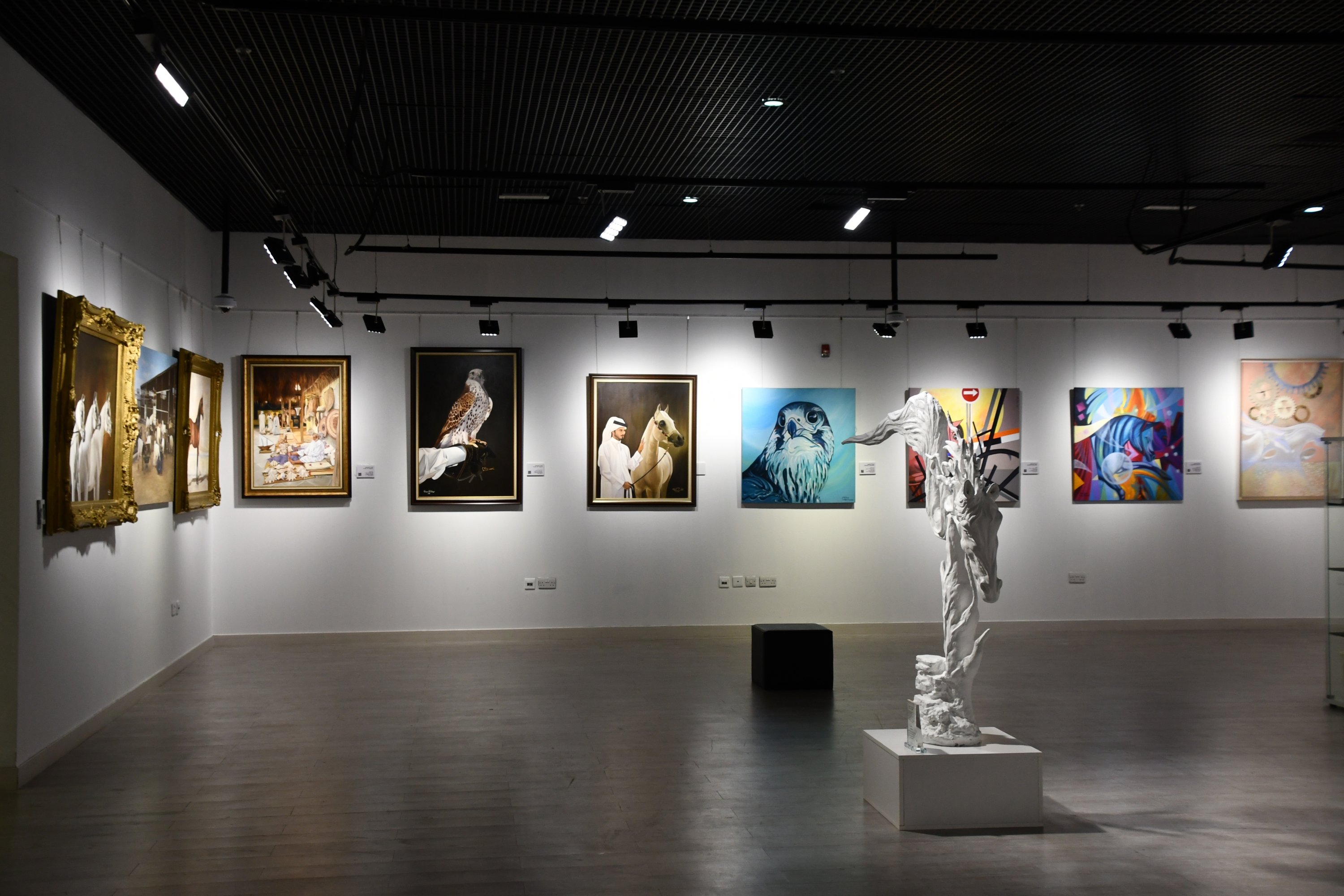
Only once this cultural self-awareness was established did the region begin to engage more openly with contemporary artistic language. Even then, the approach was measured. Rather than importing ready-made models wholesale, the Gulf asked fundamental questions: What does exhibition-making mean in societies where storytelling has traditionally been oral? How does one display time-based or conceptual art in cultures deeply shaped by ritual and repetition? How does Islamic aesthetics converse with minimalism, abstraction or conceptual reduction without becoming a visual cliche? These questions slowed things down and that slowness was intentional.
One of the most underestimated forces shaping the Gulf art ecosystem has been education. Long before art fairs and biennials entered the scene, generations of students were sent abroad to study art history, architecture, philosophy, museum studies and cultural theory. They returned fluent not only in global artistic languages but in the institutional mechanics behind them.
This produced a generation of artists, curators, administrators and policymakers who could operate comfortably across cultural contexts without collapsing them into one another. They did not act as intermediaries translating Western culture into local terms; rather, they functioned as authors capable of situating the Gulf within a broader, multi-directional cultural map. This educational foundation directly influenced how patronage evolved in the region.
Patronage in the Gulf has always existed, but its contemporary transformation is significant. Instead of remaining private, opaque or purely transactional, it increasingly took on institutional form. Museums, foundations and cultural bodies were established with long-term mandates: to collect, research, conserve, commission and educate. Acquisitions were framed not as trophies, but as contributions to an unfolding historical narrative. Crucially, this patronage did not privilege visibility over depth. While major international works entered collections, equal attention was paid to regional modernisms, overlooked narratives and artistic lineages that had been marginalized by Western-centric art histories. Arab modernism, African connections, South Asian diasporas and cross-cultural histories found space to be researched and exhibited with seriousness.
This approach subtly shifted the global art conversation. Rather than seeking validation from established centers, the Gulf began to function as a site of revision, questioning who writes art history, whose archives matter, and which narratives have been systematically excluded.
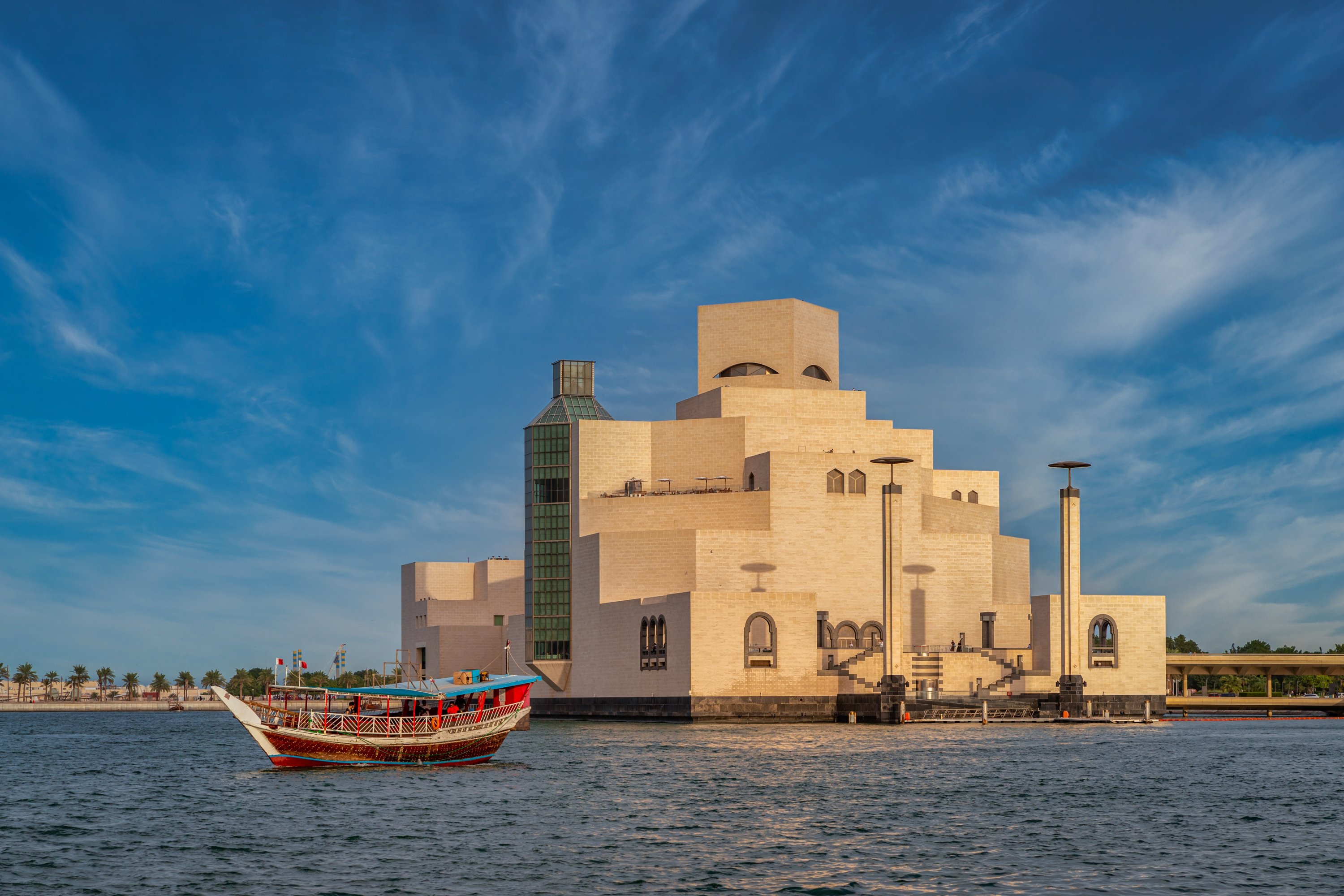
Architecture, often the most visible symbol of this cultural ambition, became both a declaration and a test. Monumental museums and cultural districts were frequently misread as excess by external observers. Internally, they carried a different meaning. In a world that often framed the region as temporary or transactional, these structures asserted permanence. They signaled a refusal to be culturally provisional. Yet the most resilient institutions resisted allowing architecture to overshadow content. The building was not meant to be the artwork. It was meant to host memory, inquiry and encounter. When this balance held, architecture functioned as a vessel rather than a spectacle.
As markets eventually entered the ecosystem through art fairs, festivals and global visibility, the region encountered its first major tension. Markets accelerate recognition, but they also compress time. They reward legibility, repetition and immediate gratification. Culture, by contrast, requires duration. It needs room for ambiguity, contradiction and failure.
The Gulf learned this lesson in real time and in public. Unlike older art capitals shielded by centuries of institutional authority, its experiments unfolded under constant observation. Missteps were visible. Critiques were amplified. But so was the capacity to adjust. The ecosystem evolved not through denial, but through recalibration. This willingness to learn openly, often mistaken for fragility, became one of the region’s quiet strengths.
Why, then, should Qatar occupy a distinct place in this broader Gulf narrative? Because, unlike many rapidly globalizing societies, Qatar has consistently treated values not as obstacles to progress but as its very source of strength. Cultural continuity here has never been framed as resistance to the world; on the contrary, it has functioned as a stabilizing force that allows the country to open itself outward without dissolving inward. This commitment to heritage, ethics, education and collective memory has given Qatar an unusual kind of confidence: the ability to engage globally without the anxiety of losing itself.
Yet this same strength demands vigilance. Opening to the world is not a single moment but a continuous negotiation, and even the most value-driven societies are not immune to dilution when visibility accelerates faster than reflection. Qatar’s task, therefore, is not to limit exchange but to consciously minimize the risks that accompany it to ensure that global curiosity does not quietly recalibrate local priorities, and that cultural openness does not become cultural permeability. The challenge is subtle but critical: to remain generous without becoming porous, to be globally engaged without surrendering the internal compass that has made Qatar distinct in the first place.
Today, Qatar stands at a precise and delicate moment. Its opening to the world is neither accidental nor reactive. It is measured, intentional and intellectually ambitious. The country is not merely hosting art; it is positioning itself as a space of mediation between regions, histories and cultural languages.
Furthermore, what distinguishes Qatar is its restraint. There is no urgency to overwhelm, no compulsion to saturate the calendar. Collections grow carefully. Research precedes programming. The city of Doha allows meaning to accumulate rather than forcing immediacy. It does not rush to explain itself to external audiences, nor does it overperform for recognition.
Western institutions, collectors and media are now arriving with genuine curiosity. This attention is natural. It is also the point at which the greatest risk emerges. Everything appears to be aligned. Infrastructure is strong. Global visibility is increasing. Cultural confidence is palpable. The narrative is, by most measures, positive. Yet there is one danger that must be articulated calmly, without alarmism. The risk is not Western discovery itself. Exchange is not the threat. Dialogue is not the problem. The real danger lies in allowing external validation to subtly redefine internal priorities. In mistaking visibility for depth. In confusing being globally present with being culturally grounded.
Becoming “another Dubai” does not mean losing identity altogether. It means replacing slowness with velocity. It means allowing market appetite to dictate cultural rhythm. It means privileging constant novelty over cumulative meaning.
Dubai chose a model of immediacy, spectacle and perpetual reinvention. That model excels at commerce and global attention. But culture requires something fundamentally different: patience, silence, contradiction and the courage to disappoint expectations.
Qatar must resist the pressure to become instantly legible.
The path forward is not withdrawal, but discernment. Institutional autonomy must remain protected even as interest intensifies. Archives must matter more than headlines. Artists must be commissioned for their questions, not just their visual appeal. Local voices must remain central, not symbolic. Criticism must be embraced as a form of loyalty, not resistance.
Most importantly, Qatar must continue defining success on its own terms. Not through comparison. Not through borrowed metrics. But through a deeper inquiry: does this cultural gesture expand understanding, or merely accelerate consumption?
The Gulf’s art ecosystem did not take shape to impress the world. It took shape to understand itself and only then invite the world into that understanding. That order is fragile, and it is precious. Doha’s opening itself to the world of art is one of the most promising cultural moments of our time. If it remains anchored in memory, ethics, and patience, it will not become “another” anything. It will become a reference point in its own right.
And in the long arc of art history, that kind of quiet authority is the rarest and most enduring form of power.