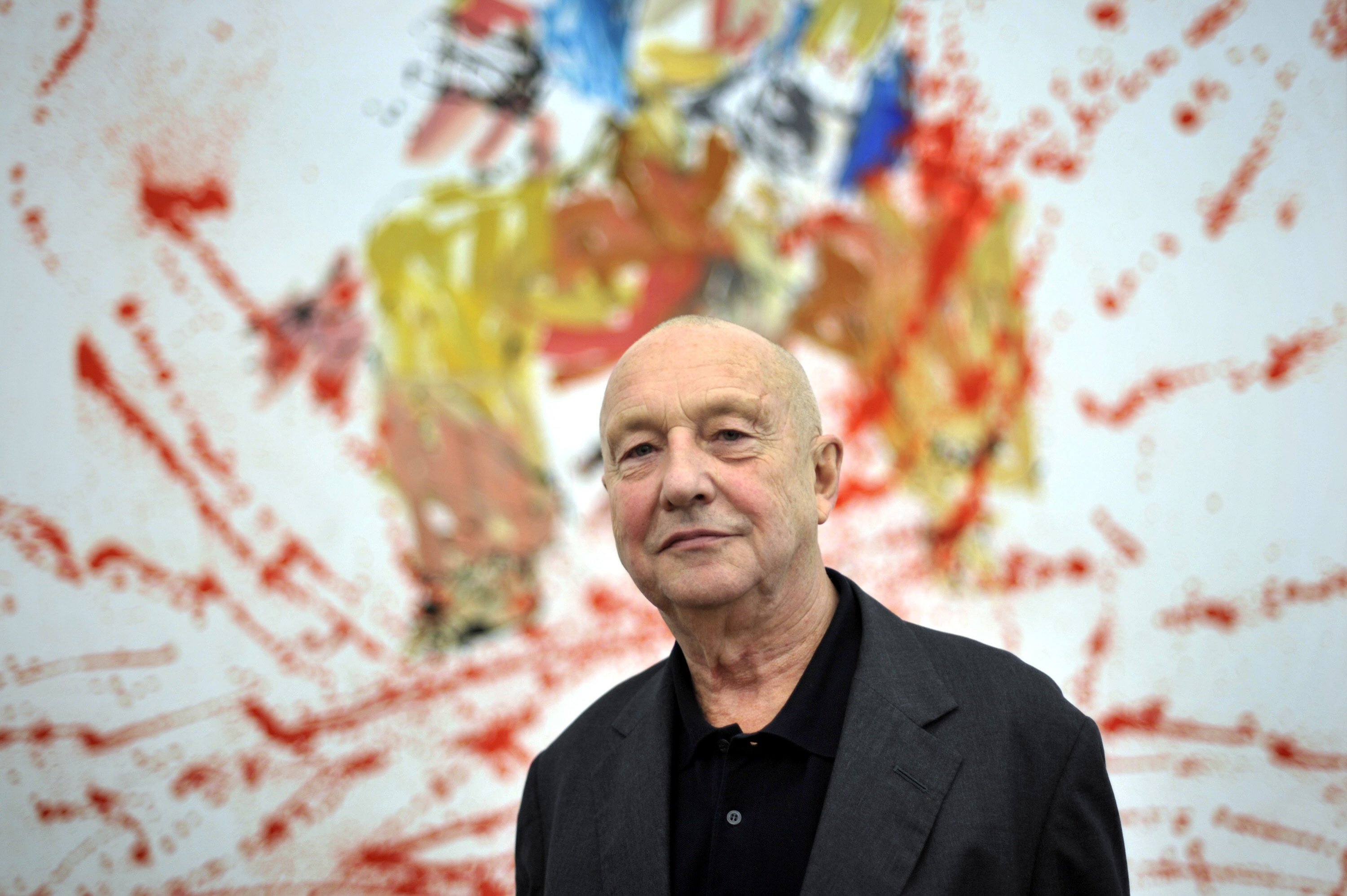
When Georg Baselitz died on April 30, 2026, at the age of 88, it felt less like the end of a life than the quiet completion of a gesture he had been rehearsing for decades. Baselitz did not simply paint. He inverted. He did not merely depict the human figure, he destabilized it. And in doing so, he transformed what might have appeared, at first glance, as a formal eccentricity into a deeply philosophical position about existence itself. His death, inevitably, compels us to revisit one of the most persistent tensions in his work: the fragile and uneasy relationship between life and death.
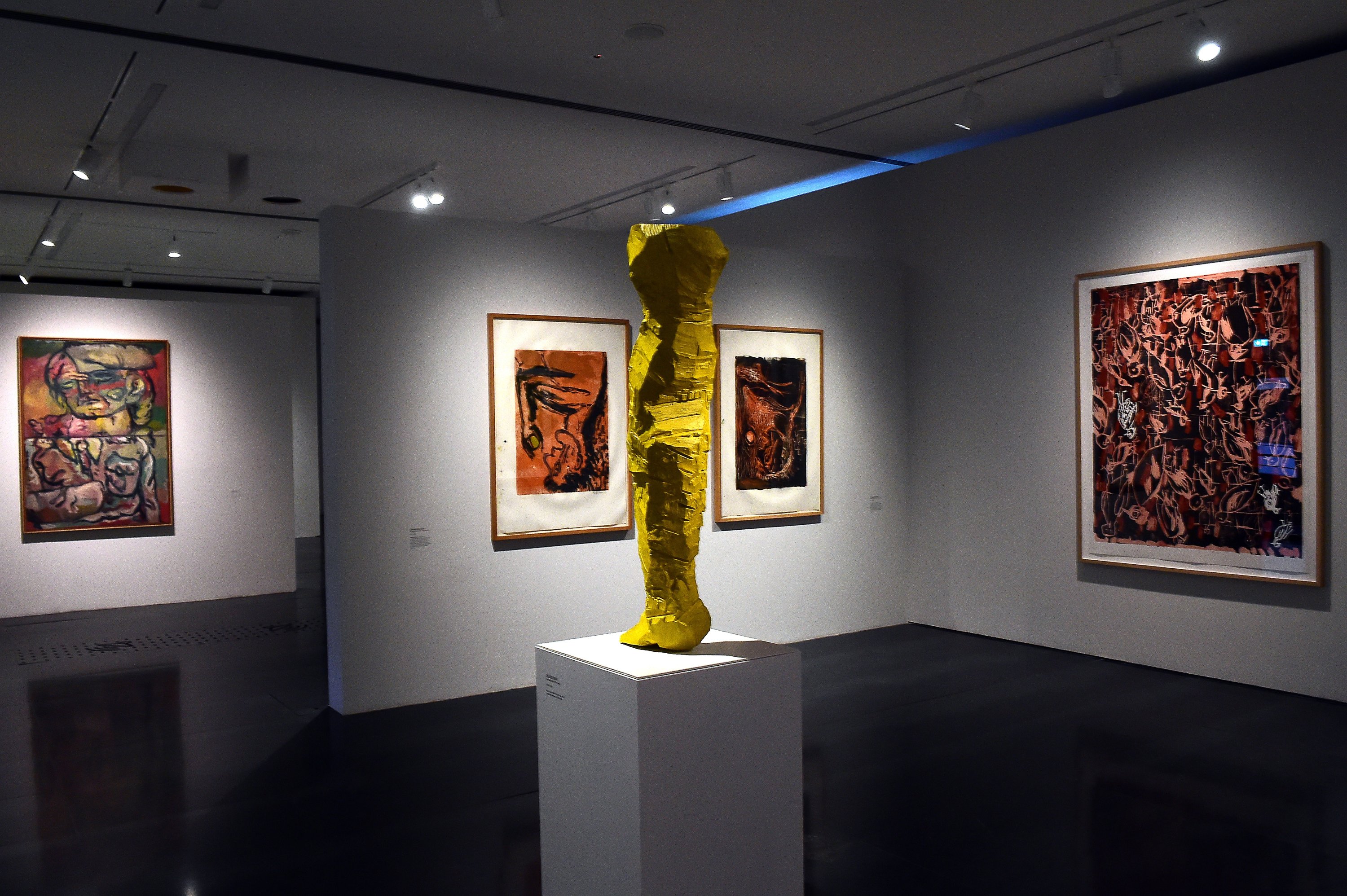
In Baselitz’s late paintings and sculptures, the body is no longer triumphant. It does not stand upright in confidence or coherence. It trembles, bends, dissolves, often suspended in a state that feels neither fully alive nor entirely gone. These figures, frequently inverted, seem to hover between presence and disappearance, as if gravity itself had become uncertain. There is a quiet, almost unsettling awareness in these works that life is always already leaning toward its own undoing. Yet Baselitz never renders death as a definitive endpoint. Instead, he treats it as a disturbance within the image, a reversal, a shift in orientation, a condition of seeing. In his world, death does not close the image; it complicates it.
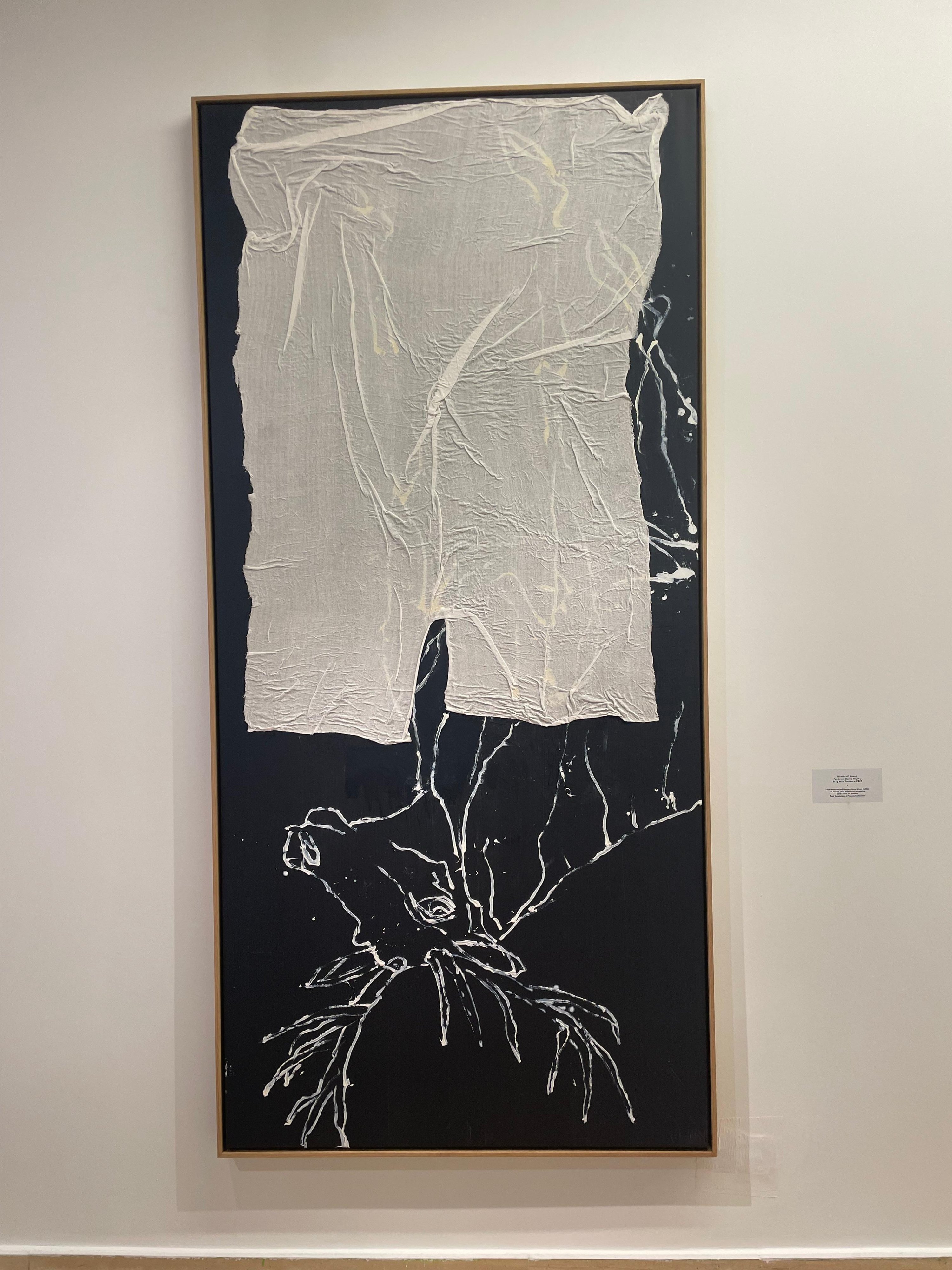
This is where Baselitz’s contribution begins to crystallize. What did he give the world by insisting that we look at paintings and sculptures as if the ground beneath them had shifted? He gave us a new way of seeing: one that resists immediacy, distrusts clarity and demands participation. Since 1969, when he began systematically turning his subjects upside down, Baselitz has forced a separation between recognition and meaning. We see a figure, a tree, an eagle, but we cannot immediately understand it. The eye hesitates, the brain starts to reproceed, the viewer becomes actively integrated. And in a visual culture increasingly shaped by speed, instant comprehension and the relentless consumption of images, this hesitation becomes profoundly significant. Baselitz reintroduced time into perception. He reminded us that seeing is not automatic, not neutral, not innocent. It is constructed, fragile and deeply dependent on orientation.
It is precisely this insistence on difficulty that resonated so strongly in Istanbul, during his exhibition at the Sakıp Sabancı Museum, 2024-25. Walking through those galleries, surrounded by monumental canvases and raw wooden sculptures, one did not feel as though one was encountering a distant European master imported into a Turkish context. On the contrary, there was an unexpected familiarity, a sense that Baselitz’s fractured visual language spoke to something deeply embedded in our own cultural experience.
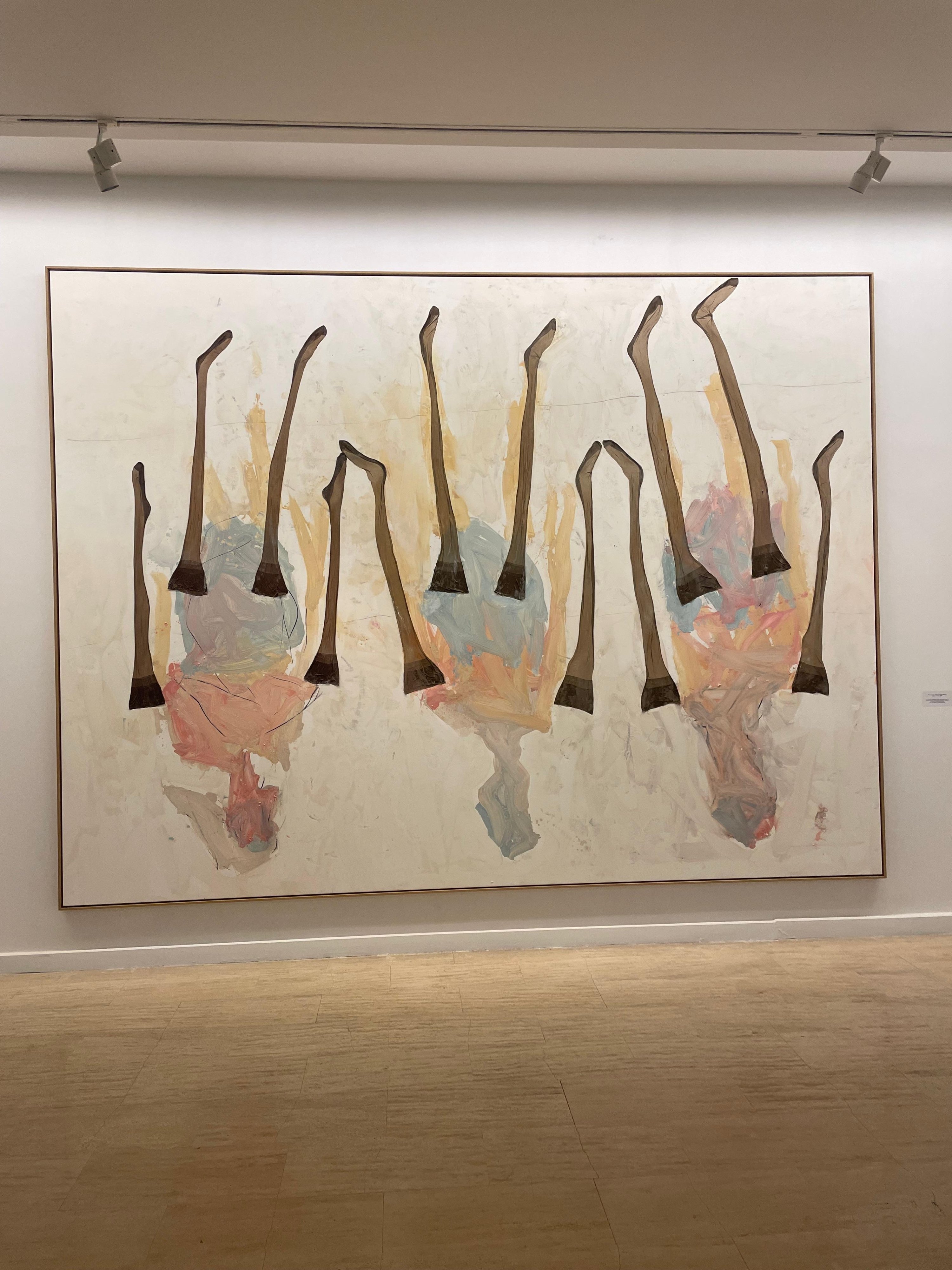
Perhaps this is because we, in Türkiye, live within a geography where history itself rarely stands upright. We inhabit a landscape layered with civilizations, ruptures, continuities and reinventions. Byzantine, Ottoman, republican, modern, these are not sequential chapters neatly arranged. They coexist, overlap and sometimes contradict one another. Memory here is not linear. It is sedimented, unstable and often contested. In such a context, Baselitz’s inversion does not feel alien. It feels intuitive. During my visit to the Sabancı Museum, I found myself in a long and unexpectedly absorbing conversation with a friend. We stood in front of one of Baselitz’s inverted figures and began asking what seemed like a simple question: Were these works painted upside down from the beginning, or were they first painted upright and then turned? The question lingered longer than we anticipated. If the figure was painted upside down, then the artist’s body had already submitted itself to inversion, entering the painting through an altered physical logic. If it was painted upright and then reversed, then the final act of turning became a conceptual rupture, a deliberate break between making and meaning.
The more we thought about it, the more the question expanded. It was no longer about technique. It became about intention, perception, authorship, even trust. And at some point, it became clear that the answer mattered less than the question itself. Baselitz had already succeeded. The work had forced us into a state of inquiry. It had extended itself beyond the canvas and into our thinking.
To provoke such a sustained mental engagement, to create not only an image but a question, is perhaps one of the rarest achievements in art. If a painting can accompany you beyond the museum, if it can continue to unfold in your mind, then it has already fulfilled its purpose. In that sense, even this simple, almost naive question, “was it painted this way, or turned this way?” becomes evidence of the work’s vitality. And perhaps, to generate such a discussion alone could be enough for an artist to close his eyes peacefully. Because the work has already begun to live independently.
Baselitz’s portraits refuse the intimacy traditionally associated with the genre. Faces are distorted, fragmented, inverted, present, yet inaccessible. We recognize the human form or parts of a human, but we cannot fully picture it. The emotional immediacy that portraiture often relies on is interrupted. Baselitz does not allow us the comfort of identification; he positions us at a distance, forcing us to confront not the subject, but our own expectations of what a subject should be.
His sculptures extend this tension into physical space. Roughly carved from wood, often monumental in scale, they reject the polished ideal of classical sculpture. They bear the marks of their making, cuts, fractures and irregularities. These are not bodies perfected; they are bodies marked by process, by time, by resistance. They stand, or sometimes seem to resist standing, as if gravity itself were uncertain. In these works, the relationship between life and death becomes almost tactile. The material itself appears to carry memory.
Baselitz’s position within art history is often discussed in relation to figures such as Marcel Duchamp or Pablo Picasso, artists who fundamentally altered the conditions of art. Yet Baselitz’s intervention is distinct. He does not abandon painting, as Duchamp might suggest, nor does he reconstruct it into a new formal system, as Picasso does. Instead, he remains within painting, but destabilizes it from the inside. He keeps the figure, but removes its reliability. He keeps the image, but fractures its meaning.
In this sense, Baselitz also enters into a subtle dialogue with Anselm Kiefer and Jackson Pollock. From Kiefer, he shares a confrontation with history; from Pollock, an emphasis on the physical act of painting. Yet Baselitz resists both narrative symbolism and total abstraction. He occupies a space between a space where the figure remains, but cannot be trusted. This refusal to stabilize meaning is, perhaps, Baselitz’s most enduring legacy. He transformed painting from a medium of representation into a medium of interrogation. His works do not tell us what to see; they ask us how we see. And in doing so, they expose the fragile mechanisms through which images acquire authority.
In today’s world saturated with digital images, manipulated realities and accelerated visual consumption, this lesson feels more urgent than ever. Baselitz teaches us to slow down, to doubt, to question and reminds us that not everything that is visible is immediately understandable and that meaning often resides in the effort to interpret, rather than in the image itself. He fractures the image rather than unifying it. Yet this tension is not contradictory, rather necessary. Because before an image can be trusted, it must first be questioned.
Baselitz occupies that critical moment of rupture; the stage at which perception itself must be destabilized. He reminds us that clarity without reflection can be dangerous, that images can seduce as much as they can reveal. In this sense, his work does not oppose the search for meaning; it prepares the ground for it.
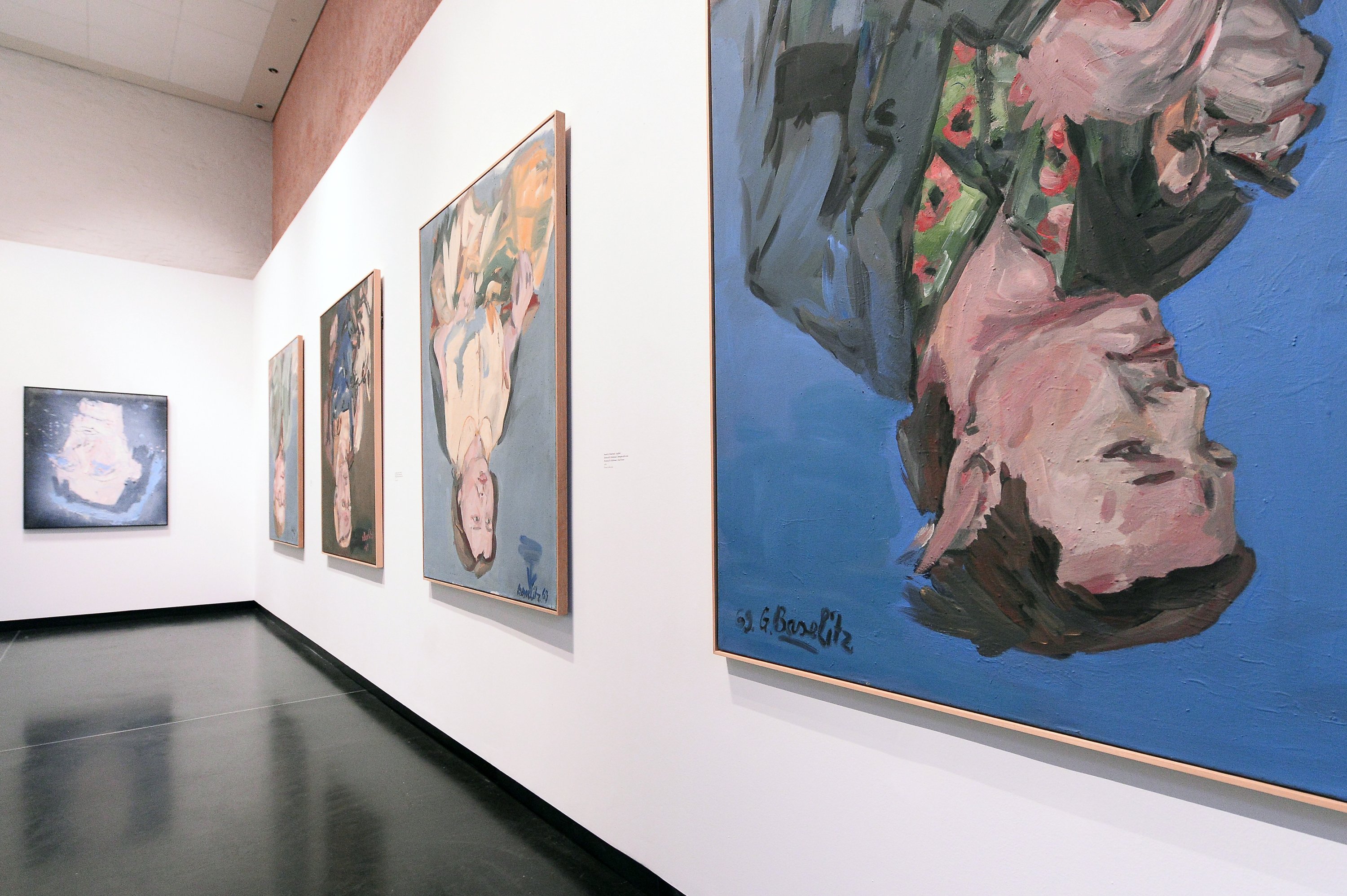
And perhaps this is where his work finds its deepest resonance. Baselitz does not offer resolution. He does not restore the world to an upright position. Instead, he insists that we remain within its instability, that we learn to see differently, to think differently, to think upside down.
And yet, one cannot help but return to that simple question we asked in the museum: Was it painted upside down, or turned afterwards? The question lingers because it is never fully answered. It continues to echo, to expand, to unsettle. It becomes, in itself, a small but persistent form of engagement. In the end, this may be Baselitz’s greatest achievement. Not the inversion itself, but the space it creates, the space of hesitation, of doubt, of inquiry. A space in which the viewer is no longer passive, but actively involved in the construction of meaning.
When it comes to the true answer to that lingering question, Baselitz painted his works upside down from the very beginning. What initially seemed like a technical detail revealed itself, in fact, as something far more profound. It was not merely a compositional choice, but a way of thinking, an orientation of the mind itself. To begin a painting already inverted means to conceive the world differently from the first gesture, to construct meaning outside of the perception. Learning this not only deepened my understanding of his technique; it also awakened a renewed and almost intimate curiosity about Georg’s inner architecture, his way of seeing, of questioning, of existing. And perhaps it is precisely here that our long conversation found its resolution: if an artwork can open such a door, not only into itself, but into the mind of its creator, then it has fulfilled its purpose.
If an artwork can do this, if it can extend beyond its material boundaries and enter the mind of the viewer, then it has already reached its purpose.
Because ultimately, an artwork that fulfills its purpose does not end with the artist’s life. It restarts there.