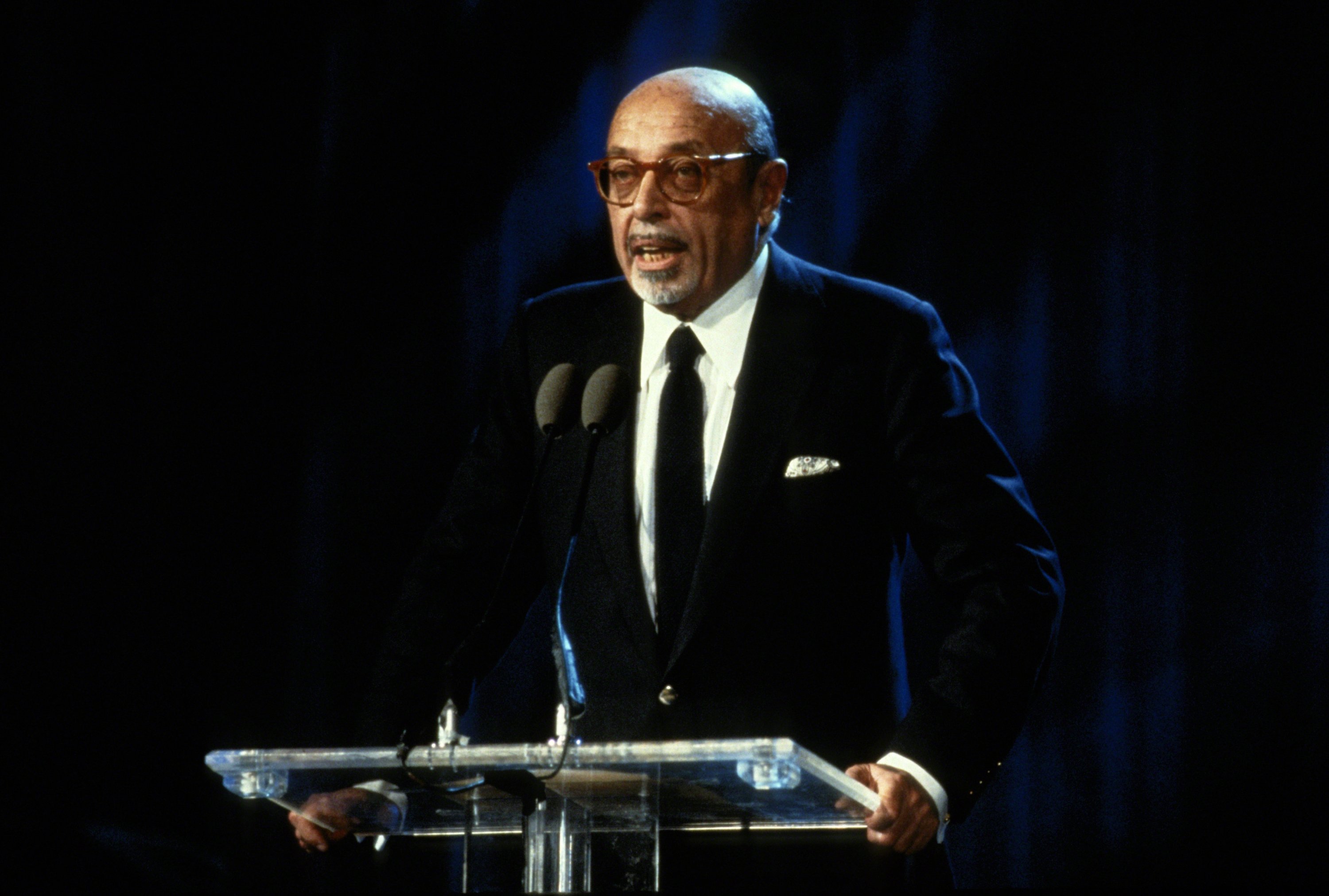
The name Ahmet Ertegün today resonates not only with the voice of Ray Charles, the rebellious spirit of The Rolling Stones, or the stirring notes of Aretha Franklin, but also as the signature of a visionary era that redefined the music and cultural soul of a generation. In the mid-20th century, when music became as much commercialized as politicized and cultural representation was expressed through artistic forms, Ertegün worked as a producer, diplomat and aesthetic theorist. However, his vision was not limited to music alone. Art collecting formed another facet of his intellectual and aesthetic journey, and today, understanding Ahmet Ertegün requires considering both fields together.
Ahmet Ertegün was born not into a diplomatic family, but into a lineage that combined diplomacy with culture. When he was born in Istanbul in 1923, his family had already secured a significant place in Türkiye’s political and intellectual memory. His father, Mehmet Münir Ertegün, had served during the Turkish War of Independence and, after the proclamation of the republic, had held diplomatic posts in Switzerland, Paris and London as Türkiye’s first representative to the League of Nations. Later, he was appointed as Türkiye’s ambassador to Washington. His mother, Hayrünnisa Rüstem, although not a diplomat in the classical sense, was a figure who instilled in her children a love for music, art and elegance from an early age.
Ahmet’s great-grandfather was Ibrahim Edhem Efendi, the last spiritual leader (postnişîn) of the Üsküdar Özbekler Tekke. Therefore, the Ertegün family had not only political and diplomatic roots but also a deeply intertwined Sufi and intellectual tradition, forming a multilayered cultural heritage.
When the Ertegün family moved to Washington in 1935, Ahmet was only 12 years old. After his earlier education in Switzerland, Paris and London, exposure to American culture would complete the final link in his sensory and intellectual formation.
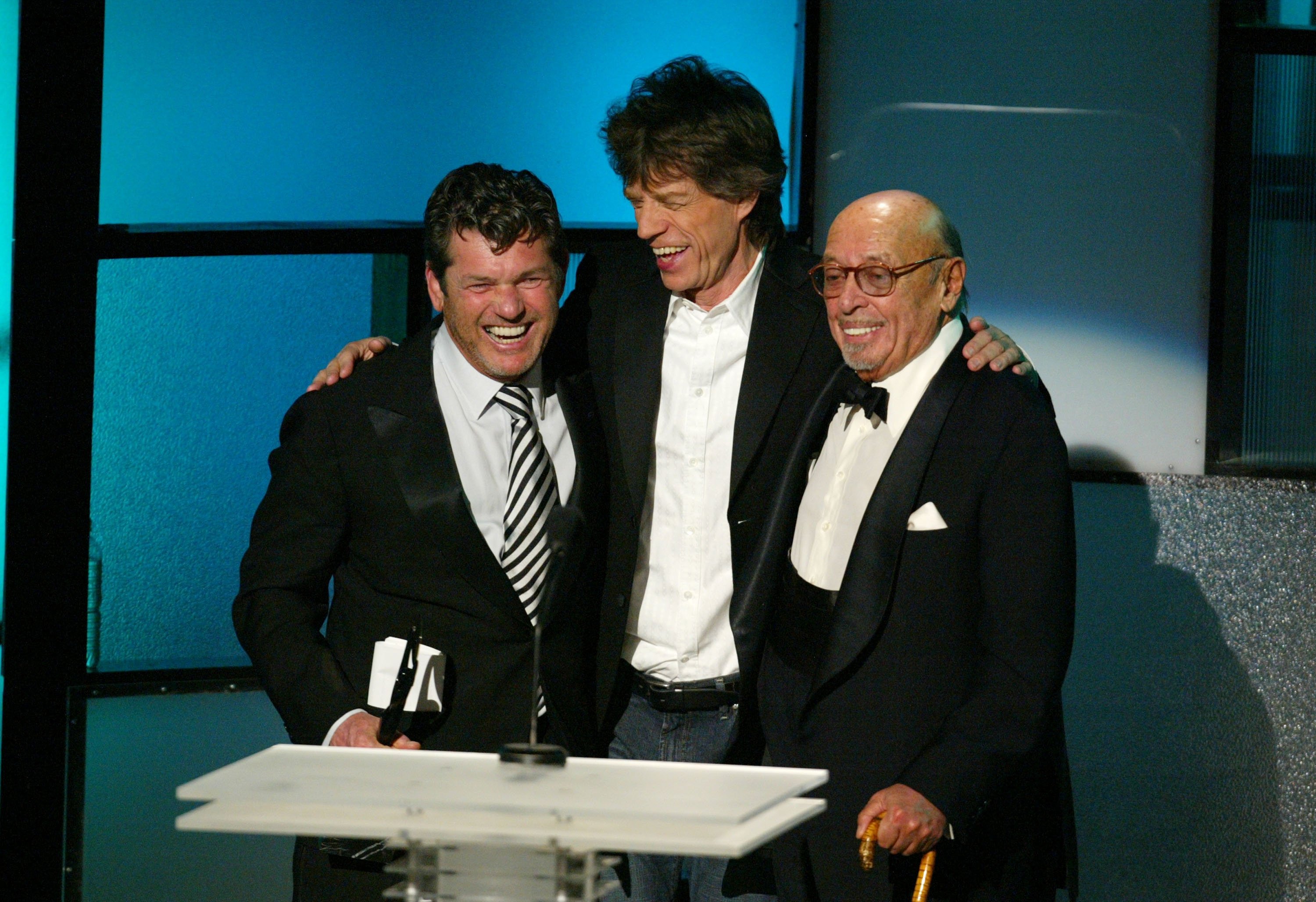
The ambassadorial residence in Washington soon became a musical salon where jazz musicians of the era gathered to play, listen and discuss. At a time when Black musicians were often barred from public stages in the U.S., legendary figures from Cab Calloway to Duke Ellington were hosted in the Ertegün family home.
Ahmet’s relationship with music dates back almost to his childhood. At the age of 14, a transformative experience came with a gift from his mother: a record player capable of recording sound, along with Cootie Williams’s album, West and Blues. While playing records, Ertegün would read the lyrics he wrote himself into the microphone and record them. Along with his brother Nasuhi, he spent hours listening to music in their room. “By the time I was 16, I had enough knowledge to be considered a pop music expert; by 18, I had 50,000 records,” he said in later years. This accumulation of knowledge was not merely a hobby but laid the foundations of a deep expertise that would later rewrite American music. Ahmet and Nasuhi Ertegün did not delay in transforming their passion for jazz into a vision that would shape the history of music.
Ahmet Ertegün’s interest in Black music was more than just an aesthetic appreciation; it was fueled by a profound reaction against racism and an understanding that transcended cultural boundaries. Believing in music’s unifying power, these two brothers laid the foundation for Atlantic Records with this universal perspective.
When Ahmet and Nesuhi Ertegün, along with Herb Abramson, founded Atlantic Records in 1947, they took a risk that few in the American music industry were willing to take at the time. Afro-American music, especially blues, gospel and R&B, was still regarded as “minority music” and major record companies either completely ignored these genres or tried to market them in “whitened” forms that damaged their musical authenticity. However, the Ertegün brothers intuitively understood both the emotional power and the historical and socio-cultural depth of this music.
Ahmet Ertegün’s goal was not only to make Black music heard, but to make it respected, placed at the center and become a transformative force. In Atlantic’s early years, recordings with artists such as Ruth Brown, Big Joe Turner, LaVern Baker and The Clovers brought the dynamics of R&B into the mainstream. Particularly Ruth Brown’s success earned Atlantic the nickname “The House That Ruth Built.” This was revolutionary both in terms of female and Black artist visibility in the industry. The collaboration established in the 1950s with Ray Charles turned Atlantic into more than just a production company; it became an institution that helped build the artist’s identity. When Ray Charles was blending gospel and blues and laying the foundations of soul music, Ertegün’s presence in the studio was decisive. Songs like “Mess Around,” which Ertegün wrote for Charles, were not only commercial successes but thresholds where musical genres intertwined and created synthesis.
Ahmet Ertegün approached production not merely as a technical or managerial task, but as an emotional partnership. He worked one-on-one with artists, never leaving them alone in the studio and intervened as much in vocal techniques as in the emotional layers of song lyrics. Many artists have described him not just as a producer but as a visionary guide. In the studio, he was neither authoritarian nor influential, but patient and clear. This was one of the most important factors that shaped Atlantic’s unique sound. At the end of the 1950s, with the departure of one of the company’s partners, Herb Abramson and the inclusion of Jerry Wexler, Atlantic entered a new phase. Wexler was the first journalist to use the term “rhythm and blues,” and he brought as much theory as practice to the study of music history. The Ertegün-Wexler partnership left a lasting mark on the careers of artists like Otis Redding, Wilson Pickett, Solomon Burke and Aretha Franklin. Especially Aretha Franklin’s "Respect" album became a symbol of both Atlantic and the Black liberation movement. At this point, Atlantic was no longer just a record company; it was the driving force behind a political, cultural and artistic movement.
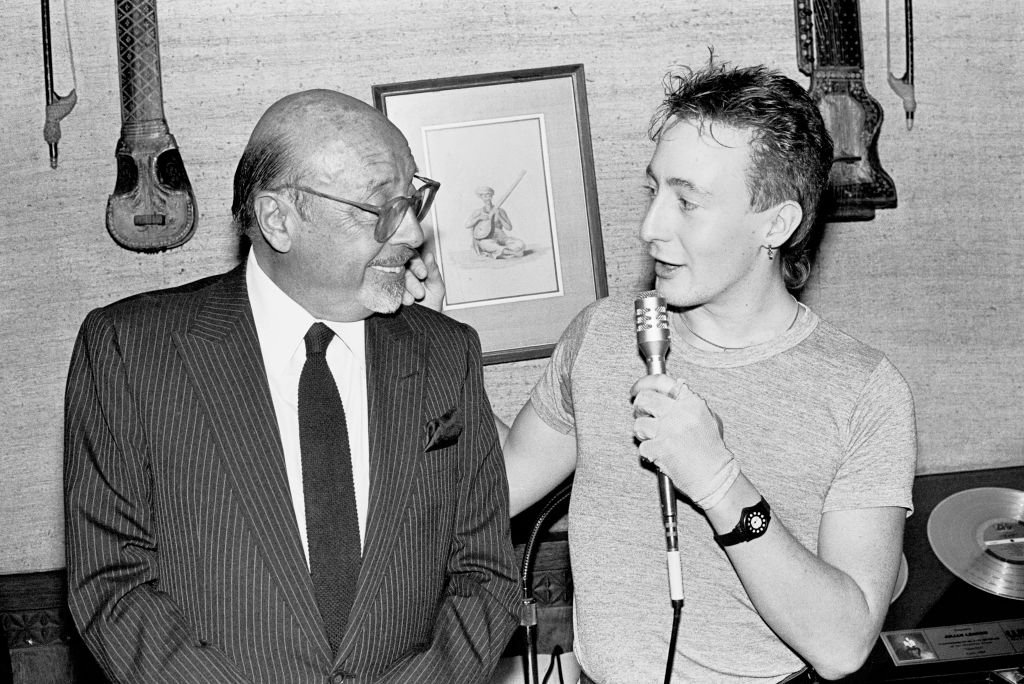
With the rise of rock music in the late 1960s, Ahmet Ertegün again turned his keen intuition toward this field. His close relationships with the British rock band The Rolling Stones and the debut of Led Zeppelin under the Atlantic label broadened the company’s musical spectrum. Additionally, progressive and experimental rock groups like Cream, Yes and Crosby, Stills, Nash & Young also achieved global success under Ertegün’s guidance.
The most important difference in Ertegün’s approach to rock music was that, like with R&B, he did not evaluate the genre in its pure form but through its hybrid structures. Led Zeppelin’s blues-based guitar riffs, combined with the vocal dynamism drawn from soul music, reflected a new perspective on Ahmet Ertegün’s polyphonic music vision. He was a producer who listened not to the boundaries of genres but to their shared vibrations.
In the early 1970s, Atlantic was acquired by Warner Communications and became part of a large media empire, but Ahmet Ertegün never relinquished control over creative decisions. Although Atlantic became institutionalized, it maintained its spiritual independence and musical sincerity thanks to his presence. Today, what Atlantic represents in music history is not just hundreds of hit songs or millions of albums sold. Atlantic is a musical language, an ethical code and the name of a cultural vision. The architect of this vision is Ahmet Ertegün: a figure who universalized Afro-American music, expanded the boundaries of rock music, and developed an approach that refuses to categorize all of it.
Ahmet Ertegün’s cultural legacy extended beyond his achievements in music; he also left his mark as one of the most significant art collectors of the 20th century. His broad aesthetic understanding made him a figure who sought deep meanings not only in the notes he listened to but also in the images he observed. The artists featured in his collection, such as David Hockney, René Magritte, Jean Dubuffet, Lucian Freud and Francis Bacon, were not only milestones of modern art but also symbols of Ertegün’s intellectual interests.
Ertegün’s collecting was not merely a display of wealth or status; it was evidence of an intellectual journey. His particular interest in Pop Art and Surrealism perfectly mirrored his boundless and rule-breaking approach in music. David Hockney’s visually calm but emotionally turbulent paintings, Magritte’s imagery playing with the subconscious and Dubuffet’s raw, unrefined forms all reflected Ertegün’s inquisitive and intuitive outlook on the world. Another factor that made this selection special was Ertegün’s disregard for geographic and cultural boundaries when forming his collection. This unity from the European avant-garde to American expressionism, from the Middle East to Britain’s new figurative painting, demonstrates that he was not merely an art buyer but almost an intellectual archivist. For him, art was not decoration, but an exercise of ideas, a silent dialogue.
After his passing in 2006, this collection resonated deeply in both academic and artistic circles. The donation made to Oxford University revealed that he left behind not only art objects but also a sense of cultural responsibility. This donation reflected his belief that education and intellectual production are public duties. The auction held at Christie’s London in 2023 demonstrated not only the material value of the collection but also the founder’s aesthetic and intellectual originality. Each piece was like a silent witness to Ertegün’s personal history, value system and cultural intuition.
This collection was an extension of his multifaceted cultural identity: the son of a Turkish diplomat, a visionary of the American music industry and an intuitive follower of European visual arts. Believing that art must be lived to be understood, Ertegün followed sensitivity and intuition rather than rules, just as he did in music.
Ahmet Ertegün’s story is much more than a tale of success; he was a living symbol of cultural transition, an intellectual mediator and a contemporary cultural ambassador. Although he is recognized as one of the key figures who shaped American music, he became a representative of a polyphonic civilization vision that emerged from Türkiye and influenced the world.
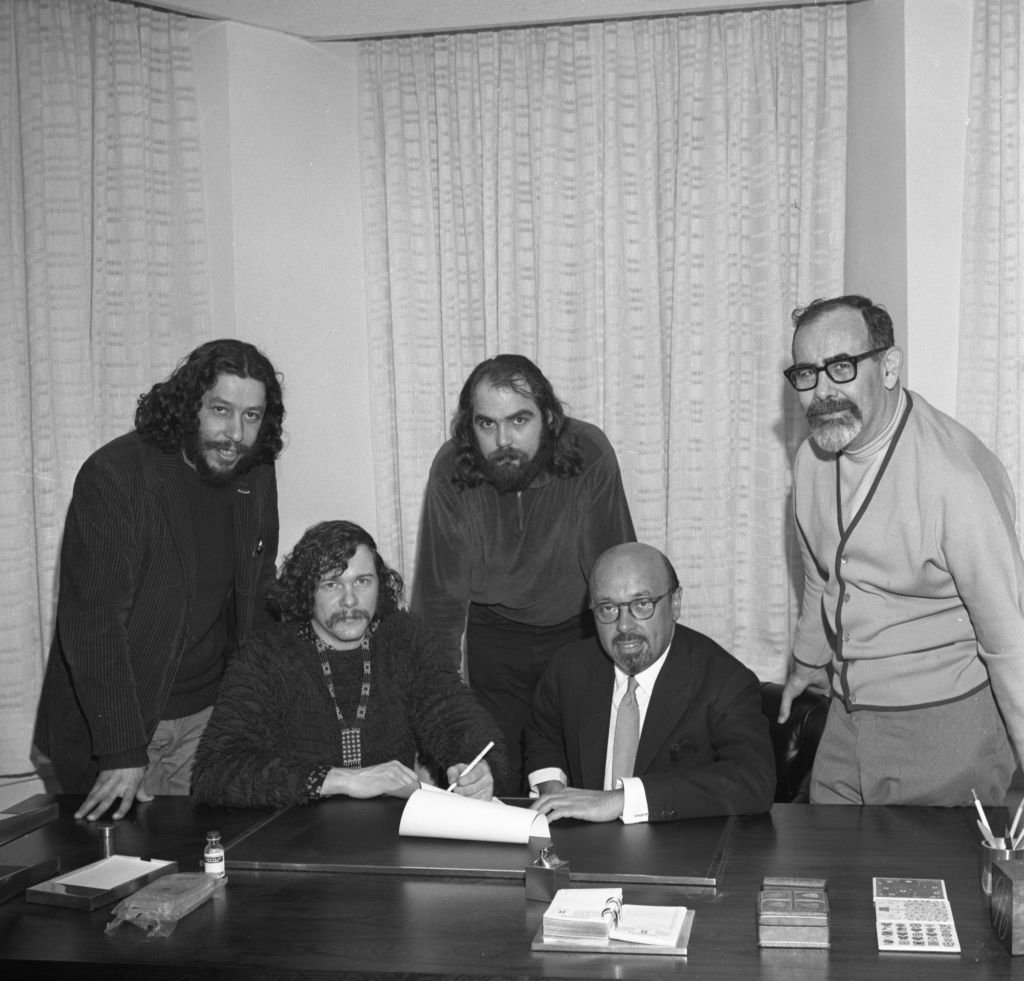
He never forgot the cultural heritage of his birthplace. When he opened the doors of the ambassador’s residence in Washington to Black musicians, he brought not only a love for jazz but also Turkish hospitality, a pluralistic approach and an empathetic diplomacy to music. In that residence, many legendary names from Louis Armstrong to Duke Ellington were hosted for the first time in a diplomat’s home, where the elegance of the East met the art of the West under Ertegün’s grace.
This reflex of building bridges continued in the following years. His decision to open his art collection not primarily to international institutions but to education and cultural transmission demonstrated that his identity was shaped not only by personal but also by public consciousness. He pioneered dialogues between Türkiye and the U.S. not only politically but also culturally. He was a silent but effective supporter in organizing American jazz groups visiting Türkiye and in helping Turkish artists reach the global stage.
Ahmet Ertegün’s existence shows that migration is not only a spatial but also a cultural and intellectual transformation. His life can be read as an interface and a unifying metaphor that breaks down all artificial binaries established between “Eastern” and “Western.” For this reason, his success is not merely individual; it is a collective consciousness that inspires generations to come.
Ahmet Ertegün’s life is a legacy that lives not only in record archives and collection catalogs, but also in musical notes, artworks, and cultural dialogues. He believed that music, art, thought, and human relationships are not separate but interconnected fields that speak to one another. Therefore, it is insufficient to define him merely as a record producer, a collector, or a music enthusiast.
He is one of the architects of cultural modernity. He shaped rhythms, selected visual images, donated collections and created stars. But most importantly, he unified all these fields with the same ethical rigor and aesthetic sensitivity. Thanks to him, music became a form of resistance, art transformed into an intellectual challenge and collecting became a way to pass on a legacy.
Suppose his echo is still heard today in music, art, academia and even the language of diplomacy. In that case, it is not just a reminder of the past but a visionary step toward the future. Because some names transcend the era in which they live, some rhythms are not only heard but also constructed. Ahmet Ertegün was one of those who built.