Daily Sabah logo

Politics
Diplomacy Legislation War On Terror EU Affairs Elections News Analysis
TÜRKİYE
Istanbul Education Investigations Minorities Expat Corner Diaspora
World
Mid-East Europe Americas Asia Pacific Africa Syrian Crisis Islamophobia
Business
Automotive Economy Energy Finance Tourism Tech Defense Transportation News Analysis
Lifestyle
Health Environment Travel Food Fashion Science Religion History Feature Expat Corner
Arts
Cinema Music Events Portrait Reviews Performing Arts
Sports
Football Basketball Motorsports Tennis
Opinion
Columns Op-Ed Reader's Corner Editorial
PHOTO GALLERY
JOBS ABOUT US RSS PRIVACY CONTACT US
© Turkuvaz Haberleşme ve Yayıncılık 2025

Daily Sabah - Latest & Breaking News from Turkey | Istanbul

  • Politics
    • Diplomacy
    • Legislation
    • War On Terror
    • EU Affairs
    • Elections
    • News Analysis
  • TÜRKİYE
    • Istanbul
    • Education
    • Investigations
    • Minorities
    • Expat Corner
    • Diaspora
  • World
    • Mid-East
    • Europe
    • Americas
    • Asia Pacific
    • Africa
    • Syrian Crisis
    • Islamophobia
  • Business
    • Automotive
    • Economy
    • Energy
    • Finance
    • Tourism
    • Tech
    • Defense
    • Transportation
    • News Analysis
  • Lifestyle
    • Health
    • Environment
    • Travel
    • Food
    • Fashion
    • Science
    • Religion
    • History
    • Feature
    • Expat Corner
  • Arts
    • Cinema
    • Music
    • Events
    • Portrait
    • Reviews
    • Performing Arts
  • Sports
    • Football
    • Basketball
    • Motorsports
    • Tennis
  • Gallery
  • Opinion
    • Columns
    • Op-Ed
    • Reader's Corner
    • Editorial
  • TV
  • Arts
  • Cinema
  • Music
  • Events
  • Portrait
  • Reviews
  • Performing Arts

Aşık Veysel: Life devoted to Anatolian minstrel tradition of bards

by Buse Keskin

ISTANBUL Nov 03, 2022 - 11:45 am GMT+3
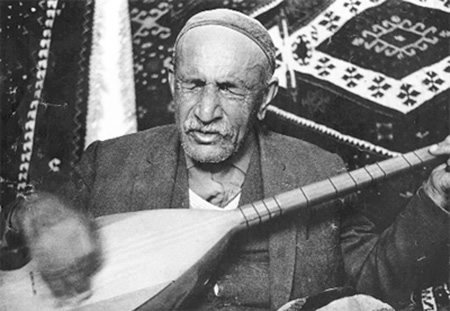
This undated photo shows Aşık Veysel playing his bağlama. (Sabah Archive Photo)
by Buse Keskin Nov 03, 2022 11:45 am

The 20th century's greatest minstrel Aşık Veysel's legacy continues to ceaselessly spread in Türkiye and all over the world through his universal themes crafted simply yet masterfully, upholding Anatolian folk poetry and music

Turkish folk literature's highly regarded poet Aşık Veysel was honored at the Loyalty Award of Presidential Culture and Arts Grand Awards on Sunday as the prominent representative of the Anatolian minstrel tradition of the 20th century, influencing every walk of life with his unique universal art that touches each world citizen's heart.

Somehow, the poverty, suffering and unfortunate events that he encountered throughout his life contributed to his affective art of words, as his poems were translated into many languages. Even American electric guitar virtuoso Joe Satriani included an instrumental piece he composed himself called "Aşık Veysel" in his 2008 album.

He was born in a village that consisted of 50 residents called Sivrialan in central Türkiye's Sivas in 1894. Living there until his late juvenile years, he was a son of a family that engaged in agriculture and animal husbandry. Yet the region suffered from the spread of smallpox, leading to the death of Veysel's two sisters and eventually the loss of vision in one of his eyes at the age of 7.

With his father's encouragement, Aşık Veysel started playing the bağlama, a long-necked plucked string instrument, and reciting poetry at the age of 10, as his father saw this engagement as a solacement. Yet, his pain grew when he lost his vision completely due to an accident and finally after his mother and father passed away.

For this reason, he read his poems in the accompaniment of sad tunes, often dealing with the inevitability of death. He also employed the themes of morals and values, interpreting the world through the eyes of a "blind" man.
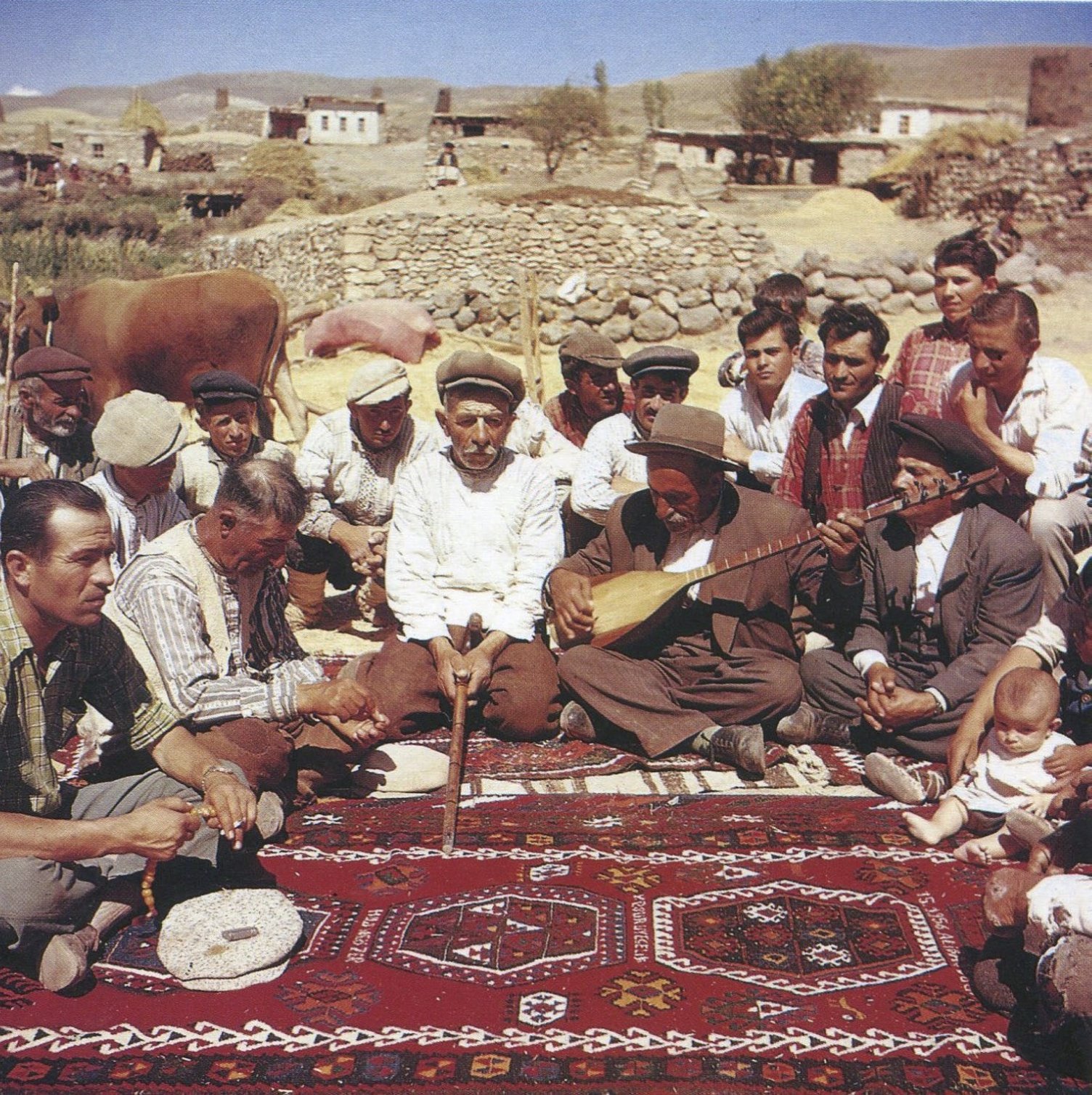
The undated photo shows Aşık Veysel and group of minstrels playing bağlama. (Sabah Archive Photo)

The director of national education in the province of Sivas in 1930, prominent Turkish poet Ahmet Kutsi Tecer discovered his talent after listening to Veysel at the Sivas Minstrels' Festival. Then he traveled all over Türkiye, living a life full of literature and music based on his impression of his travels, with his bağlama in hand, like the old wandering minstrels.

After the surname law was passed, he took the surname Şatıroğlu.

Veysel also used traces of mysticism and his poems show a rich variety in terms of subject, embracing every religion and race, praising love and emphasizing unity and solidarity through his unique verses that intertwined joy of life and optimism with melancholy and pessimism in his poems. Like any other minstrels, his verses are written in a simple and purified language, yet masterly crafted, accompanied by sad tunes.

In the grand jubilee that was held in honor of Aşık Veysel, he was granted a pension of TL 500 from the national service organization in accordance with a special law passed by the Turkish Grand National Assembly in 1965 "for his services to our mother tongue and our national unity."

His life was interpreted through the film "Karanlık Dünya" ("The Dark World") written by Turkish painter, mosaic-maker, muralist, writer and poet Bedri Rahmi Eyüboğlu and directed by famous scenarist Metin Erksan in Sivrialan village, where he was born and died in 1973. After his death, his house was transformed into a museum to display his belongings.

Having been engraved in memories as one of the great masters of Turkish literature and the tradition of instrumental poetry, he influenced many succeeding poets of Turkish literature. His uncommon way of establishing a bridge between the public and intellectuals, bringing literature to the service of all people of the country, and renouncing deep resentment between people left a great legacy of poetry, developed by only touching and hearing. Following in the footsteps of master minstrels of Anatolia such as Yunus Emre, Pir Sultan Abdal, Karacaoğlan and Dadaloğlu, his universal message as a humble human on the arduous path of life was: "On a long and narrow road, walking all day and night."


  • shortlink copied
  • Last Update: Nov 03, 2022 2:44 pm
    KEYWORDS
    aşık veysel minstrel folk literature turkish literature dadaloğlu pir sultan abdal yunus emre
    The Daily Sabah Newsletter
    Keep up to date with what’s happening in Turkey, it’s region and the world.
    You can unsubscribe at any time. By signing up you are agreeing to our Terms of Use and Privacy Policy. This site is protected by reCAPTCHA and the Google Privacy Policy and Terms of Service apply.
    No Image
    Women form human chains across 81 provinces in Türkiye for Gaza
    PHOTOGALLERY
    • POLITICS
    • Diplomacy
    • Legislation
    • War On Terror
    • EU Affairs
    • News Analysis
    • TÜRKİYE
    • Istanbul
    • Education
    • Investigations
    • Minorities
    • Diaspora
    • World
    • Mid-East
    • Europe
    • Americas
    • Asia Pacific
    • Africa
    • Syrian Crisis
    • İslamophobia
    • Business
    • Automotive
    • Economy
    • Energy
    • Finance
    • Tourism
    • Tech
    • Defense
    • Transportation
    • News Analysis
    • Lifestyle
    • Health
    • Environment
    • Travel
    • Food
    • Fashion
    • Science
    • Religion
    • History
    • Feature
    • Expat Corner
    • Arts
    • Cinema
    • Music
    • Events
    • Portrait
    • Performing Arts
    • Reviews
    • Sports
    • Football
    • Basketball
    • Motorsports
    • Tennis
    • Opinion
    • Columns
    • Op-Ed
    • Reader's Corner
    • Editorial
    • Photo gallery
    • DS TV
    • Jobs
    • privacy
    • about us
    • contact us
    • RSS
    © Turkuvaz Haberleşme ve Yayıncılık 2021