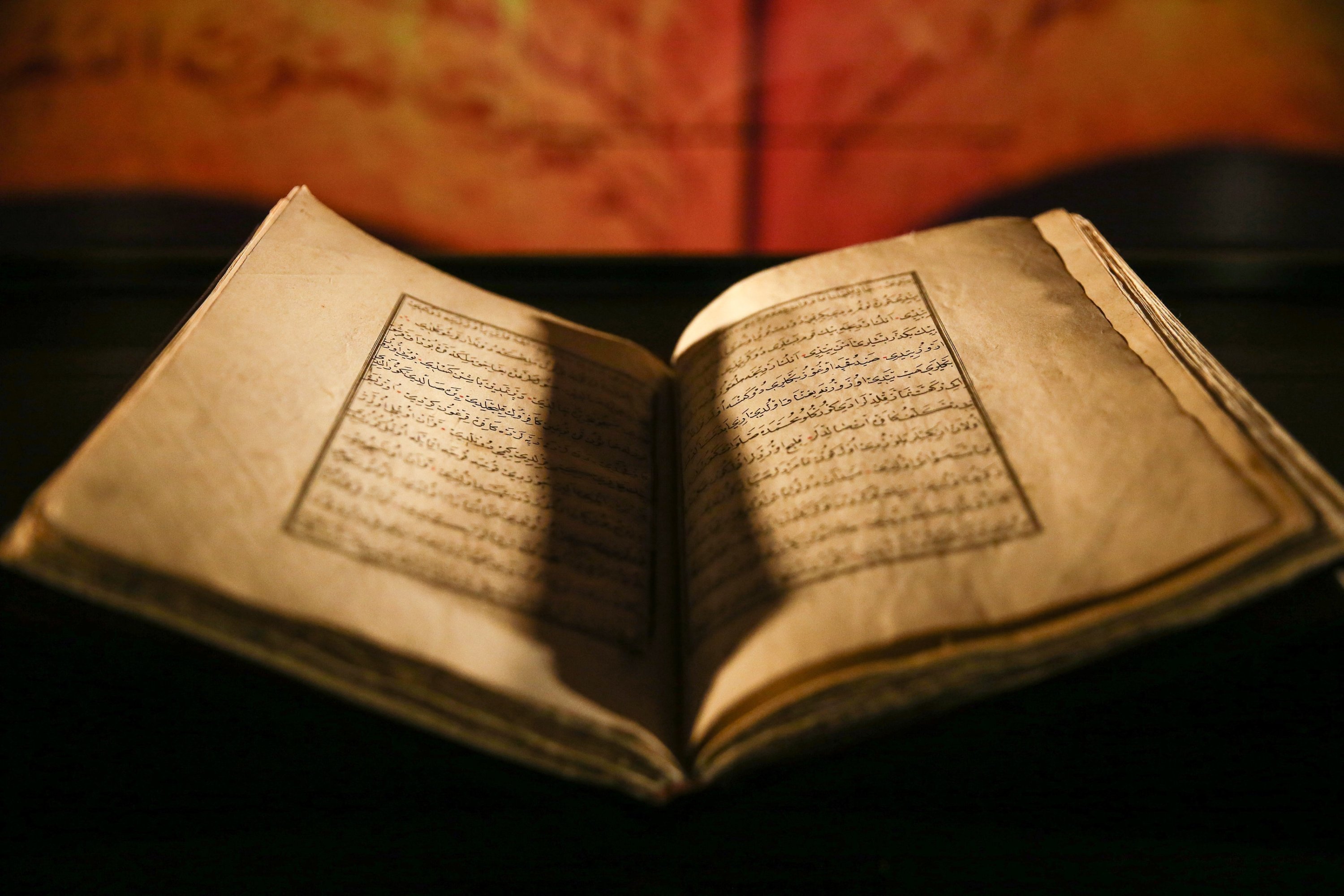
A rare manuscript of Dede Korkut donated unknowingly by a collector is set to be added to UNESCO’s Intangible Cultural Heritage List, officials said.
The "Bursa Manuscript," one of the foundational works of Turkish culture, authentically recounts Turkish morals, traditions, beliefs and heroism through the Dede Korkut stories. It is displayed in a dedicated room at the Muradiye Manuscripts Museum.
Previously known versions of the work were housed in Dresden, the Vatican, the Turkish Historical Society and Günbed. The Bursa Manuscript consists of 238 pages containing 12 stories, written with vowel markings, or hareke.
The manuscript, produced on paper between 1580 and 1593 and transcribed in the 1600s, is considered a valuable literary and historical resource. Efforts to secure its inclusion on the UNESCO list have been completed, with approval expected by the end of this month.
Güney Özkılınç, head of Bursa Metropolitan Municipality’s Department of City History, Promotion and Tourism, told Anadolu Agency that the Dede Korkut stories represent the first transition from epic to narrative in Turkish literature.
Özkılınç described the discovery of the Bursa Manuscript: “Antique dealer İbrahim Koca was walking along the shore of Lake Uluabat when he visited the house of the imam in rural Fadıllı neighborhood. He bought various books without knowing what this one was and brought them to his shop. Later, he donated some to the Bursa City Museum. Eventually, a collector identified this book as a Dede Korkut manuscript, the original. That’s how the story begins. Through this, Dede Korkut was introduced to Bursa, Türkiye and the world as the Bursa Manuscript.”
He noted that the stories originated as oral literature between the ninth and 11th centuries and were first transcribed in the 15th–16th centuries. “Some stories circulated orally among the people before being written down by an author. Our manuscript is one of only five in the world,” Özkılınç said.
The Bursa Manuscript is similar to the Dresden version but carries a key feature: vowel markings that clarify pronunciation. “Through these markings, we can reinterpret certain words and sentences. This makes the manuscript extremely valuable,” he said.
After restoration, the manuscript underwent a detailed study. Nil Baydar examined its watermark and paper, dating it to the 16th century. A facsimile edition was produced, in both the original Anatolian Turkish and modern Turkish.
Professor Ferruh Ağca translated the manuscript into accessible Turkish, with significant contributions from professor Osman Fikri Sertkaya. 1,000 numbered copies were printed, primarily for universities, researchers, Turkish republics and consulates.
At the Muradiye Manuscripts Museum, a digital room was created using modern technology, featuring a 6.5-minute presentation on Dede Korkut. Visitors can view the original manuscript and watch the digital exhibit to gain insight into its content.
Özkılınç said efforts to include the manuscript in UNESCO’s Intangible Cultural Heritage List have been completed. “We expect a positive response by the end of the month. It is an important, original manuscript. We submitted our request to UNESCO Türkiye and we hope it will be accepted. The digital presentation by artist Hakan Yılmaz and professor Evrim Ölçer complements the exhibit, making it unique compared to other versions.”
He emphasized the educational value: “Students who come to the museum can see Dede Korkut not just as a story heard in class, but as a tangible artifact. They can view the original book and explore the stories digitally.”
Özkılınç added that UNESCO recognition will boost tourism, enhance Bursa and Türkiye’s cultural value, increase awareness and ensure better preservation of the manuscript.