Daily Sabah logo

Politics
Diplomacy Legislation War On Terror EU Affairs Elections News Analysis
TÜRKİYE
Istanbul Education Investigations Minorities Expat Corner Diaspora
World
Mid-East Europe Americas Asia Pacific Africa Syrian Crisis Islamophobia
Business
Automotive Economy Energy Finance Tourism Tech Defense Transportation News Analysis
Lifestyle
Health Environment Travel Food Fashion Science Religion History Feature Expat Corner
Arts
Cinema Music Events Portrait Reviews Performing Arts
Sports
Football Basketball Motorsports Tennis
Opinion
Columns Op-Ed Reader's Corner Editorial
PHOTO GALLERY
JOBS ABOUT US RSS PRIVACY CONTACT US
© Turkuvaz Haberleşme ve Yayıncılık 2025

Daily Sabah - Latest & Breaking News from Turkey | Istanbul

  • Politics
    • Diplomacy
    • Legislation
    • War On Terror
    • EU Affairs
    • Elections
    • News Analysis
  • TÜRKİYE
    • Istanbul
    • Education
    • Investigations
    • Minorities
    • Expat Corner
    • Diaspora
  • World
    • Mid-East
    • Europe
    • Americas
    • Asia Pacific
    • Africa
    • Syrian Crisis
    • Islamophobia
  • Business
    • Automotive
    • Economy
    • Energy
    • Finance
    • Tourism
    • Tech
    • Defense
    • Transportation
    • News Analysis
  • Lifestyle
    • Health
    • Environment
    • Travel
    • Food
    • Fashion
    • Science
    • Religion
    • History
    • Feature
    • Expat Corner
  • Arts
    • Cinema
    • Music
    • Events
    • Portrait
    • Reviews
    • Performing Arts
  • Sports
    • Football
    • Basketball
    • Motorsports
    • Tennis
  • Gallery
  • Opinion
    • Columns
    • Op-Ed
    • Reader's Corner
    • Editorial
  • TV
  • Arts
  • Cinema
  • Music
  • Events
  • Portrait
  • Reviews
  • Performing Arts

Review of 'Shine': High price of talent in a world that demands perfection

by Melda Civelek

Aug 21, 2025 - 10:36 am GMT+3
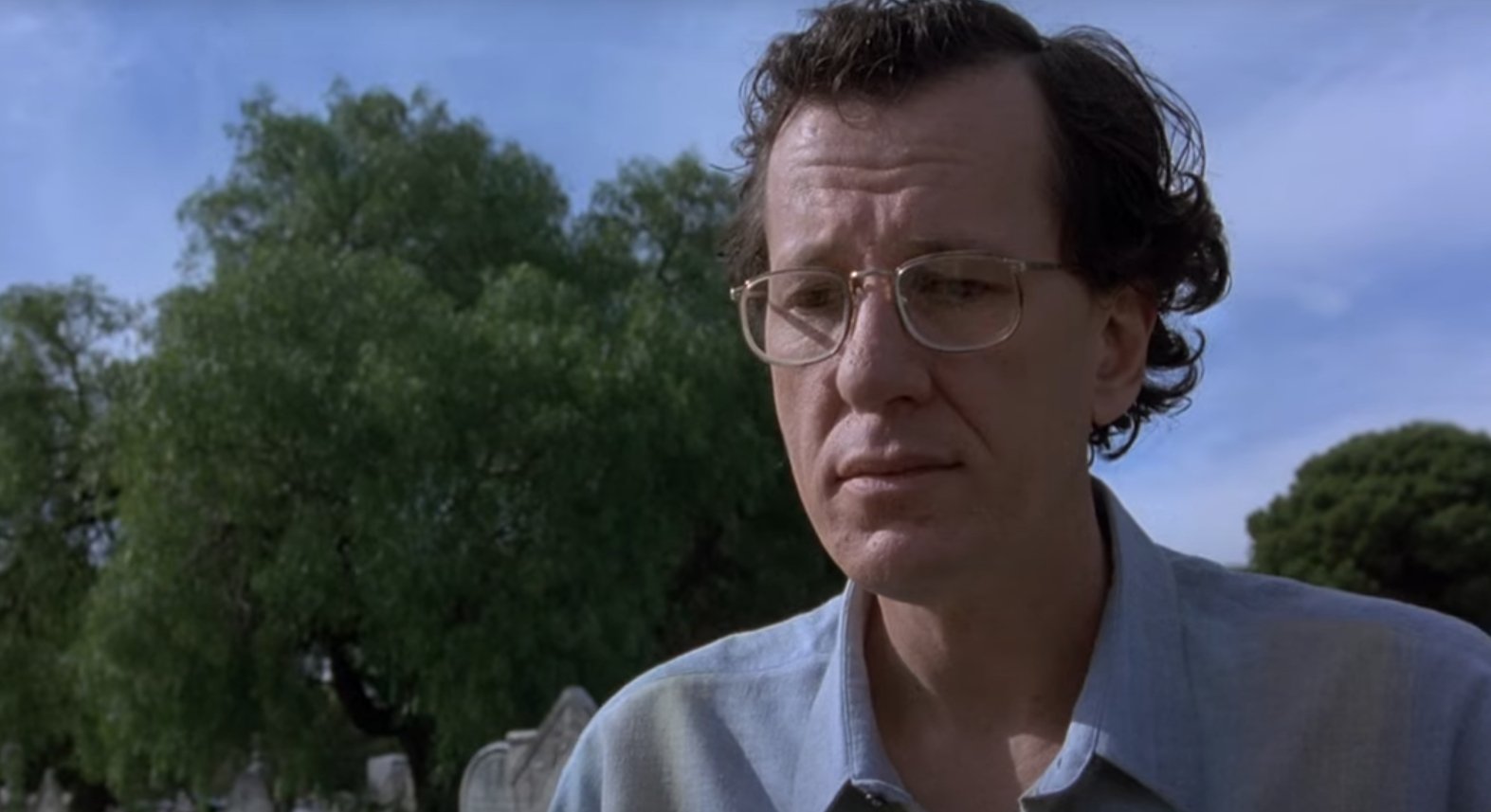
A still shot from the movie "Shine."
by Melda Civelek Aug 21, 2025 10:36 am

'Shine' is a powerful exploration of how the pressure to succeed can turn a gifted artist’s light into a shadow and how true freedom lies not in applause but in reclaiming one’s own rhythm

“Shining sometimes means sinking into darkness.”

Scott Hicks's "Shine" is a gateway not only to a pianist's life, but to how talent and trauma are intertwined, the dual nature of art that both elevates and destroys the human spirit.

The story begins with middle-aged David walking with rapid, halting steps in the rain. The flickering light of the streetlights resembles the scattered sparks in his mind. His words are left unfinished, his gaze searching not for a place, but for a time. There's no music; only the cold rhythm of the rain beats like a metronome in his mind. From the very first frame, the film whispers to the audience: This will not be the story of an ascent; it's the story of a fall from a height and the impact with the ground.

The sound of the piano echoing through the house during childhood is the key not to love, but to approval. The father figure stands at the door like a guardian, not a teacher; each note gains value only when played perfectly. The light filtering through the window casts a sharp sternness on the father's face and the shadow of constant vigilance on the son's. Here, success becomes the condition of love. That condition is so heavy that the piano keys are no longer the chains of a child's fingers, but of his destiny.

Competitions, medals, applause, from the outside, it's an elevation; from the inside, it's a gradually shrinking breath. Success each time softens the father's shoulder, but it never transforms into a hug. As Kierkegaard said, freedom can sometimes be dizzying, but David never experiences that dizziness because his choices are born not of his own desires but of his father's expectations.

Following all this comes the journey to London; the doors of the Royal College are thrown open. After his father's dark house, the school's spacious halls, its brightly lit windows, seem like a physical equivalent of freedom. But even within this light, the shadow of the past lingers. David's fingers, seated on stage, play not only the notes but also his father's gaze.

Actor Geoffrey Rush attends the 69th Annual Academy Awards at the Shrine Auditorium in Los Angeles, California, U.S., March 24, 1997. (Getty Images)

And then that unforgettable moment: Rachmaninoff's "Third Piano Concerto." As the music swells, the audience hears not only the melody but the accelerating rhythm of David's mind. As beads of sweat fall on the keyboard, the camera zooms in on his face; hands blur, time warps. This performance isn't just a concert; it's a moment when a person pushes their limits and breaks, when they both shine and fade. It reminds us of Nietzsche's words: "Genius burns with its own fire." Here, before the applause is even heard, we see that fire begins to consume his body.

The collapse comes with silence. The white walls of the hospital rooms hold a void, contrasting with the black keys of the piano. Days melt into indefinite hours. Time loses its rhythm. Conversations are fragmented, gazes turned away. As Foucault described, mental hospitals don't just heal; they are also devices for "adjusting to the norm." Here, even music is silenced; only the mind's own hum is present.

But the human soul, however fractured, yearns for reconnection. Meeting Lisa lays the first thread of this connection. Her presence reminds David of what unconditional acceptance is. The camera angles widen, the light warms; it's as if David's living space expands, his breathing becomes more open. Music once again flows into life, but this time it's not a competition piece; it's life's own rhythm.

In the finale, David returns to the piano. The audience watches not his triumph, but his rebirth. Applause comes, but this time it's different: this applause is no longer a reward, but an accompaniment. As Sartre said, freedom sometimes means embracing our obligations; David now plays the piano not from his father's shadow, but from his own light.

Shine is a film that questions, not glorifies, the myth of genius. To shine is sometimes to carry darkness within. Every keystroke carries both a wound and a hope. And perhaps the film's quietest yet most powerful message is this: True brilliance lies not in the eyes of others, but in one's own inner rhythm. Music resonates not only on stage but also in the depths of the wounded soul, until one finds one's own melody.

Fragility of a genius

Backbone of narrative

While Scott Hicks's "Shine" may appear to follow the classic "genius biopic" mold, the film is actually a laboratory where talent and trauma intersect, and public success and the intimate breakdowns of private life.

Relying on the pianist's fingers for scale and Rachmaninoff's intense, boundary-pushing passages for motif, the story demonstrates not only the rise and fall of a musical career but also how music is a force that can both build and shatter an individual's integrity. The film walks the viewer on the fine line between talent and madness, utilizing all the tools of cinema – sound, camera, rhythm, tempo and lighting – to expressively represent the inner world.

A still shot from the movie
A still shot from the movie "Shine."

Thematic centers

Genius, repression, belonging

The first theme that forms the backbone of the film is the "myth of genius." The tradition of "creativity molded by suffering," embedded within the Romantic aesthetic, is presented in the film as both a mythological allure and critically interrogated.

The real accusation here is not the nature of the genius, but the tendency of those around him (family, institutions, academia) to objectify him as a single achievement. This objectification becomes apparent in the family's expectations of upward mobility, the competitive rigor of education, and society's normative definitions of success. Ultimately, a person's inner life becomes a commodity for the public; this transformation leads to the friction and eventual fracturing of the spheres of belonging – home, conservatory, stage.

Sociologically, the film quietly but distinctly explores relations of class and cultural capital. Music education is a unique mechanism of status production; conservatories both select and shape talent. In this process, the family is both a mechanism of support and oppression: while promising success, it simultaneously reduces the child's identity to a single goal.

Direct emphasis on immigrant/minority origins may not be very evident in the film, but it can be connected to a broader social literature (assimilation, cultural expectations) through the themes of “search for belonging” and “social acceptance.”

Philosophical reading

Freedom, subjectivity, issue of "realization"

On a philosophical level, "Shine" grapples with the tension between two opposing promises: the inherent conditions of individual freedom and the determinism of social demands.

While the romantic ideal elevates suffering to a creative imperative, modern ethical and post-structural perspectives (thinking in terms of Foucault) question the power of such "normalizing" expectations over mental health. Foucault's critiques of the history of reason and spirituality are evoked, as the institutional interventions in the film hold the potential to transform individual subjectivity.

An existential perspective is also one of the film's dominant philosophical resonances: the conflict between "selfhood" and "othering." The recognition of success both brings David onto the public stage and makes his most intimate parts visible – this visibility is a liberating yet arresting force. Ultimately, the film depicts freedom not as a mere matter of choice or performance, but as a process interwoven with historical, familial and bodily conditions.

Psychological analysis

Symptoms, causes, representation

"Shine" avoids directly naming psychopathology through "diagnosis"; instead, it presents an internal "breakdown experience." One must be careful when discussing the clinical presentations observed in the film: cinema classically dramatizes symptoms and does not provide a medical diagnosis.

Nevertheless, the following are perceived on a cinematographic level:

Extreme anxiety and performance anxiety: Described as pre-scene tensions, tremors and mental confusion. This can be interpreted as representing a common form of pressure in the performance-oriented music world.

Dissociative ruptures and loss of control: David's behavioral disturbances in some scenes indicate moments of fragmentation of the self-continuity; the cinematic language depicts these moments through accelerating cuts, intense close-ups, and odd timing of the music.

Psychotic elements: Occasionally, there are images and behaviors that indicate a breakdown in the relationship with reality; these are presented as "hallucinatory" or reality-shattering moments in the film's inner world.

From a psychodynamic perspective, the film highlights the traumatic consequences of overly burdened expectations (introjected authority, perfectionism), particularly in parent-child relationships. The paternal figure's oppression leads to the internalization of a controlling other, which confines self-development to a one-way, fragile pursuit of success.

This reading draws parallels with the concepts of "high-functioning disorders" and "performance-based self-worth" in contemporary clinical literature: if one's worth is reduced to performance, failure or unexpected disruptions become identity crises.

A still shot from the movie
A still shot from the movie "Shine."

Artistic representation

Cinematic language, dramatic role of music

Artistically, "Shine's" greatest strength lies in its use of music not merely as a "background," but in transforming it into the most fundamental narrative tool for narrative and character.

Rachmaninoff's challenging passages are not merely technical feats of strength; they are also metaphorical obstacles that test the character's inner limits. In performance scenes, the film breaks the rules of sound-montage, interweaving the timbre of the piano with the sound of the character's breath, sweat and trembling fingers – thus blurring the line between "listening" and "seeing."

The cinematography emphasizes manual dexterity with frequent close-ups; the texture of the hands, the touch of the fingers on the keys and the play of light on the keyboard connect the character's physical presence with the rhythm of the music. The rhythmic cutting and sudden lapses in sound mimic moments of mental rupture.

As an aesthetic choice, the film forces the viewer to an empathetic gaze while simultaneously demonstrating the ethical limits of "observation": How closely should we look, how much should we intervene?

Ethics and criticism

Biographical cinema, privacy

Biographical cinema inevitably compresses, selects and exaggerates reality. "Shine" was also inspired by the life of David Helfgott; therefore, the film's narrative is also a practice of mythmaking.

Two ethical issues arise here: first, the dramatization of mental illness can sometimes serve cliches and become a voyeuristic object of consumption; second, the transformation of a person's fragility into "art material" raises questions of privacy and dignity. Cinema can transcend boundaries while generating empathy – it can be a process that consumes as much as it educates the viewer.

Music, rupture, reconstruction

A poetic paragraph

Like fingers striking piano keys, certain strokes in life leave endless echoes; the film shows us that these echoes can permeate both the music and the soul.

"Shine" depicts how talent, while seemingly shining in the spotlight, can be buried within, how success can sometimes absorb the most intimate parts of an individual. The film doesn't just make the viewer a spectator of tragedy; it also makes them feel the delicate weaving between genius and madness, burdened expectation and fragile freedom.

The music in the final scenes isn't the finale; it's the first step toward reconstruction. True healing begins not with the applause of a performance, but with rediscovering one's own rhythm. And this is perhaps the film's most fundamental call: Human worth cannot be reduced to a single indicator – success, applause, a title – but rather with the individual, their own fragility and creativity, as a whole; with every touch of the keys, both a melody and a life are rewritten.

About the author
Journalist, clinical psychologist
  • shortlink copied
  • Last Update: Aug 21, 2025 1:35 pm
    KEYWORDS
    shine movie review david helfgott biography
    The Daily Sabah Newsletter
    Keep up to date with what’s happening in Turkey, it’s region and the world.
    You can unsubscribe at any time. By signing up you are agreeing to our Terms of Use and Privacy Policy. This site is protected by reCAPTCHA and the Google Privacy Policy and Terms of Service apply.
    No Image
    Deepwater port endangers Congo's turtles
    PHOTOGALLERY
    • POLITICS
    • Diplomacy
    • Legislation
    • War On Terror
    • EU Affairs
    • News Analysis
    • TÜRKİYE
    • Istanbul
    • Education
    • Investigations
    • Minorities
    • Diaspora
    • World
    • Mid-East
    • Europe
    • Americas
    • Asia Pacific
    • Africa
    • Syrian Crisis
    • İslamophobia
    • Business
    • Automotive
    • Economy
    • Energy
    • Finance
    • Tourism
    • Tech
    • Defense
    • Transportation
    • News Analysis
    • Lifestyle
    • Health
    • Environment
    • Travel
    • Food
    • Fashion
    • Science
    • Religion
    • History
    • Feature
    • Expat Corner
    • Arts
    • Cinema
    • Music
    • Events
    • Portrait
    • Performing Arts
    • Reviews
    • Sports
    • Football
    • Basketball
    • Motorsports
    • Tennis
    • Opinion
    • Columns
    • Op-Ed
    • Reader's Corner
    • Editorial
    • Photo gallery
    • DS TV
    • Jobs
    • privacy
    • about us
    • contact us
    • RSS
    © Turkuvaz Haberleşme ve Yayıncılık 2021