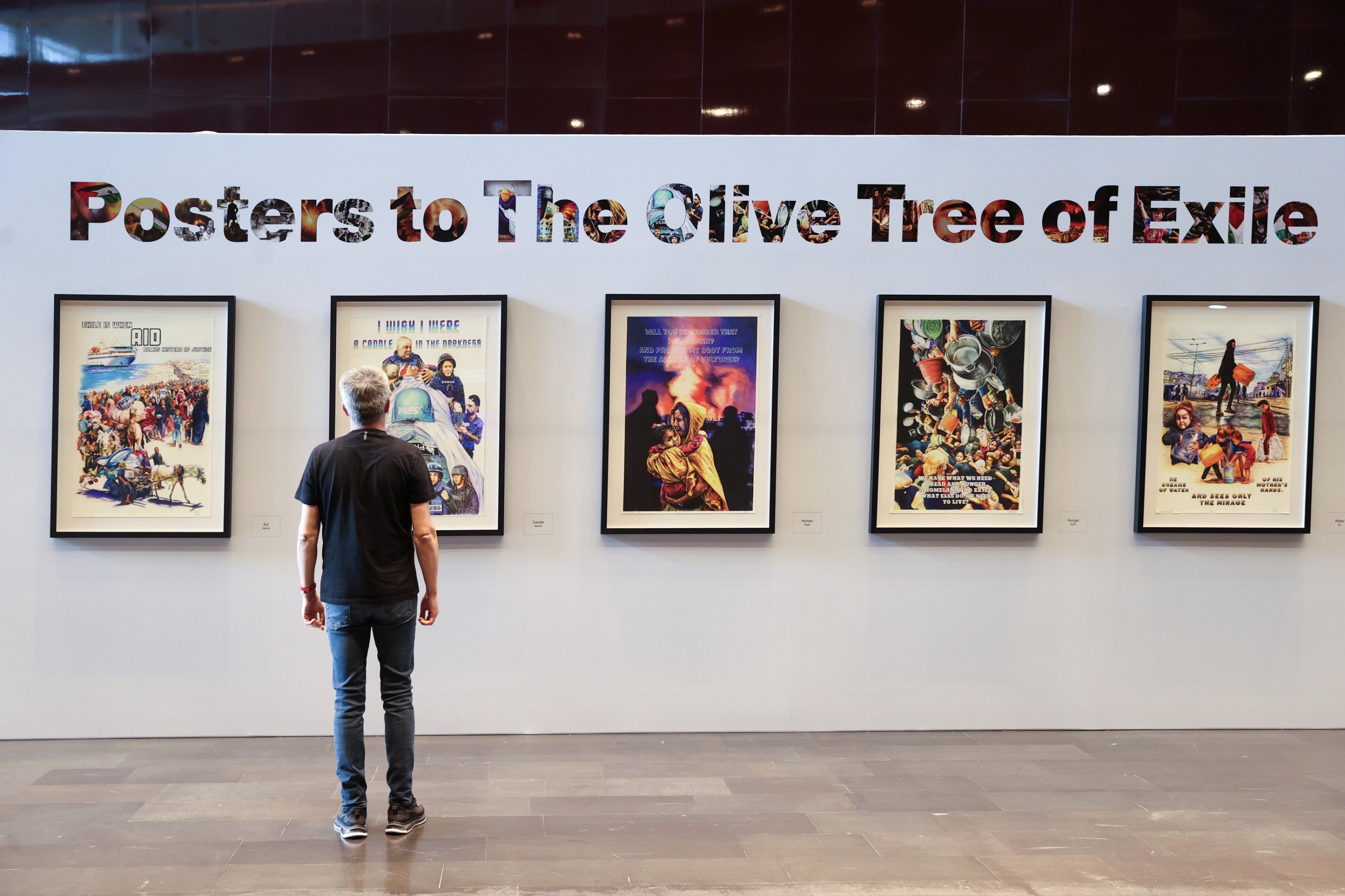
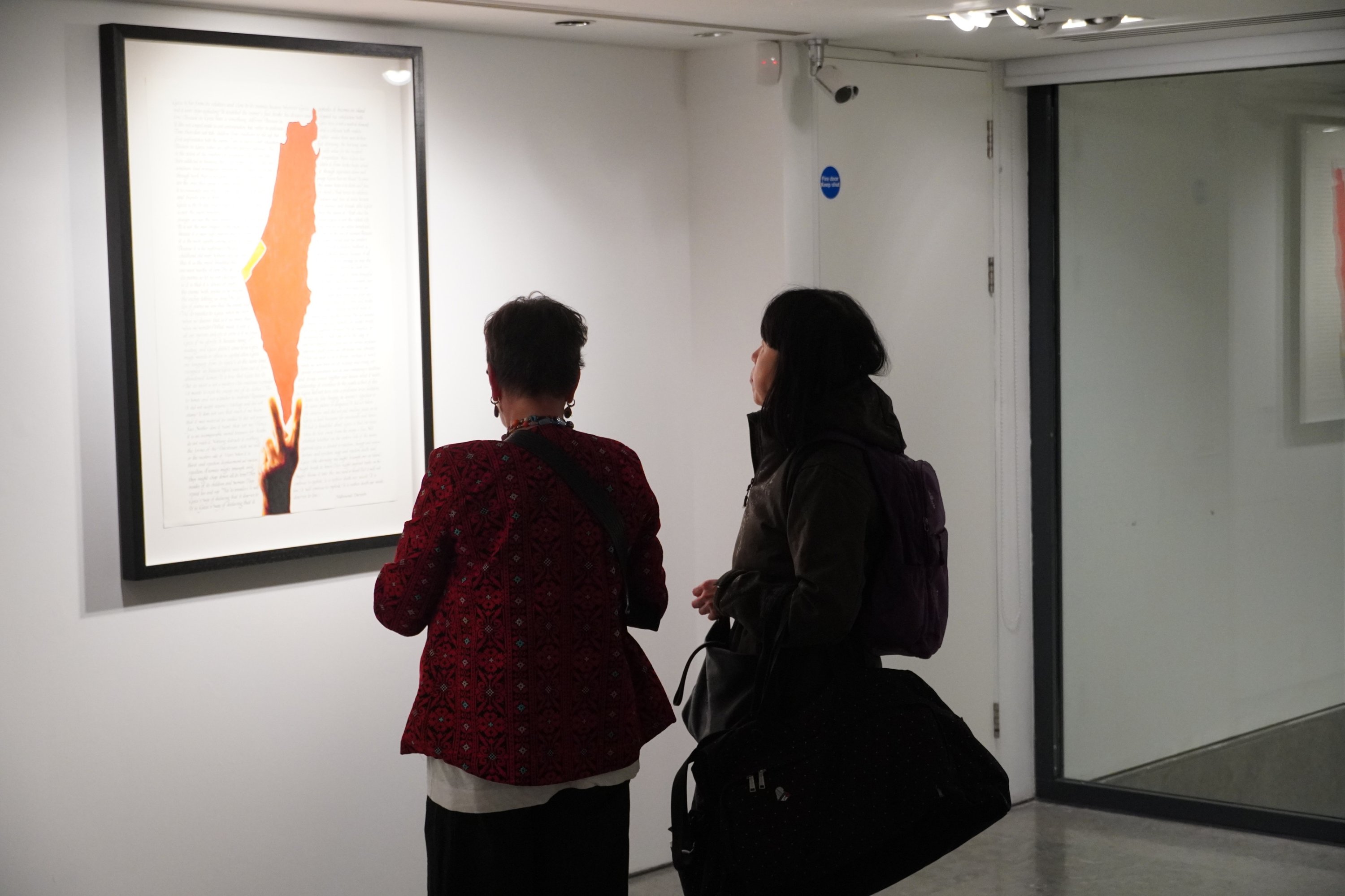
Turkish artist Ahmet Yusuf Aygeç's exhibition, "Posters for the Olive Tree in Exile," which portrays the Palestinian experience by blending it with the poetry of Palestinian national poet Mahmoud Darwish, has opened to visitors in Palestine.
The exhibition, consisting of 20 works created by Aygeç using colored pencils and soft pastels, is curated by Samed Karagöz and supported by the Palestinian Coordination Office of the Turkish Cooperation and Coordination Agency (TIKA). It opened at the Mahmoud Darwish Museum in Ramallah in the occupied West Bank.
The posters depict Palestinian suffering, resistance and everyday human life while incorporating verses from the poetry of Mahmoud Darwish, regarded as Palestine's national poet.
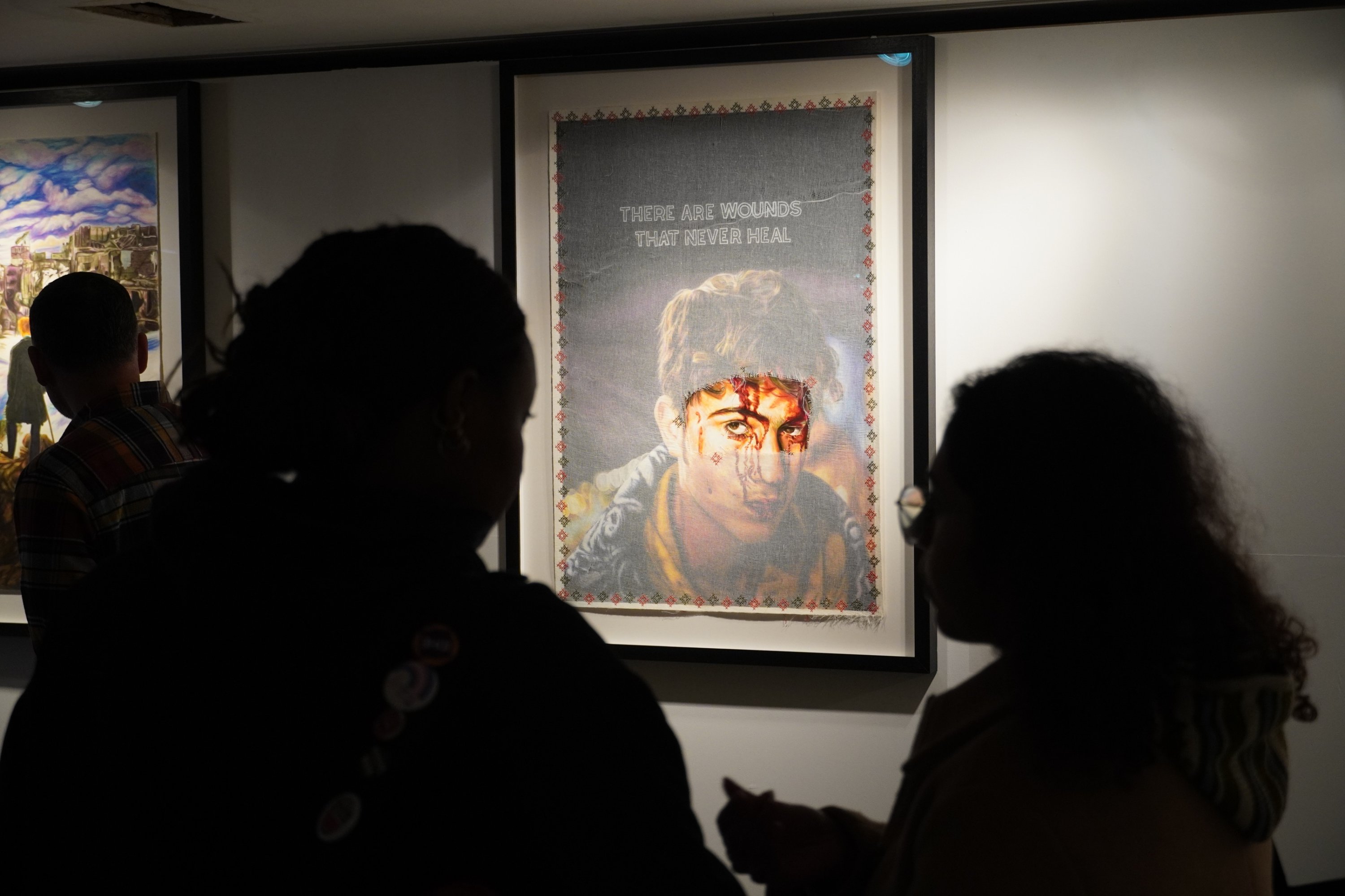
The opening ceremony was attended by Palestinian Culture Minister Imad Hamdan, Deputy Consul Aleyna Karasaç from Türkiye's Consulate General in Jerusalem, representatives from TIKA's Palestine office, the Yunus Emre Institute in Ramallah and members of the Palestinian arts community. Aygeç was unable to attend after Israel denied him a visa.
Speaking to Anadolu Agency (AA), Hamdan said the exhibition was significant because it transformed "Darwish's verses into posters," adding that the message gained further meaning by being expressed through the work of a Turkish artist.
He said the posters conveyed messages of "resistance, captivity, martyrdom and faith" while illustrating Palestinians' attachment to their homeland, comparing it to the deep roots of an olive tree. Each poster, he added, aims to communicate the Palestinian cause to the world.
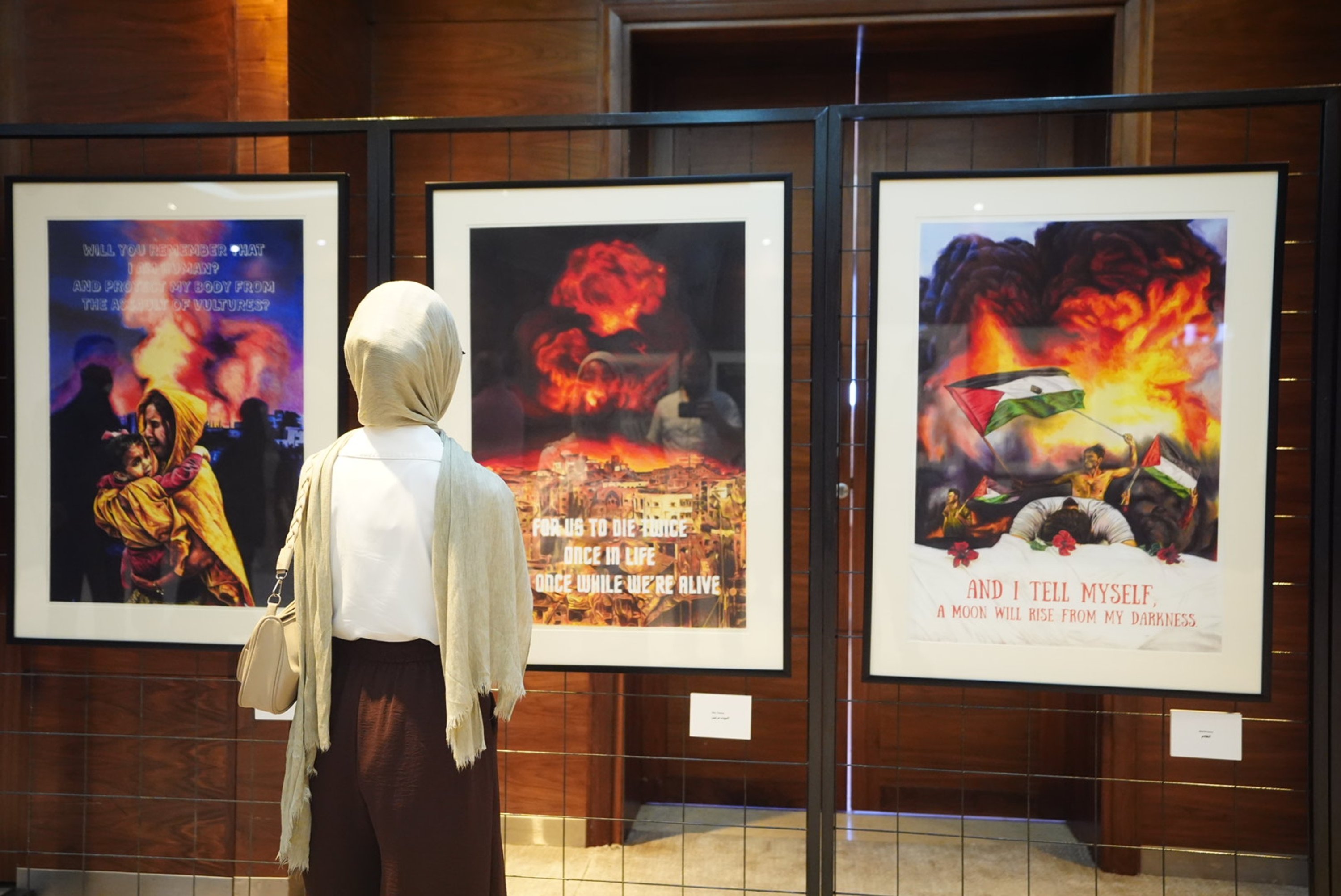
Referring to Aygeç's inability to attend because of Israel's visa restrictions, Hamdan said, "Israel does not want a witness to be present on Palestinian land or to stand with the Palestinian people. Nevertheless, this message has reached us from Türkiye and through the artist's works the message of the Palestinian cause is reaching the world."
Exhibition curator Karagöz noted that Palestinians developed a strong poster tradition during the 1960s and 1970s, influencing graphic artists across Europe. He said the exhibition contains numerous references to Darwish, with the title inspired by the poet's line, "Letters to the olive tree in exile," adapted into "posters."
Karagöz said it took Aygeç about a year to complete the collection. All but one of the works include quotations from Darwish's poems, writings or speeches.
"It is a great honor for this exhibition and these works to be displayed at the Mahmoud Darwish Museum," he said, adding that presenting the works to Palestinian audiences made the project especially meaningful.
Karagöz also described the logistical challenges of bringing the exhibition to Palestine.
"We did not dare send the original artworks because we did not know what would happen at customs. Instead, we decided to send limited-edition prints, but they were also held at customs and returned to us damaged and unusable. As a result, we had to print them here. TIKA provided tremendous support, making it possible for us to realize this exhibition. The Mahmoud Darwish Museum has also been an exceptionally generous host," he said.
Karagöz, who said he has followed developments in Palestine closely for many years and specializes in the region, also shared his observations from the occupied West Bank.
"I observed that life appears to go on as usual, but the people I spoke with said the streets are empty because many people cannot get here. Security measures at checkpoints have intensified, making it almost impossible for Palestinians to travel from one place to another. There is also a fuel shortage. Fuel is not reaching the West Bank. People cannot travel because there is no fuel and even if they have money, they cannot buy it. We hope these difficult days will eventually pass,” he said.
The exhibition will remain open to visitors at the Mahmoud Darwish Museum in Ramallah, in the occupied West Bank, through Aug. 2.