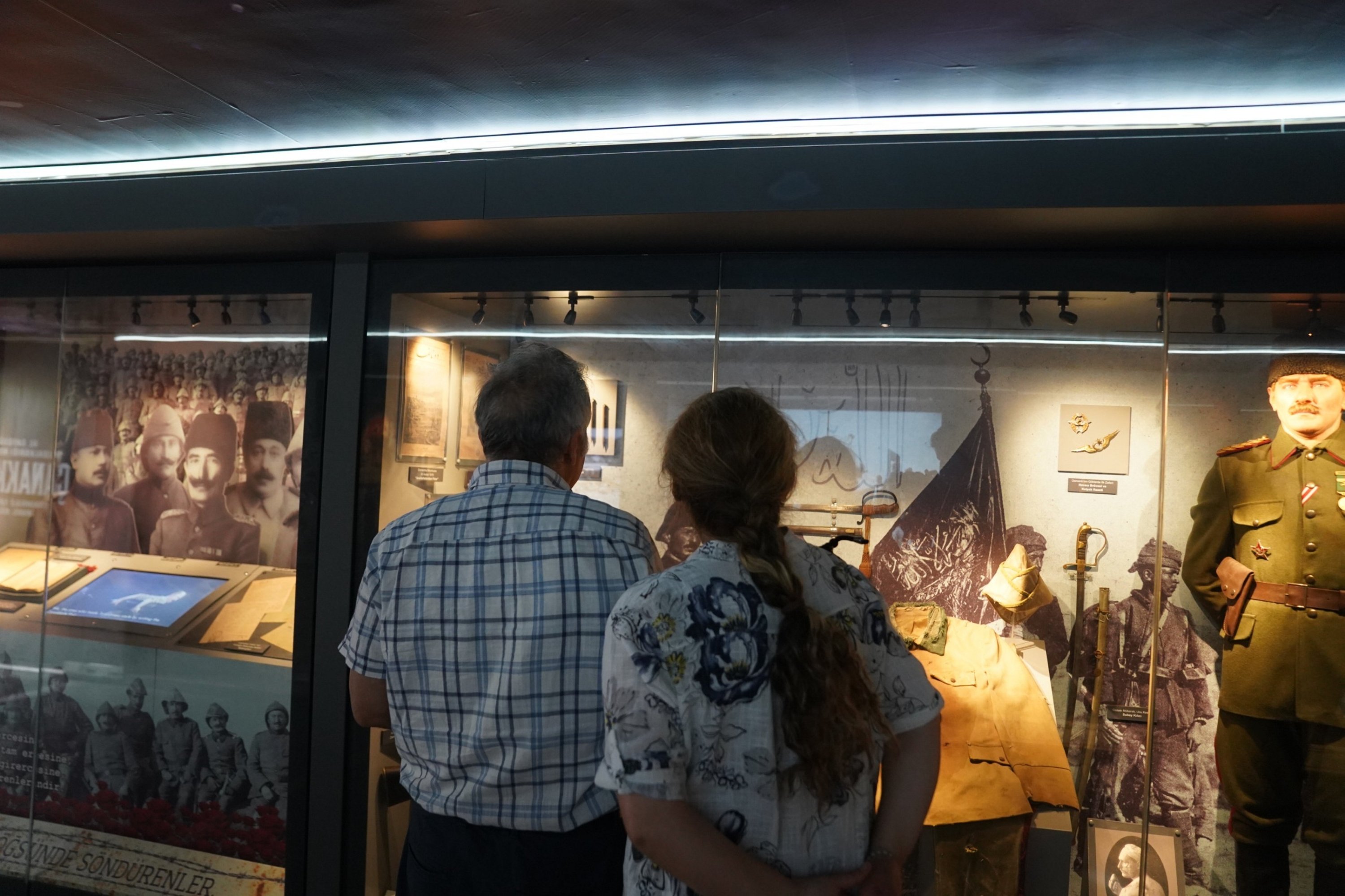
The Presidency of Çanakkale Wars and Gallipoli Historical Site has launched the Çanakkale Wars Mobile Museum across Europe, bringing exhibits on one of Türkiye’s most significant military campaigns to Turkish communities abroad.
According to a statement from the Presidency, the mobile museum previously toured all 81 provinces of Türkiye, reaching millions of visitors. It later expanded its program to Balkan countries, connecting diaspora communities with the historical legacy of the Gallipoli campaign.
After drawing strong public interest in earlier international stops, the traveling museum has now begun engaging Turkish citizens across Europe.
Designed to preserve the memory of the Gallipoli campaign, strengthen national unity, and pass historical awareness to younger generations, the mobile museum opened its European tour on June 1 in Munich, Germany.
The museum features photographs, historical documents, wartime artifacts and digital exhibits that guide visitors through key moments of the Çanakkale (Gallipoli) campaign.
Following Munich, the museum will continue its tour across major German cities, including Frankfurt, Berlin, Hamburg, Duisburg and Cologne.
Officials said the initiative aims to help Turkish citizens in Europe better understand the spiritual and historical significance of Gallipoli, honor the sacrifices of their ancestors and ensure the “Çanakkale spirit” is passed from generation to generation.
Throughout its 2026 European program, the mobile museum is expected to reach thousands of visitors across Germany, Belgium, Bulgaria and Kosovo.
In Belgium, the museum will visit Maasmechelen on June 21, Genk on June 22, Heusden-Zolder on June 23, Liege on June 24, Saint-Josse-ten-Noode on June 26-27 and Mons on June 28.
In Bulgaria, stops include Razgrad from July 5-7, Haskovo on July 8-9 and Plovdiv on July 10–11.
The tour will conclude its listed schedule in Kosovo with visits to Pristina on July 14-15; Mamusa on July 16 and Prizren on July 17-18.
Organizers say the mobile museum will continue its mission of bringing the Gallipoli story to audiences abroad, highlighting one of the defining chapters in modern Turkish history.