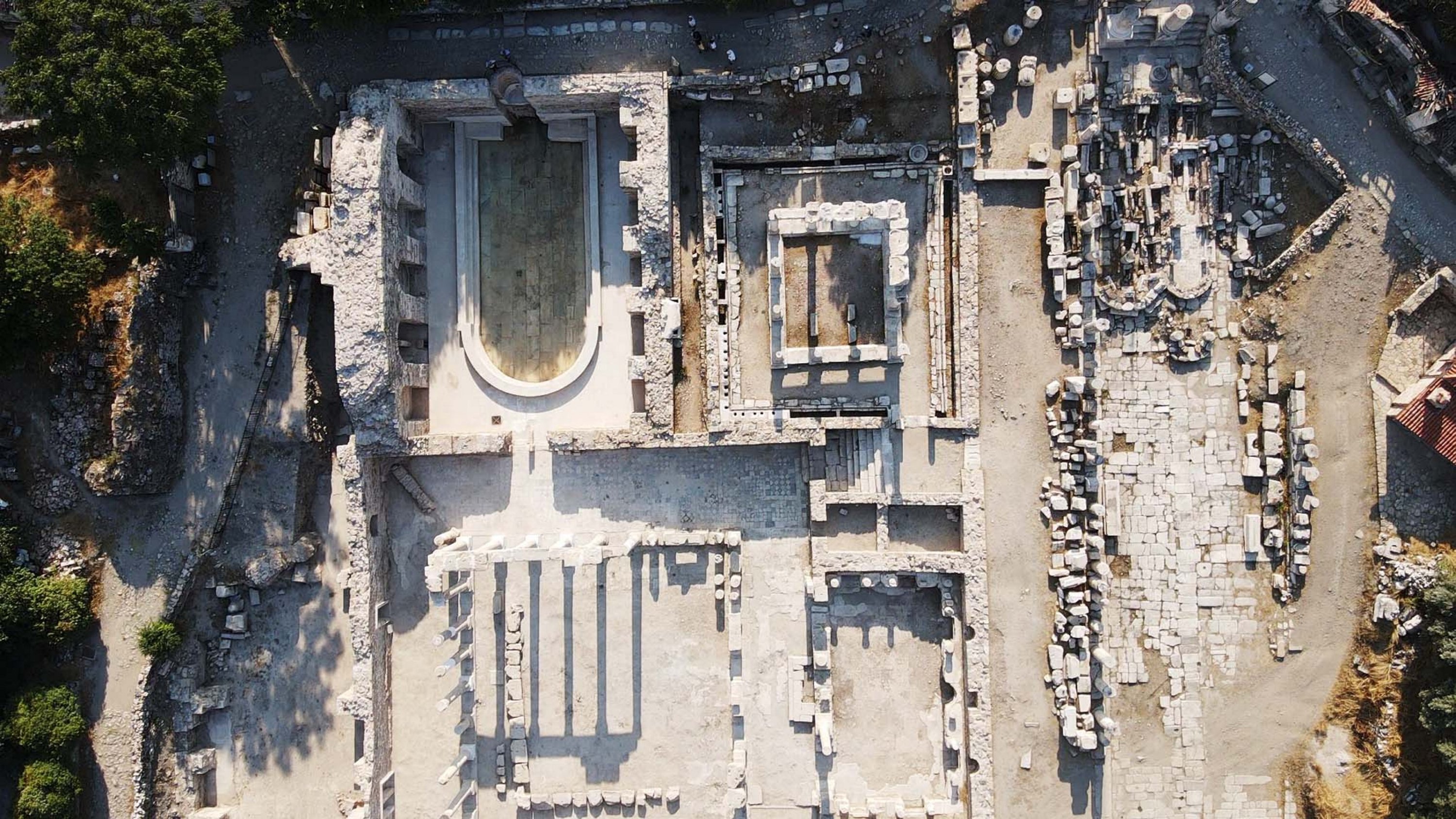
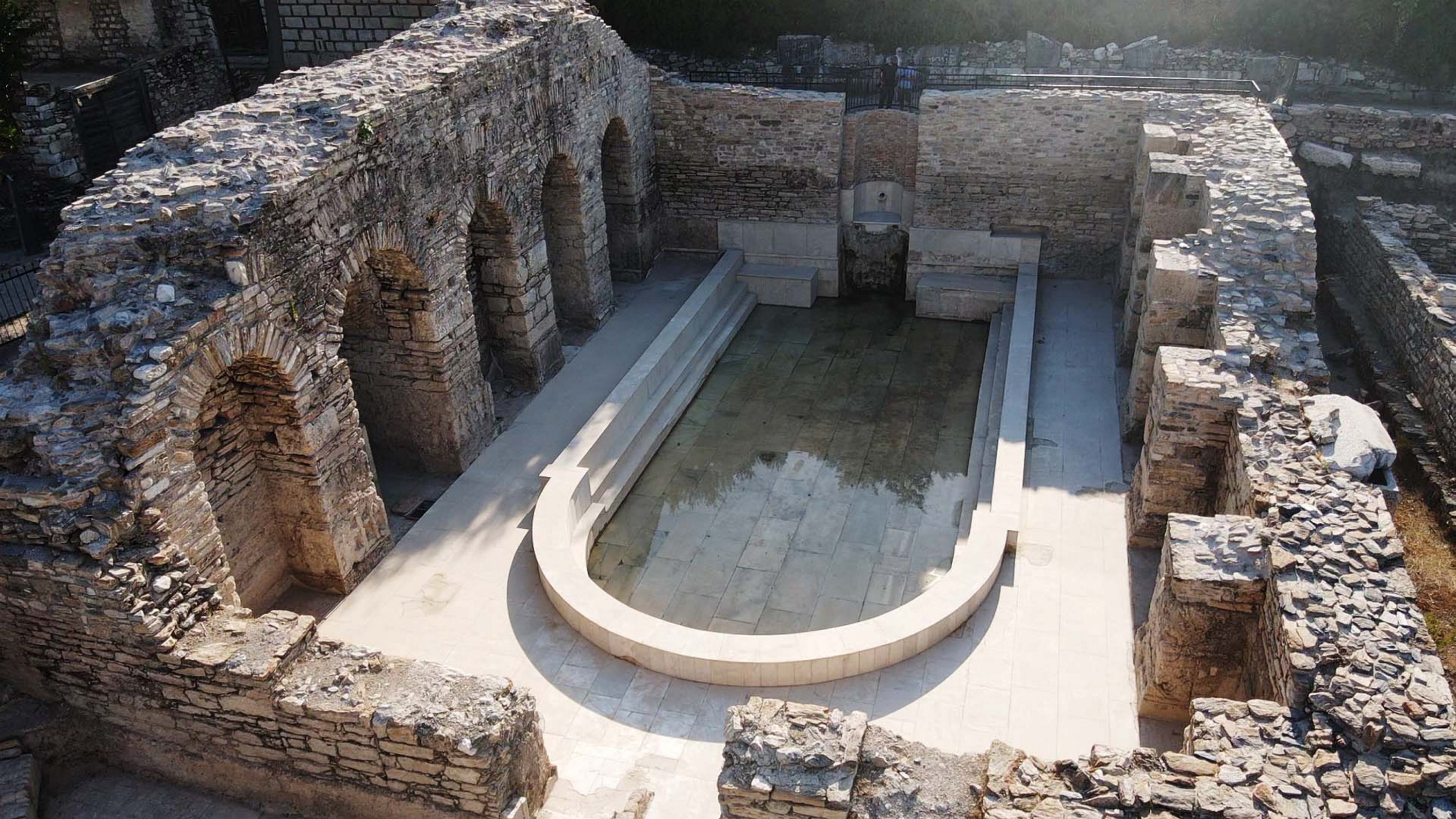
In the Roman bath at the ancient city of Stratonikeia, located in the Yatağan district of Muğla, in southwestern Türkiye, water has flowed into the pool again after nearly 1,900 years, following the completion of excavation and restoration work.
Stratonikeia, known as the “city of gladiators” and listed on UNESCO’s World Heritage Tentative List, is also considered one of the world’s largest marble cities. Excavations, which began in 1977, continue to uncover new findings.
The ancient city holds historical significance spanning the Hellenistic, Roman, Byzantine periods, as well as the Menteşe Beylik, Ottoman and Republican eras. New artifacts have been unearthed, and historic structures have been restored.
Professor Bilal Söğüt, head of the Stratonikeia and Lagina excavation team, told Anadolu Agency (AA) that they are conducting archaeological digs, restoration and documentation on various structures dating from antiquity to the present in this key city of the Caria region.
Söğüt highlighted the work on the Roman bath as part of the “Legacy for the Future” project, calling it especially exciting. “We have completed the excavation and conservation work here. We released water into the pool through the same channel as 1,900 years ago, and the water started flowing again. It created an exciting atmosphere. This will leave a legacy for the future and provide visitors a place to explore and enjoy,” he said.
He added that during the hottest days, visitors have shown eagerness to enter the pool, but the pool was designed for viewing only. “We want to demonstrate how these pools operated during the Roman period,” Söğüt said.