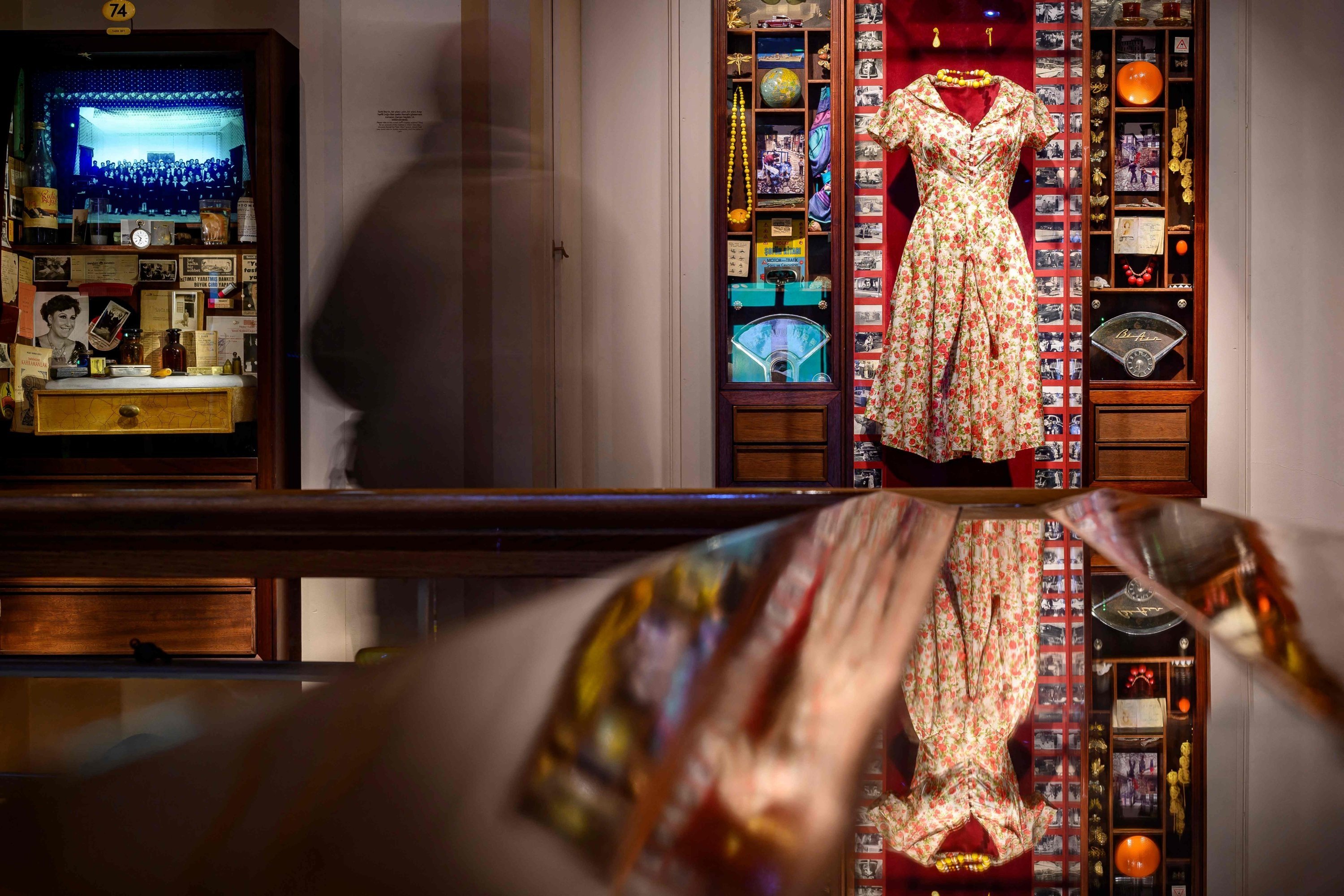
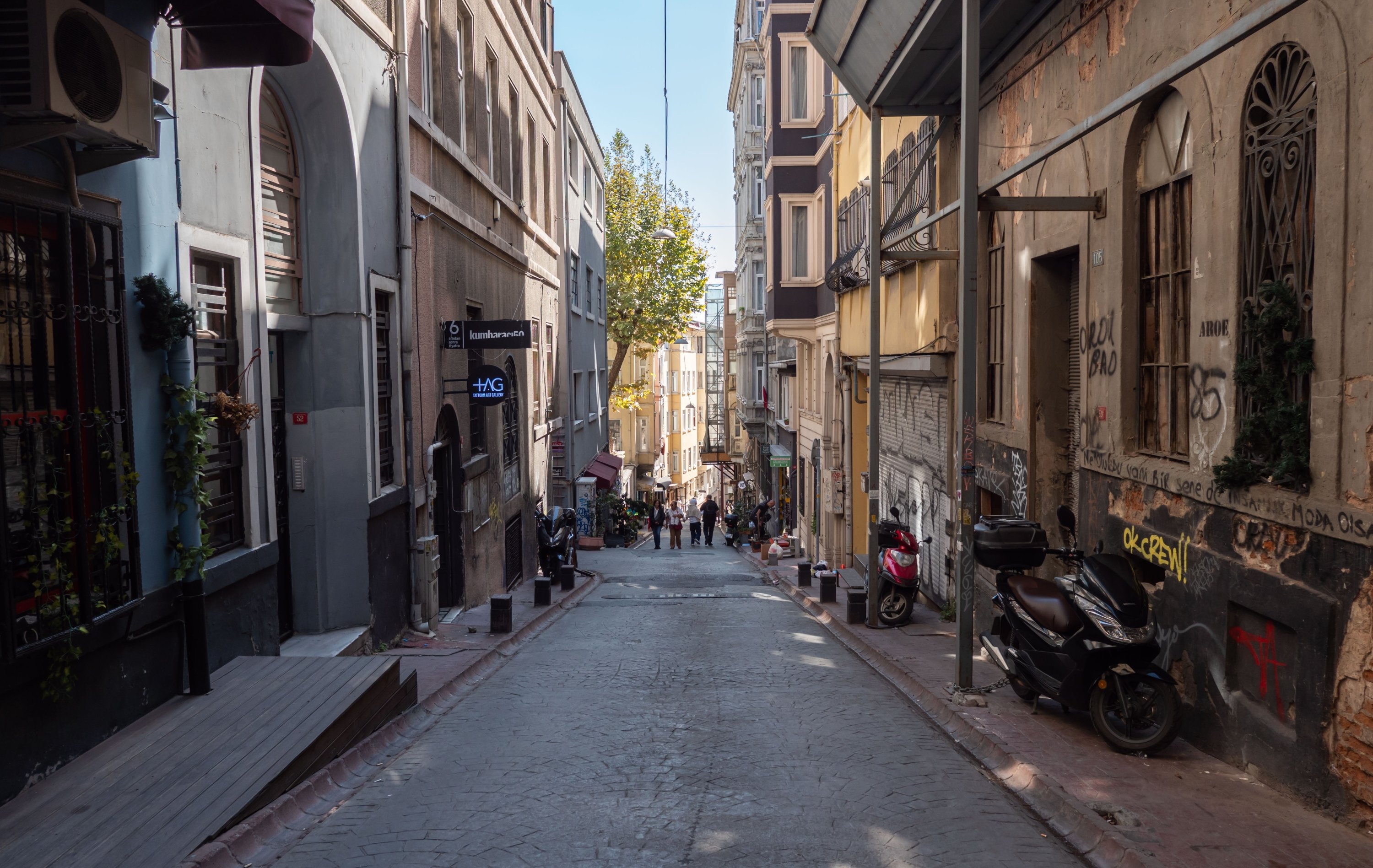
The moment you set foot on the cobblestones of Çukurcuma, you are making a choice without even realizing it. An antique store to the left. An antique store to the right. Old clocks, wooden chests, gilded mirror frames. The street seems to whisper something to you. All these things once belonged to someone. All these things once were a part of someone.
Then, you come across a red building.
Crossing the threshold of this building is like entering a novel. For this is exactly what it is. For, this is the museum with the eponymous name of the novel by Nobel laureate Orhan Pamuk, published in 2008 and opened in 2012 on this very street, in this very red building. But what is really happening here? Is a novel turning into a film? Is a museum turning into a tourist attraction? Or is Istanbul, once again, reinventing itself?
How does a city export its story? As an urban engineer, the Museum of Innocence strikes me as a genuinely unusual structure. The world's great museums are, by design, isolated: monumental gates, vast courtyards, white cubes severed from the fabric of the city around them. The glass pyramid before the Louvre signals the museum, not the city. The titanium cladding of the Guggenheim Bilbao lifts the building out of its surroundings and turns it into a sculptural object unto itself.
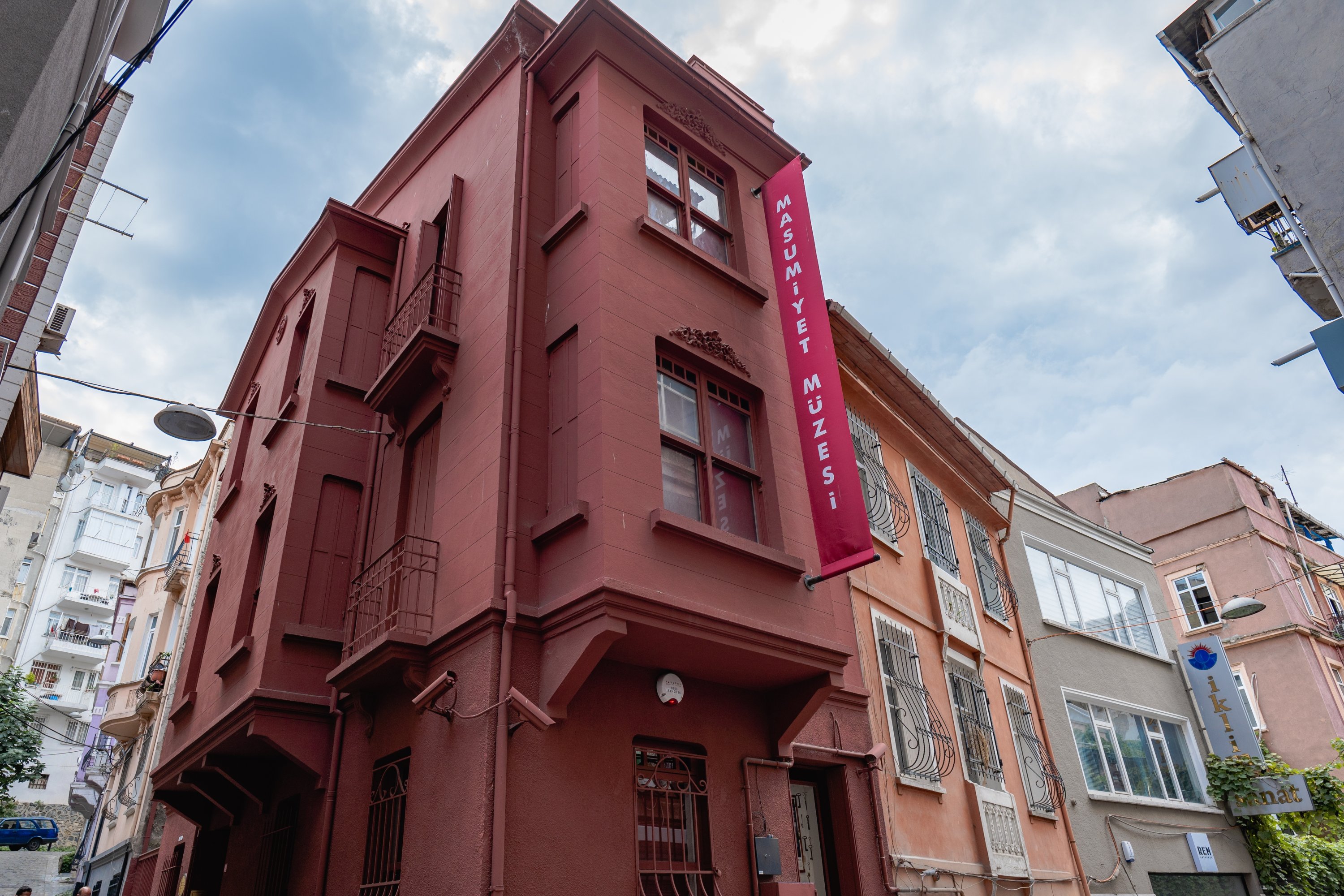
The Museum of Innocence does the exact opposite.
The building settles so naturally into Çukurcuma's antique dealers' quarter that most first-time visitors walk right past it. They turn back only when they notice the plaque. This is not a design failure; it is a design decision. What we call an embedded museum - one buried within the neighbourhood itself - transforms the institution from a destination into a part of everyday life. The museum lives inside the neighbourhood while telling the neighbourhood's story. And somewhere in that arrangement lies the answer to the question in this article's title: you cannot tell where Istanbul ends and the Museum of Innocence begins, because Pamuk never wanted you to.
Pamuk made this choice deliberately. Other locations had been considered. But Çukurcuma was the closest living equivalent to the Istanbul Kemal inhabits in the 1970s: old apartment blocks, dealers in second hand goods, narrow streets. The place would become an extension of the novel. And so it did.
But Pamuk went one step further. He embedded a free admission ticket on page 485 of the novel's Turkish edition. Any visitor who brings their copy of the book enters without charge. Look at the queue now: everyone is holding a book. Which is also a ticket. The boundary between reader and visitor has been erased. The novel invites you into the museum; the museum sends you back to the novel. Which museum in the world receives you quite like this?
Visiting the Museum of Innocence is therefore not simply a matter of going inside. Walking the street is already part of the visit. Climbing the stairs, pausing before the red facade, pressing your face to the glass – all of it belongs to the experience. The city has become the museum's foyer.
The way Pamuk built this museum is entirely unlike conventional creative practice. Most novelists write first, then leave their work behind. Pamuk collected before he wrote.
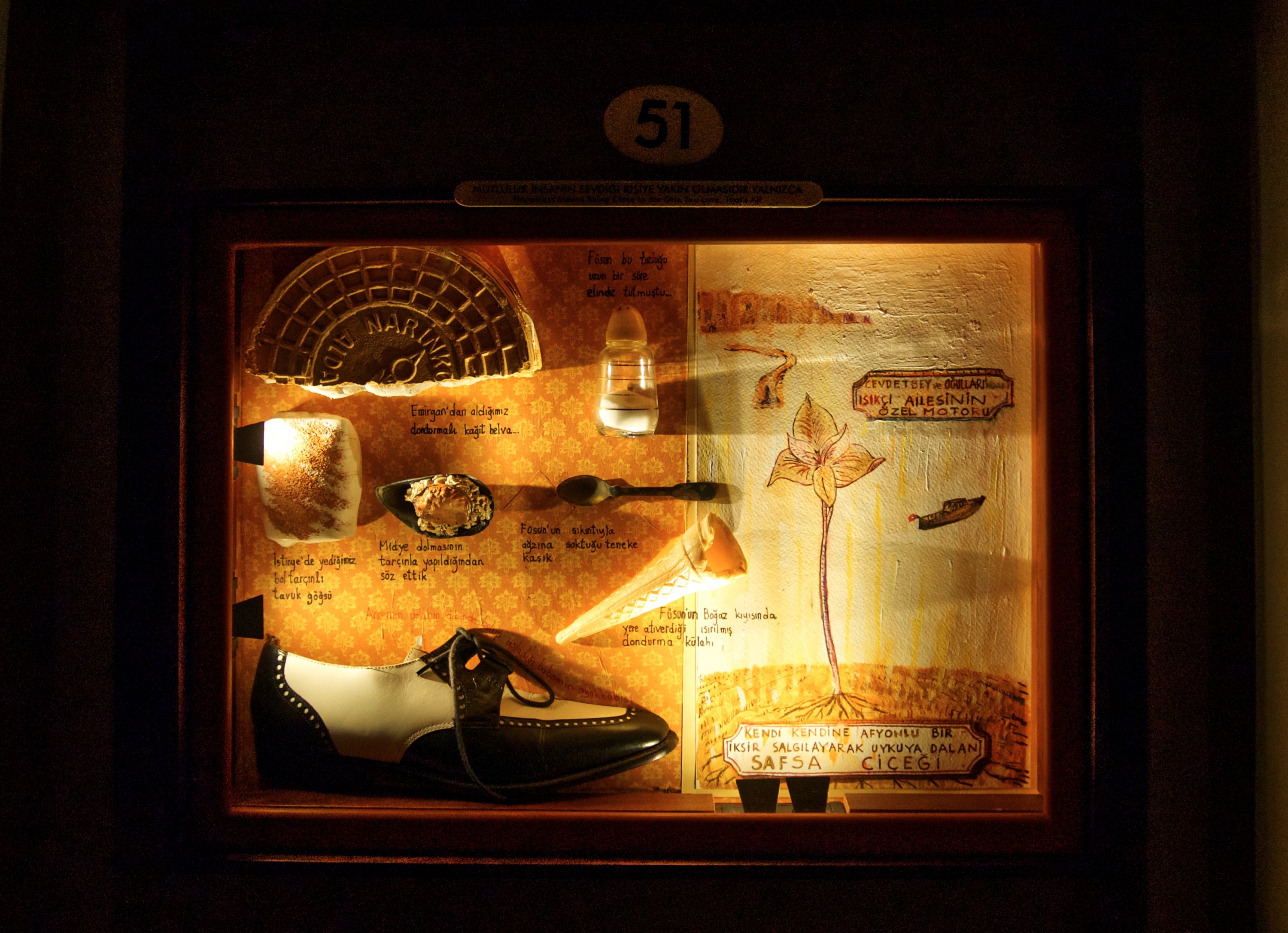
The objects he accumulated over years shaped the novel's characters. The 4,213 cigarette stubs that Füsun lights and stubs out, each one labelled by date and mood, arranged behind glass, transformed into the material form of grief. Meltem soda bottles, cinema tickets, small pieces of jewellery, items of clothing. Each carries within it both Kemal's obsession and the Istanbul of that era.
As the museum's own website puts it, the museum displays the objects from the novel while the novel itself grew as new objects were acquired through the museum. Each gave birth to the other. Which came first? Perhaps there is no answer. Or perhaps the city came before both.
This says something profound about the relationship between literature and place. Pamuk wrote from objects. And those objects came from Istanbul's memory: from bazaars, from family keepsakes, from the city's vanishing layers. The Istanbul of the 1970s - not yet globalized, weighted with class tension, turning rapidly toward the West - was the novel's true protagonist. Kemal and Füsun emerged from within that city.
Now that city is stepping onto the stage again, and this time, on a global scale.
In the days before Netflix's adaptation launched, the museum was receiving around 200 visitors a day. Once the trailers began to run, that figure climbed to 500. Museum staff expect the number to double again once the series is fully out.
These figures speak to a nation's cultural export capacity. In 2024, Türkiye ranked third in the world for television series exports, behind only the United States and the United Kingdom. Turkish dramas are now available in 170 countries and global demand for them rose by 184% between 2020 and 2023. These are not the numbers of a coincidence; they are the numbers of an accumulation.
But what does this global attention mean for Istanbul itself? As visitors from Russia, Hungary, Italy, Japan and China squeeze past one another on Çukurcuma's narrow staircase – what is happening to Istanbul in that same moment? Is it becoming a tourism destination? A nostalgia object?
Or is it, simply, a city worth telling stories about?
Two young sisters from Hubei province in central China said, on their way out of the museum, that they now want to read the book and watch the series, even though Netflix is not legally accessible in China. But curiosity finds a way. It always does.
In urban engineering, we speak of place-making: the art of transforming a space into somewhere people genuinely want to belong to. Sometimes architecture achieves it. Sometimes infrastructure. Sometimes the careful design of green space.
But Çukurcuma tells us something different.
Sometimes a writer spends years collecting objects. Sometimes a novel holds within it the days a city lived through decades ago. Sometimes a museum embeds itself so quietly into a neighbourhood's fabric that it becomes the neighbourhood itself. And sometimes a series opens a door to that city for the rest of the world.
Does place give birth to story, or does story build place? The Museum of Innocence offers a clear answer: the two are inseparable. The object shapes the writer; the writer shapes the character; the character shapes the place; the place shapes the city. And the city makes all of it possible.
Where Istanbul ends and the Museum of Innocence begins; perhaps that is not a question with an answer. Perhaps it was never meant to be.