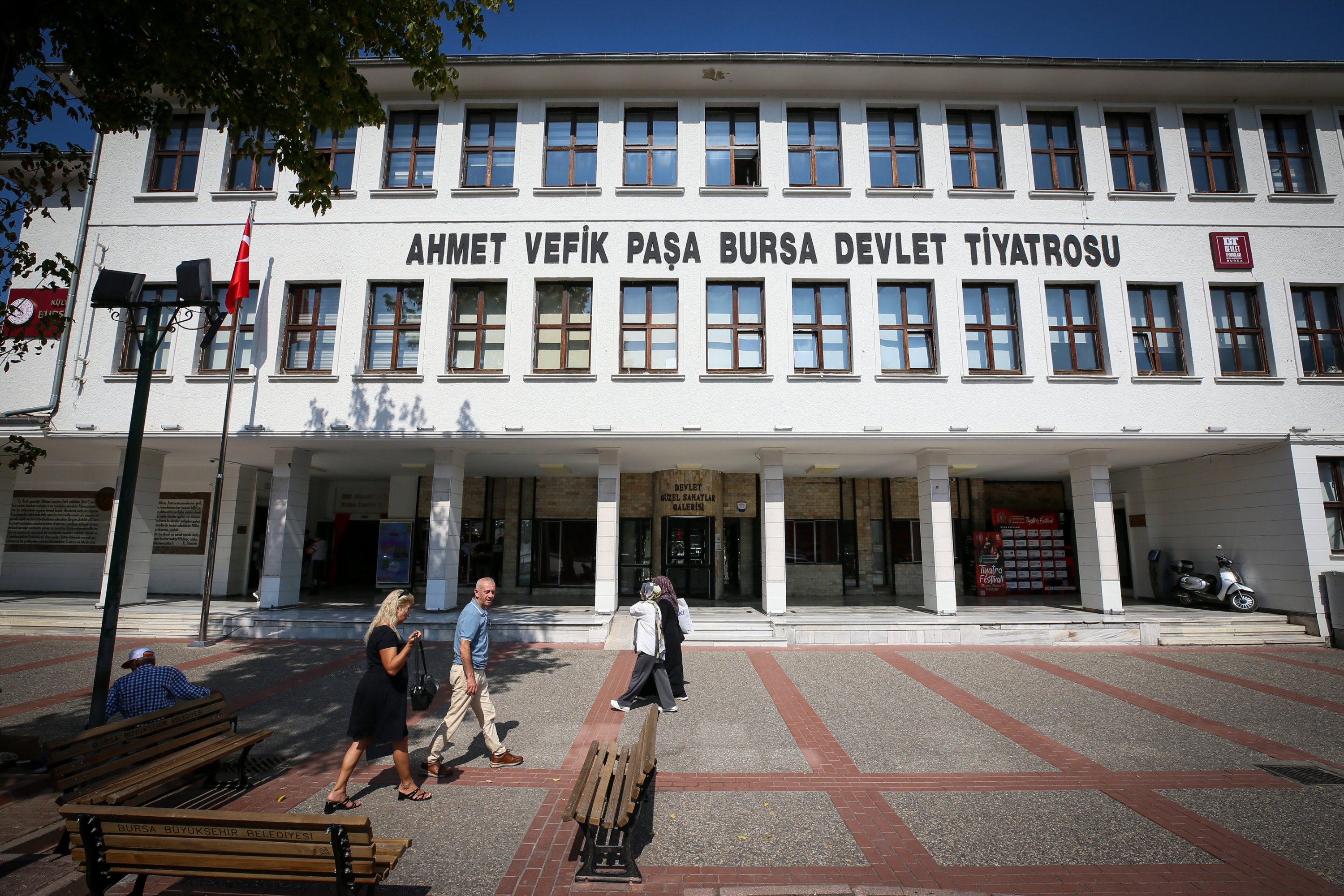
The Ahmet Vefik Pasha Theater in Bursa, Türkiye, has been welcoming art lovers since 1957 as the country’s first regional state theater. Yet, the building's story begins even earlier, with the pioneering vision of one of Türkiye's first female architects, Münevver Belen.
In 1937, an architectural competition was held in Bursa for the design of a new Halkevi (People's House), an institution established in the early republican era to promote cultural and educational development. Münevver Belen, one of the few female architects in Türkiye at the time, won the competition alongside architect Abidin Mortaş. Her modernist design was selected for construction and completed in 1940.
This building has now stood for 85 years and it remains an important cultural symbol of the city. Initially serving as a Halkevi for 20 years, the building was repurposed in 1957 as the Ahmet Vefik Pasha State Theater, aligning with the Republic of Türkiye's goal of spreading culture throughout Anatolia.
Professor Tülin Vural Arslan, dean of the Faculty of Architecture at Bursa Uludağ University, highlighted the cultural value of the building’s location in the city’s Heykel district – a central and historically rich area. After the proclamation of the republic, key public structures such as the governor’s mansion, the Halkevi and a statue of Atatürk were erected there, symbolizing the new government's vision.
"The construction of a building by a woman architect in 1937, even before women in many European countries had voting rights, is of profound importance," said Arslan. She emphasized that Belen’s design reflected the modernist Bauhaus movement – sharp geometric forms, devoid of traditional motifs, representing the republic’s break from the past and a bold step toward modernization.
“This building, made of rectangular prisms with sharp geometric lines, is a clear architectural reflection of the new ideology, the birth of the republic and its cultural climate,” she added.
Since 1957, the building has served continuously as the Ahmet Vefik Pasha Theater, a significant cultural institution in Bursa. According to Arslan, its preservation is vital not only because it was designed by a pioneering woman architect but also because buildings like this carry the soul of a city.
“Cities, like people, are shaped by their memories. These historical structures, bearing the traces and stories of the past, are crucial to preserving a city’s identity and transmitting it to future generations. It is essential to protect such rare buildings, especially when we understand their stories,” she said.
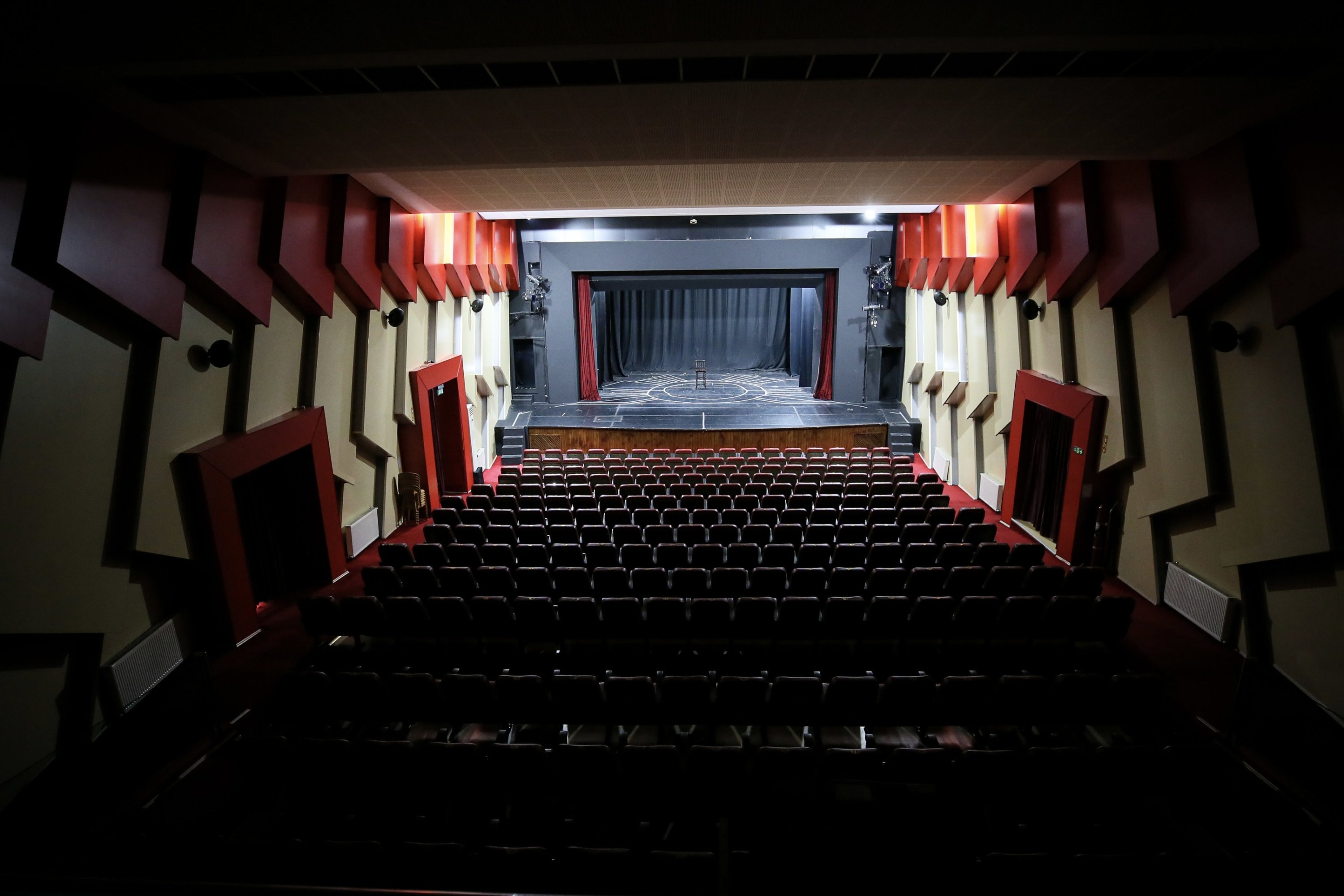
Sezai Yılmaz, the Director of the Bursa State Theater, noted that the theater houses two performance stages and has staged hundreds of plays without interruption since it was handed over to the State Theaters in 1957.
“After the State Theaters were established, the first major goal was to expand beyond Ankara,” he said. “Bursa became home to the first regional theater in Anatolia. Since then, the theater has trained numerous artists who have gone on to achieve international success.”
Yılmaz also shared a charming anecdote: when the theater first opened, a director’s office was needed. Legendary Turkish theater director Muhsin Ertuğrul donated his personal furniture to the new director – a gift that is still preserved with care today.
As an actor himself, Yılmaz expressed the emotional connection performers feel when they step onto the Ahmet Vefik Pasha stage:
“Performing here is a unique privilege. Every actor who comes here feels the presence of nearly 70 years of memories; the whispers of lines once spoken, the spirit of the masters who came before. This place has a soul that many other stages simply do not.”