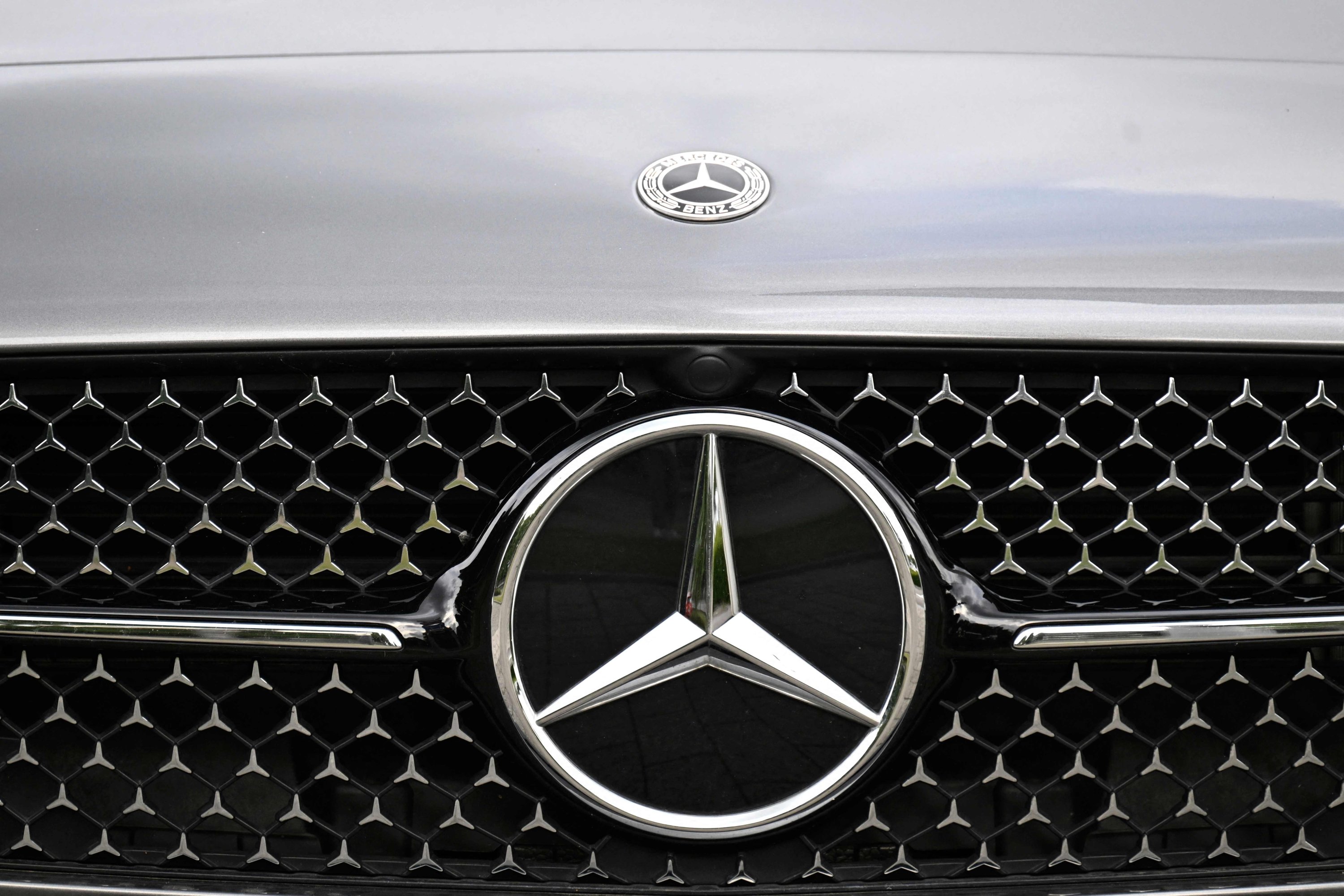
Premium German carmakers Mercedes-Benz and Porsche reported on Wednesday a steep decline in profits amid falling sales, particularly in China and tariff-related woes.
Mercedes-Benz said its second quarter profit plunged nearly 70% due to U.S. tariffs and weak sales in China, prompting it to lower its full-year revenue outlook. Similarly, the profit of German luxury high-performance sports and off-road vehicle manufacturer Porsche nosedived by more than 71% in the first half of the year compared to the same period a year ago.
The net profit of Mercedes in the second quarter was 957 million euros ($1.1 billion), far below the 1.5 billion euros that analysts polled by financial data firm FactSet had expected.
Without tariffs, the firm's car business would have achieved a profit margin of 6.6% compared to an actual 5.1%, Mercedes-Benz said.
That amounts to a cost of hundreds of millions of euros, given overall sales of 24.2 billion euros at the cars division for the quarter.
Mercedes-Benz CEO Ola Kaellenius said the results were "robust" considering "the dynamic business environment."
"We're adapting to new geopolitical realities by using our global production footprint intelligently," he added.
In April, Trump imposed an additional 25% levy on imported cars as part of an aggressive trade policy he says will help boost U.S. manufacturing.
That hit European carmakers, with Jeep- and Citroen-owner Stellantis, as well as auto giant Volkswagen, all reporting slumping North American sales in recent results.
Mercedes-Benz's own sales by volume fell 12% in the U.S. over the period.
In China, they tumbled 19%, underlining the challenge the company faces against local competitors such as BYD.
Mercedes-Benz has issued new guidance for the year, taking into account tariffs, and forecasts groupwide revenue to be "significantly below" the 146 billion euros it generated last year.
Back in February, it expected 2025 revenue to be "slightly below" the 2024 level.
Along with other carmakers, Mercedes-Benz then withdrew its guidance in April while digesting the impact of Trump's tariff blitz.
At its key cars division, Mercedes-Benz said that it now forecasts a profit margin of between 4% and 6%, including the effects of tariffs.
Excluding tariffs, it expects a profit margin of between 6% and 8%.
At the same time, Porsche reported its profit nosedived by more than 71% in the first half of the year compared to the same period of the previous year.
The group's result from January to June stood at 718 million euros ($830 million), the company announced on Wednesday. In the same period last year, the figure was nearly 2.2 billion euros.
Splitting the six months in half, the numbers took a significant downward turn from the first to the second quarter: In the first quarter, the Stuttgart-based company reported a post-tax profit of around 518 million euros, meaning that only an additional 200 million euros was added in the period from April to June.
The data on the operational business in the first half of the year had already been in the public domain since the figures were presented by the parent company, Volkswagen, last week.
In the first six months, Porsche's revenue fell by almost 7% to around 18.2 billion euros. The result in day-to-day business also dropped by two-thirds to just over 1 billion euros, partly due to special costs for the corporate restructuring following the recent poor performance.
The situation looked particularly dramatic in the second quarter: In the car business – excluding financial services – Porsche recorded an operational profit slump of nearly 91%.
Porsche chief executive Oliver Blume stated: "We continue to face significant challenges around the world. And this is not a storm that will pass."
"The world is changing dramatically – and, above all, differently to what was expected just a few years ago," he said, adding that he does not expect "positive economic momentum again from 2026 onwards."
Porsche is particularly struggling in China. High restructuring costs and U.S. import tariffs are also weighing on the business, while the sluggish transition to e-mobility is associated with significant investments.
Therefore, saving is the order of the day: Structures are to be reduced, and by 2029, Porsche management plans to cut around 1,900 jobs in the region around the company's headquarters in the south-western German city of Stuttgart.
Another savings program is already underway. Blume, who also serves as chairperson of the parent company Volkswagen, had prepared the workforce for further cuts in a letter last week.
Due to the U.S. tariff policy, the company must also trim its profit outlook.
Blume is now expecting an operating margin of 5% to 7% for 2025, meaning less profit is likely to remain from the revenue.
The company had already previously dampened its outlook, but the recently projected 6.5% to 8.5% only accounted for the tariff impacts in April and May.
Following the tariff compromise between the European Union and the U.S., there will now be permanently increased import tariffs into the U.S.