Turkish electric vehicle (EV) manufacturer Togg on Wednesday said an initial public offering (IPO) was not imminent but signaled plans for eventual public listing, while firmly rejecting speculation about seeking foreign partnerships, including with Chinese investors.
Its executives also outlined the carmakers' ambitions in Europe, where the brand is about to enter, starting with Germany, before expanding into other key markets.
"Exit is not on the agenda, but every company should have an IPO on its road map. Not today, not in the very near future, but Togg must eventually go public, and Turkish investors should be able to buy its shares," the company's chair, Fuat Tosyalı, said.
"This would mean sharing in Togg's success and would make the company stronger. But first, Togg must become successful, profitable and firmly established. Once we achieve that, we can consider bringing in stakeholders who are interested, and I believe the company should eventually go public.”
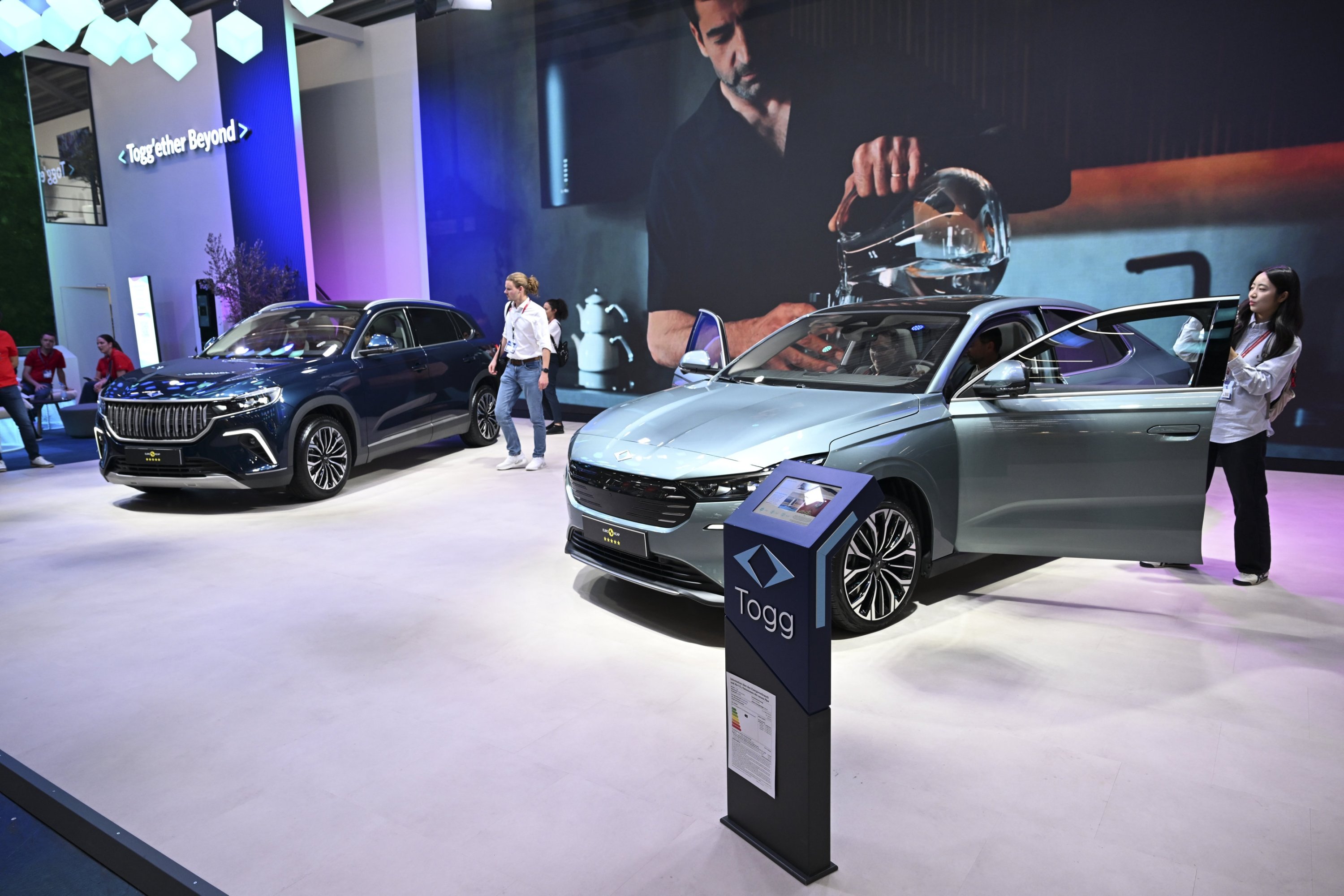
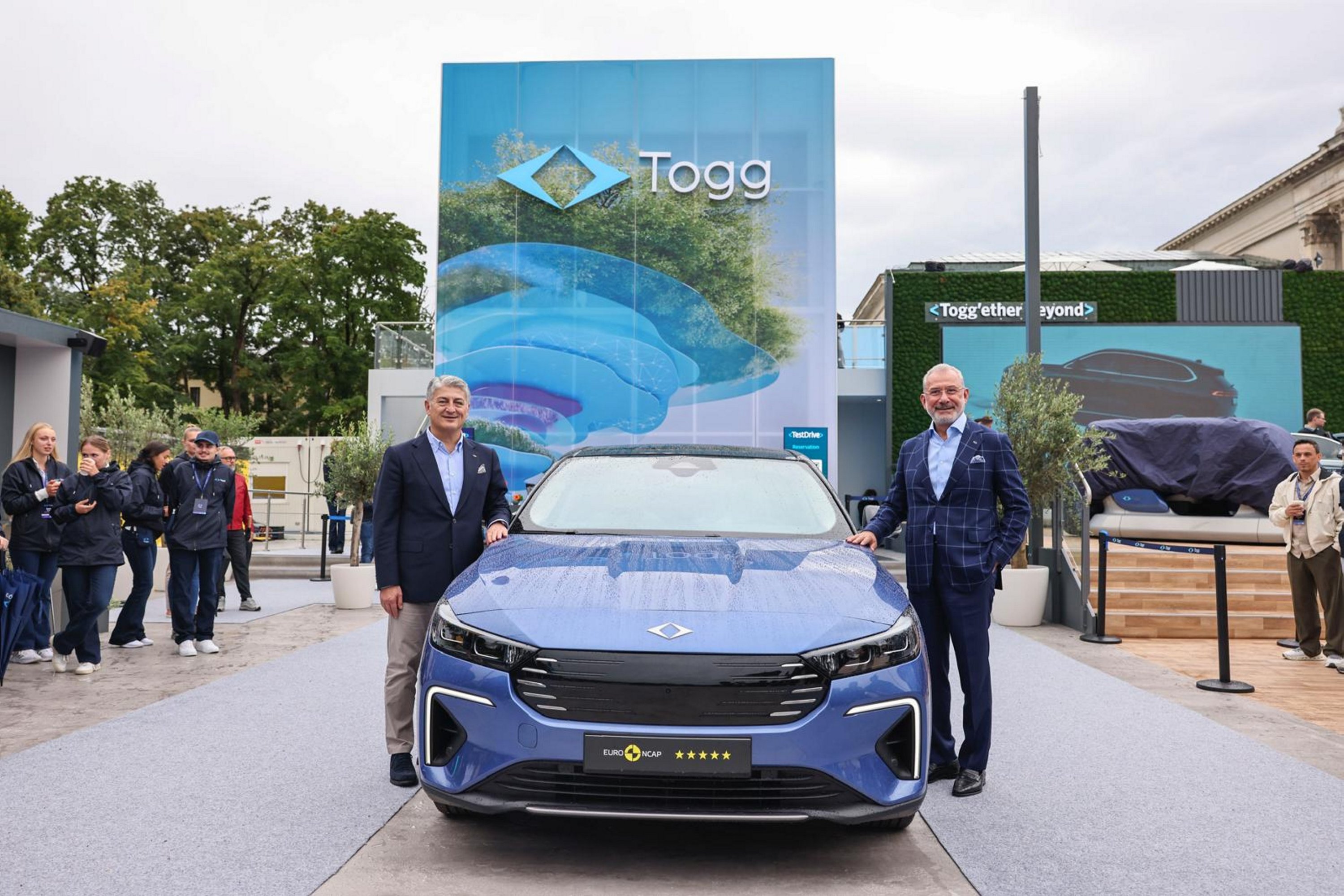
Tosyalı was speaking to reporters in Munich on the sidelines of the IAA car show, Europe's biggest, where Togg unveiled a new sedan and said it would launch sales in Europe, starting with Germany.
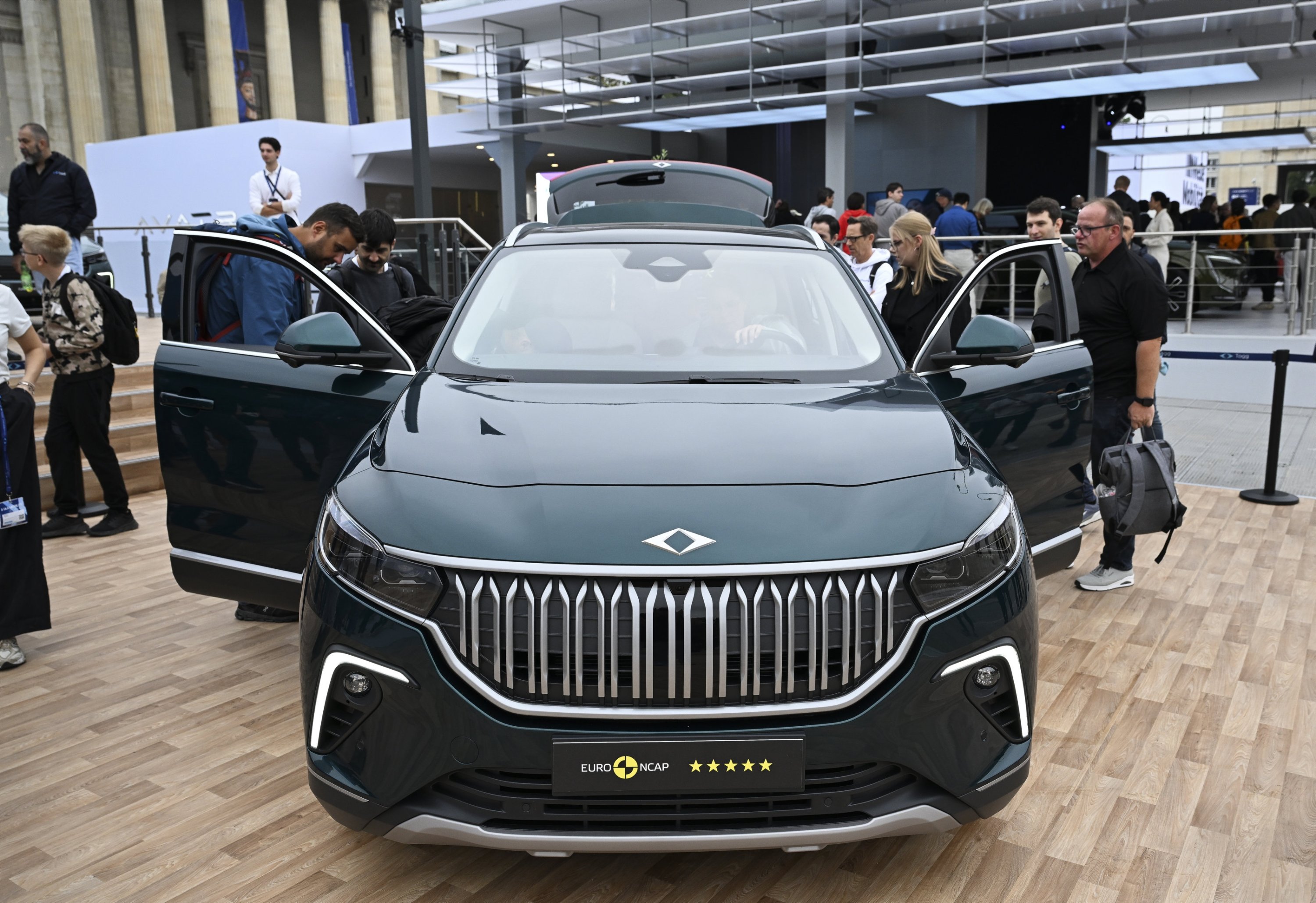
Togg announced the European launch of its T10X electric SUV and unveiled the T10F, an electric five-door sedan. Orders for both vehicles will start in Germany at the end of September.
The Turkish automaker is tapping into the region's largest, highly competitive car market, as it seeks new profit avenues and will also look to France and Italy, according to its CEO Gürcan Karakaş.
"Timing and place matter," Karakaş told reporters. "If you can differentiate yourself there, you can succeed anywhere. We are not afraid of competition, we've always prepared for it," he said.
"We aim to build on what we learn in Germany and move forward to France and Italy."
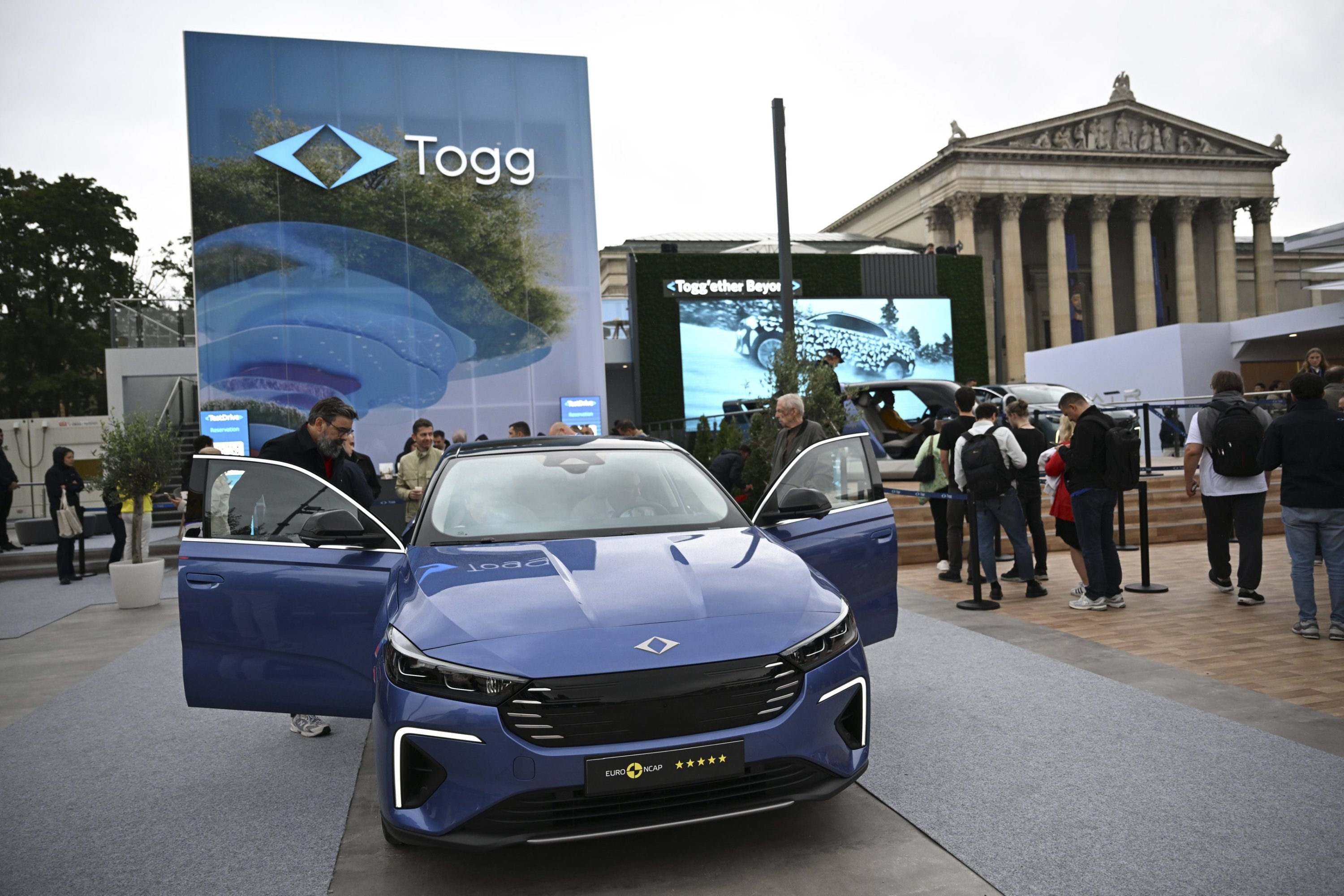
Pricing details were not disclosed for either of Togg's models in Germany, but Karakaş said the company is "prepared" for the competition in Europe, where Chinese automakers are rapidly gaining share.
Karakaş sees Togg's status as a European manufacturer as giving it an edge on the regulatory front.
Togg was rumored to have held talks with foreign investors, particularly from China, but Tosyalı dismissed such claims as “unfounded.”
"We haven't held any talks, nor do we need to," he stressed. "We have not held any discussions regarding a partnership, nor are we open to pursuing such a path."
"We began this journey with five partners, and we are satisfied with the partnership. There is no need for a new shareholder," he added.
Togg is backed by a consortium of major groups, including Tosyalı's BMC, Zorlu Holding, Anadolu Group and Turkcell, along with the Union of Chambers and Commodity Exchanges of Türkiye (TOBB).
The European debut coincided with the T10F and T10X both receiving the maximum five-star safety rating from independent Euro NCAP tests this week.
On expected pricing differences between Türkiye and Germany, Tosyalı pointed to tax regimes rather than factory costs.
"Our factory price is fixed. There's intense competition here, and the price gap isn't that significant. Production costs leave you with a narrow margin, and the market dictates the final price, so you're already operating under pressure," he noted.
Türkiye has a large auto industry but also a complex vehicle tax system that includes a special consumption tax and value-added tax. The combined rate ranges from 50% to 284%.
"The special consumption tax applied in Türkiye and the tax rates in Germany naturally vary," said Tosyalı.
"Value-added taxes and special consumption taxes determine the final price of the vehicle, and these are beyond our control. But our factory gate price for Germany will not be lower than it is in Türkiye," he explained.
Togg sold around 30,000 of its T10X electric SUV cars in Türkiye last year, its first full year of deliveries, with sales this year through August jumping 42% to around 21,000 units.
Industry experts estimate that Togg needs to sell around 200,000 cars annually to become profitable, underlining the need for the EV maker to expand outside its home market.
Tosyalı said they expect to see a "serious" demand in Germany, home to the world's biggest Turkish community overseas.
"We have no doubts about the market. First, we trust our vehicle; second, we are confident in how it compares with competitors in both domestic and international markets. We don't see any issues there," he noted.
According to Tosyalı, what matters is the company's ability to meet the growing demand through production.
"The T10F is a new product, and our production capacity will continue to expand. We will allocate this capacity in a balanced way between the domestic and international markets," he said.
Togg aims to reach an annual capacity of 100,000 vehicles before ramping up to 175,000 once its plant in the northwestern Bursa province reaches full capacity.
It began taking orders for the T10X in March 2023, with deliveries starting a month later. Besides the SUV and sedan, it will manufacture four other models – a C-hatchback, B-SUV and B-MPV.
The company is already working on the B-segment SUV model, which it named T8X. It aims to manufacture 1 million vehicles across the five segments by 2030.
Karakaş said the T8X is being fast-tracked. "Normally, a product like this would take around two and a half years to launch, but we're working to bring it to market about two years ahead of schedule," he noted.
Karakaş said Togg is adapting to rapid advances in artificial intelligence, battery technology and connectivity.
He said Togg is collaborating with "the best brands" on the next-generation battery for the vehicles and is preparing for the adoption of lithium iron phosphate (LFP) batteries.
The company has partnered with the Chinese battery company Farasis since its launch.
"We started with a company that had started mass production worldwide, making the largest and the highest energy density – and the highest chemistry – batteries that would provide the longest range, but that firm, like other firms, is preparing for the changes in technology," Karakaş said.
"Now, that doesn't mean we will lose our competence to produce batteries, though who we work with is important – as long as we continue to work with the best in the world, we will have access to these resources."
"We always prefer to identify the best partners for us and continue with them," he noted.