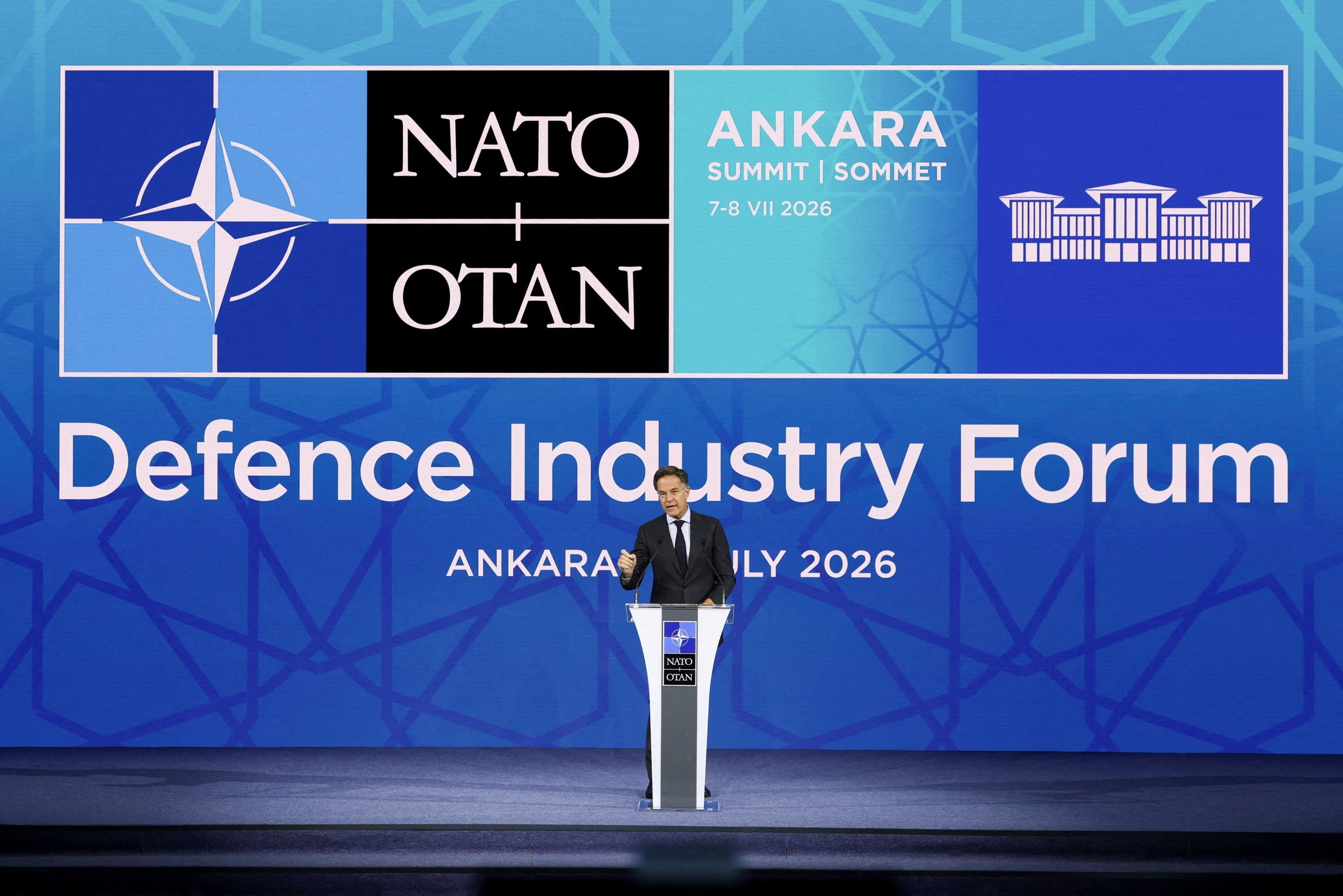
NATO allies unveiled on Tuesday a series of new projects and initiatives as part of efforts to step up defense efforts and bolster the deterrence of the alliance at a critical gathering in the Turkish capital.
The defense showcase came as part of the NATO Summit Defense Industry Forum (NSDIF26), a high-level event taking place on the first day of the 2026 NATO summit, which, after 22 years, returned to Türkiye.
The two-day summit in Ankara is being held at a critical point, as the U.S. is pushing for Europe to step up and take more responsibility for its own defenses.
It also comes on a backdrop of continued geopolitical volatility amid the Russia-Ukraine war and the recent crisis in the Middle East.
Addressing the defense forum, NATO chief Mark Rutte cited that "real progress" has been made, recalling last year's Hague summit at which the alliance nations committed to spending 5% of gross domestic product (GDP) on defense and security-related spending by 2035.
"Allies and industry from both sides of the Atlantic will reveal new major projects and sign contracts worth literally billions of dollars," Rutte said.
"These are billions that are invested in our security, boosting our economies and supporting hundreds of thousands of new jobs," he added.
Among the deals announced were contracts for new drones, refuelling and surveillance aircraft designed to bolster Europe's ability to protect itself.
The defense industry forum kicked off hours before U.S. President Donald Trump touched down in Ankara. His arrival at the summit follows his continuous calls and pressure on European nations to increase defense-related spending and budgets, as he has often claimed that only the U.S. is doing the heavy lifting.
The so-called "burden-sharing" debate is one of the critical topics of the summit. It is also what many term, under the concept of "NATO 3.0," a vision of the alliance in which Europe assumes greater responsibility for its own defense, freeing the U.S. to concentrate on other priorities.
Rutte kicked off the summit by announcing several initiatives – under the forum's "Big Reveal" – including a multinational modernization program centered on the Airbus A400M transport aircraft and the Airbus A330 Multi Role Tanker Transport (MRTT) fleet.
"Several allies are officially announcing the forthcoming delivery of additional Airbus A330 MRTT aircraft," Rutte said, describing the project as a step toward strengthening NATO's strategic airlift and refueling capabilities.
He also announced a joint procurement project for MQ-4C Triton unmanned aircraft to enhance the alliance's intelligence, surveillance and reconnaissance (ISR) capabilities.

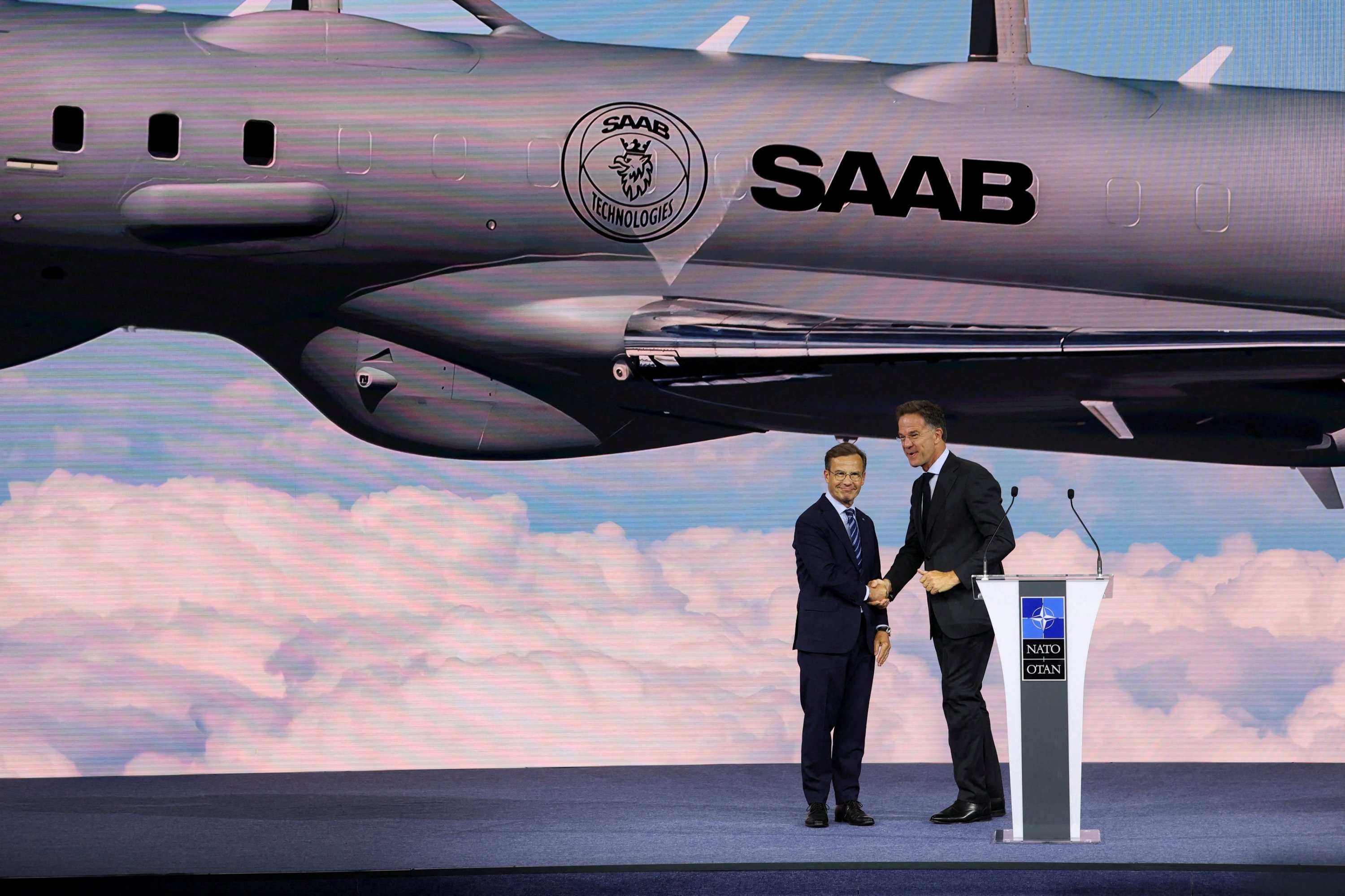
Rutte's third announcement focused on replacing NATO's ageing Airborne Warning and Control System (AWACS) fleet.
Thus, NATO presented a roughly $4.5 billion plan to acquire up to 10 Saab GlobalEye surveillance planes and replace the AWACS early warning aircraft, backing a Swedish system over a rival solution from U.S. planemaker Boeing.
At the same time, he also pledged that the allies would invest more than $40 billion in the next five years in their capabilities to defend against drones.
Under the "Drone Edge initiative," allies committed to investing over $40 billion in counter-drone capabilities, while also aiming to train five times as many drone operators by the end of 2027.
To accelerate procurement, NATO will also establish a counter-drone marketplace to provide allies with NATO-tested, NATO-compatible systems available for rapid acquisition.
Moreover, he also announced the critical minerals initiative through which he said allies will work together to acquire, store, transport and manage stockpiles of critical defense materials.
Rutte said the initiative involves Belgium, Canada, Denmark, Finland, Greece, Italy, Luxembourg, the Netherlands, Norway, Spain, Sweden and Türkiye.
Among other plans, Rutte also unveiled the NATO Engine initiative, which aims to establish a network of factories and manufacturing facilities across the 32-member alliance to expand defense industrial capacity, saying no single nation can meet growing defense demand alone.
Also speaking on the first day of the summit, NATO Deputy Secretary-General Radmila Shekerinska announced additional multinational projects involving Türkiye across air defense, communications and space.
Shekerinska also announced Türkiye's contribution of two domestically produced observation satellites to the alliance's collective space capabilities.
A NATO summit is a highly symbolic moment when the member nations of the world's biggest military alliance come together to underline their unshakeable commitment to each other's security.
This year, although the trans-Atlantic bond is seen as fragile, the meeting is being organized around the idea of a stronger Europe in a stronger NATO.
Also speaking at the sideline event dubbed "Allies in Ankara," Defense Minister Yaşar Güler said that NATO's future does not only depend on the strength of tanks and aircraft but on "our societies, industry and political will."
He also pledged for Türkiye to continue to contribute to NATO's deterrence and defense.