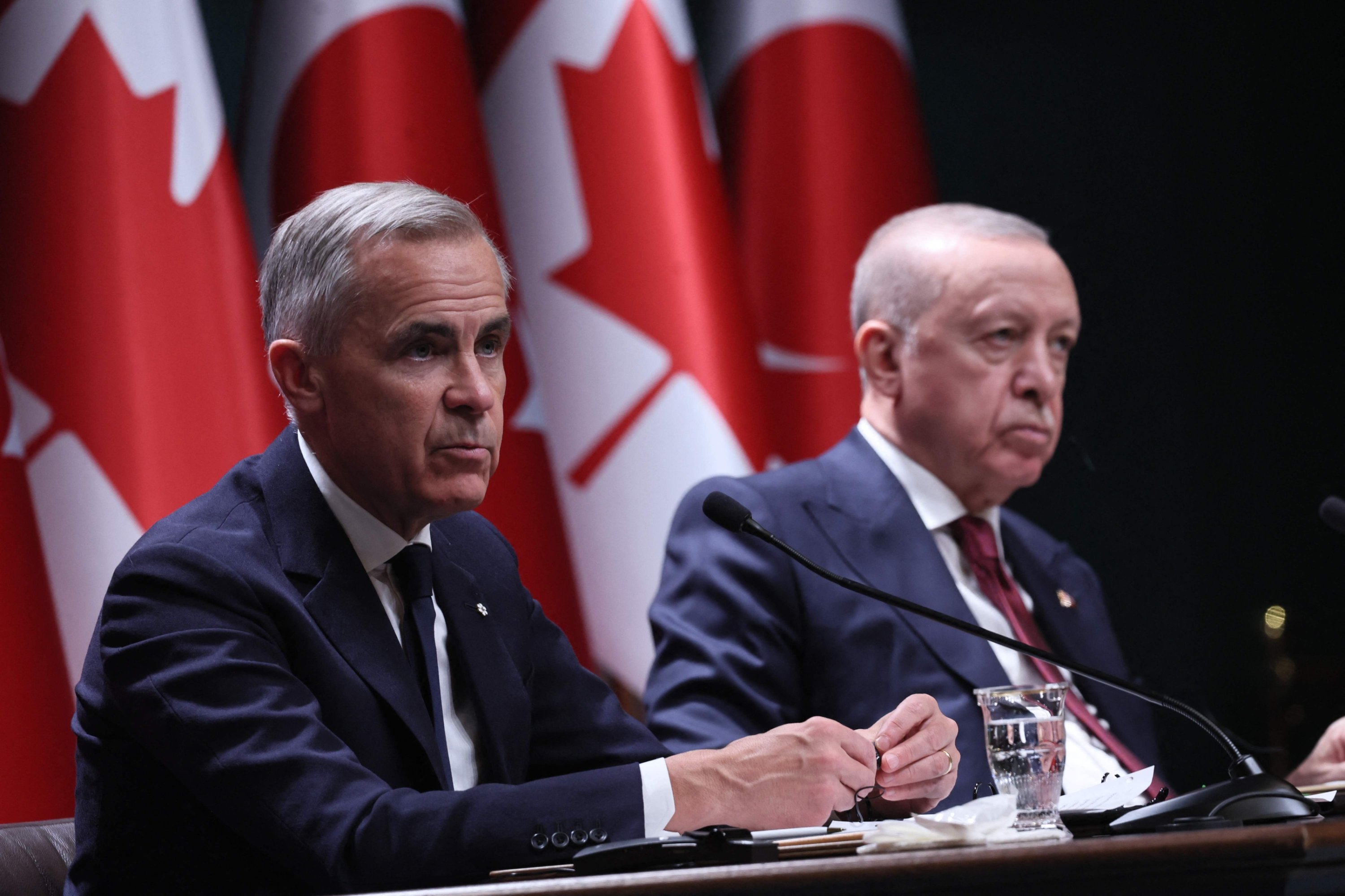
Canadian engineering company AtkinsRealis is in the running to help build Türkiye's third nuclear power plant, Prime Minister Mark Carney said Friday.
NATO allies Canada and Türkiye upgraded their relations to a "strategic partnership" during the first bilateral visit by a Canadian prime minister on Thursday, as Carney seeks new global trade partners to reduce reliance on the U.S.
The new partnership signed in Ankara following talks between Carney and President Recep Tayyip Erdoğan focuses on trade and investment, defense, security and energy. It aims to create jobs and opportunities for Canadian and Turkish companies to do more business together.
Carney arrived in Istanbul on Friday to meet with Turkish business leaders in strategic sectors such as energy, aerospace and critical minerals.
Canada and Türkiye announced a partnership agreement in the defense industry and have also identified potential for cooperation in nuclear energy.
Asked about talks on Canadian involvement in Türkiye's planned third nuclear power plant, over which Ankara has also held talks with South Korea, Russia, China and Japan, Carney said the decision would ultimately be made by the Turkish government, but he believed Canada had better odds now.
"If you would have asked us a year ago how we would have pegged the chances, they would have been very low. Now there are good chances. There's real competition, of course," Carney told reporters in Istanbul, adding that there may be a decision on the issue before the end of the year.
He said the strength of Canada's CANDU technology, partnership with some Turkish businesses, including on the construction side, and the ability to build out elements of the supply chain make it "quite a compelling proposition."
Rosatom, Russia's state nuclear energy company, is building Türkiye's first nuclear power station at Akkuyu in the Mediterranean province of Mersin under a $20 billion accord from 2010. It said last week that it expected a year-end nuclear startup at the site.
Türkiye plans to build a second nuclear power plant in the Black Sea region of Sinop, with the third planned in the northwestern region of Thrace.
Reports before Carney's visit said allies would discuss potential purchases by Türkiye of liquefied natural gas (LNG) from Canada, as well as critical minerals.
On Thursday, they said they had agreed to significantly increase collaboration across the energy sector, including in LNG, civil nuclear energy and renewable energy.
Carney meanwhile also said Friday that Ottawa is "in need of Turkish expertise" to strengthen its defenses and reduce reliance on foreign military systems.
He said Canada was interested in both Turkish military technology and joint industrial partnerships, with an emphasis on developing capabilities together.
"I would lean toward the partnership end of the spectrum, where we're providing complementary technology and we're building up together," Carney said.
He was more direct when asked whether Canadian companies could benefit from closer ties with Türkiye's established defense industry, particularly its expertise in drones and autonomous systems.
"Candidly, we're in a position where we're more in need of Turkish expertise in terms of reinforcing what we need to do to protect Canadians and to serve as a full NATO ally at this stage," he said.
Separately, Türkiye and Canada signed a memorandum of understanding to strengthen export credit cooperation and support joint projects in third-country markets, Trade Minister Ömer Bolat said Friday.
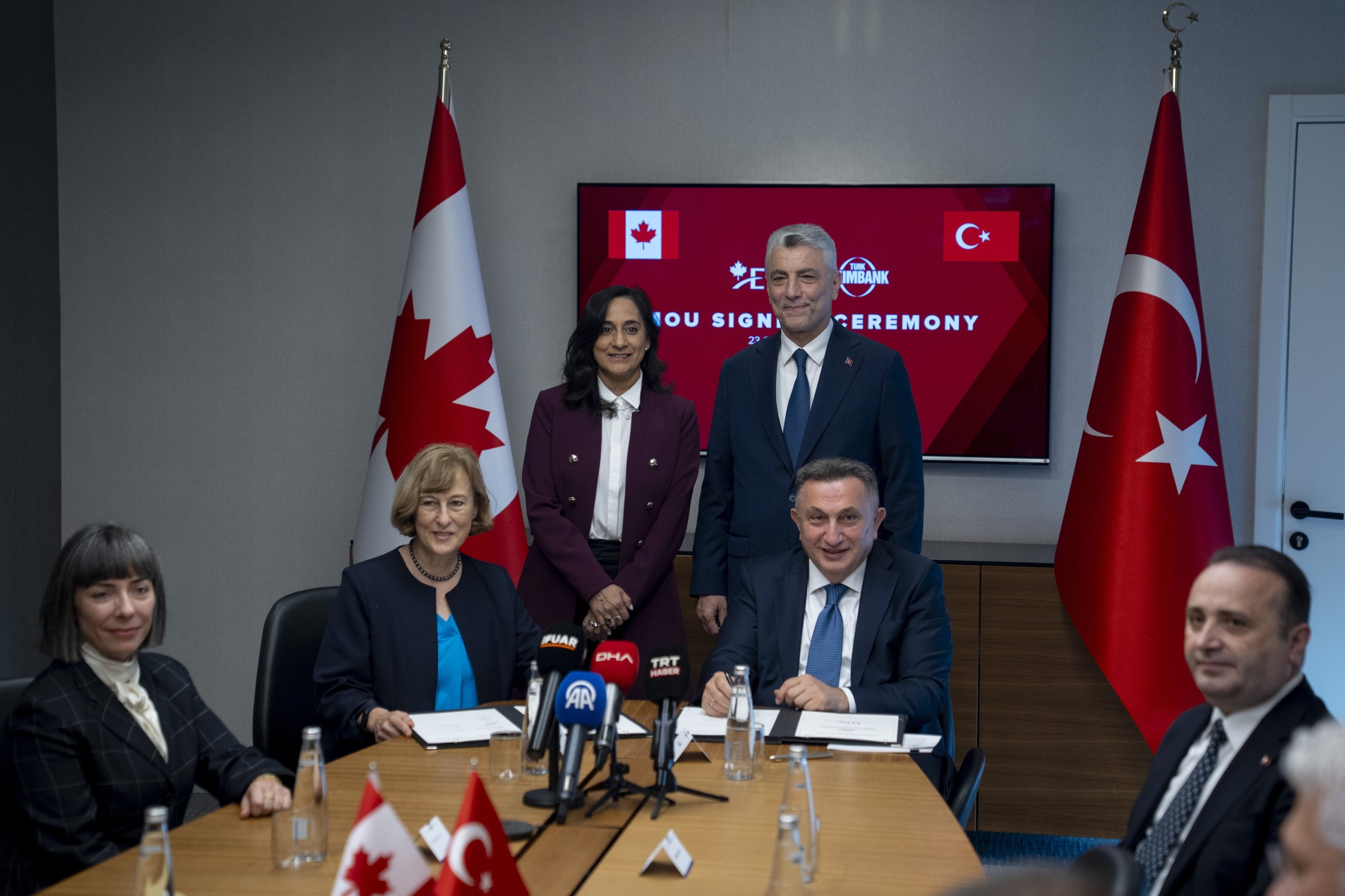
The agreement between Türk Eximbank and Export Development Canada (EDC) followed Bolat's meeting with Canadian Foreign Minister Anita Anand in Istanbul.
In a statement on Turkish social media platform NSosyal, Bolat said the two discussed expanding bilateral trade and economic relations, alongside negotiations on a Türkiye-Canada free trade agreement.
Canadian and Turkish negotiators will kick off the first round of free trade talks next month in Ankara.
The memorandum aims to support Turkish and Canadian companies in developing joint projects in third-country markets, particularly in Africa, the Middle East, North Africa and Central Asia.
"We will continue our efforts to deepen trade and economic cooperation between our two countries and create new opportunities for our companies," Bolat said.