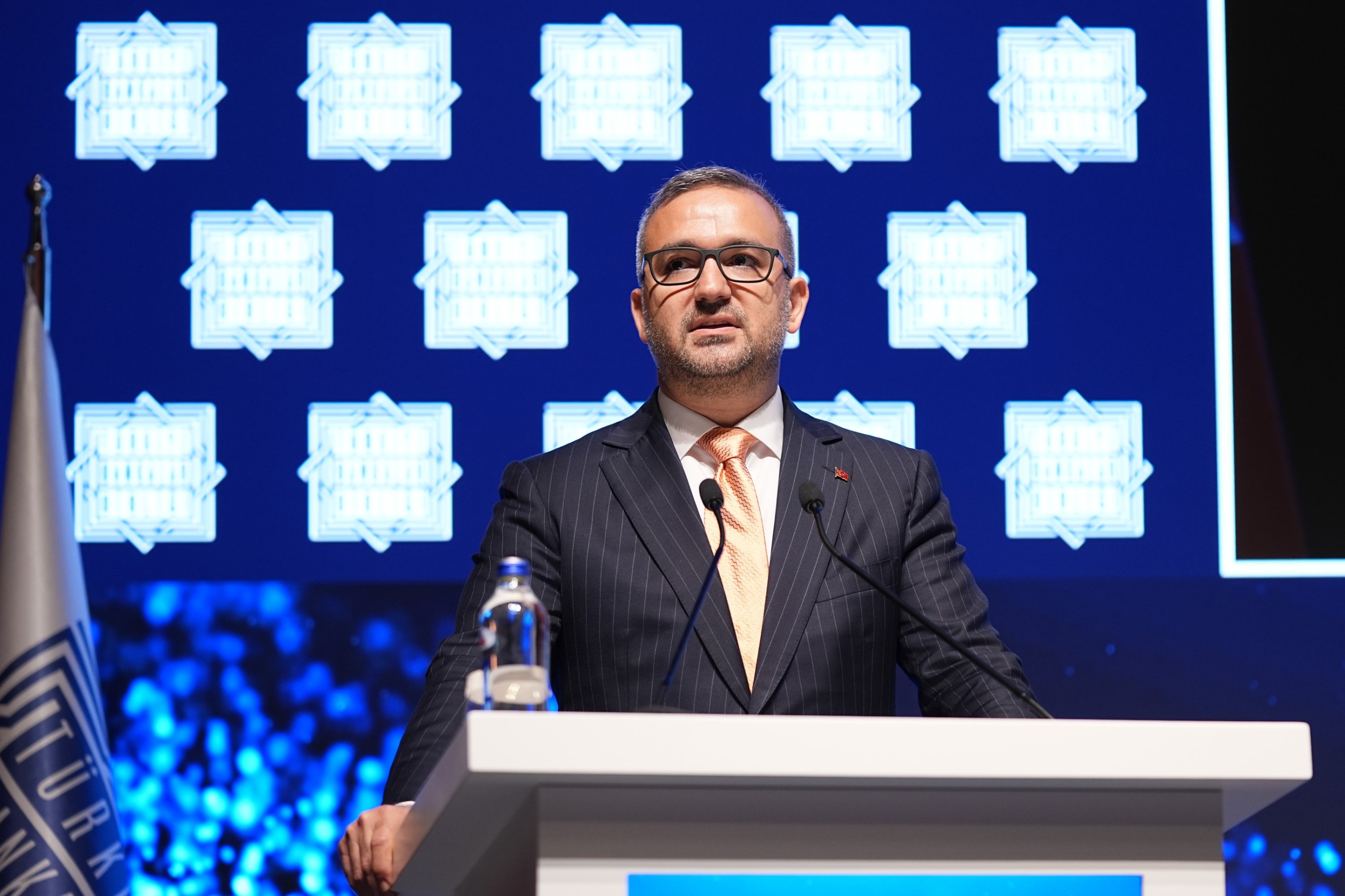
Türkiye's central bank said Friday the Middle East conflict had delayed the disinflation process, but deterioration in expectation has remained limited, while the slowdown in economic activity continued under tight financial conditions.
Supply shocks mainly due to the fallout from the Iran war had pushed Türkiye's headline inflation higher in April and May, but June signaled the return of a downward trend.
The annual inflation eased to 32.1% last month from 32.6% in May. The decline had stalled following a sharp rise in energy prices caused by the war launched by the U.S. and Israel against Iran on Feb. 28.
On a monthly basis, consumer prices rose 0.99% in June, slowing from 1.7% in May.
"Recent uptick in underlying inflation poses upside risks for near term inflation," Central Bank of the Republic of Türkiye (CBRT) Governor Fatih Karahan told an event in Istanbul.
Karahan said easing rigidity in rents and education prices was supporting disinflation in the services sector, while recent strength in core goods inflation was expected to moderate.
He reiterated that the central bank would maintain a tight monetary policy stance until price stability was achieved.
"The tight monetary policy stance, which will be maintained until price stability is achieved, will strengthen the disinflation process through demand, exchange rate, and expectation channels," he added, according to his presentation released by the bank.
Last month, the Central Bank of the Republic of Türkiye (CBRT) held its one-week repo rate steady for a third consecutive meeting as it monitored the impact of the Iran war.
Since the conflict started, the bank has halted an easing cycle that began in late 2024 and taken other liquidity steps that pushed the Turkish lira overnight rate up to the 40% limit.
The CBRT raised its end-2026 inflation forecast to 24% from 16% in its quarterly inflation report published in mid-May, saying the short-term inflationary effects of the Iran war would remain "pronounced."
The bank projects inflation falling to 15% at the end of 2027 and 9% at the end of 2028.
Karahan said Friday the CBRT "will determine the policy rate by taking into account realized and expected inflation and its underlying trend in a way to ensure the tightness required by the projected disinflation path in line with the interim targets."
"Monetary policy stance will be tightened in case of a significant deviation in inflation outlook from the interim targets," he noted.
Karahan said the distribution of household and real sector expectations has improved recently. He added that household demand for foreign currency remained limited and confidence in the Turkish lira continued to hold firm
He said the central bank's foreign exchange reserves remained at robust levels.
Data on Thursday showed CBRT's gross international reserves rose by $10.49 billion to $159.69 billion in the week ending July 3
Gross foreign exchange reserves increased by $7.70 billion to $61.95 billion, while gold reserves climbed by $2.79 billion to $97.74 billion.
Karahan said capacity utilization in Türkiye remained below historical averages and demand indicators pointed to a slowdown in economic activity.
Credit growth has moderated, while the trade deficit narrowed in the second quarter, he added, noting that the impact on tourism had remained limited.
He also said Türkiye's balance of payments remained moderate relative to historical averages.