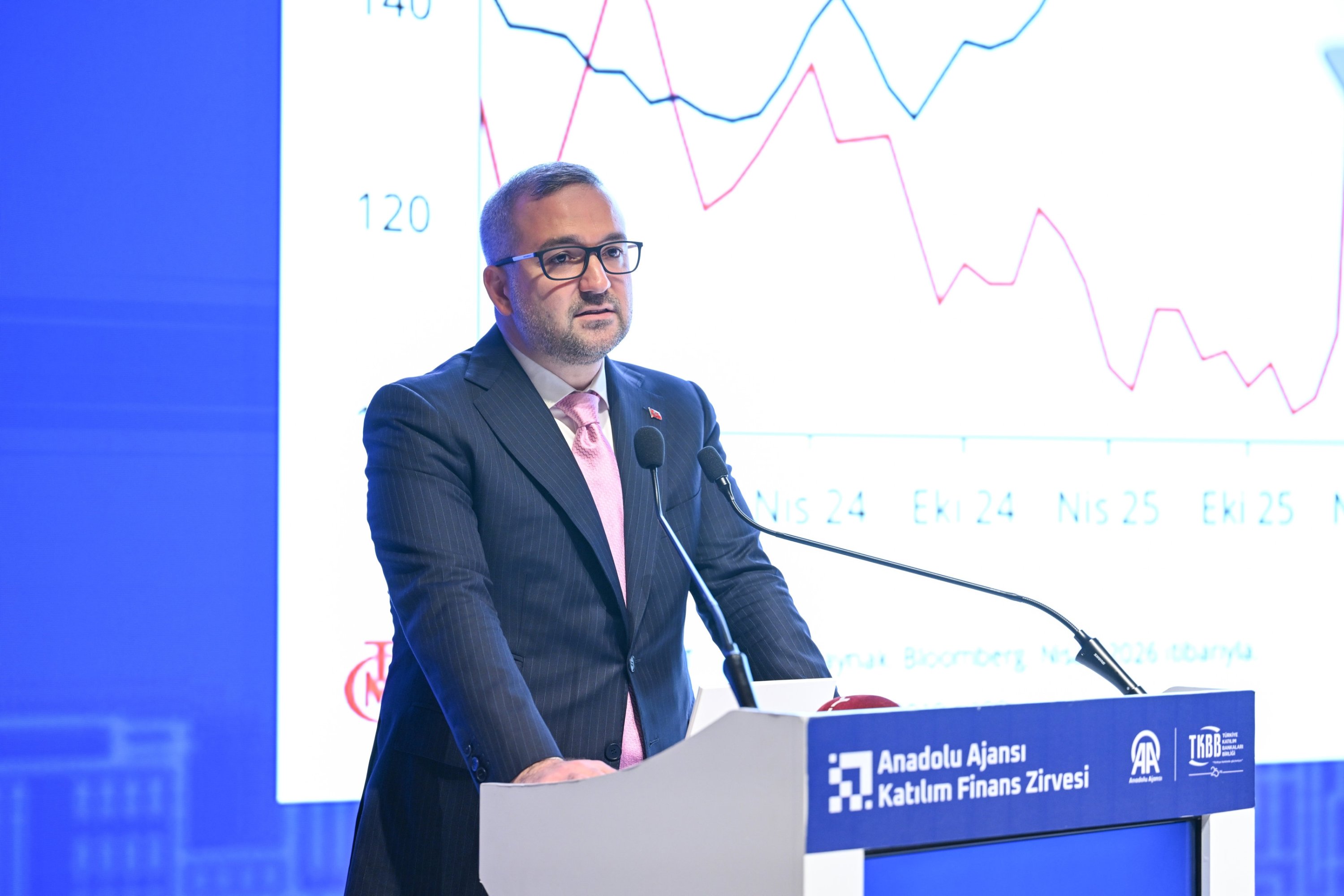
Türkiye's central bank will maintain a tight monetary stance and will not allow a recent deterioration in inflation, driven largely by higher energy costs due to the Iran war, to worsen the medium-term outlook, its governor said on Thursday.
The war in the Middle East, unleashed on Feb. 28 by Israel and the United States against Iran, provoked reprisals from Tehran across the region and a shipping blockade in Hormuz, a crucial global trade route, leading to a significant global surge in energy prices.
Central Bank of the Republic of Türkiye (CBRT) Governor Fatih Karahan said higher costs linked to the conflict were continuing to pressure both consumer prices and the external balance.
But though this affected Türkiye's disinflation process, Karahan said it did not change policymakers' resolve.
"We will not allow the deterioration observed in inflation to spoil the medium-term outlook," he told a summit in Istanbul.
Annual inflation rose to nearly 32.4% in April, the highest measure since October 2025, mainly driven by the energy-linked pricing pressures.
Karahan said the April data show the impacts of the war and said they expect energy-linked effects to continue in the short term.
"The reflections of these effects on the medium-term inflation outlook will take shape with our monetary policy stance, and we will carefully evaluate these factors while making monetary policy decisions in the upcoming period," Karahan noted.
The jump in costs and the resulting inflationary pressures have curbed central banks' room to cut interest rates.
CBRT flagged rising risks in its monetary policy committee statement last month, when it kept its benchmark policy rate steady at 37%, saying it was closely monitoring fallout from the Iran war and potential second-round effects.
Before the conflict began shifting expectations, the CBRT had been expected to continue a rate-cutting cycle that began in late 2024.
In February, the bank raised its year‑end inflation forecast range by two percentage points to 15%-21%, while keeping its interim 16% target unchanged.
It is due to present its second inflation report of the year next week. Analysts say it will likely feature a revision of both the target and forecasts.