The European Union proposed to Türkiye last month the idea that the candidate for bloc membership could join a cost-cutting payments system to boost integration efforts and benefit those sending money abroad, according to a report on Thursday quoting the EU envoy to Ankara.
Jurgis Vilcinskas, the bloc's chargé d’affaires in Türkiye, said European Commissioner for Enlargement Marta Kos discussed the proposal with Foreign Minister Hakan Fidan when the two met last month in Ankara.
The EU says its 41-country Single Euro Payments Area (SEPA) makes cross-border euro-currency payments cheaper, faster and more secure. Users in far smaller Balkan candidates, Albania, Moldova, Montenegro and North Macedonia, which adopted the scheme last year, could save up to 500 million euros (around $573 million), it said.
"SEPA could present a valuable opportunity to strengthen Turkiye’s economic integration as a candidate country and a key trade and economic partner of the EU," Vilcinskas told Reuters in a response, using the Turkish spelling of the country's name.
It could generate "significant savings annually for Turkish businesses, consumers and diaspora by making cross-border transfers in euros as fast and as cheap as domestic ones," he said.
Ankara's view on the matter is unclear.
A Turkish diplomatic source confirmed that during the visit by Kos on Feb. 6, an offer had been conveyed to Ankara, adding the SEPA issue was under the jurisdiction and coordination of the Finance Ministry, which did not immediately comment on the matter.
Under SEPA, Turkish banks could stand to lose revenues on transfers, which vary widely based on size. A Türkiye-Europe transfer of 1,000 euros to 5,000 euros can cost 40 euros, according to Western Union.
Europe is Türkiye's largest trading partner with more than 200 billion euros in volume. With bloc membership talks effectively stalled for years, both say they want to modernize their customs union and move to boost economic ties.
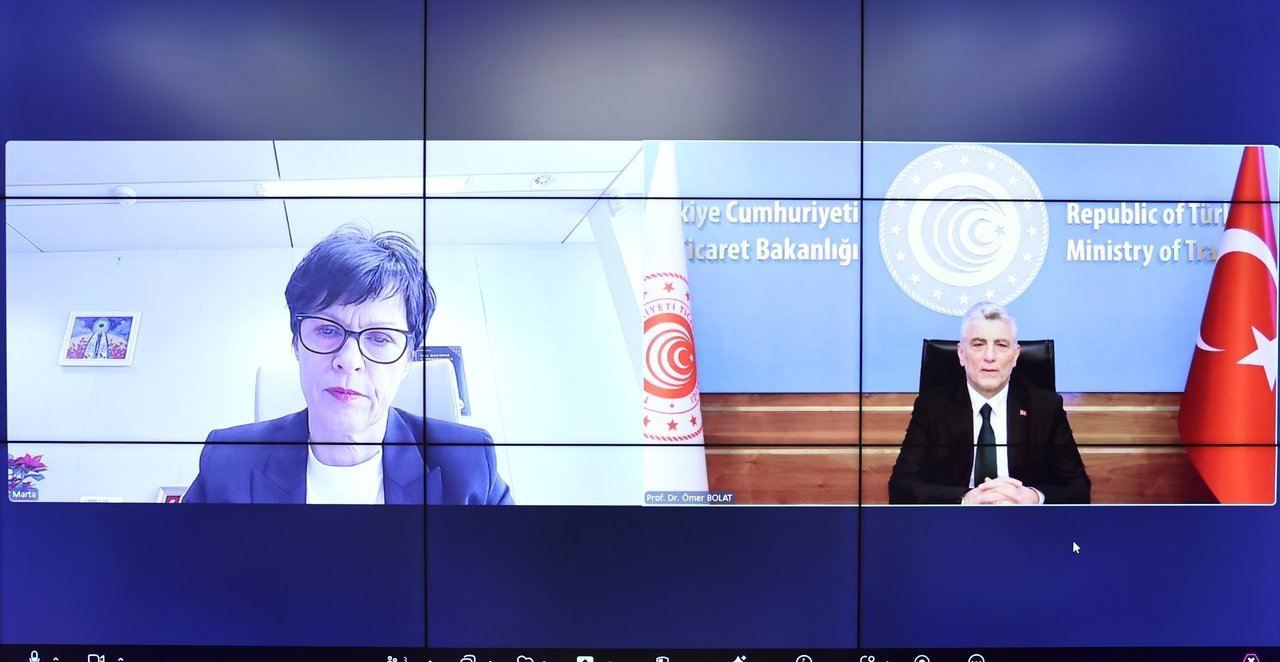
Trade Minister Ömer Bolat recently reiterated the goal of modernizing the customs union, a decades-old framework, to better suit the present needs. Ankara has also been accepted into the new "Made in Europe" industrial policy, a move seen as reinforcing the economic and trade ties between the duo.
SEPA could bring "significant" savings, especially for the large Turkish diaspora across Europe, a Turkish banking source said.
In an interview this month, Odile Renaud‑Basso, the president of the European Bank for Reconstruction and Development (EBRD), said SEPA would "basically make transactions cost-free."