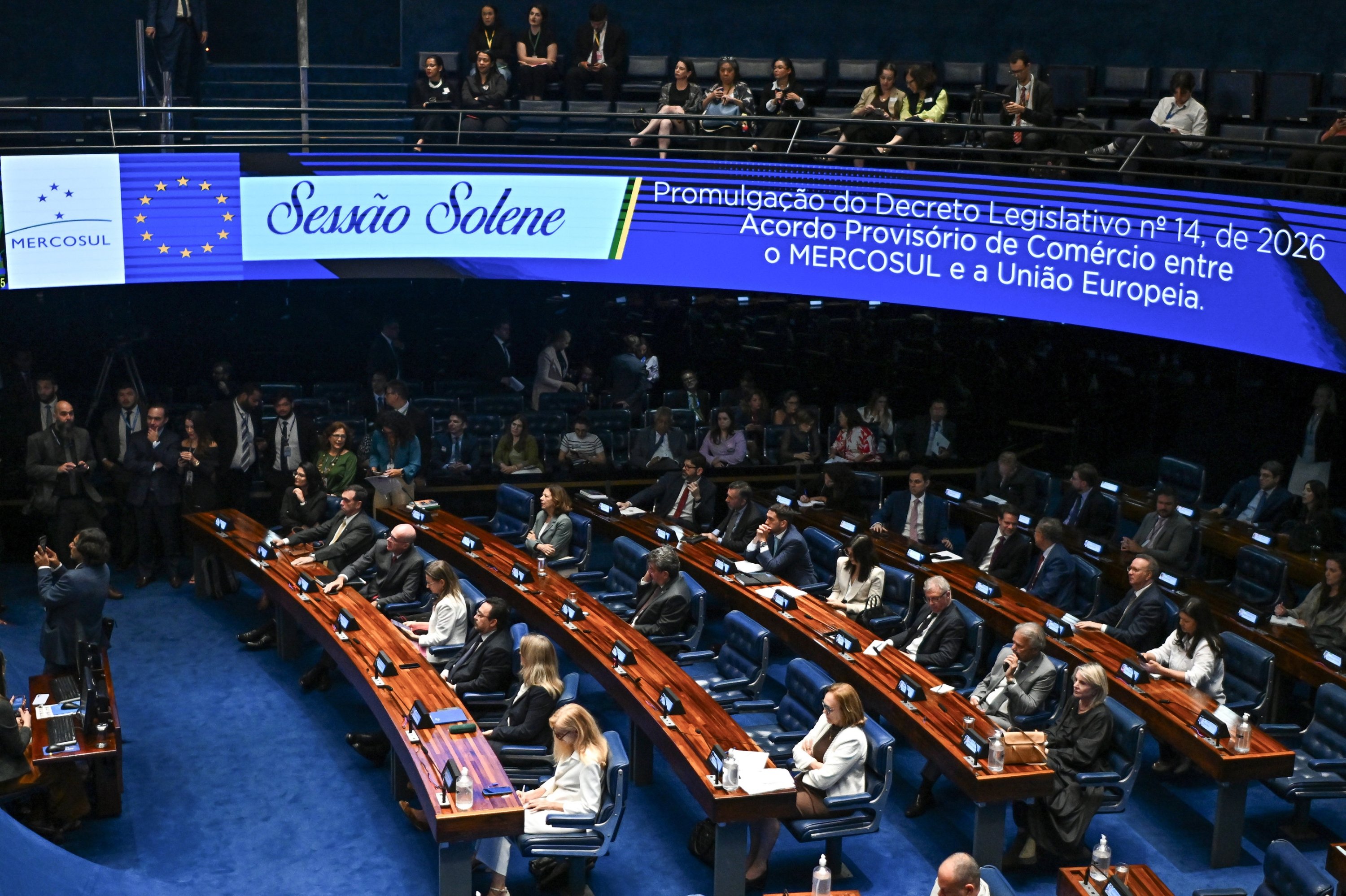
The European Union announced on Monday that a free trade agreement (FTA) signed with the South American bloc of nations (Mercosur) will provisionally enter into force on May 1, despite a pending court ruling on its legality.
The mammoth deal to eliminate tariffs on more than 90% of trade between the two blocs has proven divisive in Europe, with France leading opposition over concerns some of its farmers will be worse off because of it.
But, backed by a majority of EU countries, Brussels has ploughed ahead as it pushes to diversify trade in the face of challenges from the United States and China.
"Today is an important step in demonstrating our credibility as a major trading partner," EU trade chief Maros Sefcovic said.
"The priority now is turning this EU-Mercosur agreement into concrete outcomes, giving EU exporters the platform they need to seize new opportunities for trade, growth and jobs."
The move comes as Paraguay ratified the deal last week, becoming the last Mercosur member to do so after Argentina, Brazil and Uruguay.
"Provisional application ensures the removal of tariffs on certain products as of day one, creating predictable rules for trade and investment," the European Commission, in charge of EU trade policy, said Monday.
It added that it had notified Mercosur partners.
"EU businesses, consumers and farmers can thus start reaping the benefits of the deal immediately."
The EU had already signalled in February that it would provisionally implement the deal, prompting a public split between its two largest member states, France and Germany.
The pact still needs a green light from lawmakers in the European Parliament, which referred it to the EU's top court within days of being inked in January.
France unsuccessfully attempted to block the deal over worries for its farmers, who fear being undercut by cheaper goods from Brazil and its neighbours.
The accord creates one of the world's biggest free trade zones. Together, the EU and Mercosur account for 30% of global gross domestic product (GDP) and more than 700 million consumers.
It favors European exports of cars, wine and cheese, while making it easier for South American beef, poultry, sugar, rice, honey and soybeans to enter Europe.