The European Union's latest round of sanctions directed at Russia's shadow fleet and energy revenues is being blocked by Hungary, the bloc’s top diplomat said Monday, a day before an anniversary marking the start of the Russian invasion on Feb. 24, 2022.
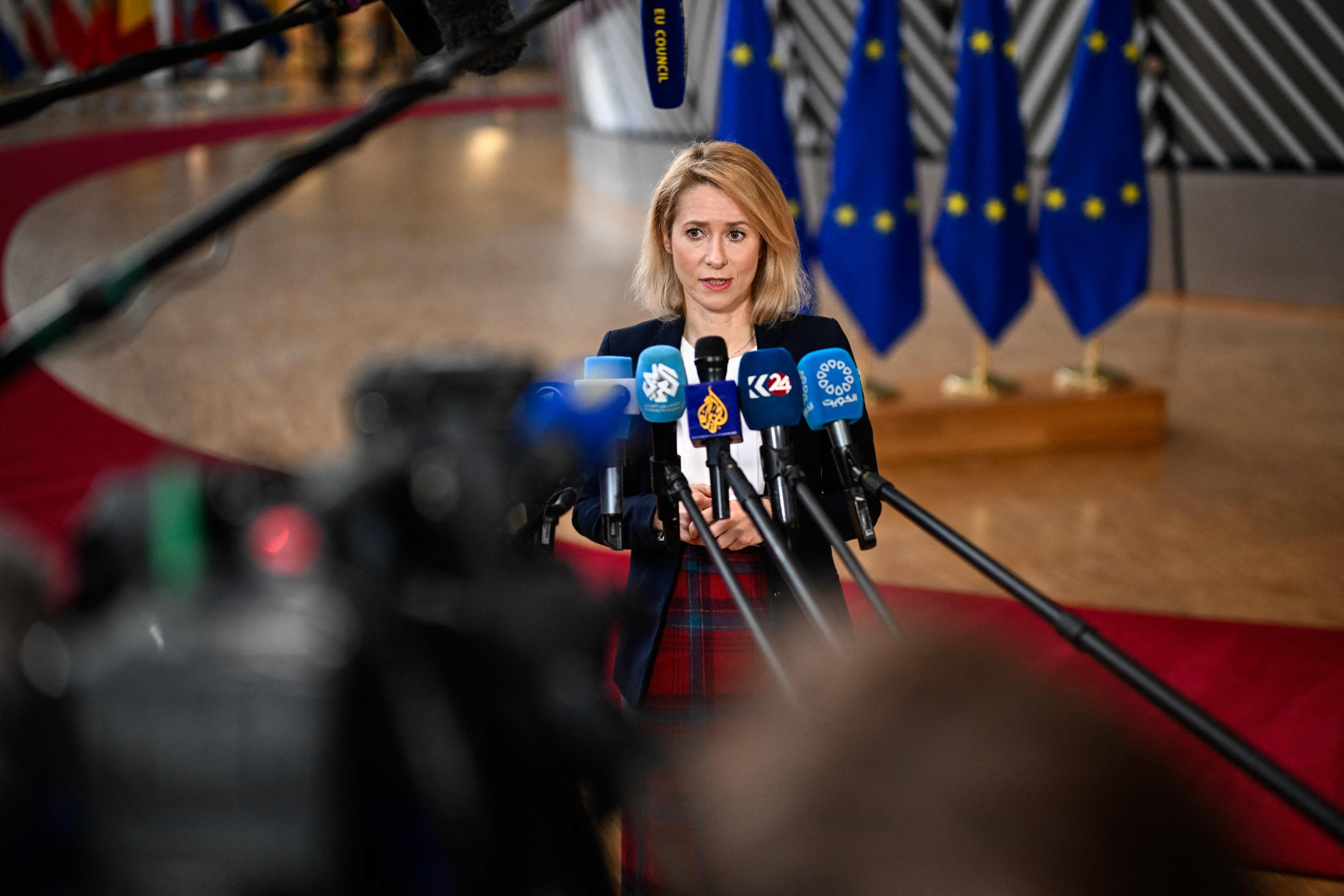
EU foreign policy chief Kaja Kallas said the bloc's 27 foreign ministers gathering in Brussels would likely not agree on the 20th package of sanctions, which it hoped to pass ahead of the fourth anniversary of the invasion.
"I think there is not going to be progress regarding this today," Kallas said before a regular meeting of the EU’s foreign ministers in Brussels, where discussion of the 20th sanctions package was planned.
The meeting came after Hungary threatened over the weekend to block the EU sanctions plans and to obstruct a 90 billion euro ($106 billion) loan for Ukraine until Russian oil deliveries to Hungary resume.
Russian oil shipments to Hungary and Slovakia have been interrupted since Jan. 27 after what Ukrainian officials say were Russian drone attacks that damaged the Druzhba pipeline, which carries Russian crude across Ukrainian territory and into Central Europe. That has led to rising tensions between Budapest and Kyiv.
Hungarian Prime Minister Viktor Orban doubled down Monday on his allegation that Ukraine was deliberately holding back shipments of Russian oil, and accused Kyiv of seeking to topple his government.
In a post on social media, Orban referred to the oil supply disruptions as a "Ukrainian oil blockade" led by President Volodymyr Zelenskyy.
"We have given President Zelenskyy firm and proportionate responses," Orbán wrote. "He, too, must understand: by attacking Hungary, he can only lose."
For the sanctions to pass, the 27-nation bloc needs to reach a unanimous decision.
Kallas said that efforts would also continue on Monday to advance the EU’s 90 billion euro loan to Ukraine.
Facing a crucial election in less than two months, Orban has launched an aggressive anti-Ukraine campaign and accused the opposition Tisza party, which leads in most polls, of conspiring with the EU and Ukraine to install what he called Monday a "pro-Ukraine government aligned with Brussels and Kyiv."
Poland’s Foreign Minister Radoslaw Sikorski said he believed Hungary’s surprise announcement Sunday could really be about Hungarian Prime Minister Viktor Orban’s fierce fight to hold onto power.
"I would have expected a much greater feeling of solidarity from Hungary for Ukraine," he said in Brussels. "The ruling party managed to create a climate of hostility towards the victim of aggression. And then it is now trying to exploit that in the general election. It’s quite shocking.”
Nearly every country in Europe has significantly reduced or entirely ceased Russian energy imports since Moscow launched its full-scale war in Ukraine on Feb. 24, 2022.
Yet Hungary and Slovakia, both EU and NATO members, have maintained and even increased supplies of Russian oil and gas, and received a temporary exemption from an EU policy prohibiting imports of Russian oil.
"Tomorrow we are entering the fifth year of the war," said Latvian foreign minister Baiba Braze ahead of the meeting. "We are fully committed both to the 20th sanctions package, including maritime and maritime services ban, but also political commitment, economic commitment, military commitment to support European values."
German Foreign Minister Johann Wadephul said he was "astonished by the Hungarian position."
"I don’t think it is right if Hungary betrays its own fight for freedom and European sovereignty," Wadephul told reporters in Brussels, alluding to Hungary’s role in the fall of communism in Europe in 1989. "So we will once again come to the Hungarians with our arguments, in Budapest but of course also here in Brussels, for them to reconsider their position."
"The German position is very clear: we must now show strength, we must support Ukraine sustainably, and we must do exactly what we did last year too: continue to raise the pressure on Russia,” Wadephul said, adding that he is sure the EU will agree on a 20th sanctions package "at the end of the day."
On the line is a major 90-billion-euro EU loan to Ukraine meant to help Kyiv meet its military and economic needs for the next two years.
"We must release that. We must find an agreement between the member states because Ukraine needs this money heavily," said Margus Tsahkna, the foreign minister of Estonia.