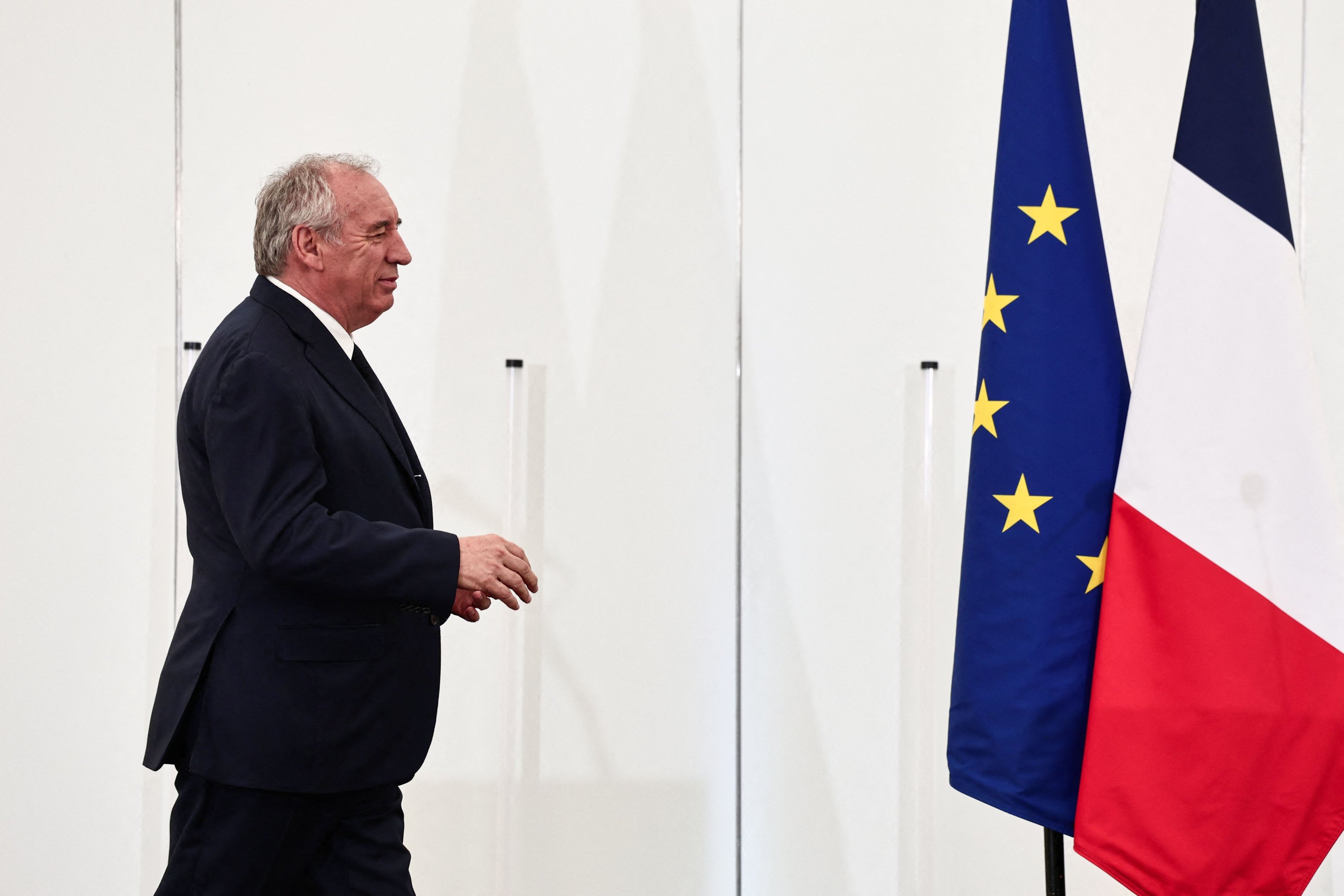
French Prime Minister Francois Bayrou put the future of his minority government to a new test by calling for another confidence vote, due to be held in parliament on Sept. 8.
He claims it is needed to pass austerity measures, which he says will revive the economy, but the move is threatening to revive political turmoil and has also stoked fears of a financial crisis.
Although not quite on the brink of the abyss, France's financial situation is strained.
The 10-year rate at which France borrows on the financial markets stands at 3.5%, just below that of Italy.
"I bet you that in the next fortnight we will pay more than Italy for our debt," warned Economy Minister Eric Lombard on Tuesday.
Spain, Portugal and Greece – the last of which had to be bailed out just 15 years ago – are all able to borrow on more favorable terms than France.
The rise in rates increases the amount paid to service the debt.
Pierre Moscovici, president of the national audit body, recently said that this figure could increase from 30 billion euros ($35 billion) in 2021 to 100 billion euros by the end of the decade.
Such an increase would "jeopardize the country's social contract," Bayrou said on Tuesday.
Yet the markets were not pleased with Bayrou's move; the Paris exchange tumbled after his announcement on Monday and continued those losses on Tuesday.
Bayrou is unlikely to win the vote of confidence, and few analysts give his gambit much chance of resolving the country's fiscal problems.
Salomon Fiedler, an economist at Berenberg Bank, praised Bayrou for trying to tackle "unsustainable" government overspending.
"France urgently needs to get its excessive deficits under control. Bayrou has presented a plan to do so," he said.
"But neither his plan nor other ideas to make France's public finances sustainable seem to be palatable to a majority in a parliament that is deeply divided."
The rating agency Fitch is expected to deliver its verdict on France's debt on Sept. 12.
Both the Barnier and Bayrou governments have raised the specter of international institutions stepping in.
The International Monetary Fund (IMF) could be called on, as it was in Greece during the financial crisis.
But Lombard said on Tuesday: "We are not under the threat of any intervention" of this kind today.
Analyst firm Capital Economics said in a note that a "mini-crisis" in France might not be so damaging.
There were European mechanisms to support a state in difficulty, it said and French banks were not overexposed to government bond yields.
"That said, fiscal-political crises are hard to predict and it could become quite severe if French politicians continue to resist market and EU pressure to reduce the deficit."