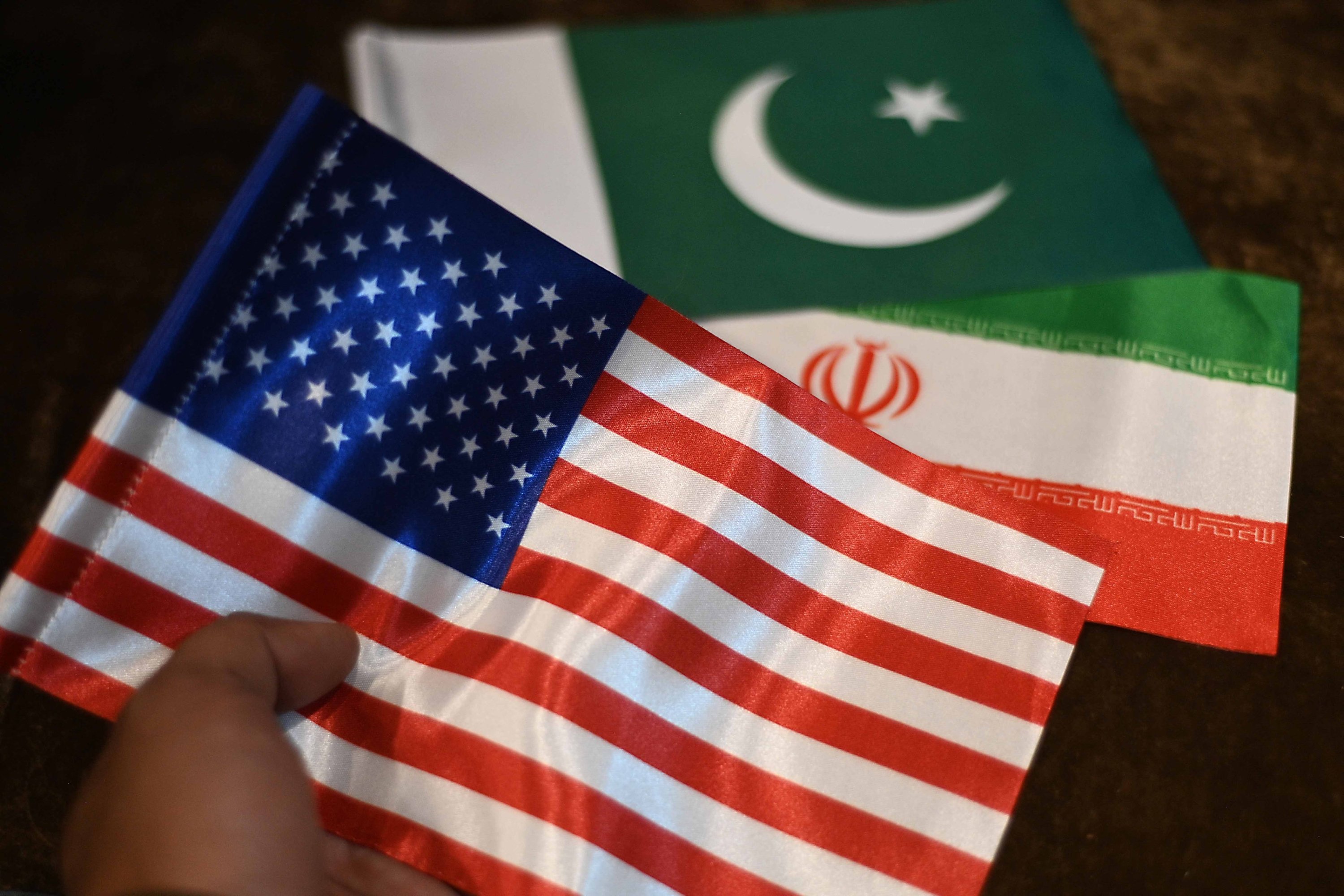
Oil prices surged on Monday and global equities eased as markets grew increasingly concerned that the cease-fire between the U.S. and Iran might not hold and a second round of talks was hanging in the balance, while tensions over the Strait of Hormuz once again escalated.
Brent crude futures rose about 6% to $95.85 a barrel. MSCI's world share index was last down around 0.3%, with Europe's cross-regional STOXX 600 down 1.1%, after Asia's equity markets shrugged off risks to advance. S&P 500 futures were 0.65% lower.
Concerns grew on Monday that the cease-fire between the United States and Iran might not hold after the U.S. said it had seized an Iranian cargo ship that tried to run its blockade and Iran vowed to retaliate.
However, lingering hopes for a deal to end the seven-week crisis continued to support Asian equities, even as Tehran said it was not currently planning to attend peace talks.
Crude plunged on Friday while U.S. stocks rallied after Iran said it would again allow ships to pass through the waterway, through which a fifth of global oil and liquified natural gas (LNG) usually passes, citing the cease-fire between Israel and Lebanon. However, over the weekend, it said the strait was closed again to traffic while the U.S. has maintained a blockade of Iranian ports.
U.S. benchmark West Texas Intermediate (WTI) dived more than 11% and Brent shed 9% in response to developments on Friday.
But both contracts jumped sharply on Monday, days before the end of a two-week ceasefire, owing to the ongoing U.S. blockade and after an American destroyer fired on and seized an Iranian ship that tried to evade it. Tehran warned it would retaliate.
Kpler data showed that more than 20 vessels carrying oil products, metals, gas and fertilizer passed through the strait on Saturday, the busiest day for the chokepoint since March 1. Still, shipping data on Monday indicated that only three vessels transited the waterway over the past 12 hours, a Reuters report said.
The blockade of Iranian ports has been a significant sticking point in negotiations between the two countries, and state broadcaster IRIB cited Iranian sources as saying "there are currently no plans to participate in the next round of Iran-U.S. talks" in Pakistan.
The Fars and Tasnim news agencies had earlier cited anonymous sources as saying "the overall atmosphere cannot be assessed as very positive," adding that lifting the U.S. blockade was a precondition for negotiations.
There has so far been only a single, 21-hour negotiating session held in Islamabad on April 11 that ended inconclusively, though groundwork for fresh talks continued afterwards.
"We're offering a very fair and reasonable DEAL, and I hope they take it," Trump said in a social media post Sunday, while also renewing his threats against Iran's infrastructure if a deal is not made.
But Iran's Revolutionary Guards warned that any attempt to pass through the strait without permission "will be considered cooperation with the enemy, and the offending vessel will be targeted."
Iran's Foreign Ministry spokesperson Esmaeil Baqaei said the blockade was "a violation" of the cease-fire.
Chris Weston at Pepperstone said traders were assessing "whether the cease-fire can be salvaged through this week's diplomatic talks, with recalibration on the probability of military escalation."
The outlook for further negotiations between the U.S. and Iran and a quick resolution seemed uncertain.
"Whether this impasse proves to be merely a detour on the path to a resolution remains to be seen, but more volatility would seem the most likely outcome," Derren Nathan, head of equity research at Hargreaves Lansdown, said in a note.
"We always thought there would be some swings and roundabouts within that, rather than a straight linear path to the end outcome," said Investec's Horsfield.
Bonds, which rallied on Friday, retreated and the yield on benchmark 10-year Treasuries rose 2.6 basis points to 4.2697%, while the yield on German 10-year government bonds was last 3.6 bps higher at 3.0015%.
The dollar, which was sold for the best part of the past two weeks, broadly steadied, trading at $1.1761 per euro.
Wall Street indexes touched record highs on Friday, supported by expectations of robust first-quarter earnings, the bulk of which come this week.
British inflation data, U.S. retail sales and European Purchasing Managers' Index figures are also due through the week, though much of the market's focus will be on Gulf shipping.
"The critical barometer of geopolitical risk has been distilled into one data point: The number of ships transiting the Strait of Hormuz," said Bob Savage, head of markets macro strategy at BNY.
"Peace talks matter, but the immediate focus is on oil and other supply shortages driving inflation."