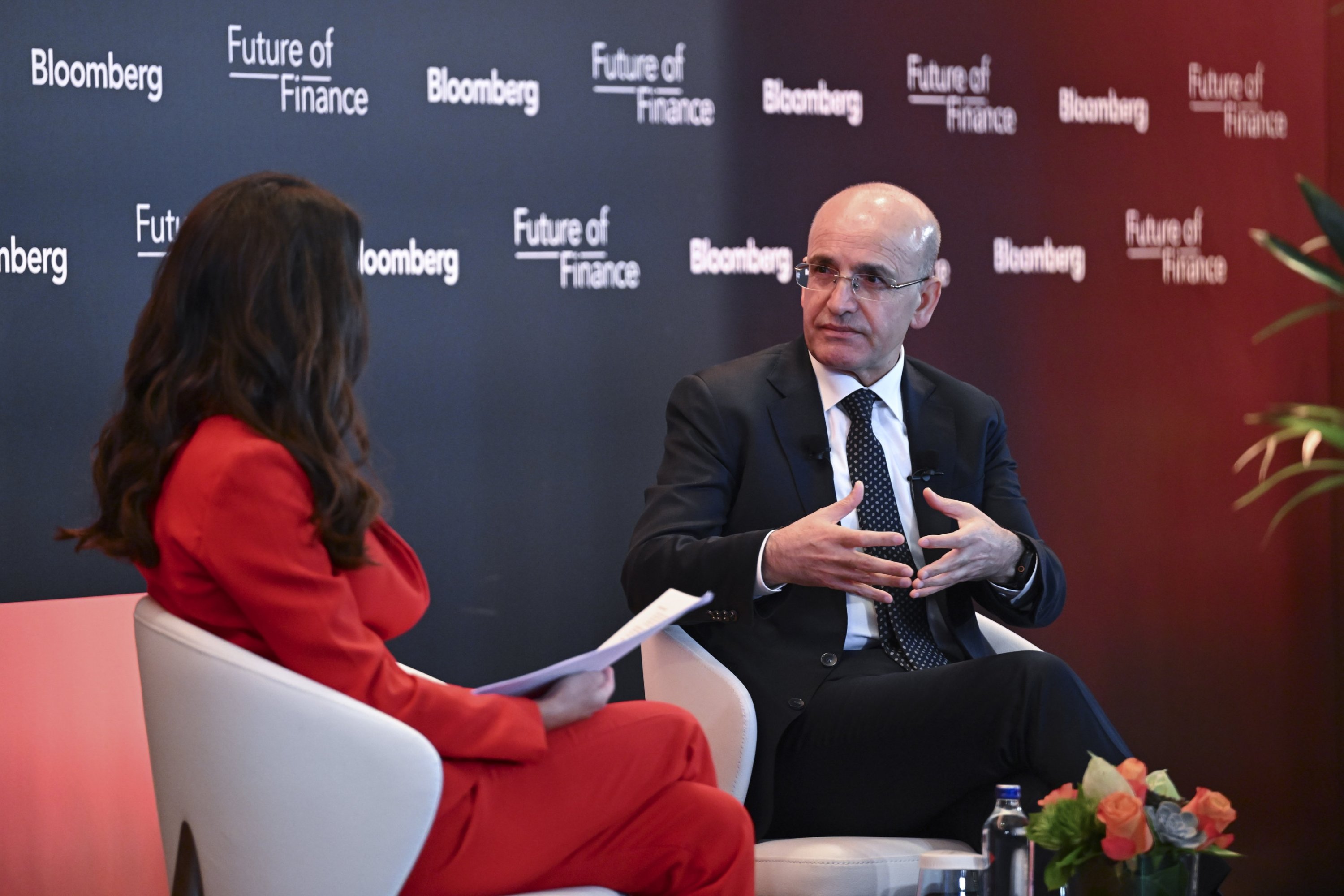
Treasury and Finance Minister Mehmet Şimşek on Tuesday reiterated that the Turkish government’s primary goal is to reduce inflation and expressed confidence in reaching their targets.
Şimşek’s remarks came a day after official data showed Türkiye’s annual inflation eased to 42.12% in January, while monthly print climbed more than expected to 5.03% due to a minimum wage hike and several new-year price updates.
The government expects inflation to continue declining to stand at around 20% at the end of the year. The central bank is due on Friday to present its first inflation report of the year. Its previous forecast projects consumer prices slowing to 21% by the end of 2025.
Şimşek acknowledged the market’s doubts but assured that inflation would continue to decrease.
“When you look at the 12-month forward market inflation expectations, they are around 25%. Our target range is close to this, meaning the upper band. Therefore, I believe we will succeed. I have confidence in the team at the central bank, and we are doing everything we can on the fiscal side, considering the reconstruction of the earthquake zone and all other constraints,” Şimşek told a Bloomberg event in Istanbul.
“At the same time, we have the right policies. We are using all the necessary tools to bring inflation down. Inflation will fall, but I understand the doubts in the market."
Annual inflation has been falling since May, when it exceeded 75%, as tighter monetary and fiscal policies curbed overheating domestic demand.
The central bank began cutting its interest rate from 50% in December and trimmed it again to 45% last month while pledging to maintain sufficiently tight policy to ensure continued disinflation.
Despite the larger-than-expected monthly consumer price rise in January, analysts still see the central bank continuing on its easing path in the coming months.
Şimşek stressed that lowering the inflation rate is “really the key.” He urged the central bank to maintain a strict stance on consumer loans so as to achieve that goal.
“When it comes to consumption, which is key for disinflation and the current-account deficit, that’s where we are really tight,” the minister said. “Consumer credit – I think the central bank should continue to stay tight there.”
The minister also signaled the Turkish lira would continue strengthening in inflation-adjusted terms, paving the way for investors looking into longer-term bets.
“You could bank on real exchange-rate appreciation lasting as long as the program delivers,” Şimşek said, referring to the government's medium-term economic road map that focused on shifting from years of easing policy to more conventional policymaking since mid-2023.
“Right now, the delivery is there. I can tell you that there are more opportunities going forward.”
He reiterated that Türkiye does not have an exchange rate target. The lira weakened around 15% in nominal terms over the past year to around 36 per dollar. But that’s far below the annual rate of inflation.
Şimşek reiterated that the government's goal is to draw in longer-term investments as opposed to hot money flows, which risk prompting currency volatility.
Asked about the additional U.S. tariffs that have jolted the global markets this week, Şimşek said he does not expect Türkiye to be among the targeted countries.
"Our exports to the U.S. constitute only 0.4% of the U.S.'s total imports, which is really very small by global standards. We already have high tariff status, meaning we are not treated preferentially by the U.S., and therefore, it is unlikely that we will be a target country," he noted.
He also noted that the economy is currently growing below the trend, but he believed this is necessary to shift to a sustainable high-growth trajectory.