A top European Union official cautioned again on Wednesday about unsustainable trade with China, pledging to use "all tools" available to counter the growing deficit.
The EU's trade talks with China must deliver results, European Commission President Ursula von der Leyen said, warning that the bloc would "use all tools at our disposal to rebalance our relationship."
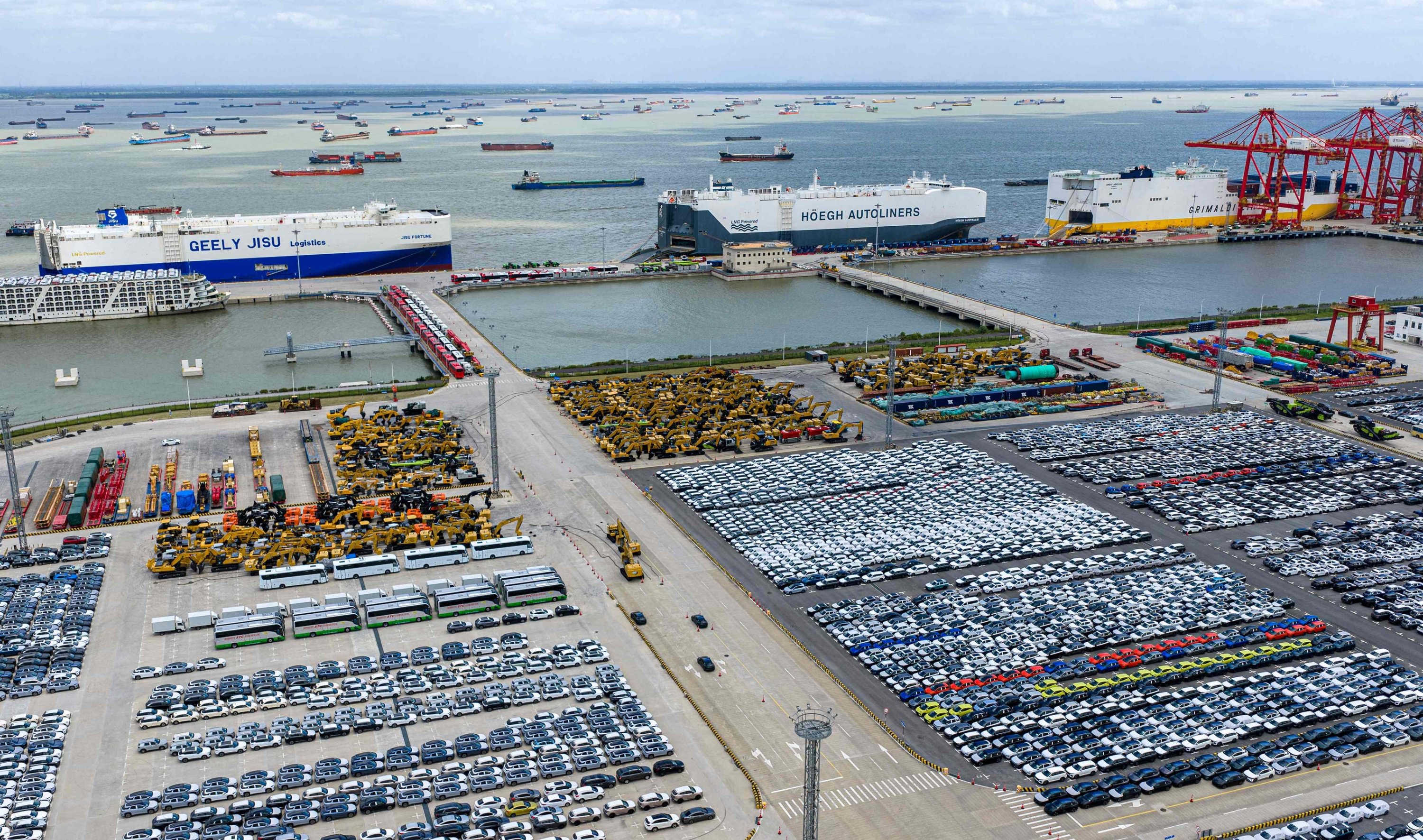
"Our trade deficit with China is now 1 billion euros ($1.2 billion) a day. It has reached a tipping point," she said during a speech to the European Parliament in Strasbourg, France.
"Some say the second China shock is looming. But it's already here," she added.
She went on to say that this shows "in our communities and in factories" across the union, adding that it leads to deindustrialization in the industrial heartlands of Europe.
"This is unsustainable," von der Leyen said.
"Let me be clear – we will use all the tools at our disposal to rebalance our relationship. Words are good. But deeds are better."
However, she also pointed to dependencies on China, noting that the bloc is more than 80% dependent on China for many critical raw materials
"We have done a lot. But we are not the only ones trying to diversify. We need to urgently procure and build up our reserves," she said.
"No country can do this alone. So we need to think differently. This is why we will establish a new European Corporation on Critical Raw Materials," she added.
"It will help us obtain and stockpile what we need. For electric cars, chips and batteries, clean tech and defence. And so much more."
The EU chief also mentioned the recent free trade agreements (FTAs) the bloc has agreed upon, suggesting that in this age, prosperity and security "will not only be built at home."
"This year, we have signed free trade agreements with India, Mercosur, Mexico, Australia and Indonesia," she said.
"We now have trade deals in place with more than 80 countries," she added.
She also provided details on planned investments for the international connectivity project.
"It will link the South Caucasus and Central Asia directly to the European market – what we call the Middle Corridor," she noted.
"Through Global Gateway, we will aim to crowd in up to 12 billion euros ($13.8 billion) in public and private investment. Our goal is to diversify routes, triple trade flows and slash freight transit times by 2030."