U.S. President Donald Trump filed a $5 billion lawsuit against banking giant JPMorgan Chase and its CEO Jamie Dimon on Thursday, accusing the lender of "debanking" him and his businesses by closing accounts for political reasons after he left office in January 2021.
The lawsuit, filed in Miami-Dade County court in Florida, alleges that the nation's largest lender abruptly closed multiple accounts in February 2021 with just 60 days notice and no explanation. By doing so, the lawsuit claims JPMorgan and Dimon cut the president and his businesses off from millions of dollars, disrupted their operations and forced Trump and the businesses to urgently open bank accounts elsewhere.
"JPMC debanked (Trump and his businesses) because it believed that the political tide at the moment favored doing so," the lawsuit alleges.
In the lawsuit, Trump alleges he tried to raise the issue personally with Dimon after the bank started to close his accounts, and that Dimon assured Trump he would figure out what was happening. The lawsuit alleges Dimon failed to follow up with Trump.
In a statement, JPMorgan said it believes the suit has no merit.
"While we regret President Trump has sued us, we believe the suit has no merit. We respect the President's right to sue us and our right to defend ourselves," it said.
The lender said it does not close accounts for political or religious reasons.
"We do close accounts because they create legal or regulatory risk for the company. We regret having to do so but often rules and regulatory expectations lead us to do so," the bank said.
Trump's lawsuit said despite the bank claiming to hold its principles dear, JPMorgan violated them unilaterally and without warning or remedy, terminating several bank accounts belonging to him and his hospitality companies.
"Plaintiffs also suffered extensive reputational harm by being forced to reach out to other financial institutions in an effort to move their funds and accounts, making it clear that they had been debanked by JPMC," the filing said.
The lawsuit comes as the banking industry oppose Trump's plan to place a 10% cap on credit card rates, calling the move uneconomic and bad for customers.
Still, bankers have cheered the administration's deregulatory policies, which they say could cut red tape, boost profits and spur economic growth.
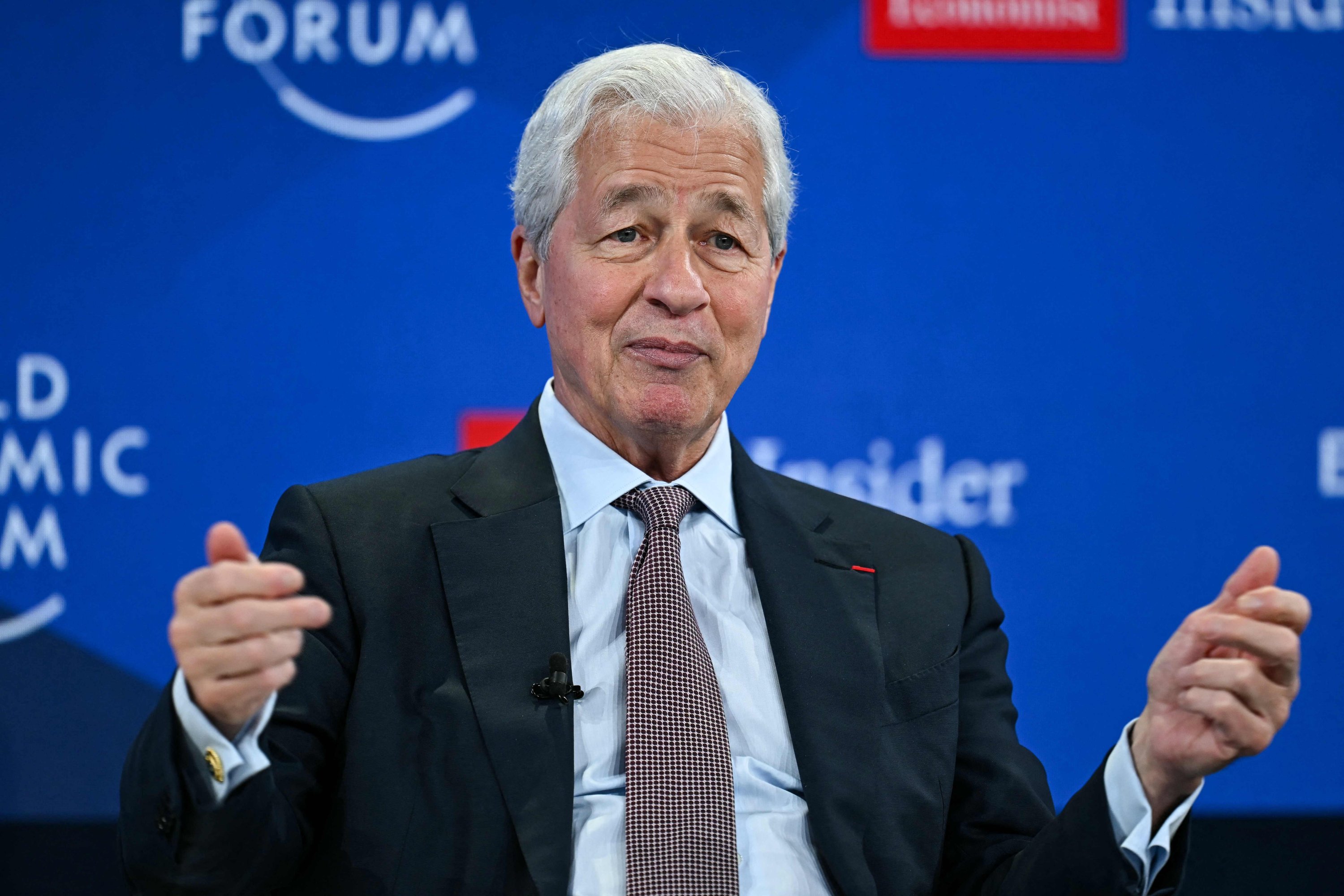
Dimon said the cap would amount to an "economic disaster."
Dimon has run the lender for two decades and is one of the most influential figures in corporate America.
The lawsuit accused Dimon of ordering a "blacklist" to warn other banks about doing business with the Trump Organization and Trump family members, as well as himself. It said the blacklist was "an intentional and malicious falsehood."
Trump is seeking at least $5 billion in damages for the alleged blacklist, and JPMorgan's allegedly acting in "bad faith" toward him. The White House said it will refer the matter to the president's outside counsel.
Banks have faced growing political pressure in recent years, particularly from conservatives who argue that lenders have improperly adopted "woke" political positions and, in some cases, discriminated against certain industries such as firearms and fossil fuels.
That pressure has intensified during Trump's second term, with the Republican president claiming in interviews that some banks refused to provide services to him and other conservatives. The banks have denied the allegation.
A U.S. banking regulator said last month the nine largest U.S. banks in the past had placed restrictions on providing financial services to some controversial industries in a practice commonly described as "debanking."
It occurs when a bank closes the accounts of a customer or refuses to do business with a customer in the form of loans or other services. Once a relatively obscure issue in finance, debanking has become a politically charged issue in recent years, with conservative politicians arguing that banks have discriminated against them and their affiliated interests.
Debanking first became a national issue when conservatives accused the Obama administration of pressuring banks to stop extending services to gun stores and payday lenders under "Operation Choke Point."
Last year, JPMorgan said it was cooperating with inquiries from government agencies and other entities regarding its policies and procedures in light of the Trump administration's push to scrutinize banks over alleged debanking.
U.S. regulators have examined themselves to see if overly strict supervisory policies discouraged banks from providing services to certain sectors.
Trump-led officials have also moved to loosen oversight, with federal bank regulators last year saying they would stop policing banks based on so-called "reputational risk."
Under that approach, supervisors could penalize institutions for activities that were not explicitly prohibited but could expose them to negative publicity or costly litigation.
Banks have increasingly complained the reputational risk standard is vague and subjective, giving supervisors wide discretion to discourage firms from providing services to certain people or industries.
The industry has also argued regulators need to update anti-money laundering rules, which can force banks to close suspicious accounts without giving customers an explanation.
Shares of JPMorgan were last up 1.2% in afternoon trading.