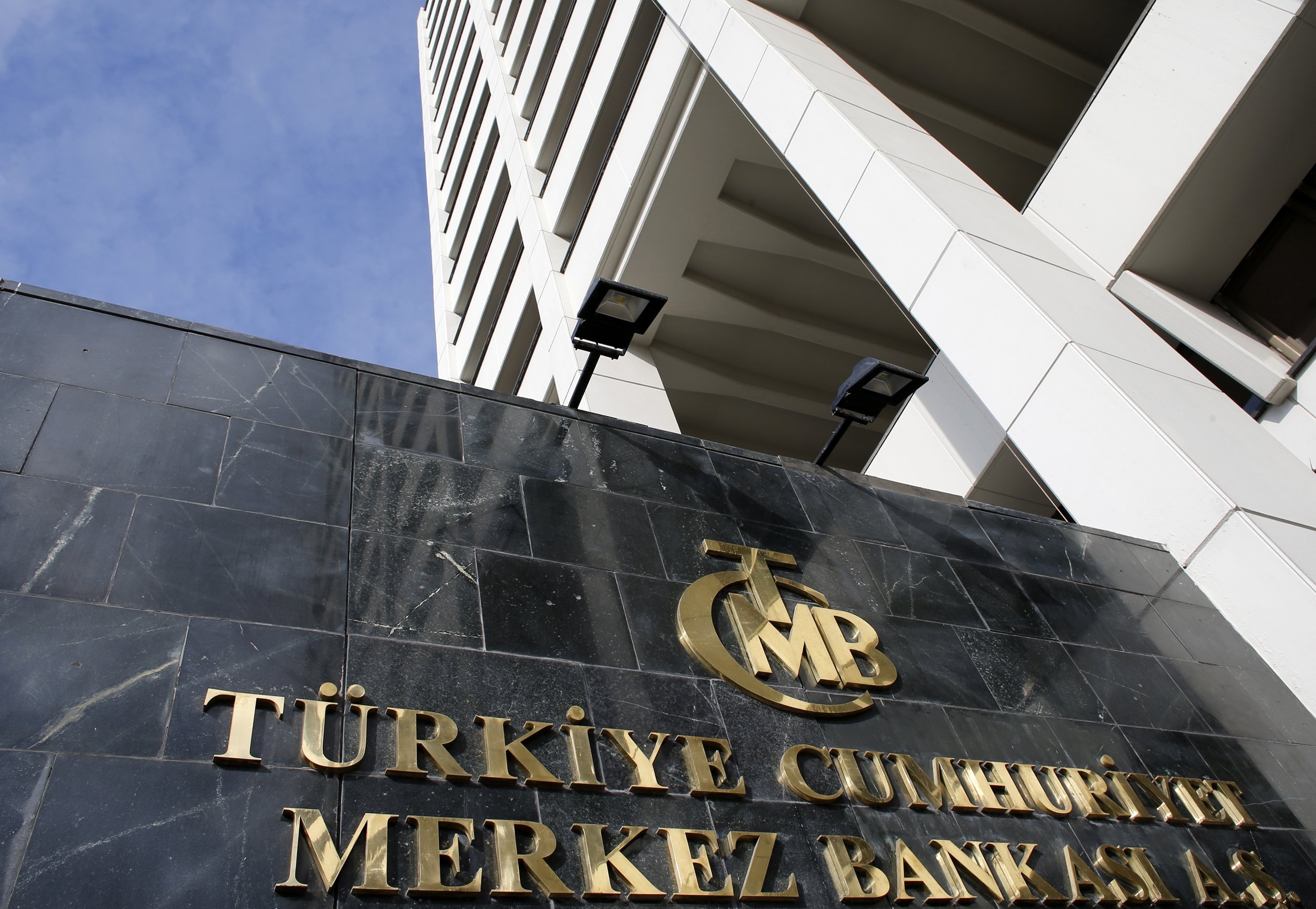
The Turkish central bank put its easing cycle on pause and left its key interest rate on hold at 37% on Thursday, taking a more cautious stance on monetary policy due to market fallout from the Iran war.
"As uncertainty heightened amid geopolitical developments, the global risk appetite deteriorated and energy prices increased," the bank said, adding it acted to "contain the risks posed by these factors to the inflation outlook."
The Central Bank of the Republic of Türkiye (CBRT) also left unchanged its band of overnight lending and borrowing rates at 40% and 35.5%, respectively. Last week, it responded to the volatility by taking liquidity measures that lifted overnight rates to around 40%, up 300 basis points from pre-war levels.
"The underlying trend of inflation was essentially flat in February. As uncertainty heightened amid geopolitical developments, global risk appetite deteriorated and energy prices increased. To contain the risks posed by these factors to the inflation outlook, decisions supporting tight monetary policy have been enacted alongside coordinated fiscal measures," the bank said in a statement following its widely anticipated Monetary Policy Committee (MPC) meeting.
Most polls indicated that the bank was likely to keep rates steady in light of recent developments and escalating regional conflict.
"The effects of geopolitical developments on the inflation outlook through the cost channel and economic activity are being closely monitored," the CBRT said.
Annual inflation rose slightly to 31.5% in February, while the monthly figure cooled to 2.96%, compared to the higher-than-expected 4.84% increase in January, official data revealed earlier this month.
Before the expanding regional conflict began shifting expectations, the central bank had been expected to continue a rate-cutting cycle that began in late 2024. A year ago, the bank temporarily reversed course and hiked rates, though it returned to rate cuts by mid-2025.
Since the U.S.-Israeli attack on Iran nearly two weeks ago, exports from major Gulf oil producers have largely halted, causing a sharp rise in energy prices and stoking inflation concerns worldwide.
The lira was flat at 44.114 against the U.S. dollar after the announcement.
The bank, meanwhile, also reiterated that a tight stance, which will be maintained until price stability is achieved, will strengthen the disinflation process through demand, exchange rate, and expectation channels."
"The committee will determine the policy rate by taking into account realized and expected inflation and its underlying trend in a way to ensure the tightness required by the projected disinflation path in line with the interim targets," it added. It also again emphasized that monetary policy decisions are made prudently on a meeting-by-meeting basis with a focus on the inflation outlook.
"In case of a significant and persistent deterioration in the inflation outlook, which can also be driven by the recent developments, the monetary policy stance will be tightened," it suggested.
"In case of unanticipated developments in credit and deposit markets, the monetary transmission mechanism will be supported via additional macroprudential measures. Liquidity conditions will continue to be closely monitored, and liquidity management tools will continue to be used effectively."