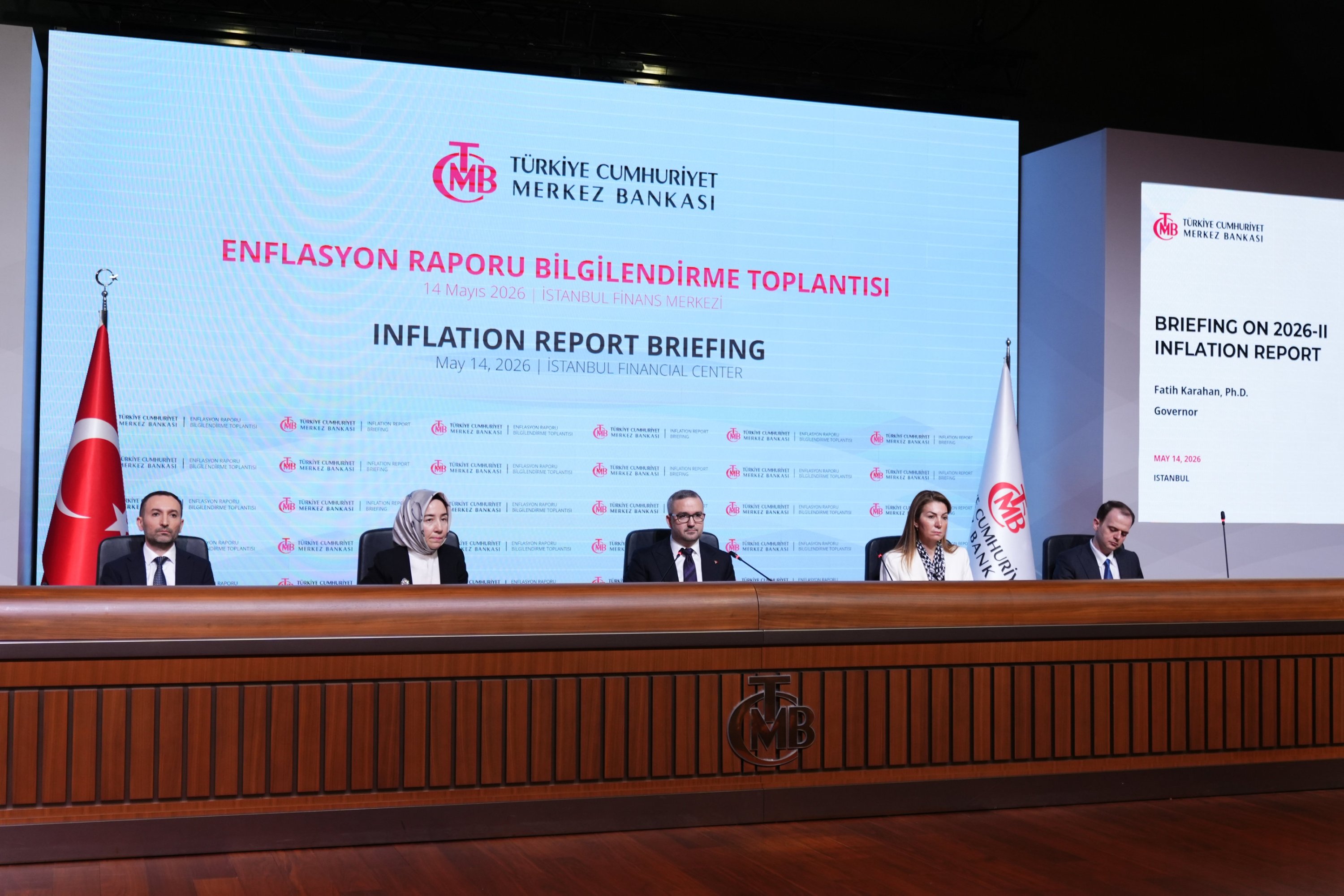
The Turkish central bank is set to convene for a key policy meeting this week, another one since the start of the U.S.-Israeli war with Iran, which has sharply lifted global oil prices, prompting a more cautious stance by the economic actors worldwide.
The Central Bank of the Republic of Türkiye (CBRT) will, June 11, decide whether to keep interest rates unchanged at the current level of 37% or instead potentially opt for a hike as recent data indicated a mild uptick in annual inflation in May, despite the monthly reading coming in less than the prior month.
In May, consumer prices increased 1.71% monthly and 32.61% annually, official data showed on Friday. That compared to 4.18% monthly and 32.37% annually registered in April.
The data shared by the Turkish Statistical Institute (TurkStat) revealed that although education and housing remained among the leading drivers that contributed to the annual surge in the index, transportation and food and non-alcoholic beverages also posted increases above the median.
The central bank raised its year-end interm inflation target to 24% from 16% last month, forecasting that the short-term inflationary effects of the Iran war would remain "pronounced," as the war-related surge in energy prices has impacted countries that rely on energy imports.
"Although geopolitical risks and volatility in energy prices continue to exert pressure on the inflation outlook, we have limited these effects with the steps we have taken," Treasury and Finance Minister Mehmet Şimşek said in a post on X, commenting on the May data.
Prior to the outbreak of the Iran war, Ankara had managed to lower inflation to the level of around 30s compared to above 80% in late 2022.
Earlier this week, Şimşek pledged that commitment to disinflation remains "firm."
However, amid the Iran-war related pressures, which have weighed on prices in different regions, including Europe, analysts are debating whether central banks would turn to rate hikes to contain the fallout.
This week will also mark the meeting of the European Central Bank (ECB), where the bank is expected to be the first one among major global banks to raise rates amid the war. Polls point to a definite hike by a quarter percentage point, to 2.25%, as inflation in the eurozone accelerated over the past two months.
For Türkiye, economists currently expect the bank to keep rates unchanged at 37%, although a hike is not excluded.
A recent survey by financial services provider Matriks, suggested that the CBRT is most likely to keep rates on hold. Of 33 economists who provided forecasts for the June Monetary Policy Committee (MPC) meeting, 27 predicted that the weekly repo rate would remain unchanged.
Six economists, however, predicted that the policy rate could be increased by 300 basis points to 40%.
Last month, amid the latest political developments in the country, U.S. banking giant JP Morgan also said it expected the policy rate to be hiked to 40%.
Dutch banking giant ING, in a report shared following the latest inflation data, said it expects the central bank "to keep interest rates unchanged at the June MPC meeting, taking into account recent macroprudential tightening with reduced caps on lending growth."
"Nevertheless, ongoing geopolitical uncertainties and domestic political developments may call for a more cautious approach, which could lead to an upward adjustment in the policy rate – from 37% to the current effective funding rate of around 40%," it added.