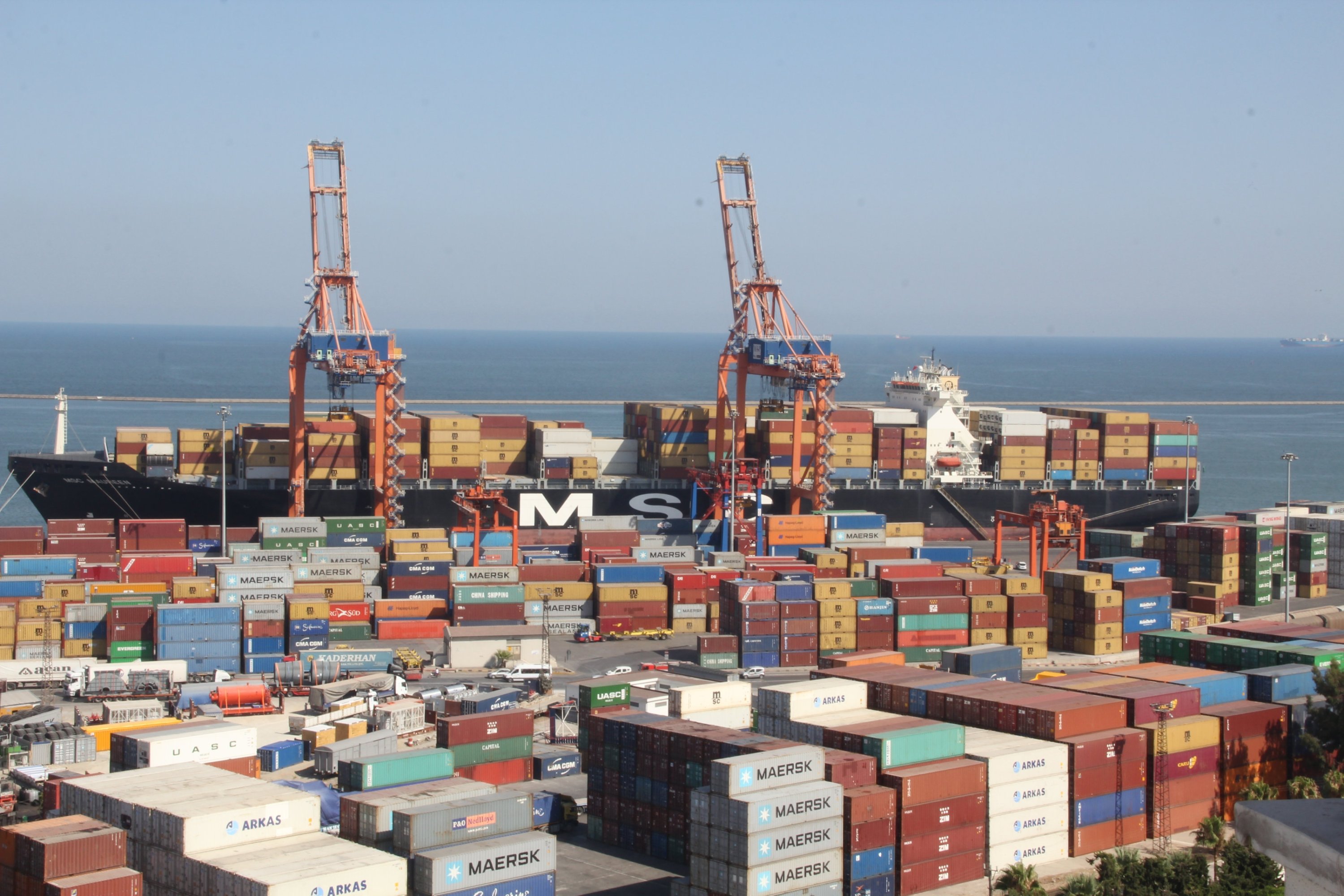
Türkiye's exports rose 1.6% year-over-year in February to nearly $21.1 billion, marking the second-highest February figure on record, Trade Minister Ömer Bolat said on Tuesday.
Imports increased 6.1% to $30.3 billion, while the foreign trade deficit widened 18.1% to $9.2 billion, Bolat told a news conference to announce the preliminary trade data in Ankara.
The performance came despite global uncertainty and regional conflicts, he said.
Bolat recalled that the Turkish economy expanded 3.6% in 2025 and grew 3.4% in the final quarter, extending its uninterrupted growth streak to 22 consecutive quarters.
Türkiye's gross domestic product (GDP) reached $1.6 trillion, while per capita income rose to $18,040, he said.
Bolat stated that exports of goods and services had reached approximately $400 billion, noting that the contribution of exports to the economy is at a critical level. "Our exports account for one-fourth of our national income; that is, 25%," he noted.
In the first two months, exports totaled $41.4 billion, while imports rose 3.1% to $59 billion. The export-to-import coverage ratio stood at 70.2%.
The foreign trade deficit was recorded at $9.2 billion in February.
Bolat noted that higher gold and silver imports played a significant role in the rise in overall imports.
In February, silver imports reached $1 billion due to the increase in price. "Silver imports, which did not exist last year, totaled $1.7 billion in the January-February period," said the minister.
The data also showed unprocessed gold imports reached $2.2 billion. Energy imports decreased by 16.6%, falling to $5.1 billion, said Bolat.
"In the first two months, the increase seen in imports was driven by gold and silver," he added.
The data also showed exports of processed gold jewelry and petroleum oils decreased by about $1 billion in February.
On the services side, Bolat said February exports were expected to come in at around $7 billion.
On a rolling annual basis, services exports are projected to have reached $123.2 billion, surpassing last year's $122 billion and setting a new record.
Bolat also said the current account deficit-to-GDP ratio remained at 1.6%, describing it as a reasonable level below historical averages.
Meanwhile, Türkiye is holding intensive talks with European Union officials to be recognized as an "intra-EU" country under a new industrial support framework being drafted by the European Commission, Bolat said.
The Commission is working on a draft "Industry Accelerator" law that would prioritize products manufactured within the European Union in public procurement tenders in certain strategic sectors. However, disagreements remain over which countries would qualify as "intra-EU" under the proposed rules.
Türkiye, which has been part of a customs union with the EU for nearly 30 years, is seeking inclusion in the intra-EU definition. Industries such as automotive, which have established supply chains centered on Türkiye, are also lobbying for both Türkiye and the United Kingdom to be covered by the designation.
Bolat said Ankara is continuing its efforts at both the European Commission and member state levels.
"We continue our work with EU officials and member states," he said, stressing intensive contacts with Commission officials and ministers of member states to ensure Türkiye "is not left outside."
Bolat added that compared with the initial draft, the current version under discussion contains changes in Türkiye's favor, partly reflecting the country's investment ties with Europe.
"There has been a positive change compared to the first draft prepared on this issue. However, no final decision has yet been taken. We will continue our intensive efforts with the EU," he said.