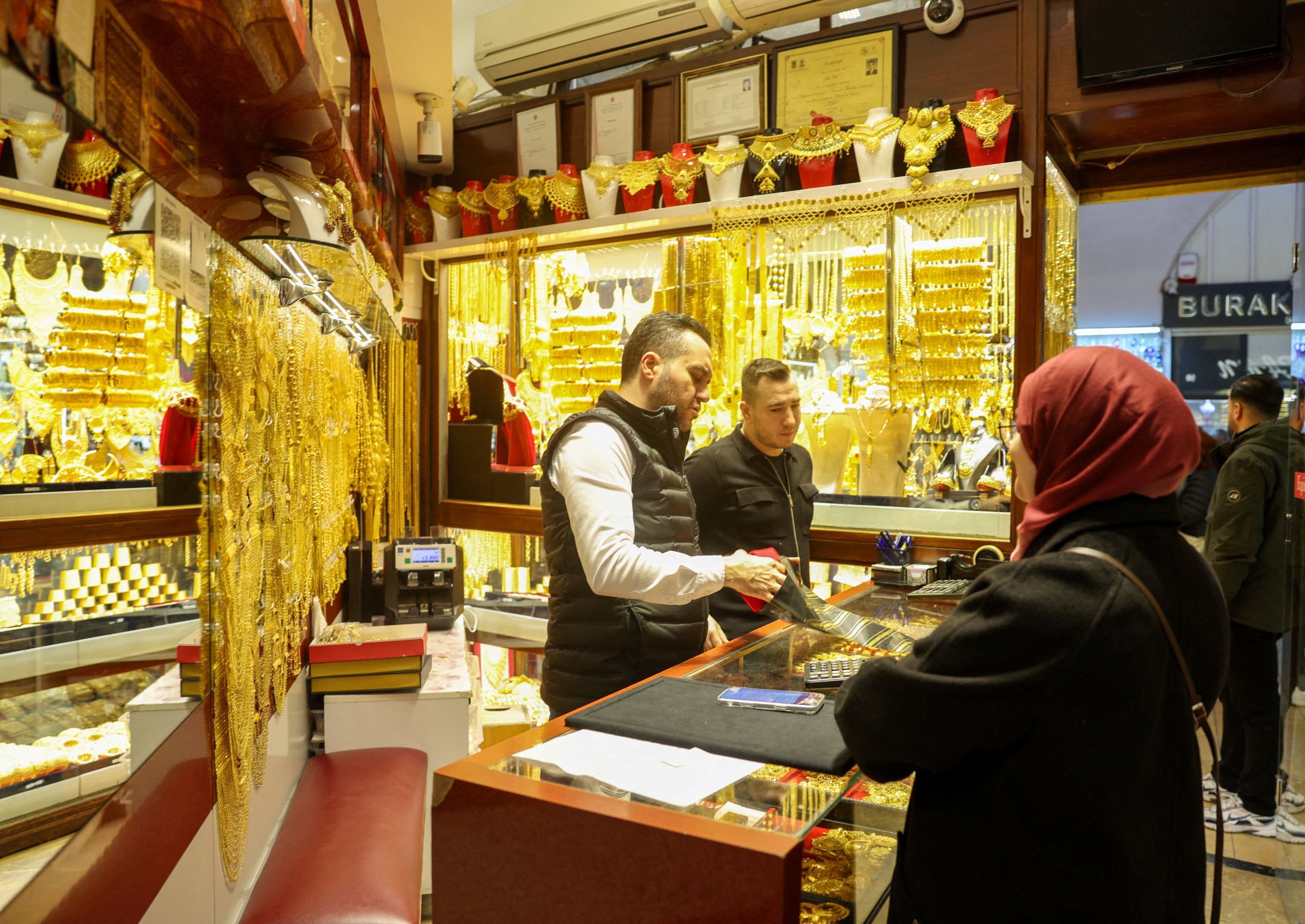
Turkish households are increasingly turning to real estate as a preferred investment option, while interest in gold has declined, according to survey data on Friday that also showed rising inflation expectations and concerns over food and energy prices.
The findings, based on the Central Bank of the Republic of Türkiye's (CBRT) sectoral inflation expectations report, indicated a shift in savings behavior amid continued price pressures.
Households' expectation for inflation in 12 months time rose by 1.67 percentage points in April to 51.56%. Expectations also climbed for market participants and the real sector, reaching 23.39% and 33.70%, respectively.
The share of households expecting inflation to decline over the next year edged down by 0.57 percentage points to 14.57%.
The Iran war has sent energy prices soaring, posing a challenge for import-heavy economies like Türkiye, where inflation still eased to 30.87% last month.
Respondents in the CBRT survey identified food and fuel-energy as the categories with the steepest recent price increases and the highest expected rises over the coming year.
The proportion of participants citing food as the fastest-rising category increased slightly to 40.7%.
Meanwhile, expectations for housing prices also moved higher, with respondents forecasting a 35.23% increase over the next 12 months.
Expectations for the Turkish lira showed relative stability compared to previous months. Households projected the exchange rate of the dollar at TL 52.12 over the next year, a slight decline from the previous survey.
The survey pointed to a significant change in investment preferences.
While gold remains the most favored asset, the share of respondents saying "I would buy gold" dropped sharply by 6.4 percentage points to 48.8%.
At the same time, interest in real estate strengthened. The proportion of households opting for property investments, such as housing, shops or land, rose by 4.9 percentage points to 33.4%.
The data suggest that households are increasingly favoring tangible assets to preserve wealth in a high-inflation environment, with real estate emerging as a stronger alternative to traditional safe havens like gold.