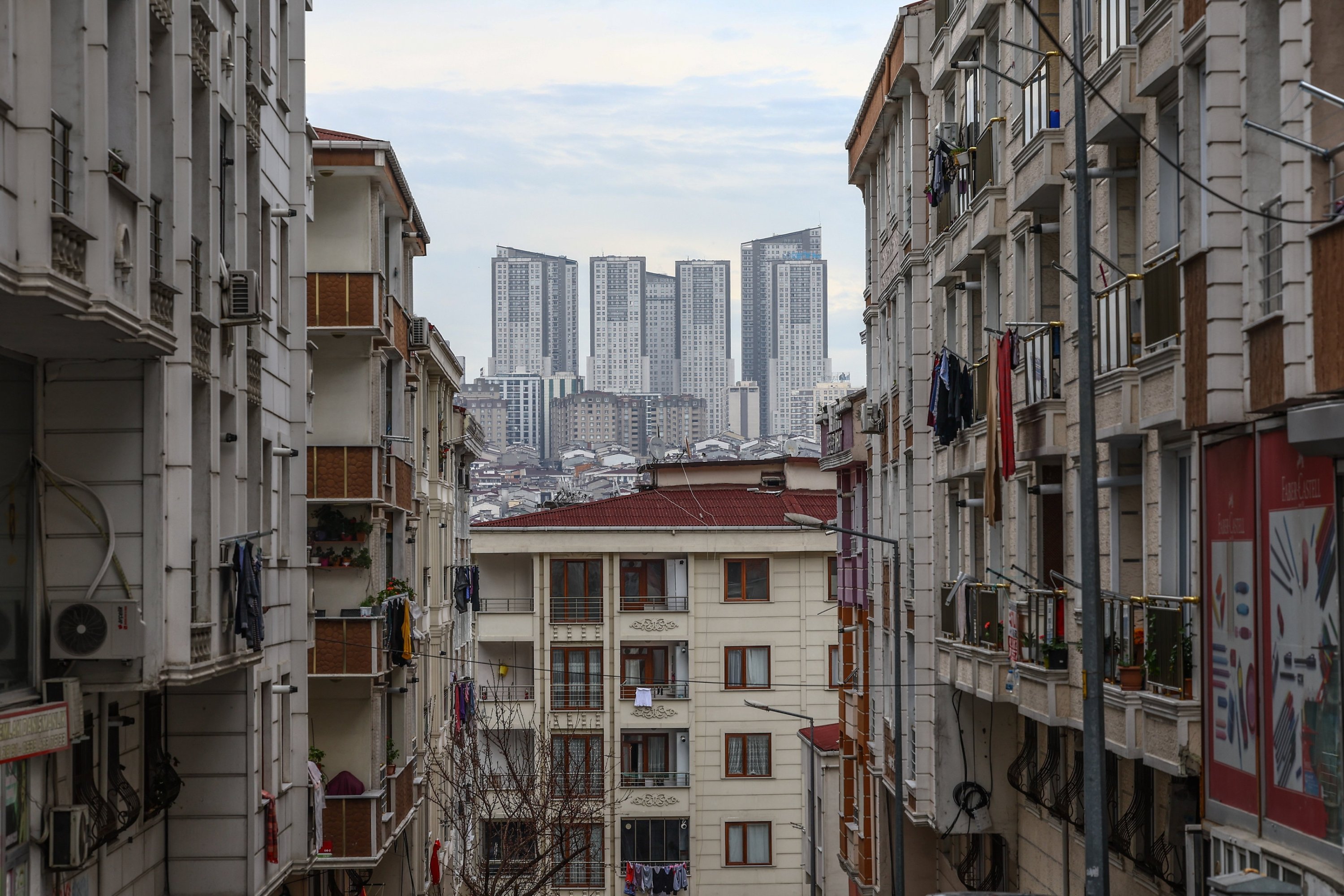
Türkiye's housing market has capped a year of decline in real terms as property price increases continue to fall short of inflation, official data showed on Tuesday.
The Residential Property Price Index (RPPI) rose by 31.3% in nominal terms in February compared to the same month last year, according to the Central Bank of the Republic of Türkiye (CBRT), lagging behind the 39.05% annual inflation rate.
In real terms, it recorded an annual decrease of 5.6%, the bank said, capping a year of a falling trend that began in February a year ago.
Nominal terms reflect the raw percentage change in the value of an asset without adjusting for inflation. Real terms, however, account for inflation, offering a clearer picture of purchasing power and actual economic value.
In Türkiye's case, while nominal prices have increased, the value of the properties has actually decreased in real terms.
Compared to the previous month, housing prices rose by 2.8% in February, outpacing the 2.27% increase in monthly inflation, the data showed.
Among Türkiye's three largest cities, Istanbul recorded an annual housing price increase of 28.4%. In contrast, Izmir and Ankara saw annual price increases of 32.7% and 37.2%, respectively.
Official data last week showed house sales in Türkiye rose 20% on an annual basis to nearly 113,000.
That indicated that although momentum persists it proceeds at a slower pace compared to the recent months.
Sales rebounded in 2024 to grow by 20.6% to about 1.48 million, returning to levels last seen in 2022. That came despite strict monetary tightening and falling purchases by foreigners.
The strict policy campaign to curb inflation kept borrowing costs high, before the central bank reversed an 18-month tightening drive to launch an easing cycle in December.
Since then, the bank has cut its key rate three times by a total of 750 basis points, to 42.5%. Rate hikes typically lift borrowing costs for mortgages, auto loans and credit cards.
The mortgage sales in the first two months of this year jumped 127.3% on an annual basis, according to the Turkish Statistical Institute (TurkStat). They had dropped 10.8% in 2024 as a whole.