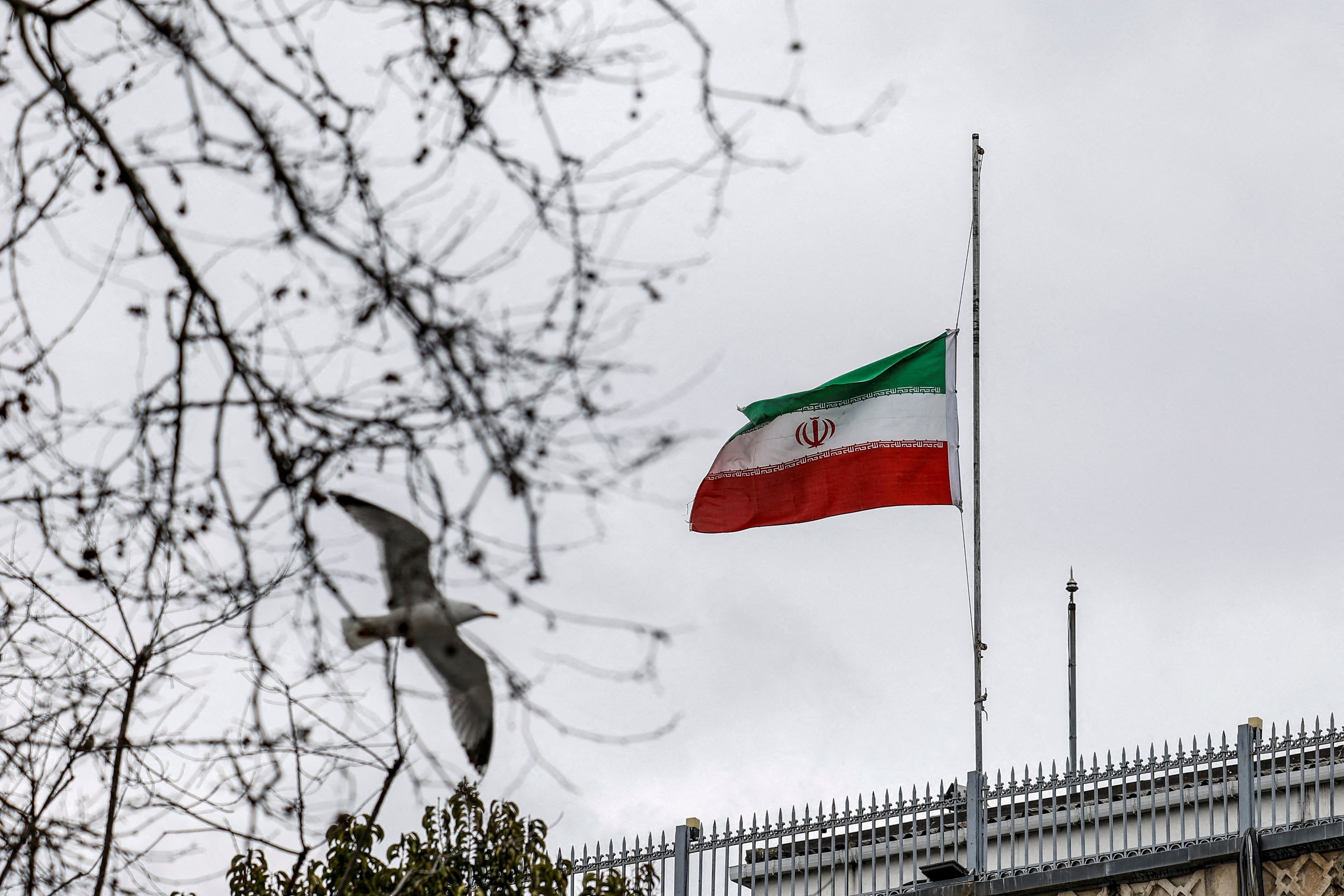
Top Turkish economic policymakers convened on Sunday following attacks by Israel and the United States on Iran, assessing the potential impact of the conflict on financial markets, energy prices and the broader macroeconomic outlook.
The joint attacks by the U.S. and Israel started early Saturday and killed Iran's Supreme Leader Ayatollah Ali Khamenei, with Tehran responding by hitting targets across the region.
Iran has also threatened ships in the Strait of Hormuz, the narrow mouth of the Persian Gulf through which a fifth of all oil traded passes. Several ships have been attacked as well there.
Energy prices rose as a result, sounding an alarm bell for import-heavy Türkiye.
A statement following the Financial Stability Committee meeting chaired by Treasury and Finance Minister Mehmet Şimşek said "all necessary measures are ready and will be implemented decisively when required" to ensure the healthy functioning of markets and to limit possible negative effects.
The statement said the economy remains “significantly” resilient to external shocks, citing strong macroeconomic fundamentals, rising foreign exchange reserves and tight monetary policy.
It also noted that the financial system's capital structure and liquidity conditions are sufficient to manage potential risks.
Separately, Vice President Cevdet Yılmaz said institutions had already taken precautionary steps against temporary effects stemming from geopolitical developments.
"Our macroeconomic fundamentals are solid. Our economy has proven its resilience against many external shocks in the past," Yılmaz said in a post on social media.
"Our institutions have taken preemptive measures against temporary effects that may arise from geopolitical developments in our region. Developments will continue to be closely monitored."
Following the meeting, top institutions, led by the Central Bank of the Republic of Türkiye (CBRT) and the Capital Markets Board (SPK) announced actions to curb market volatility.
The central bank said it would begin Turkish lira-settled forward foreign exchange sales transactions to support the healthy functioning of the foreign exchange market, prevent excessive volatility and stabilize foreign exchange liquidity.
It also decided to suspend the one-week repo auctions “for a period of time.”
The bank started trading on the sell-side of foreign exchange contracts on Borsa Istanbul Stock Exchange's futures market, two bankers said on Monday.
The Capital Markets Board said it imposed a one-week ban on short selling in the Borsa Istanbul equity market.
In its statement, the regulator said the measures were taken "to limit the possible effects of geopolitical tensions and conflicts in our region on the capital markets."
The short-selling ban will remain in effect until the close of trading on Friday. The board also allowed a reduction in the minimum equity requirement for margin trading transactions.
Borsa Istanbul Stock Exchange's main 100 stock index lost 3.8% on Monday, with its main banking index tumbling 6.5%. The Turkish lira slid to 43.97 against the dollar, an all-time low.