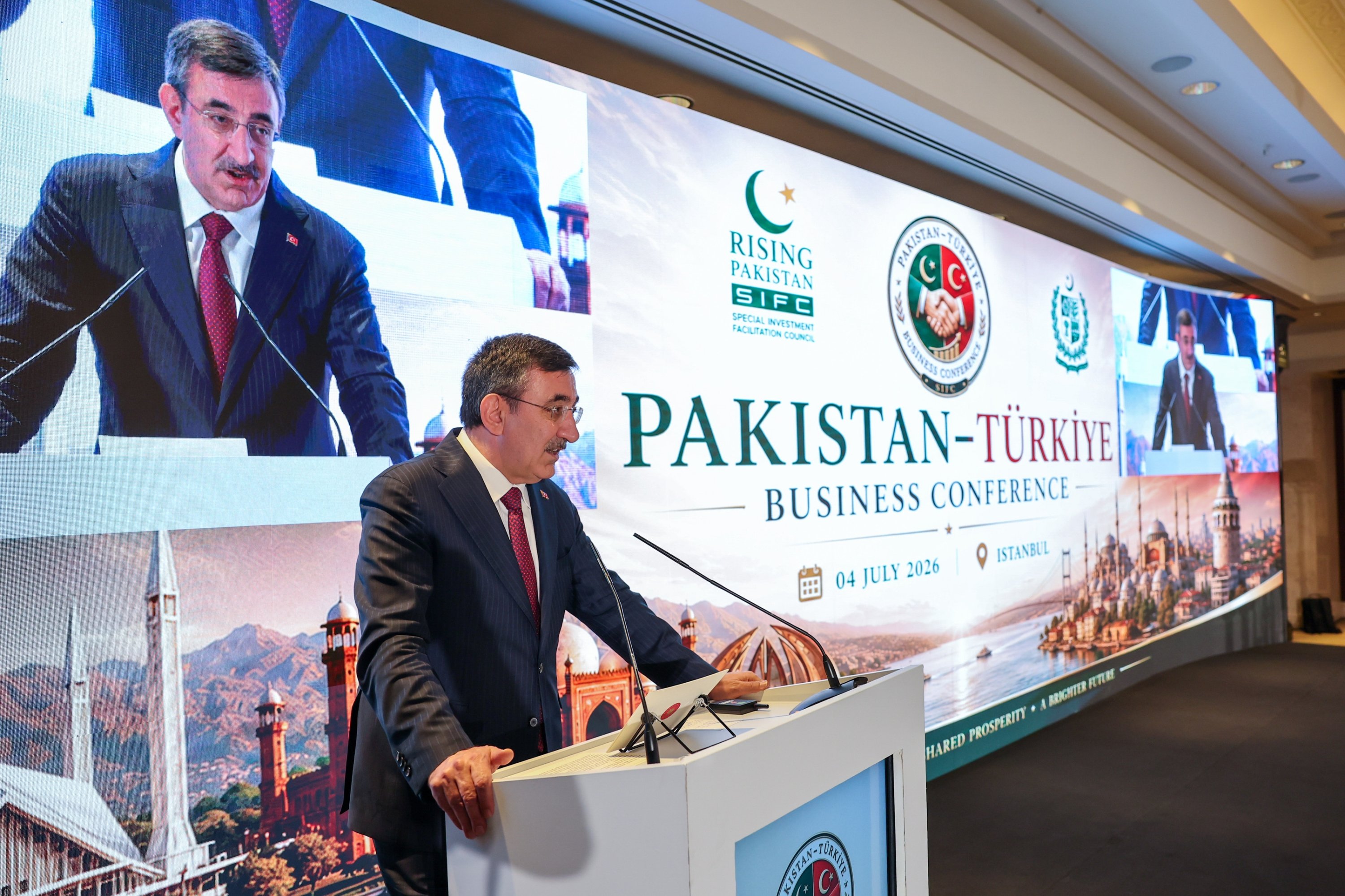
Top Turkish and Pakistani officials reaffirmed on Saturday the close and brotherly relations between the two countries, emphasizing the potential to further strengthen economic cooperation in a number of fields.
Addressing the Pakistan-Türkiye Business Conference in Istanbul, officials, including Vice President Cevdet Yılmaz and Pakistani Prime Minister Shehbaz Sharif, reinstated their aim to elevate bilateral trade volume to $5 billion.
Speaking at the conference, Yılmaz said that the friendship between the two countries has always been built on "strong emotional bonds," adding that "now we must make this friendship equally strong in trade, investment, technology and production."
Starting his speech, the vice president said that they had come together on the occasion of the conference not only to review economic cooperation between the two countries, but also to open the doors to a new era of cooperation.
Yılmaz also praised Islamabad's diplomatic role in recent months aimed at defusing tensions in the Middle East and its mediating role between the United States and Iran.
Pakistan is not only a leading country in South Asia, but "also a responsible actor that plays a constructive role in regional and global issues and effectively contributes to peace and stability," he said.
Moreover, he said that the two nations aim to raise bilateral trade volume to $5 billion, a target agreed by President Recep Tayyip Erdoğan and Sharif.
President Erdoğan and Sharif also met later during the day for bilateral talks and a joint news conference.
On trade, Yılmaz said that the current level at around $1.2 billion last year remains below potential, and that the $5 billion target should be seen as "modest" and raised further.
He also informed that Turkish direct investments in Pakistan have exceeded $2 billion, while Turkish contractors have completed 74 projects worth about $3.5 billion in the country.
At the same time, he pointed out that Ankara and Islamabad could further expand cooperation in areas including automotive, agricultural technologies, food processing, medical devices, renewable energy, information technologies, e-commerce, defense industry, shipbuilding, tourism, and film and television production.
Yılmaz also welcomed a proposal to allocate a special zone for Turkish investors inside the Karachi Industrial Park, saying it could add a "new strategic dimension" to the economic partnership.
Sharif, for his part, has called for the ideas discussed at the forum to be turned into concrete results, saying the two countries should move quickly to transform their friendship into deeper economic cooperation that benefits both countries.
The conference was also attended by Industry and Technology Minister Mehmet Fatih Kacır, Trade Minister Ömer Bolat, Energy and Natural Resources Minister Alparslan Bayraktar, Pakistani ministers and businesspeople from both countries.
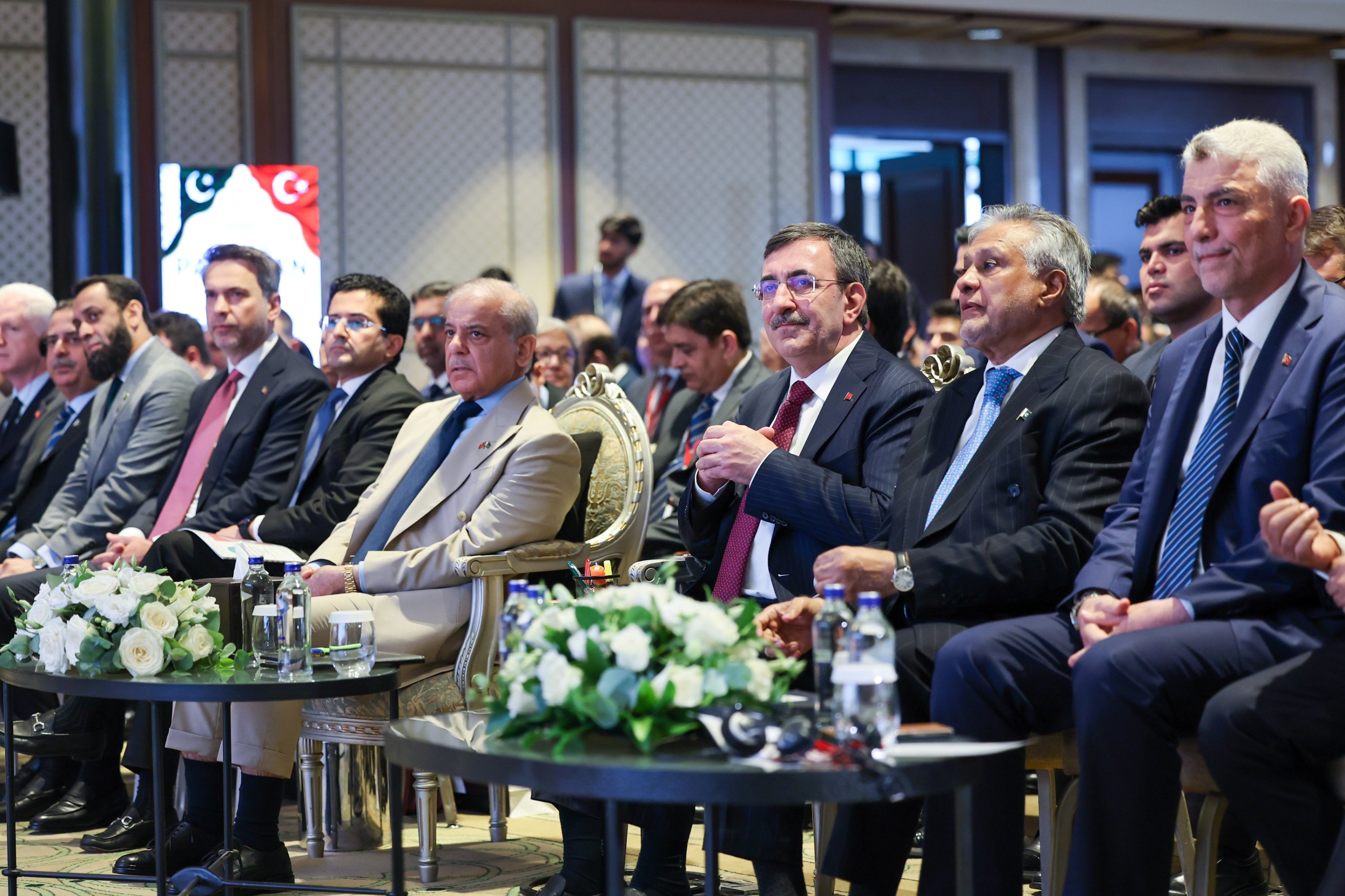
Pakistani officials, as part of the forum, have showcased the opportunities for cooperation in different sectors, including energy, electricity transmission, IT and emerging technologies, transportation and others.
They also sought to emphasize Pakistan's recent macroeconomic stability efforts and reform agenda and lure Turkish investors.
In particular, the officials underscored robust legal protections, strategies toward a market-based economy, privatization push, while pointing out that Pakistan is a "re-emerging story."
Türkiye and Pakistan enjoy close and friendly ties, which in recent years have further expanded to also include a new grouping – the Regional Four (R-4), a diplomatic partnership – also involving Egypt and Saudi Arabia.
Defense cooperation stands out as one of the strongest pillars of relations between the duo, particularly seen through projects such as MILGEM, through which Türkiye has already delivered two corvettes to Pakistan's Navy.
Additionally, Ankara and Islamabad have strengthened energy cooperation as the countries have already signed an oil and gas exploration and production agreement covering Pakistan's onshore and offshore areas.
Further scope of cooperation and potential includes work on transportation and connectivity, through links and projects such as a plan to revive the Islamabad-Tehran-Istanbul freight train route, alongside the Middle Corridor and the planned Development Road project.