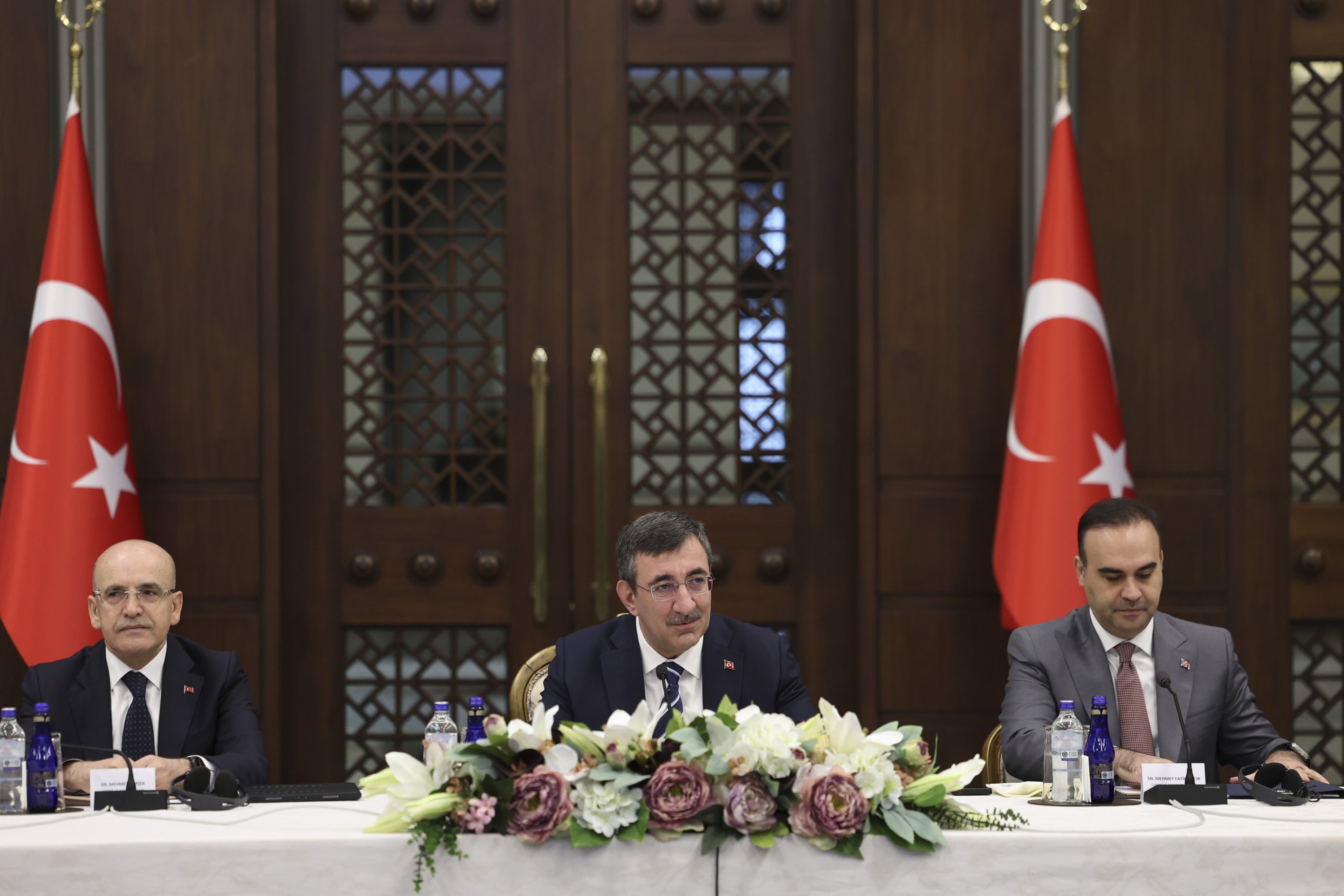
Türkiye outlined details on Monday of a broad package of incentives that top officials say is aimed at boosting competitiveness and attracting investment, and also positioning its biggest city as a leading financial gateway across the region.
President Recep Tayyip Erdoğan first floated the comprehensive legislative package that includes a cut in taxes on Friday, saying it aims to increase the country's competitiveness and overall economic appeal.
Describing the planned reforms as "not an ordinary incentive package," Treasury and Finance Minister Mehmet Şimşek said on Monday the measures amount to a comprehensive "tax architecture."
"This is a full-spectrum structure covering goods, services, capital, talent and activities," he told a press conference in Ankara. "Our priority is to move Türkiye into the top league in terms of global investment attractiveness."
Şimşek said Türkiye was extending a tax exemption on services exports to 100% to target high-value sectors like software, gaming and medical tourism.
At the same time, it is reducing manufacturing exporters' corporate tax rate to 9% from the current 25% to boost competitiveness and attract foreign direct investment (FDI), he said. Other exporters would benefit from a reduced rate of 14%.
The tax reductions are long-term and "here to stay," he said.
According to the government, anyone who has not been a tax resident in Türkiye for the past three years will not have to pay tax on income earned abroad for 20 years after moving back.
With these measures, Erdoğan said, Türkiye is demonstrating that it is a stable country in a region affected by war.
The government also intends to help repatriate money, gold and securities held abroad to Türkiye within a specified period at a low tax rate.
"We are working to make the financial markets deeper and stronger by reintegrating Turkish capital located abroad back into the country," said Şimşek.
The legislative package is to be presented to Parliament shortly, according to Erdoğan.
The measures come at a time when the U.S.-Israeli war with Iran rattles Gulf states, prompting some companies and banks there to consider other options.
Asked about this, Şimşek said the package was not meant to take advantage of war fallout and was in the works long before.
Some of the incentives, including zero corporate income tax on transit trade, are focused on the companies located in the Istanbul Financial Center (IFC), a state-backed clutch of glassy towers on the city's Asian side.
The rate is 95% for those located outside the IFC, Şimşek said, noting it was set at 50% in years past.
Speaking at the same event, Vice President Cevdet Yılmaz said the package is designed to provide a "clear and reliable framework" for investors seeking stability in an uncertain global environment.
Yılmaz added that companies establishing regional headquarters in Türkiye would benefit from substantial tax exemptions and also said a centralized mechanism would be introduced to accelerate large-scale foreign investments and streamline administrative processes.
The package aims to "export more goods and services, attract more talent, entrepreneurs, capital, a new home that's more encouraging local citizens to use Türkiye as a center of their activities and... placing IFC as one of the key regional hubs," Şimşek said.
This month, the IFC's CEO Ahmet Ihsan Erdem told Reuters that the Iran war prompted dozens of companies with operations in the Gulf to consider moving business there.
The exporter incentives include what Şimşek called a "radical step" toward reducing the corporate tax rate.