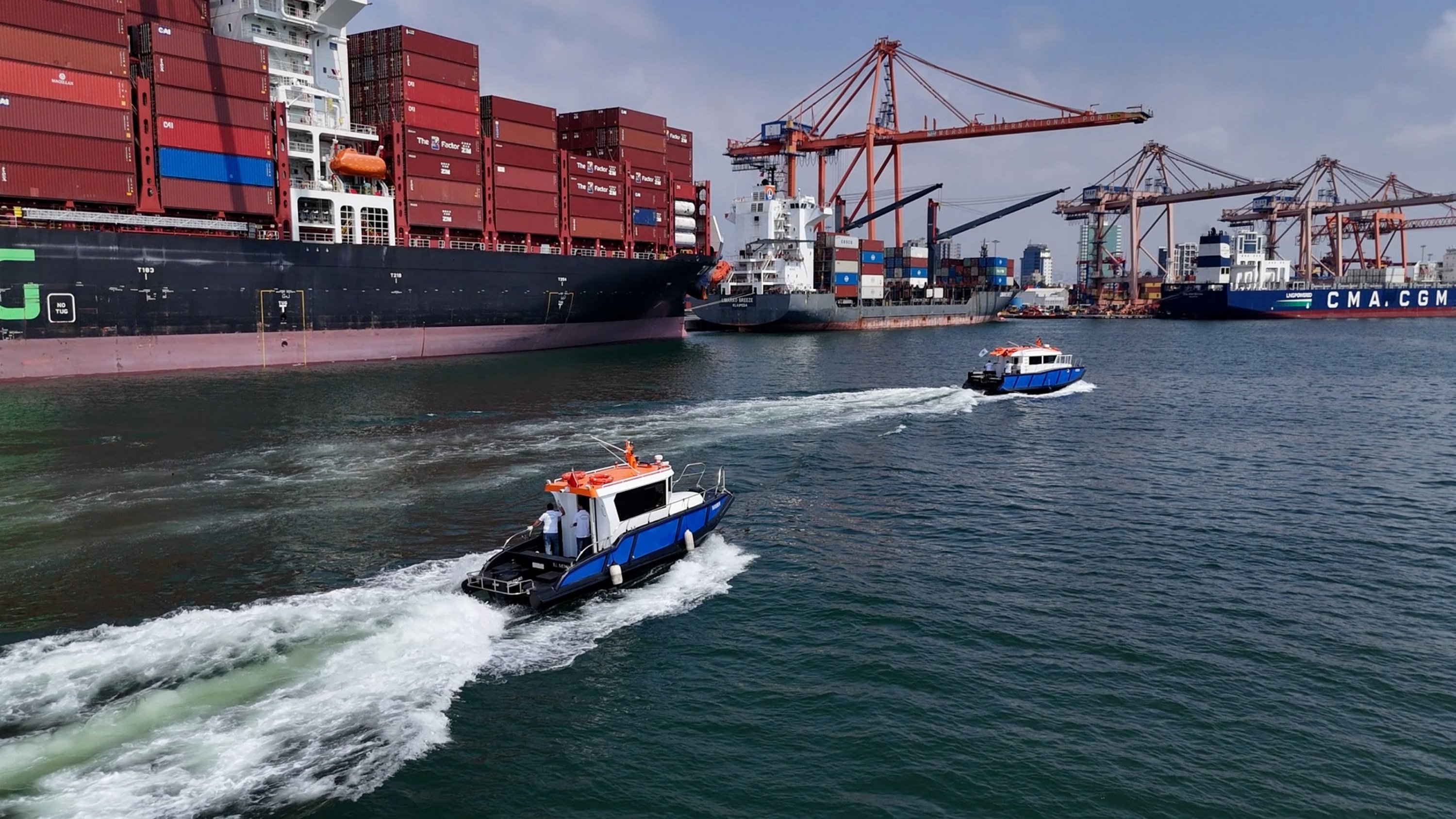
Türkiye said on Friday it was still among a few countries with relatively favorable trade terms after the U.S. issued a new set of tariffs that will apply to dozens of countries and that include higher duties on Turkish imports.
Late Thursday, President Donald Trump signed an executive order imposing tariffs ranging from 10% to 41% on goods from dozens of trade partners as of Aug. 7. Rates were set at 25% for India's U.S.-bound exports, 20% for Taiwan's, 19% for Thailand's and 15% for South Korea's.
The White House said the tariff for products from Canada would rise to 35% from 25%, effective Friday. But Trump gave Mexico a 90-day reprieve from higher tariffs to negotiate a broader trade deal.
Under the new measures, tariffs on Turkish products were increased to 15%, compared to 10% that was announced by Trump as a baseline duty in April.
Despite that, Türkiye continues to "positively decouple" itself, the Trade Ministry said in a statement on Friday, highlighting that the country remains among the countries subject to the lowest customs duties.
The ministry said Türkiye's position shows that it is regarded as "a balanced and constructive trade partner" by the U.S.
It suggested that Turkish exporters "retain their competitive edge" in global markets and that Türkiye's "strong" position in international trade "remains intact."
Compared to many Asian and Latin American countries, the ministry said, Türkiye's lower tariff category represents a significant advantage.
Meanwhile, talks are ongoing between the two countries at diplomatic and technical levels, particularly regarding tariffs on strategic sectors such as steel, automotive and copper, the statement said.
Negotiations also aim to secure more favorable terms for Türkiye's textile and apparel sectors, the ministry added.
"The priority is to ensure that trade with the U.S. proceeds in a predictable, fair, and sustainable framework," the statement said, adding that Türkiye’s inclusion among countries with positive progress in negotiations demonstrates strengthening mutual dialogue and cooperation in bilateral trade relations.