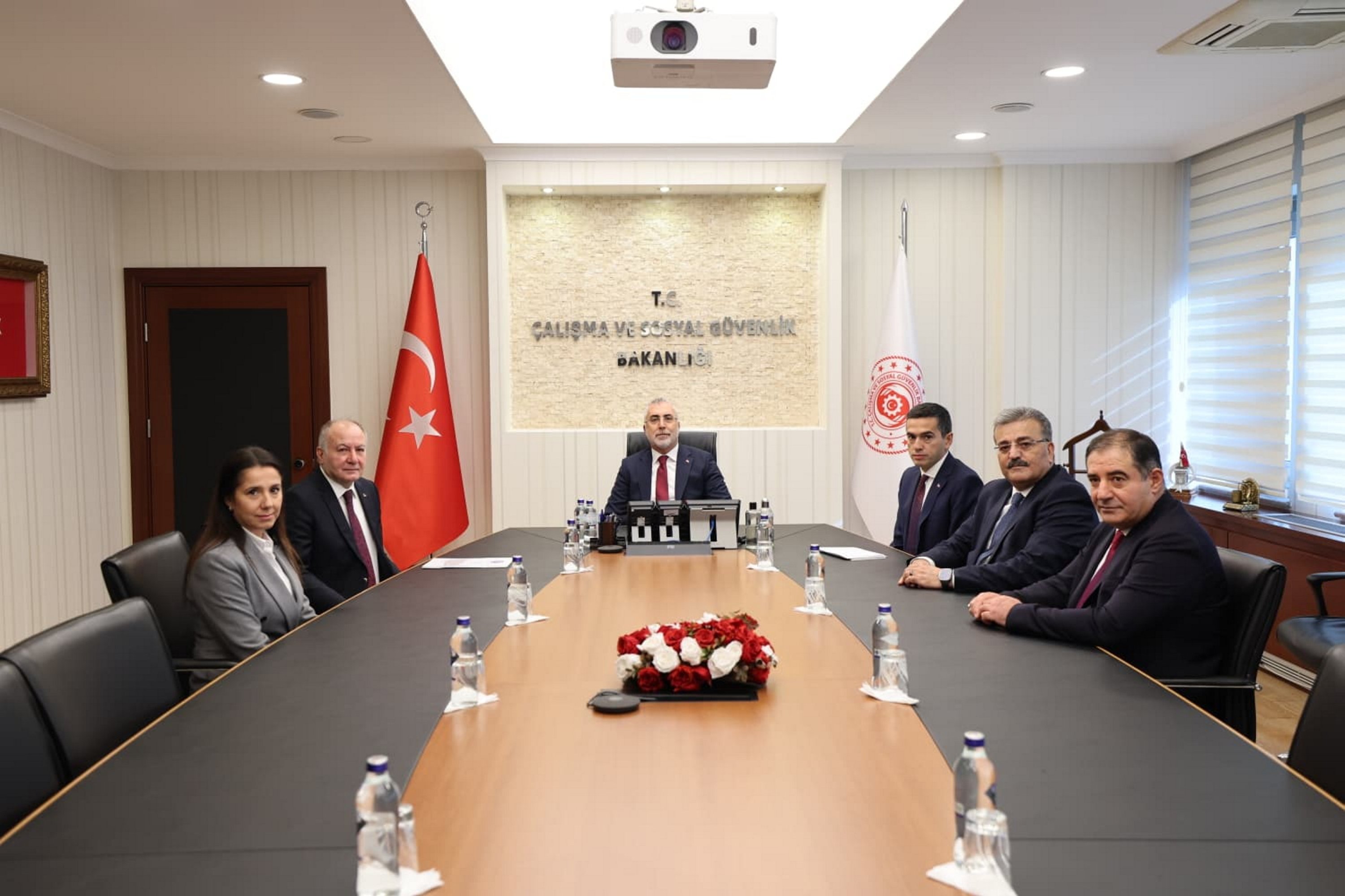
A commission tasked with setting the minimum wage in Türkiye held its first meeting on Friday for talks on a raise for the next year, but without the participation of officials representing workers.
The minimum wage adjustment will directly affect nearly 9 million workers and is widely seen as a benchmark for private-sector pay rises. It also carries significant implications for inflation, labor costs and future interest rate decisions.
Government officials and representatives of employers' confederation TISK attended Friday's meeting in Ankara, while the second round of talks has been scheduled for Dec. 18.
Shortly before the meeting, officials from Türk-Iş, the confederation representing workers on the tripartite committee, met Labor and Social Security Minister Vedat Işıkhan to submit a file outlining their reasons for not joining the negotiations. TISK officials were also present.
On Thursday, President Recep Tayyip Erdoğan urged TISK to show "flexibility" in the talks. He has repeatedly pledged they wouldn't allow households to be "crushed" by inflation.
Türk-Iş deputy chair Ramazan Ağar told reporters the confederation would stay out of the 2026 minimum wage negotiations, arguing that wage-setting should be guided by economic indicators rather than changes to the commission's membership structure.
"Regardless of changes in the number of members, minimum wage decisions must be based on economic data," Ağar said.
The Minimum Wage Determination Commission consists of 15 members, with five representatives from each, the government, which convenes the committee, the employer and worker confederations.
Türkiye's net monthly minimum wage was raised 30% to TL 22,104 for 2025. Many economists expect the 2026 increase to be set at around 25%.
Ağar said last year's rise fell short of the annual inflation of 44.38%, leaving workers with a "14.38% loss" that he argued should be compensated in the upcoming decision.
Consumer prices rose 31.1% year-over-year in November, with a 0.87% monthly increase, both readings below expectations, helped by easing food prices.
The Turkish central bank's interim end-2025 inflation target stands at 24%, with a forecast range of 31%–33%.
The bank expects inflation to fall to its 16% interim target by end-2026, in line with the government's medium-term program. For next year, the bank projects inflation between 13% and 19%.
On Thursday, the central bank lowered its benchmark interest rate by 150 basis points to 38%, cutting at the higher end of expectations, as data over the last two months suggested that disinflation is back on track after summer price pressure.
Analysts expect the central bank to continue easing next year.
Türk-Iş's Ağar said additional increases to the minimum wage were needed to offset sharp rises in food, transport, rent, education and utility costs, and that workers should receive a share of economic growth through an extra adjustment.