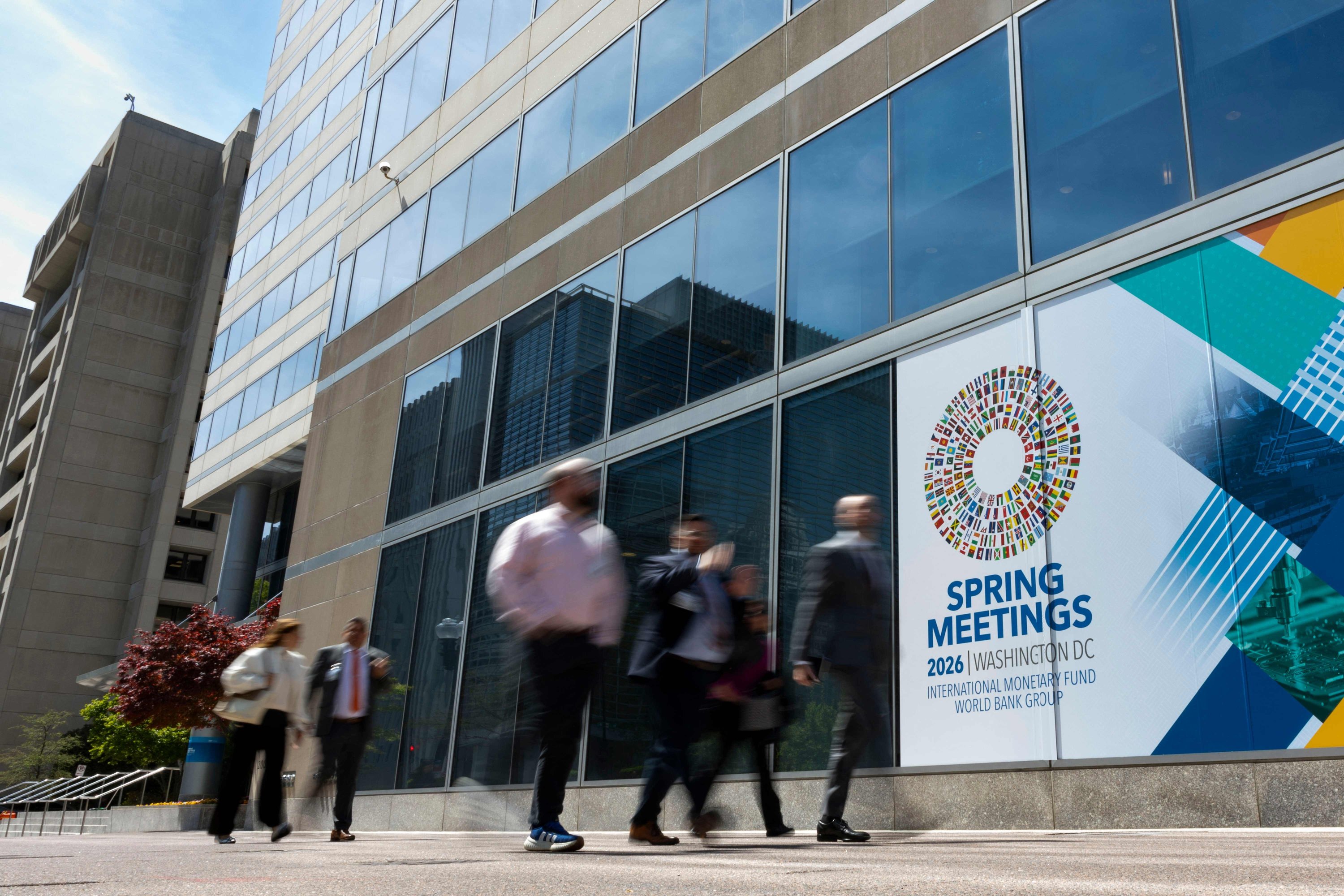
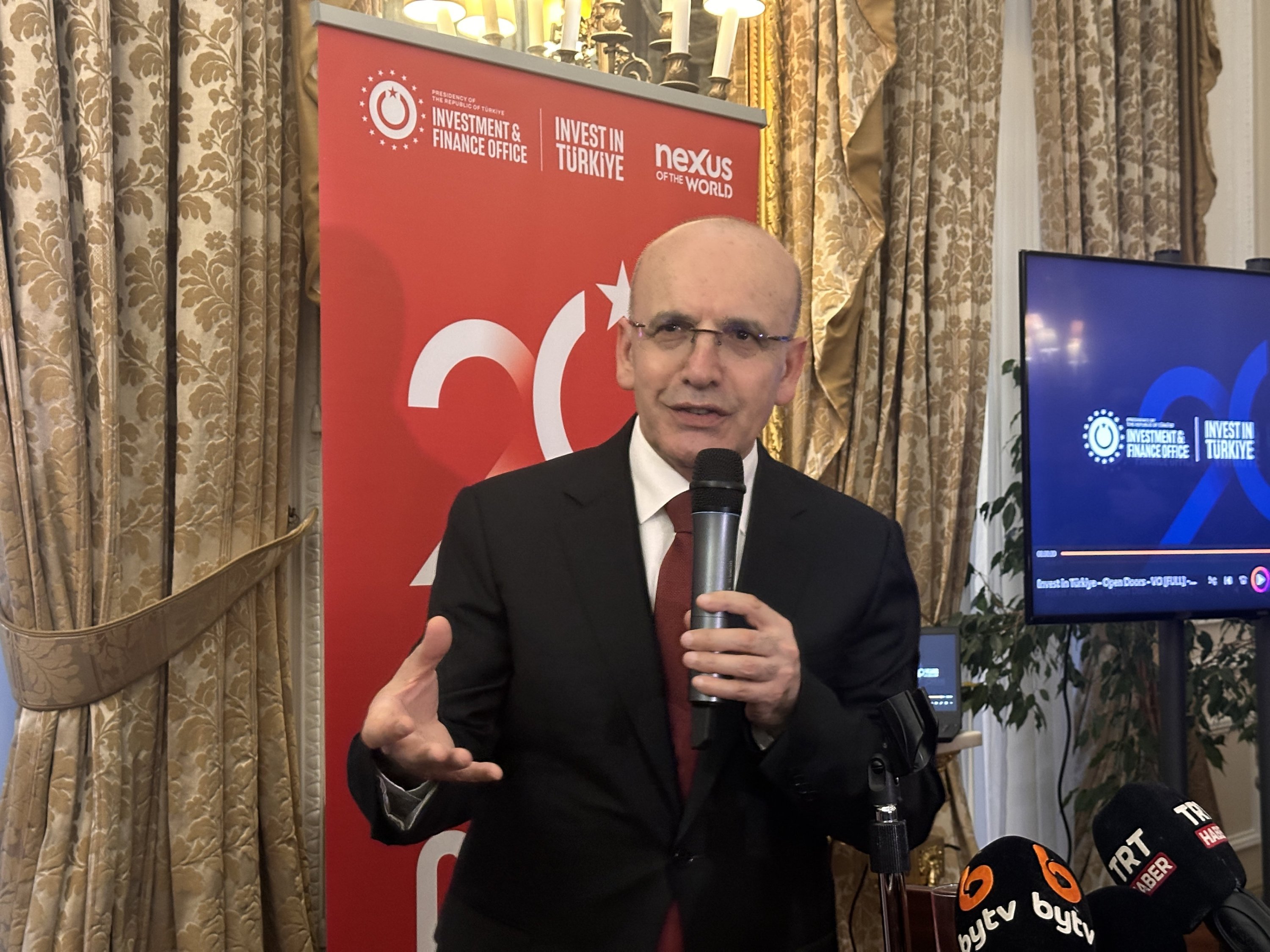
Treasury and Finance Minister Mehmet Şimşek will hold a series of high-level meetings in the U.S. this week, engaging with global investors and financial institutions on the sidelines of the IMF-World Bank spring meetings.
Şimşek will join top finance officials from around the world will convene under the shadow of the war in the Middle East, which has delivered a third major shock to the global economy after the COVID pandemic and Russia's full-scale invasion of Ukraine in 2022.
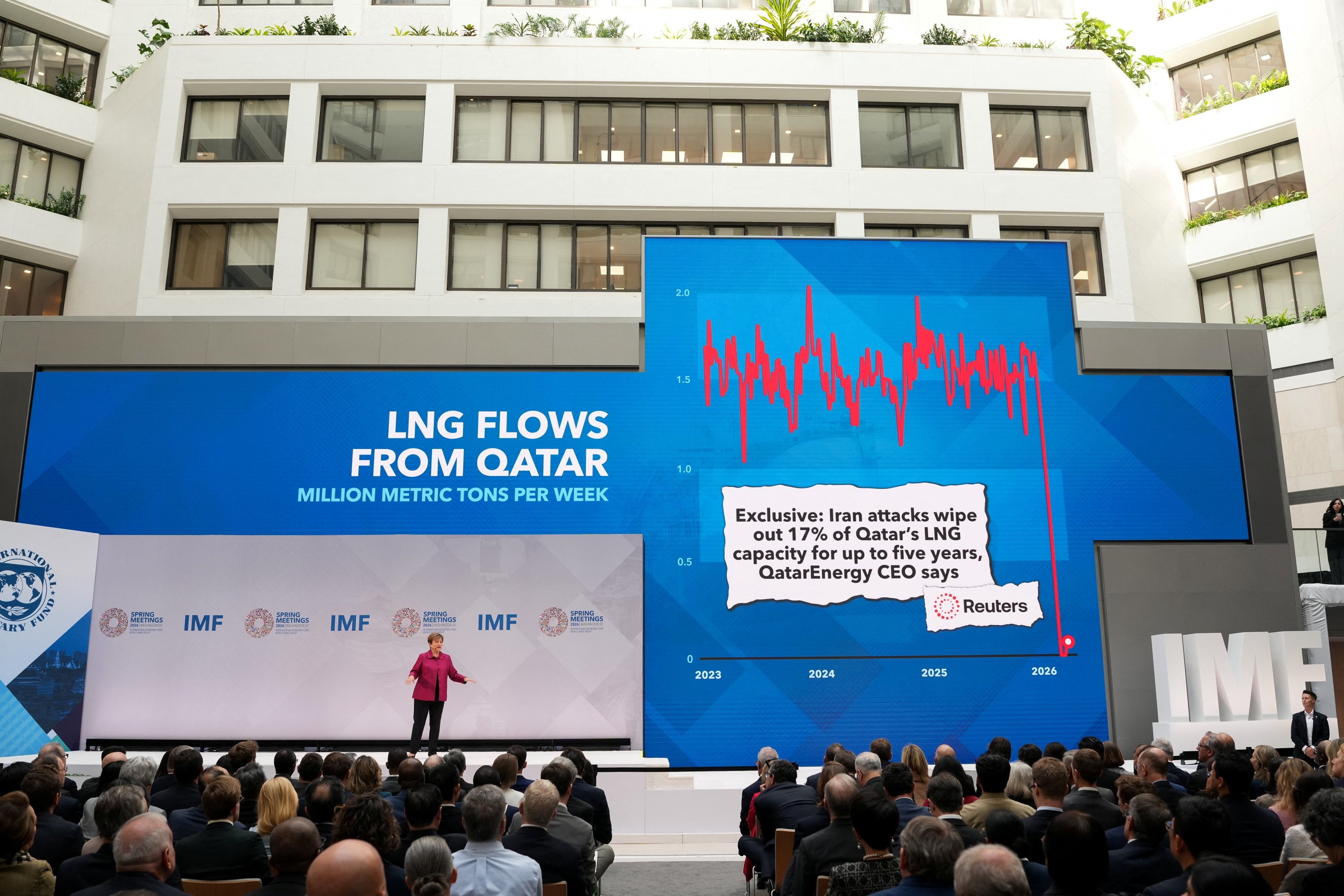
Weekend talks between the U.S. and Iran brokered by Pakistan failed to reach a deal to end the war that has effectively shut the Strait of Hormuz, sending energy prices soaring and causing the worst ever disruption in supplies.
Starting on Monday, the U.S. military said it would begin a blockade of ships leaving Iran's ports on Monday, and Tehran threatened to retaliate against ports of its Gulf neighbors.
Şimşek began his trip in New York City and was scheduled to attend a roundtable jointly organized by Citigroup and the Turkish-American Business Council. He was also said to hold a bilateral meeting with Citigroup CEO Jane Fraser.
In addition, Şimşek is expected to meet real sector representatives at an event organized by JPMorgan Chase and the top Turkish business association, MÜSIAD, as well as representatives of international credit rating agencies and leading global investors.
Following his New York program, Şimşek will travel to Washington for the International Monetary Fund-World Bank meetings, which kicked off on Monday and will last through Saturday.
The gatherings bring together finance ministers, central bank governors, private sector leaders and academics.
Top IMF and World Bank officials last week said they would downgrade their forecasts for global growth and raise their inflation predictions as a result of the Iran war, warning that emerging markets and developing countries will be hit hardest by higher energy prices and supply disruptions due to the effective closure of the Strait of Hormuz.
The U.S. military said it would begin a blockade of all maritime traffic entering and exiting Iranian ports and coastal areas starting at 10 a.m. ET (1400 GMT) on Monday. Washington has sought help to reopen the strait from allies, who have not expressed interest.
Before the Iran war broke out on Feb. 28, both institutions had expected to lift their growth forecasts given the resilience of the global economy – even in the wake of major tariffs imposed by U.S. President Donald Trump beginning last year. But the war has delivered a series of shocks that will slow progress on recovering growth and beating back inflation.
The World Bank's baseline estimate now projects growth in emerging markets and developing economies of 3.65% in 2026, down from 4% in October, but sees that number dropping as low as 2.6% if the war lasts longer. Inflation in those countries was now forecast to hit 4.9% in 2026, up from the previous estimate of 3%, and could spike as high as 6.7% in the worst case.
The IMF warned last week that about 45 million additional people could also face acute food insecurity if the war persists and continues to disrupt fertilizer shipments needed now.
The IMF and World Bank are racing to respond to the latest crisis and support vulnerable countries at a time when public debt levels have reached record levels and budgets are tight.
The IMF said it expects demand for $20 billion to $50 billion in near-term emergency support to low-income and energy-importing countries. The World Bank has said it could mobilize some $25 billion through crisis response instruments in the near-term, and up to $70 billion in six months, as needed.
But economists are urging governments to use only targeted and temporary steps to ease the pain of higher prices for their citizens, since broader measures could fuel inflation.
"Leadership matters, and we've come through crises in the past," World Bank President Ajay Banga told Reuters, lauding work on fiscal and monetary controls that had helped economies weather previous storms. "But this is a shock to the system."
Countries now face a tough balancing act managing inflation while keeping an eye on growth and the longer-term challenge of creating enough jobs for the 1.2 billion people who will reach working age in developing countries by 2035.
IMF and World Bank also face a far different global landscape with tensions running high between the U.S. and China, the world's largest economies, and the Group of 20 (G-20) major economies hobbled in its ability to coordinate a response.
The U.S. currently holds the rotating presidency of the G-20, which also includes Russia and China, but it has excluded another member – South Africa – from participation, complicating the group's ability to coordinate on this crisis.
"You're trying to operate on consensus when there's no consensus in the world right now on anything," said Josh Lipsky, chair of international economics at the Atlantic Council.
Lipsky said statements by the IMF, World Bank and other multilateral lenders about their readiness to support countries hit hard by the war were clearly aimed at reassuring markets.
"It's a signal to private creditors. This is not a time to flee countries that are in problematic waters. They will have support from the multilateral development banks and the international financial institutions. This is not going to be COVID. This is something that we can handle."
Mary Svenstrup, a former senior U.S. Treasury official now with the Center for Global Development, said many emerging market and developing economies entered the crisis worse off than just a few years ago, with lower buffers, higher debt vulnerabilities and lower reserves.
"We need to have this crisis be a catalyst for IMF stakeholders to really rethink how the Fund supports vulnerable countries with the recognition that we're going to be seeing more global shocks," she said. "We can't ask them to sacrifice growth and development for the sake of rebuilding buffers."
Svenstrup said countries should pursue more ambitious reforms if they received fresh funds. "There probably does need to be more financial support from the (international financial institutions) but it needs to be affordable, and it needs to be in the context of reform programs and potentially broader debt relief," she said.
Martin Muehleisen, a former IMF strategy chief who is now with the Atlantic Council, agreed, saying the IMF should work with donor countries to accelerate debt restructuring for borrowers and "get them off the debt cycle." New lending should be tied to a credible debt-reduction road map, he said.
Eric Pelofsky, vice president at the Rockefeller Foundation, said low-income and lower middle-income countries paid twice the amount to service their debts in 2025 than before COVID, limiting funds for education, health care and other critical social programs. Half were now in or near debt distress, up from a quarter, just a few years ago.
"This new conflict threatens any recovery that occurred since the pandemic or the Ukraine war, and it takes countries that have basically been treading water, trying to stay away from default, and keeps them in a long term debt-growth-investment trap," he said.