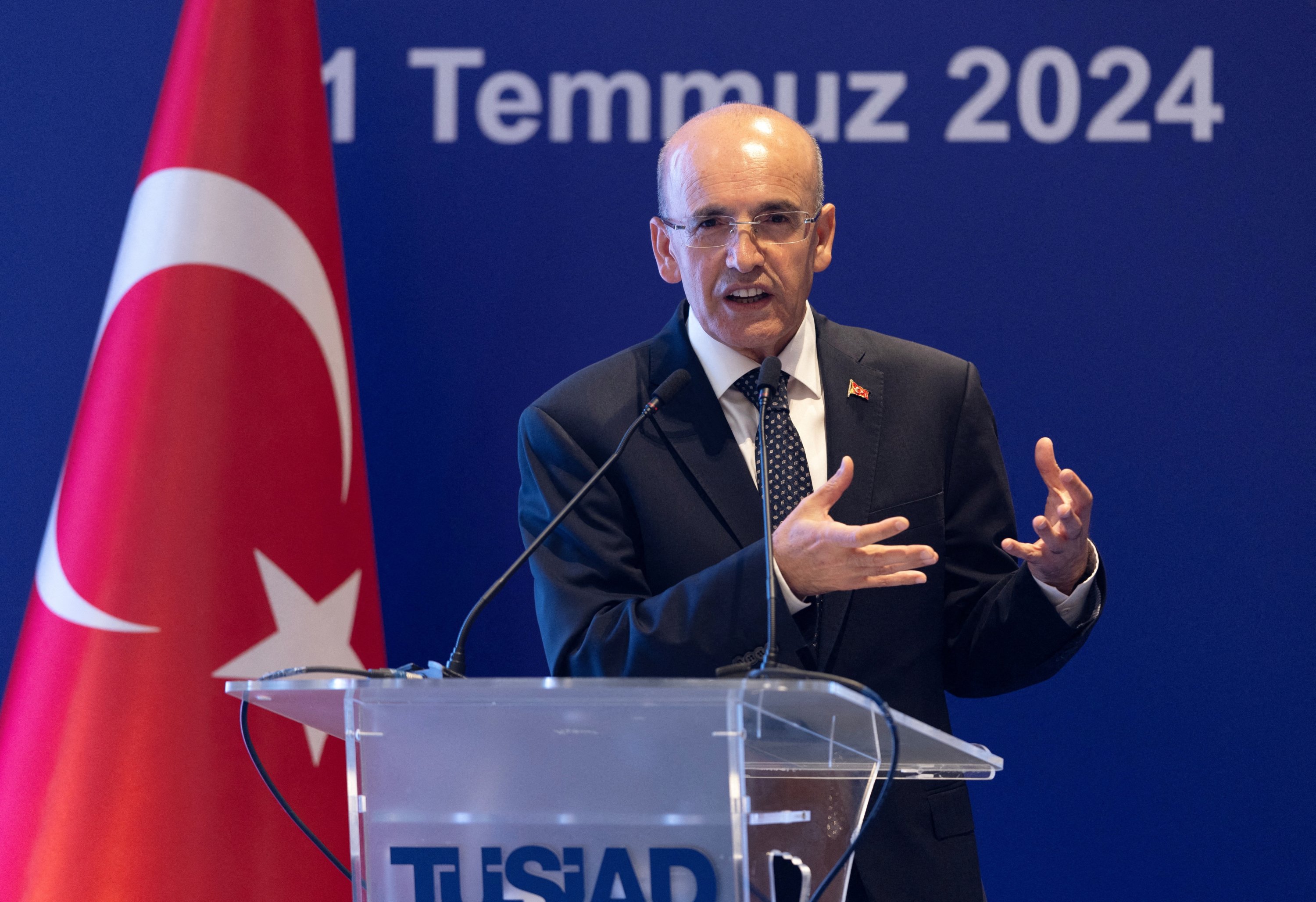
The impact of the conflict in the Middle East on the Turkish economy may be temporary and reversible if the recent cease-fire holds, and authorities are ready with a different set of tools if the shock persists, Treasury and Finance Minister Mehmet Şimşek said Thursday.
In a live interview, Şimşek said authorities are prepared with a new response beyond steps already taken if the newly agreed U.S.-Iran cease-fire does not hold. He also pointed to the importance of measures being taken, as he touted Ankara's capacity to tackle shocks.
"We have a good capacity to manage shocks," the minister told Bloomberg HT broadcaster, as he recalled trade wars, issues such as drought and frost and political events last year.
He did not detail the potential response but said authorities' "main scenario" was for a month-long war, adding that a three-month conflict would be bad.
"The macroeconomic fundamentals of emerging economies are actually strong. We saw this in Türkiye as well. Risk pricing in Türkiye dropped dramatically yesterday," he said, referring to the fall in risk premiums in response to the two-week cease-fire agreed upon.
"The likelihood of a turnaround in risk appetite is quite high," he added.
This week's cease-fire has mostly halted the more than five-week war that gripped the Middle East and sent energy prices soaring, although Israel bombed more targets in Lebanon on Thursday, potentially jeopardizing the deal.
Answering questions in the interview, Şimşek described the shocks from the war as the biggest since World War II, referring particularly to disruptions related to energy supplies.
"Reaching a cease-fire is welcome, but normalization will take months at best," he suggested.
He also drew attention to the risk of global inflation, even stagflation and recession.
"There is a much bigger shock than those experienced in the 1970s. If high energy prices remain a concern, there is a risk of a global recession," he noted.
He also highlighted that the continuation of the cease-fire and the reconstruction of supply chains are crucial.
"The oil shock – it reduces growth in many countries, there is a cost dimension. ... There are negative effects on growth. It triggers fund outflows. If this shock continues, there is a high probability of inflation, growth ... stagflation, and a risk of recession," he explained.
Şimşek also said the central bank's reserves had fallen by about $48.7 billion since the war began and that some $162 billion remained. He also conveyed the expectations for reserves to rebound.
"We are better off than in the past in terms of reserve adequacy, close to the IMF's indicator. There is currently no problem with reserves; our reserves are strong. We are also in surplus in net reserves, excluding swaps," he said.
Comparing Türkiye with other stock markets, including those far away from the region, Şimşek said that Turkish stock markets "have proven resilient" in the face of declines. "This means that Türkiye is performing better than other developing countries," he suggested.
Among others, the minister emphasized that the government remains committed to its goal of disinflation and lowering prices, also conveying that they found certain assessments for inflation heading towards 30% as "exaggerated."
"The core of our program is combating the high cost of living. The sliding scale adjustment system is one example of this," he said, referring to a special system introduced to curb the impact of higher fuel prices on consumers.
He also dismissed the revision of the government's targets, adding: "We can't say, 'Let's publish a new Medium-Term Program.' We don't see such a need."
Similarly, he also said there is some deterioration in growth expectations and expectations related to the current account balance. He also noted that, besides energy, Türkiye has trade and tourism relations with the conflict-impacted region.
The minister also pointed to the potential of Türkiye emerging as a supplier in the region with the disruption of flows through the Strait of Hormuz.
"What's important for us is to maintain the general outline of the program; there may be deviations from the targets, let's be realistic, but we will ensure that it converges towards the targets," he said.