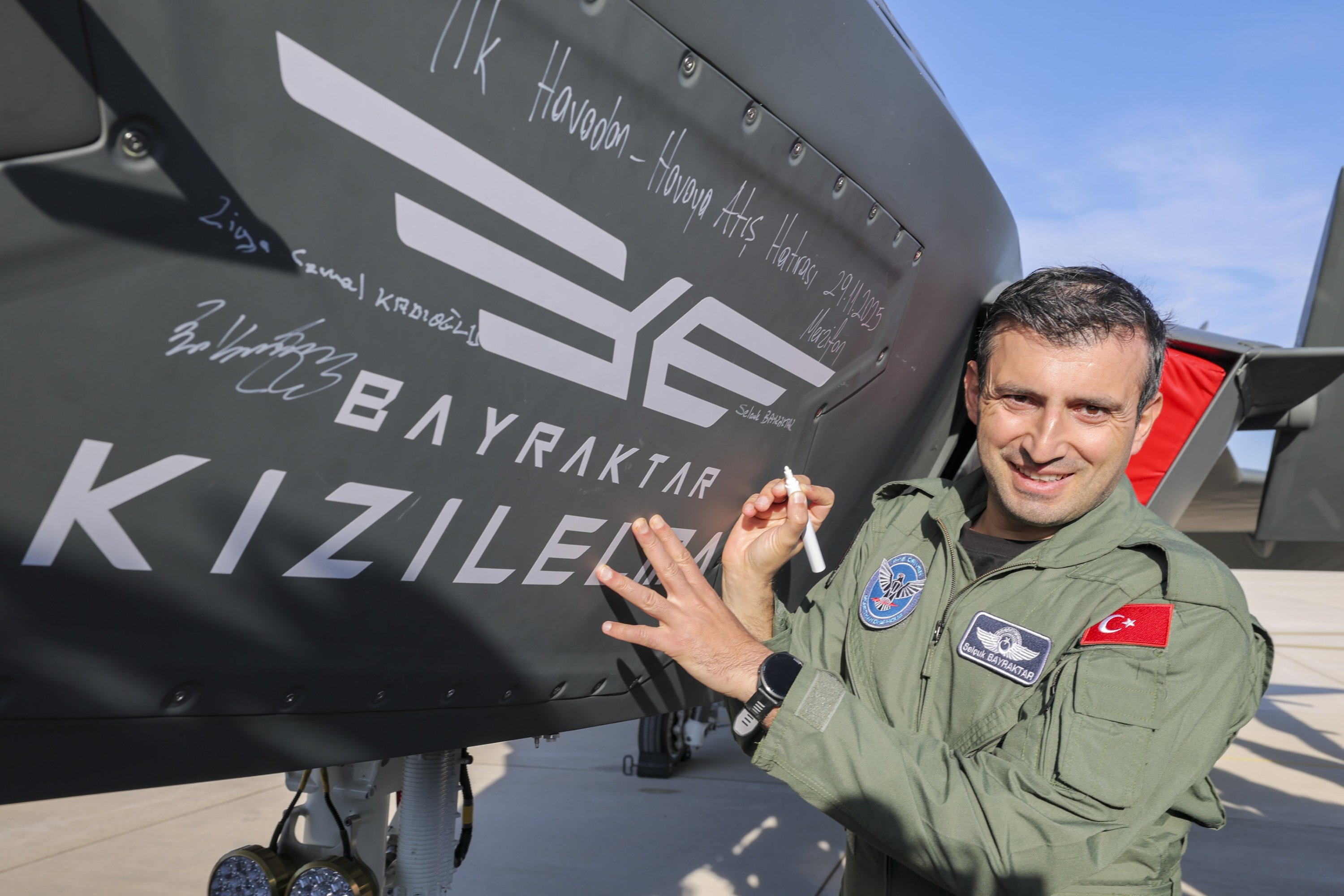
Baykar, the Turkish defense company best known for its drones, is preparing to step into the nuclear energy sector with the development of a small modular reactor (SMR), according to Energy and Natural Resources Minister Alparslan Bayraktar.
Baykar is working on a 40-megawatt SMR unit, which would have the capacity to power more than 100,000 households on its own, Bayraktar was cited by local media as telling reporters.
The move comes as Ankara prepares a comprehensive legislative package to regulate the nuclear energy field. Türkiye aims to reach 7.2 gigawatts (GW) of nuclear capacity by 2035 and 20 GW by 2050.
It plans to build three conventional nuclear power plants and complement them with SMRs.
Baykar's initiative is expected to form the technological foundation of the country's plan to have 5 GW of SMR capacity, an amount officials say could eventually cover around 10% of the country's electricity demand.
The first conventional nuclear power plant, Akkuyu, is being built by the Russian conglomerate Rosatom in the southern province of Mersin. Its first reactor is set to go online next year. Once fully operational, the $20 billion, 4.8 GW, four-reactor Akkuyu is expected to generate around 10% of Türkiye's electricity.
It plans to build the second and third plants in the northern Sinop and Thrace regions.
SMRs, unlike traditional large-scale nuclear power plants, can be deployed in smaller sites and built to supply energy directly to industrial zones, mining operations and large manufacturing facilities.
Officials say localizing part of the production would help create a new supply chain, support employment and enable Türkiye to enter export markets for SMR components and technologies.
A new draft law governing SMRs is expected to be submitted to Parliament in the coming days. The planned framework is set to include incentives similar to Türkiye's Renewable Energy Resource Zone (YEKA) mechanism used for wind and solar investments.
The regulation would aim to attract both domestic and international investors, encourage private-sector partnerships, and open access to long-term financing tools. Turkish authorities are also exploring opportunities to leverage green-energy funding from international financial institutions.
Türkiye has recently signed cooperation agreements with the United States and South Korea to advance SMR development and technology transfer.
Global investment in SMRs is accelerating, with the U.S. planning to commission more than 10 reactors by 2030, Canada preparing a 300-MW SMR project for 2035, and South Korea developing its local SMART design for export. France is also advancing its own SMR research.