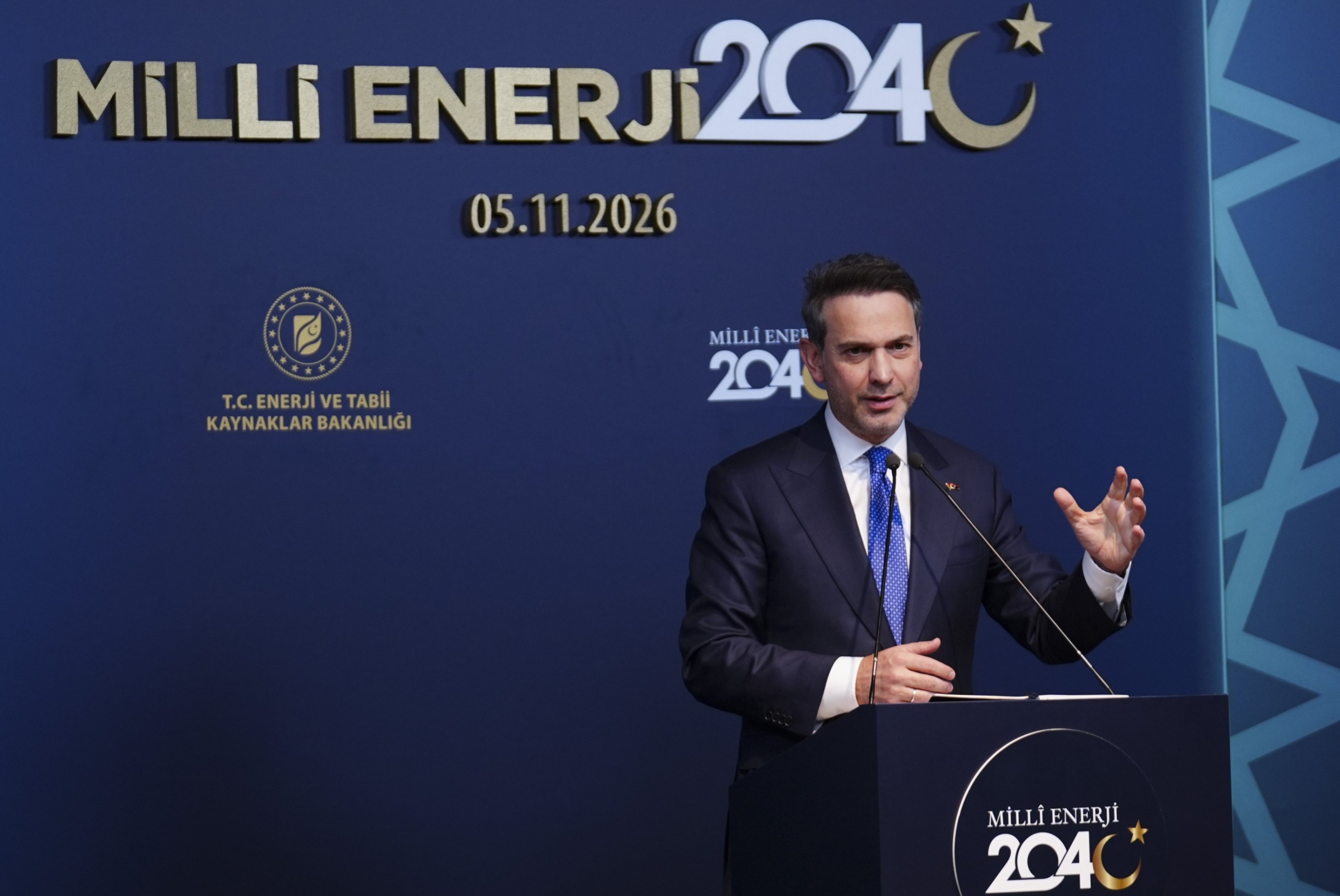
Türkiye aims to increase the share of renewables in total installed capacity to 77% from the current 63% by 2040, Energy and Natural Resources Minister Alparslan Bayraktar said Thursday.
Sharing the new national energy policy for 2040, Bayraktar highlighted the rising energy demand and the importance of energy efficiency as he also announced plans to boost electrification.
He said the government aims for the Turkish economy to achieve 36% electrification by 2040.
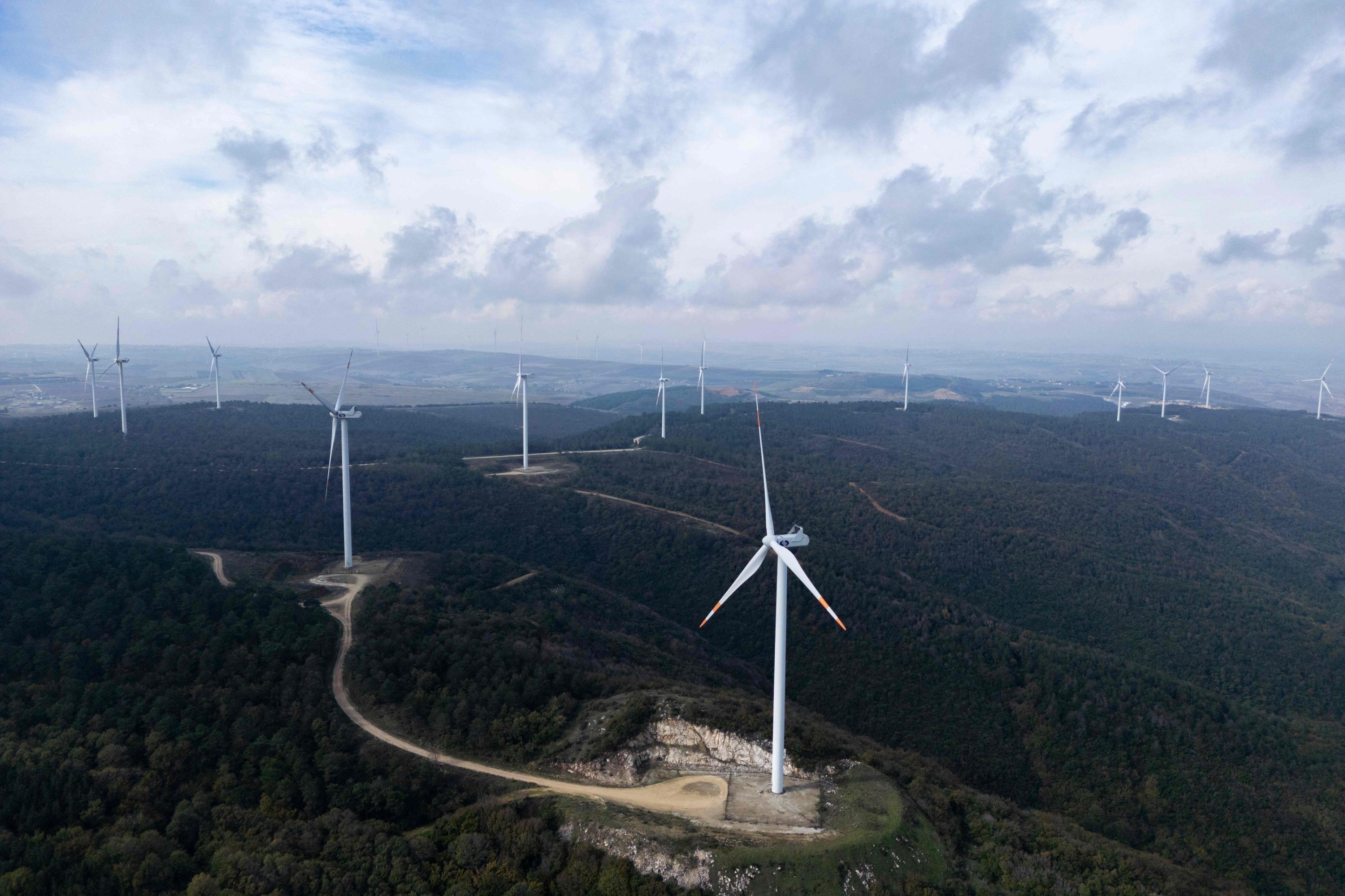
He also said that the combined wind and solar installed capacity target is set at 175 gigawatts (GW) by 2040, with an estimated investment of approximately $100 billion.
The plan projects installed power capacity will rise to 281 GW from the current 123 GW, with renewables' share climbing to 77% from 63%.
Starting his speech to present the "National Energy 2040" plan, Bayraktar recalled the road maps set earlier in 2022 and 2017 and said that global developments, as well as the approaching COP31 summit, played a role in unveiling the new strategy.
He flagged the risks tied to energy security, also due to wars, trade and tariff wars, as well as conventional wars, as he unveiled five key areas that the 2040 road map would focus on.
Bayraktar also noted that artificial intelligence would bring significant changes to the energy and economic sectors, emphasizing the necessity for Türkiye to make progress in critical minerals and strengthen its electrical infrastructure to remain competitive during this period.
He recalled the announcement of the National Energy and Mining Policy in 2017 and stated their intention to unveil a similar road map for the mining sector by 2027.
Highlighting the goal to reduce energy dependency, Bayraktar explained that the focus would be on five areas: energy efficiency, nuclear energy, renewable energy, oil and natural gas, and mining.
Turning to energy supply security, he described two main issues: rising electricity demand and climate change.
The minister explained that economic growth, population, and urbanization – with a projected population of 93 million by 2040 – all point toward an increase in demand and the need to secure energy supplies.
He also mentioned non-traditional sources of demand, for instance, energy consumption from data centers and air conditioning.
"Another issue, the energy import bill, is the problem of the current account deficit, and we need to find a solution to this," he also said.
In this regard, he emphasized the importance of energy efficiency and access to financing as well as industrial transformation to curb the use of energy.
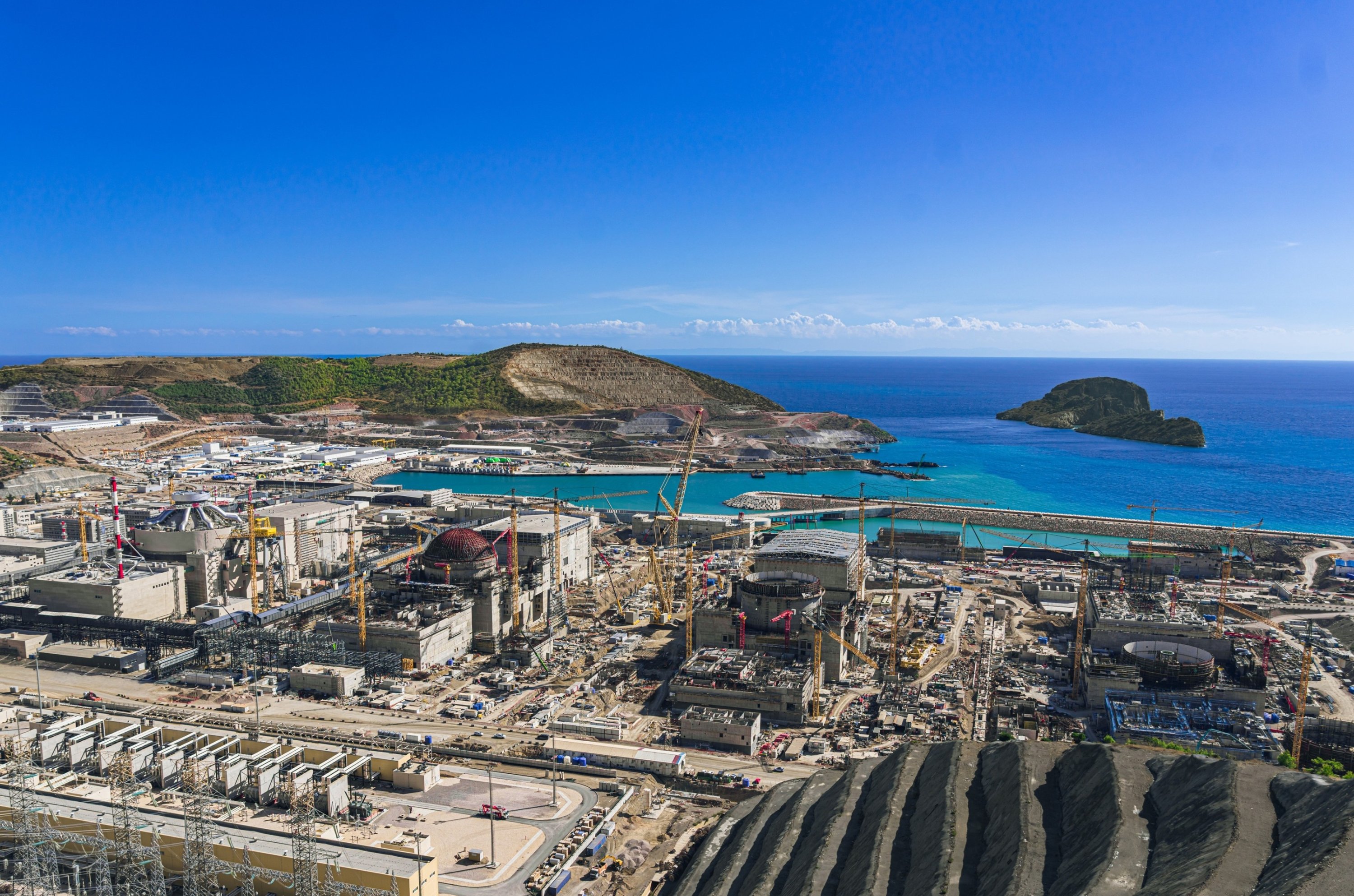
"Nuclear energy must be added to the energy mix; Türkiye has taken significant steps in this area," he also said as he recalled that Türkiye has joined the declaration for tripling nuclear energy capacity by 2050.
Speaking of renewable energy, he described it as "competitive" and said they aim to harness its potential but said that more is needed for domestic production of the equipment.
Moreover, he said that oil and natural gas "will continue to be a part of our lives" and that Ankara needs to be "more active" when it comes to exploration efforts.
"There are also significant opportunities in the mining sector," he added, mentioning the domestic reserves.
“Our goal for 2040, in the 'Century of Türkiye,' is to make Türkiye energy-independent," he also said.
The minister also highlighted electrification priorities, mentioning the so-called "35 by 35" proposal that would be discussed during COP31, where nations could agree to increase the share of global final energy consumption met by electricity to 35% by 2035 from about 23%-24% at the moment.
Bayraktar touched upon the organization of both the demand and supply sides during the electrification process, projecting Türkiye's energy demand in 2040 as 230 million tons of oil equivalent (Mtep).
He stated that electrification would rise across all sectors, calling for a robust electricity infrastructure.
"We aim to increase electricity demand from 365 terawatt-hours (TWh) to 551 terawatt-hours and consequently to 680 terawatt-hours in 2040, thereby boosting electrification and electricity demand," he said.
Here, he noted that the goal is increasing use of electricity in 2040, while curbing energy produced from petrol, thus bolstering electrification efforts.
Thus, the plan forecasts lower growth for total energy demand, down to 199 million tons from 230 million tons of oil equivalent in 2040 as electrification picks up to 36% of total energy demand, saving $240 billion.
He also mentioned the notable demand that they project will come from electric vehicles, and suggested also that apart from EVs, data centres, electrolysers and heat pumps are seen as drivers of electricity demand.
Turning to the targets, he said that Türkiye's total installed capacity is expected to reach 281 GW by 2040, from some 123 GW in 2025.
"We need to achieve an increase of about 1 to 1.5 times what we have done so far in the next 13-14 years, raising it to 281,000 megawatts," Bayraktar said.
"The renewable share will rise from 63% to 77%, requiring an investment of approximately $190 billion, 95% of which will be aimed at zero or low-emission sources, primarily renewables," he noted.
He also recalled that during COP29, President Recep Tayyip Erdoğan had set a goal to quadruple the country's installed capacity, aiming for 120,000 megawatts in wind and solar energy by 2035 from 30,000 megawatts.
"We are currently at about 44,000-45,000 megawatts. We maintain our goal for 2040, aiming for an installed capacity of 175,000 megawatts in wind and solar, including offshore wind, with an investment of approximately $100 billion," he said.
The minister also announced the offshore capacity target of 6 GW by 2040, with the first tender planned for April next year.
The nuclear capacity target for 2040 is 10 gigawatts, adding 5 gigawatts beyond the Akkuyu plant already under construction, Bayraktar said as he described the 2040 nuclear target as the interim one to the planned 20 gigawatts by the 2050s.
Türkiye's annual energy import bill has averaged $65 billion to $70 billion in recent years, and the new policies aim to reduce that while maintaining supply security.