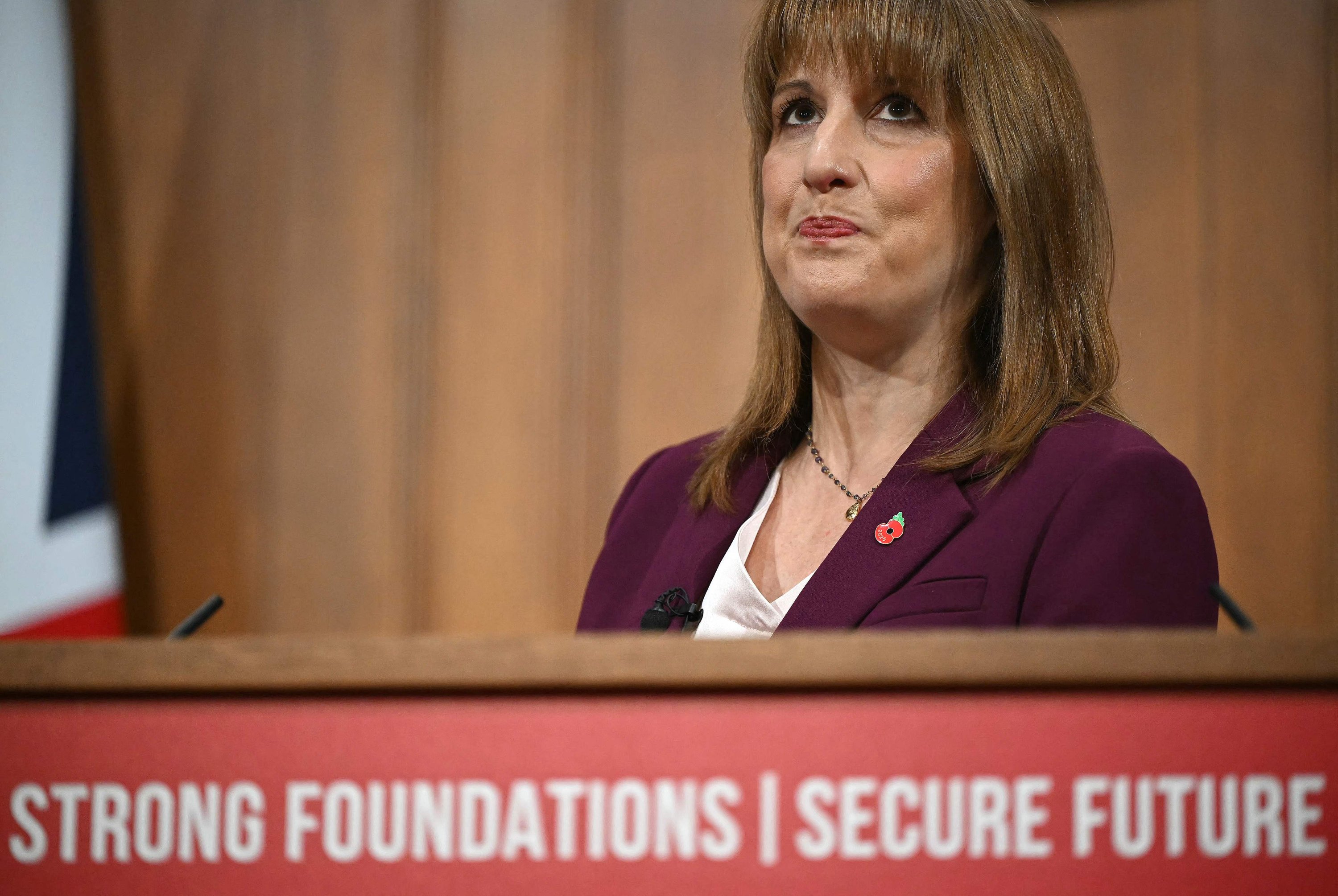
The British pound slipped to touch its lowest point since April on Tuesday after Treasury chief Rachel Reeves reiterated her commitment to upholding fiscal rules in her upcoming budget.
In a rare pre-budget speech, Reeves framed her second annual budget as one of "hard choices" to secure public spending while reducing Britain's debt, signalling possible broad tax rises to avoid a return to "austerity."
The pound fell as much as 0.64% to $1.3056, its lowest since April 11, from around $1.311 before Reeves' speech. In October, it posted its poorest monthly performance against the dollar since July.
The euro, which rose to its highest in two and a half years against sterling last week, was up 0.3% at 87.96 pence.
"She (Reeves) is justifying tough decisions to come in the budget. The fact that this is happening at all means that manifesto pledges will not be followed to the letter," said Kit Juckes, head of currency strategy at Societe Generale.
"We're going to have higher taxes."
Reeves set out the difficult economic backdrop she was wrestling with, pointing to high debt levels, low productivity and stubborn inflation.
Analysts said the overall reaction in U.K. markets was limited since a rise in taxes in the Nov. 26 budget had been widely anticipated.
Britain's benchmark 10-year gilt yield fell as much as 5.9 basis points to a low of 4.379%, before retracing to 4.407%, showing a 3.2-bp drop on the day, which further undermined sterling.
Yields fell almost 30 basis points in October, in their biggest monthly fall since late 2023.
London's FTSE 100 stock index, meanwhile, remained lower on the day, in line with other European markets.
James Rossiter, senior global strategist at TD Securities, said the timing of Reeves' speech – ahead of Thursday's Bank of England (BoE) rate decision – should give rate-setters some clarity on the direction of government policy.
"We think the BoE will cut rates on Thursday," he said.
Money markets price in less than a 40% chance of a quarter-point move.
Until late October, money markets showed traders expected no move at all from the BoE until at least the spring.
Thanks to signs of a cooling in some inflationary pressures and rising expectations for Reeves to announce more belt-tightening in her budget, expectations for a cut in the months ahead have risen.