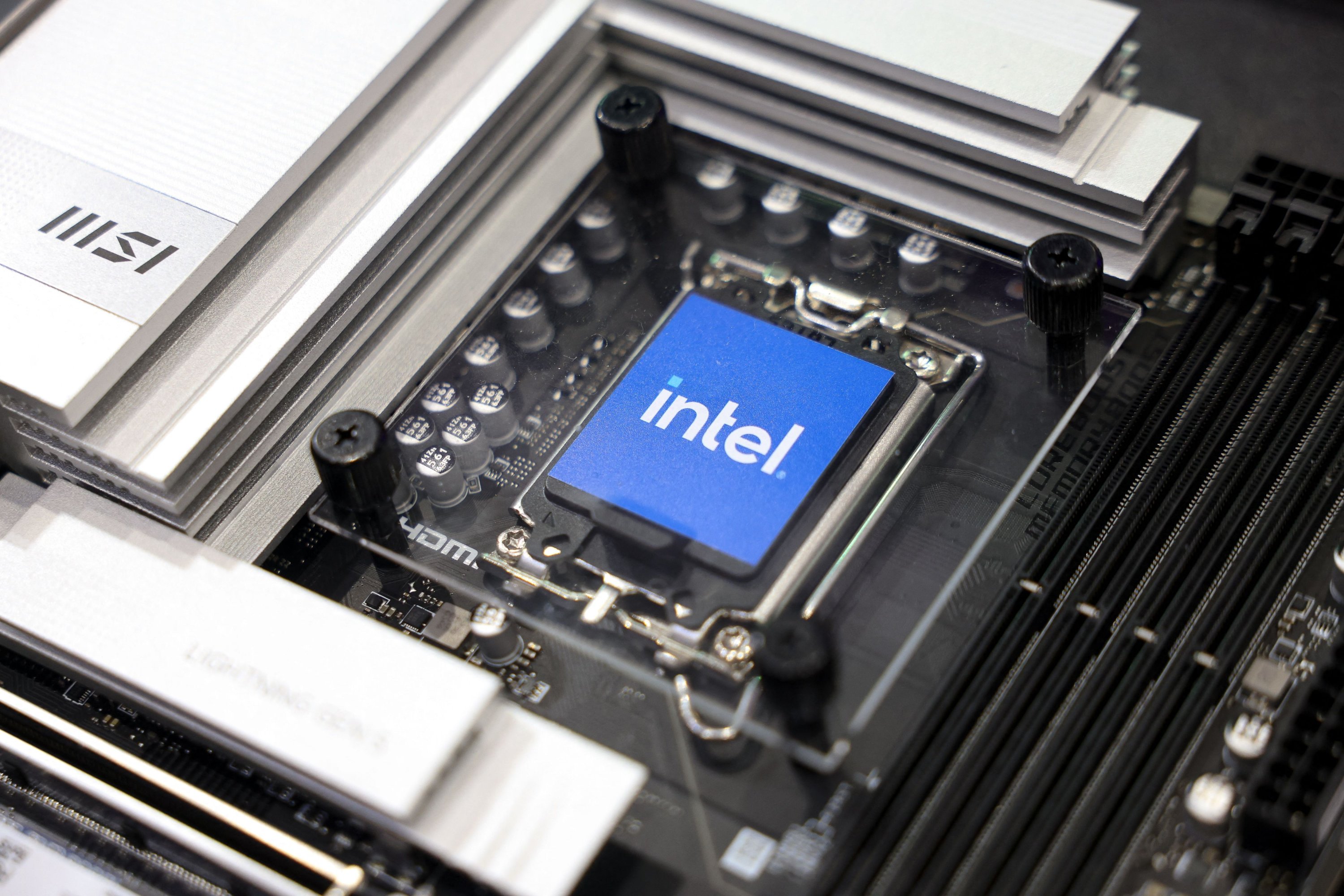
Nvidia's $5 billion investment in Intel presents a double-edged sword for Asian chipmakers like TSMC, as a stronger Intel could reduce U.S. scrutiny of foreign rivals but also intensify competition over time.
The world's most valuable company announced the equity investment on Thursday, which will make it one of Intel's biggest shareholders with a roughly 4% stake. The two companies agreed to jointly develop PC and data center chips.
The deal was welcomed warmly by Intel investors, who propelled its shares 23% on the news. Analysts expect the Nvidia partnership to help the struggling chipmaker make up some ground in artificial intelligence and boost its manufacturing capabilities.
For Taiwan's TSMC, which even now accounts for an overwhelming majority of all AI chips that roll out of U.S. companies, according to some estimates, an Intel that is chugging along is a better proposition than one that fails, said analysts.
"If Intel were to fall, it would only mean TSMC gets even more market share, leaving 90% of the burden of U.S. semiconductor manufacturing on TSMC," said Luke Lin, senior analyst at research firm DIGITIMES in Taiwan.
"Having a competitor survive is actually a good thing for TSMC, because it eases U.S. pressure on the company. The U.S. would have another target (Intel) to support, and that would allow TSMC to move at its own pace."
TSMC and other Asian chip powerhouses such as South Korea's Samsung Electronics, which contract-manufacture AI chips for their clients, are building multi-billion-dollar plants in the U.S., as they are under pressure from the administration of U.S. President Donald Trump to manufacture in the U.S. or face stiff penalties on imported chips.
That could make U.S. chip designers even more dependent on them and attract greater attention from the government.
Asian chipmakers' shares were by and large steady on Friday, with TSMC falling 1.6% and Samsung dropping 1%, slightly underperforming the broader market.
The Nvidia deal could put Intel's next-generation manufacturing technology on a stronger footing, helping it revive its fortunes after years of turnaround efforts failed to pay off.
Intel warned in July that it may have to get out of the chip manufacturing business if it does not land external customers to make chips in its factories.
While the new agreement will not involve Intel's contract chip manufacturing business making computing chips for Nvidia, some investors expect their partnership could one day develop into manufacturing deals, potentially a threat to TSMC which currently manufactures Nvidia's flagship processors.
"Intel will eventually get its foundry business off the ground, but it will take time to build it out to scale," said Dan Nystedt, vice-president at TriOrient, an Asia-based private investment firm.
"Clearly, the U.S. government wants Intel to become a manufacturer of cutting-edge semiconductors again, as a matter of national security," he said.
Moon Joon-ho, an analyst at Samsung Securities, said the partnership is "definitely bad news for Intel's competitors" as the deal raises the prospect of Intel improving its competitiveness and the possibility of Nvidia outsourcing chip manufacturing to Intel.
But the more immediate concern for TSMC could be a loss of business from AMD, which competes with Intel and Nvidia for supplying chips to data centers, some analysts said.
"The biggest victim will be AMD ... For Nvidia, AMD is a competitor, so it is essentially pulling Intel in to fight against AMD," Lin said, adding TSMC's server CPU orders from AMD may decline as a result.
An AMD spokesperson said earlier the company would keep driving market share growth with its AI-forward strategy.
How the chipmaking landscape will develop is far from clear.
"We'll have to see how it plays out. Just putting money in doesn’t automatically make a company stronger," said Han Kyu-min, director at the Korea Fabless Industry Association.
"Intel needs to catch up to TSMC in terms of manufacturing capabilities. At the end of the day, whatever Nvidia develops, it still has to go to TSMC or hopefully in the future, Samsung Foundry."