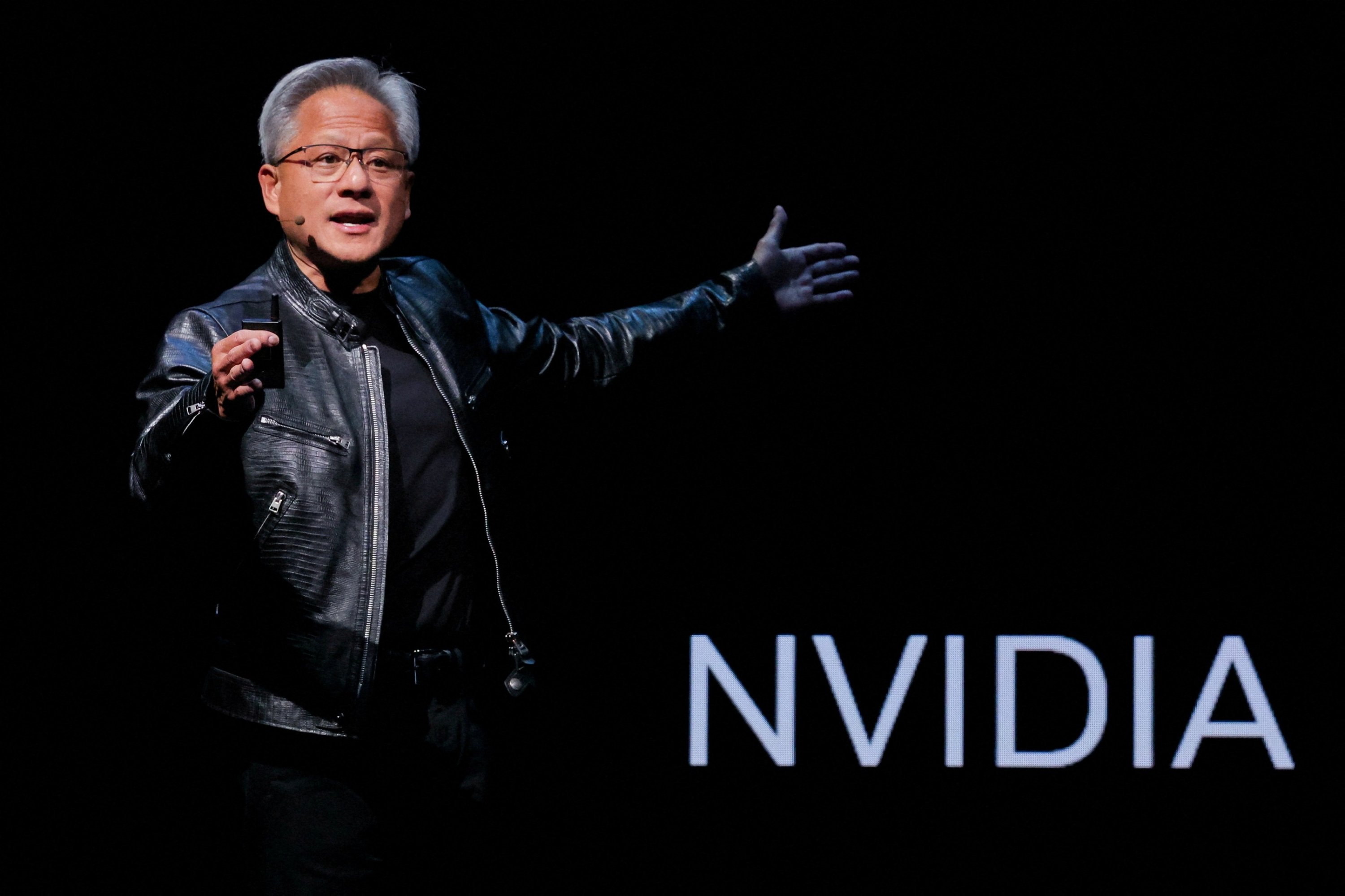
Shares in chip giant Nvidia soared as much as 30% in pre-market trading on Monday as the company's board said it reinstated its co-founder Jensen Huang as chief executive and president.
The board voted unanimously to bring Huang back to lead the artificial intelligence juggernaut after he stepped down on Nov. 12 following reports he had an affair with a woman U.S. officials suspected was spying for China.
Nvidia said it took Monday's action after input from senior U.S. government officials left its board confident Huang posed no national security risk.
"The Board believes Jensen is the right person to lead NVIDIA, and that his reinstatement is in the best interests of our stockholders, employees, partners and customers," board chair Harvey C. Jones said in a statement.
U.S. President Donald Trump also said the federal government had "no reason to believe" Huang's return to Nvidia posed a national security risk.
Huang said in a statement that he was "honored" to return to the company, adding that he takes the responsibility "with the greatest humility and renewed commitment."
He thanked Jones and interim CEO Colette Kress, who will return to her role as CFO, as well as Nvidia's executive staff for their leadership during the brief period of disorder.
"I am also deeply thankful to our employees, shareholders, leaders across the industry and partners around the world for their extraordinary support," Huang's statement continued.
"Above all, I am grateful for the love and support of my family. I can't wait to get back to work."
Multiple investigations of the company are underway, including by the U.S. Securities and Exchange Commission (SEC) and the Department of Justice (DOJ), related to everything from potential accounting issues to alleged chip smuggling.
Trump, who last week urged Nvidia to bring Huang back after its board ruled out his return, praised the reversal on Monday as the "correct and proper decision."
In a post on Truth Social, Trump said the U.S. government had no reason to believe Huang's return posed a national security risk and had no evidence he had engaged in unlawful conduct. He nevertheless urged Nvidia to continue investigating the company's compliance with U.S. export controls to ensure it was meeting its obligations to protect national security.
Huang resigned on Nov. 12 following revelations of extramarital affairs, including one with a businesswoman whom U.S. authorities suspect of spying for China, an allegation Beijing denies.
Huang built Nvidia from a video-game chip designer into the dominant supplier of artificial intelligence processors, playing a central role in its chip road map, major customer relationships and ties with Washington.
The Nvidia board has also formed a committee to investigate whether foreign intelligence efforts targeted Huang and is also starting a search to name a new chief compliance officer.
Huang's departure reverberated from Silicon Valley to Taipei and Washington.
A petition calling for his reinstatement drew more than 180,000 signatures, including one from Elon Musk, underscoring the unusually strong support for an executive who stepped down amid controversy.
The reversal highlights Huang's deep influence over Nvidia and raises broader questions about how dependent one of the world's most valuable companies remains on its co-founder.